“Bad” closes the investigation
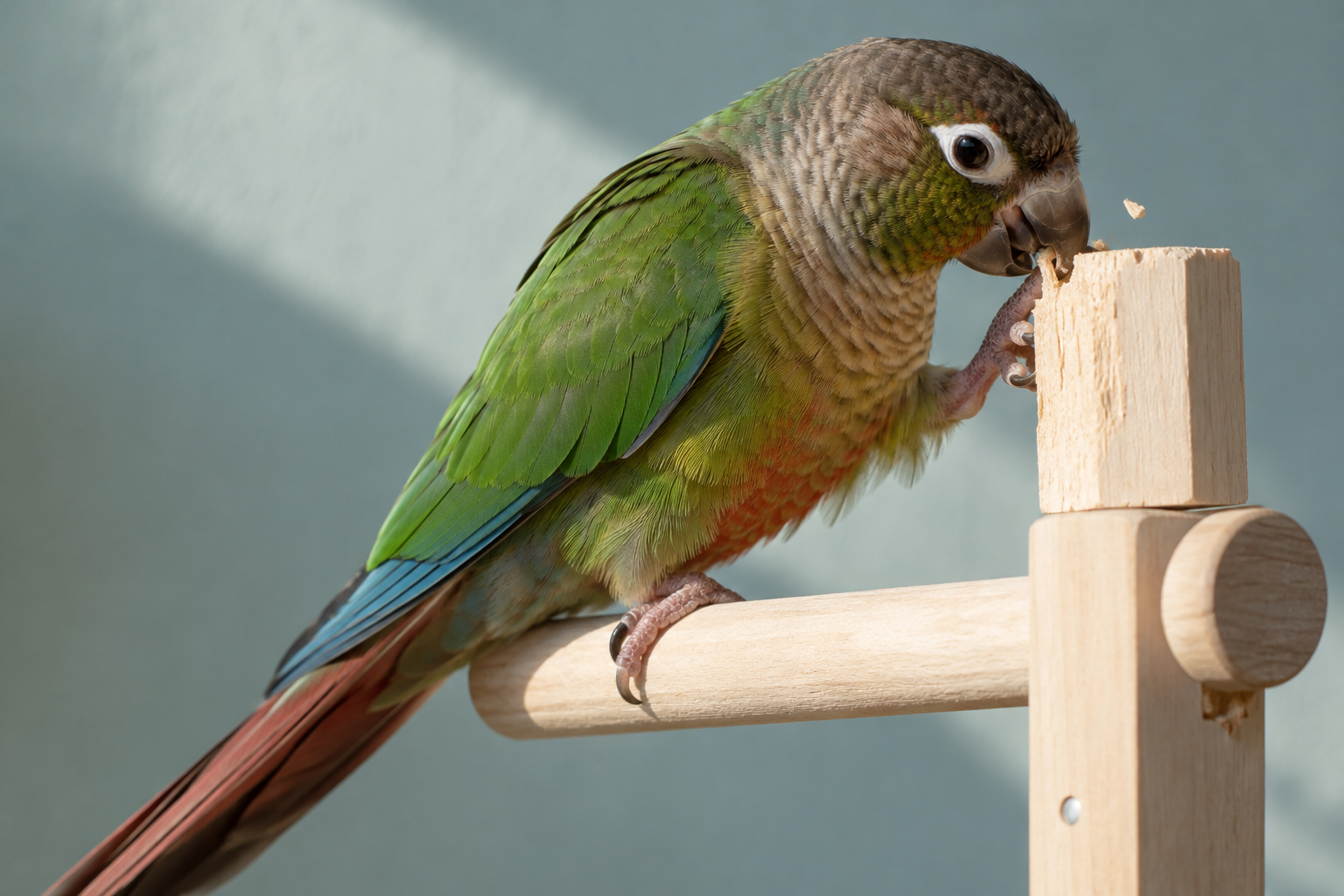
A bird bites when a hand enters the cage, calls after someone leaves, or moves away from a training perch. “Bad” can feel like an explanation because it names the owner's frustration. In practice, it erases the information needed to change anything.
Moral labels turn behavior into character: stubborn, spiteful, dominant, jealous. They invite a contest in which the person must win and the bird must submit. But behavior occurs in a context. Something happened before it, the action produced some consequence, the bird had a particular learning history and physical state, and the environment offered some choices while removing others.
Replacing blame with investigation does not mean accepting injury, endless noise, or an unworkable household. Safety and boundaries are legitimate. The point is that a useful response begins with observable events rather than a verdict about intent. “What is maintaining this?” can lead to change. “Why is my bird bad?” cannot.
Three behaviors, one investigation
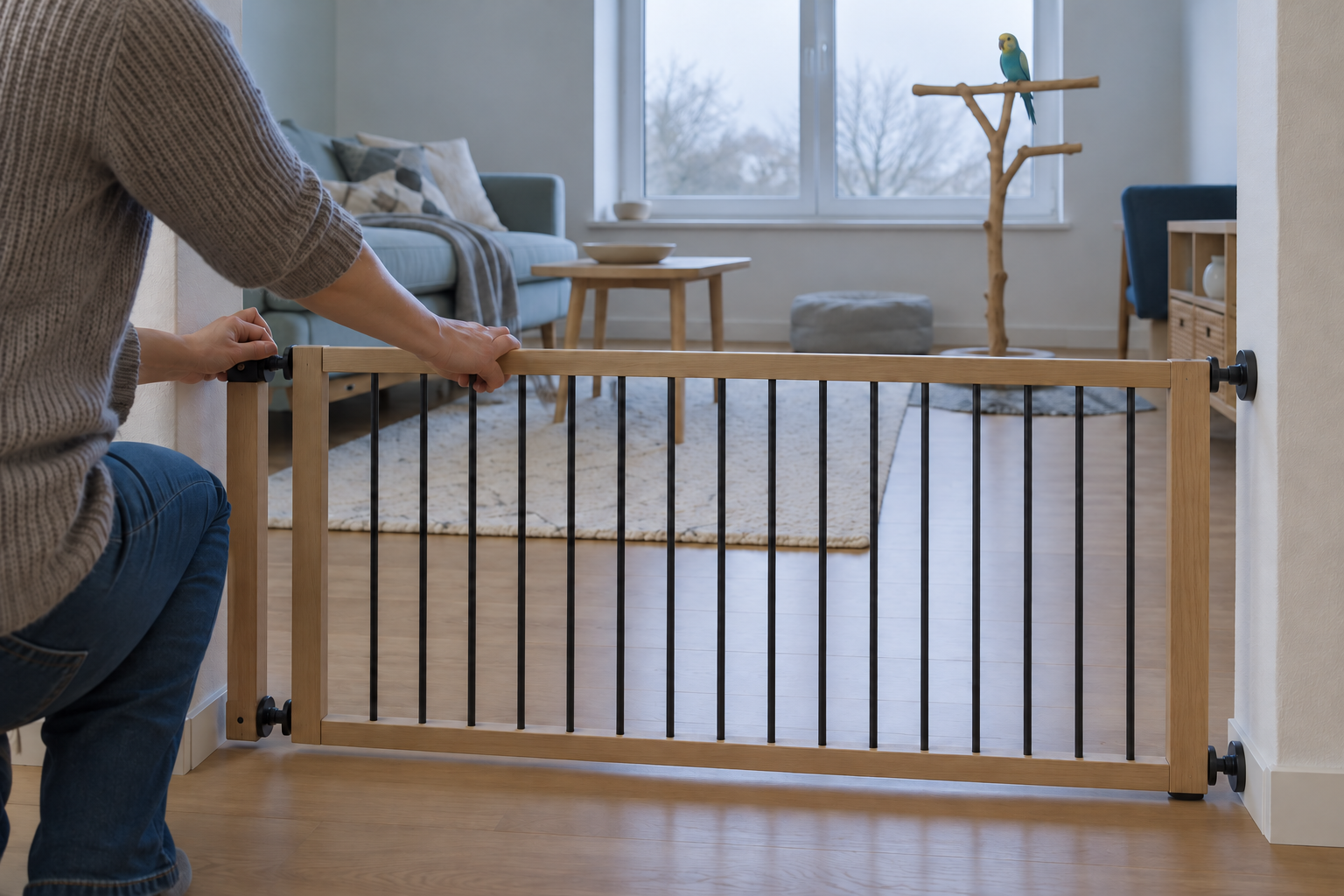
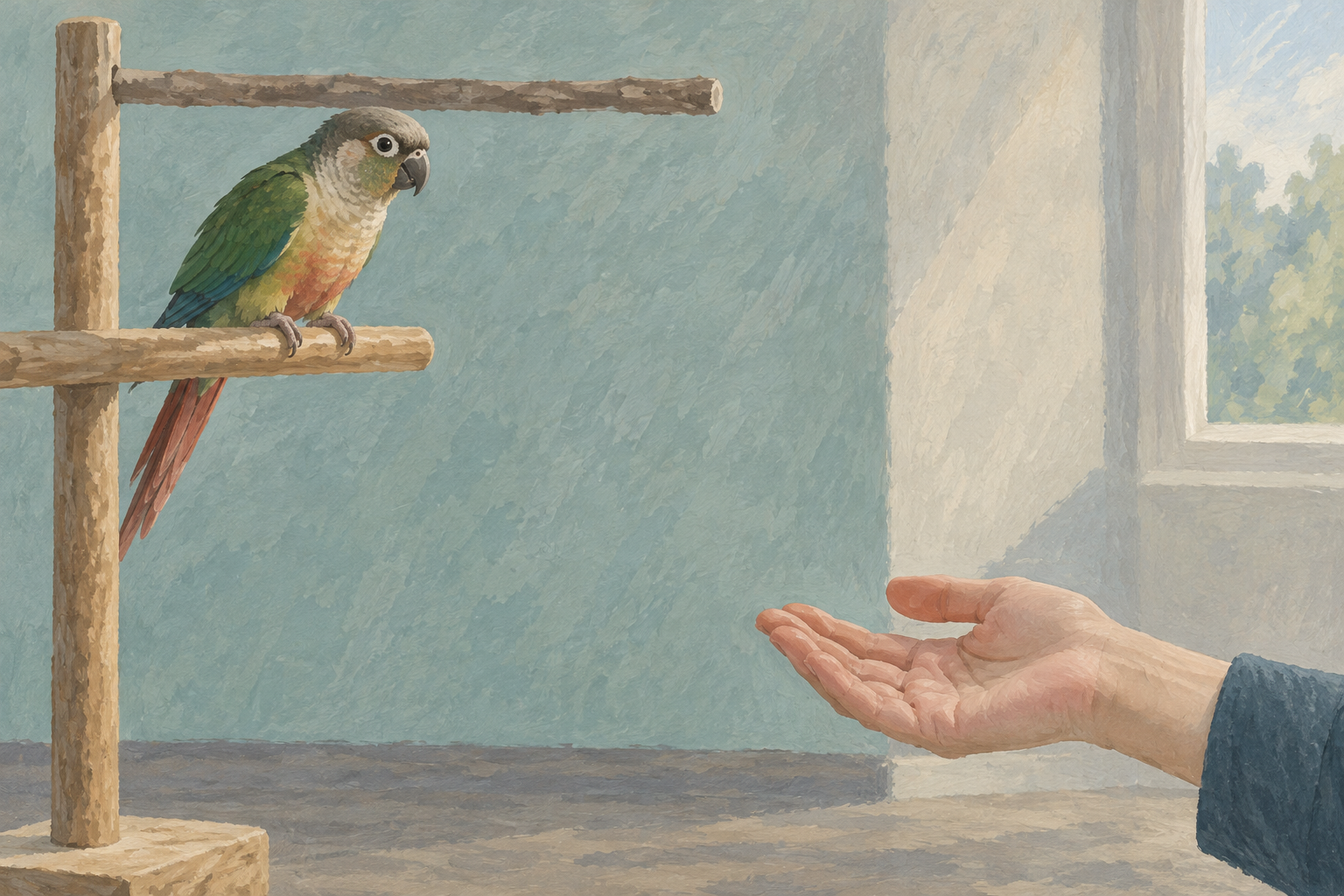
Imagine a bird that bites when asked to step onto a hand at the cage door. A blame story says the bird is defiant. An investigation begins earlier. How quickly did the hand approach? Was the bird resting, eating, guarding access to a preferred area, or already leaning away? Has stepping up sometimes led to the end of out-of-cage time? Can the bird move away, step onto a handheld perch, or choose a different station?
The bite remains a safety concern, especially near a face or child. Yet forcing another repetition may strengthen avoidance and increase risk. Management comes first: create distance, use a safe perch if the bird is comfortable with it, protect other people, and stop arranging the exact scene in which skin is repeatedly within reach. Then teach a workable alternative in easier conditions and reinforce small attempts. The missing evidence matters: without observing the individual, no article can declare whether fear, location, prior reinforcement, pain, or several factors are involved.
Now consider repeated screaming after a person leaves the room. The label “attention-seeking” may be partly descriptive, but it is not yet a plan. What happens immediately before departure? What does the person do during the call—return, shout, answer, start a video, or wait? Does quiet behavior ever receive social contact, or is the loud call the most reliable way to make the household react? Are sleep, stimulation, social opportunity, and predictable transitions adequate?
None of those questions means all calls should stop. Vocal communication is normal, individuals vary, and silence is not a welfare goal. The investigation separates ordinary sound from a pattern that is unsafe or unsustainable. It may lead to reinforcing a quieter contact signal, providing appropriate activity before a known transition, practicing very short absences, or redesigning the routine with qualified help. It should not lead to frightening the bird, covering the cage as punishment, or promising that one trick will eliminate sound.
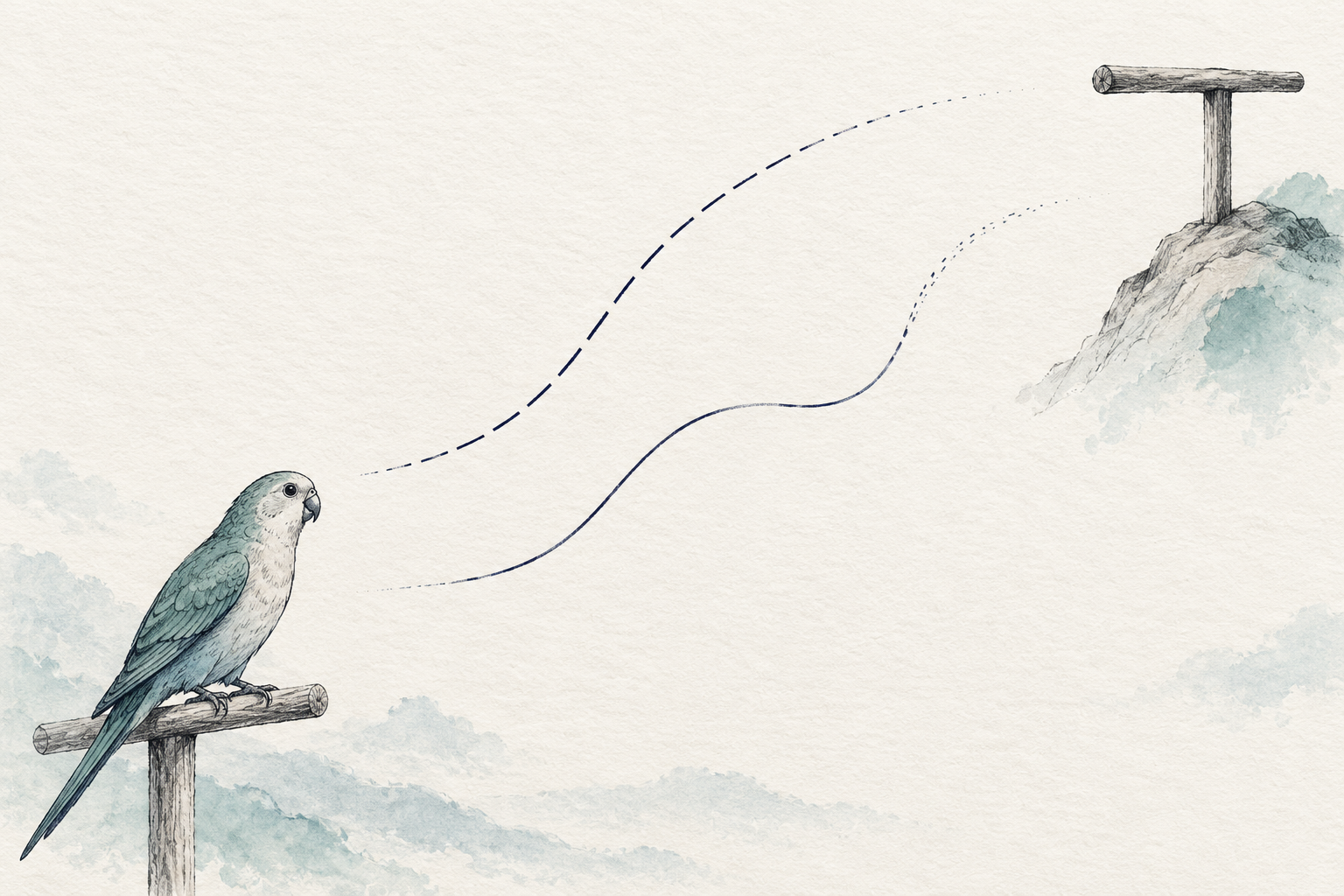
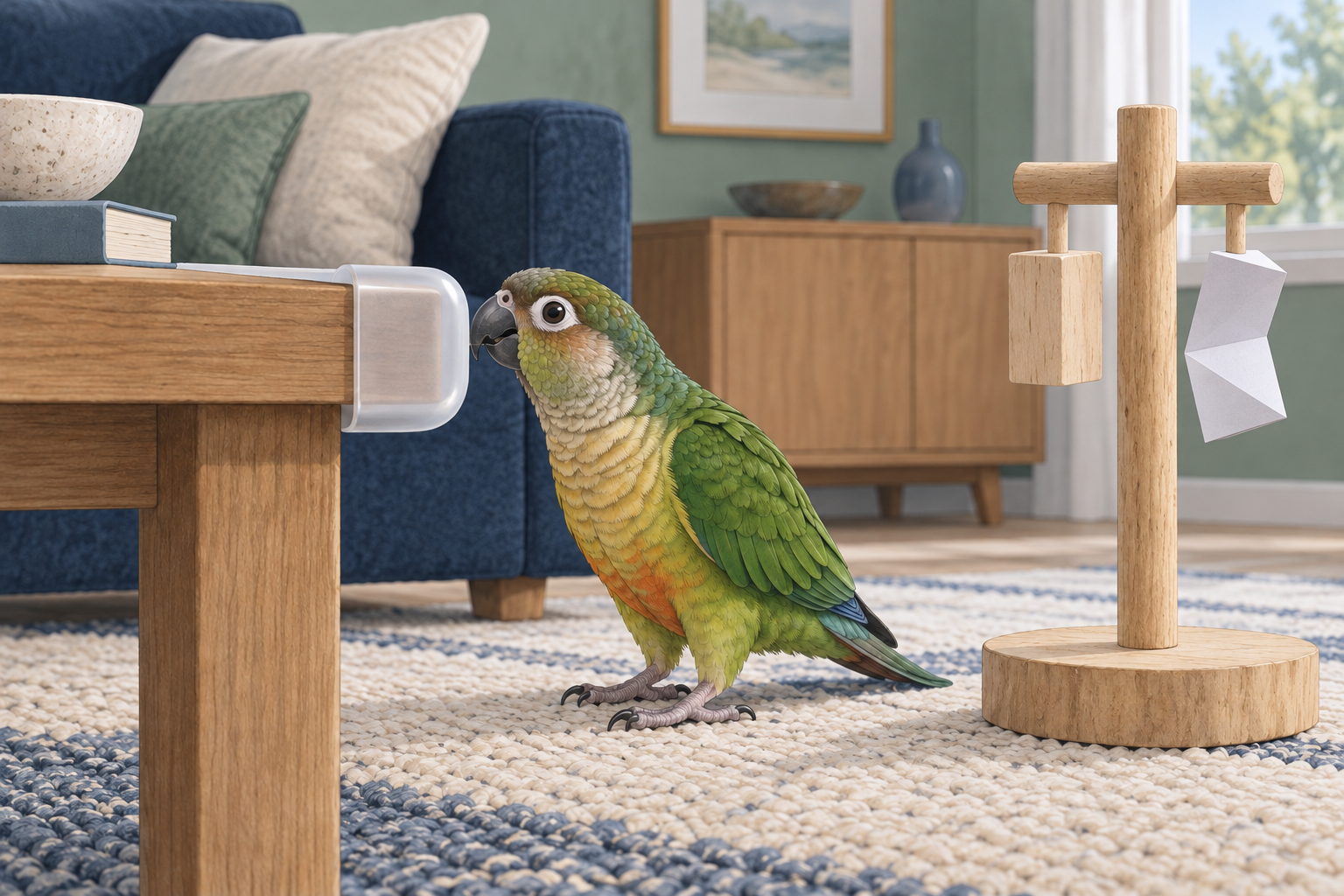
Finally, imagine a bird that walks away whenever a training prop appears. Calling the bird lazy mistakes refusal for missing motivation. Perhaps the prop was introduced too close. Perhaps sessions have been long, the reward has low value, the surface feels unstable, or the bird has learned that approaching removes the option to leave. The immediate question is not how to make the bird comply. It is how to make participation safe and worthwhile.
Reduce the difficulty until curiosity is possible: place the object farther away, reinforce looking toward it, keep the exit open, and end before the bird must escalate avoidance. If the bird will not take a normally valued reward, that may be information about stress, satiation, or the setting—not permission to withhold ordinary food. Choice is part of the procedure, not a prize delivered after obedience.
Across all three scenes, the method is the same: describe the action precisely; record what happened just before and after; examine environment, health, sleep, enrichment, and reinforcement history; preserve a safe way to opt out; teach an alternative that can serve the household; and mark what remains unknown. The result is not a remote diagnosis. It is a better question set.
The safety valve: sudden change may be medical
Behavior analysis becomes dangerous when it explains away a sudden change. Birds may conceal illness, and the MSD Veterinary Manual advises taking changes in activity, posture, appetite, vocalization, or behavior seriously. A bird that abruptly begins biting, stops participating, calls differently, avoids movement, or becomes unusually quiet may need veterinary assessment rather than a more elaborate training theory.
Look at timing. Is this genuinely a long-standing pattern, or is it new? Does it occur in one predictable context, or across the day? Are there changes in eating, drinking, droppings, balance, breathing, sleep, posture, weight trend, or ordinary activity? Do not use the absence of a dramatic symptom as reassurance.
If the change is sudden, unusual, worsening, or accompanied by other signs, contact an avian veterinarian promptly. Follow the safety-first guidance in Is My Bird Sick? rather than testing more triggers at home. A behavior plan cannot rule out pain, injury, reproductive disease, toxin exposure, or another medical contributor. Ethical behavior work keeps health inside the investigation.
Humane action keeps the investigation open
The International Association of Animal Behavior Consultants' current standards ask practitioners to consider health, environment, learning history, safety, and opportunities for choice and control. They identify positive reinforcement as the primary training strategy and oppose methods based on pain, fear, or intimidation. That framework is valuable even before a consultant is involved.
Start by preventing rehearsals that can cause injury or panic. Change access, distance, timing, or equipment so everyone is safer. Observe the pattern in neutral language: “bit after the hand crossed the door frame” is more useful than “attacked for no reason.” Reinforce an alternative the bird can actually perform, such as moving to a station, approaching a perch, or using a manageable contact sound. Keep sessions short enough that leaving remains possible.
Then review the wider day. Training cannot compensate for unsuitable housing, inadequate sleep, limited movement, absent foraging, chaotic social contact, or a diet problem. Nor should enrichment be offered as a guaranteed cure. It changes the environment; the individual response still needs observation.
Seek help when risk is significant, progress stalls, household relationships are deteriorating, or the behavior is complex. Start with an avian veterinarian for health assessment, then look for a qualified behavior professional who explains methods, measures change, protects choice, and works within their scope.
Calling a bird “not bad” is not sentimental absolution. It is a commitment to precision. The person can protect skin, sleep, furniture, and family while still asking what the behavior communicates and what conditions make a better response possible. Humane action is not permissive. It is disciplined enough to keep learning after blame would have stopped.