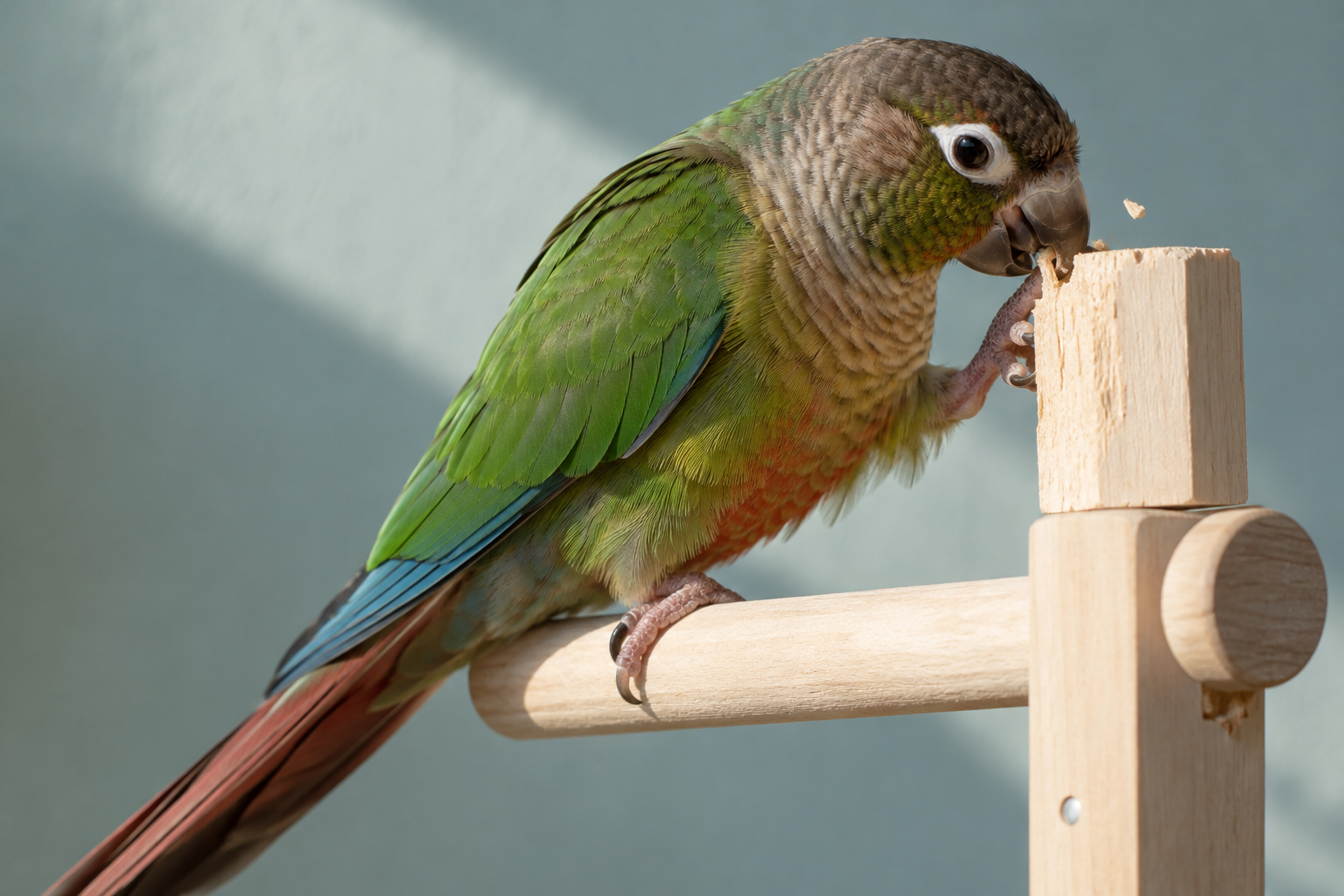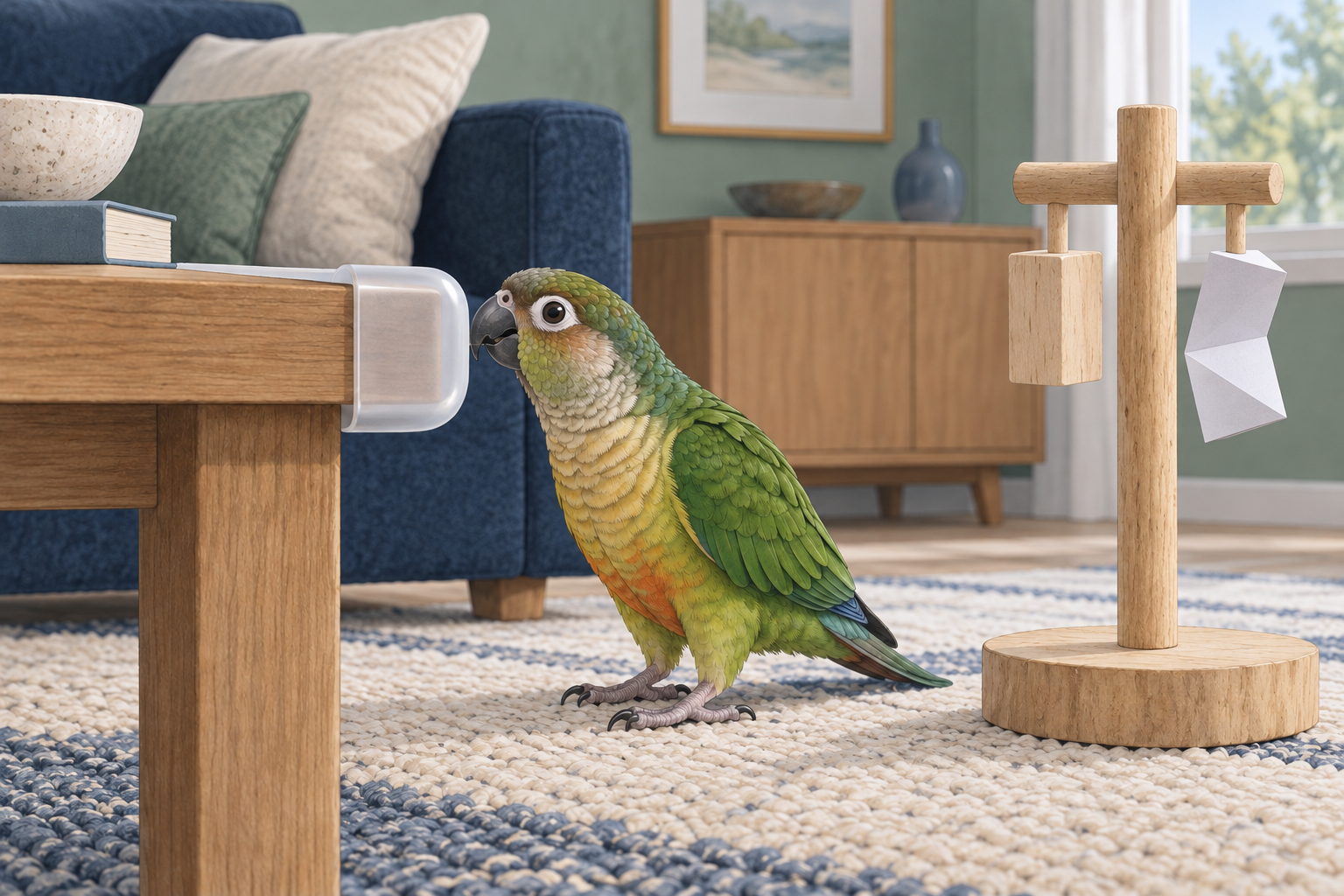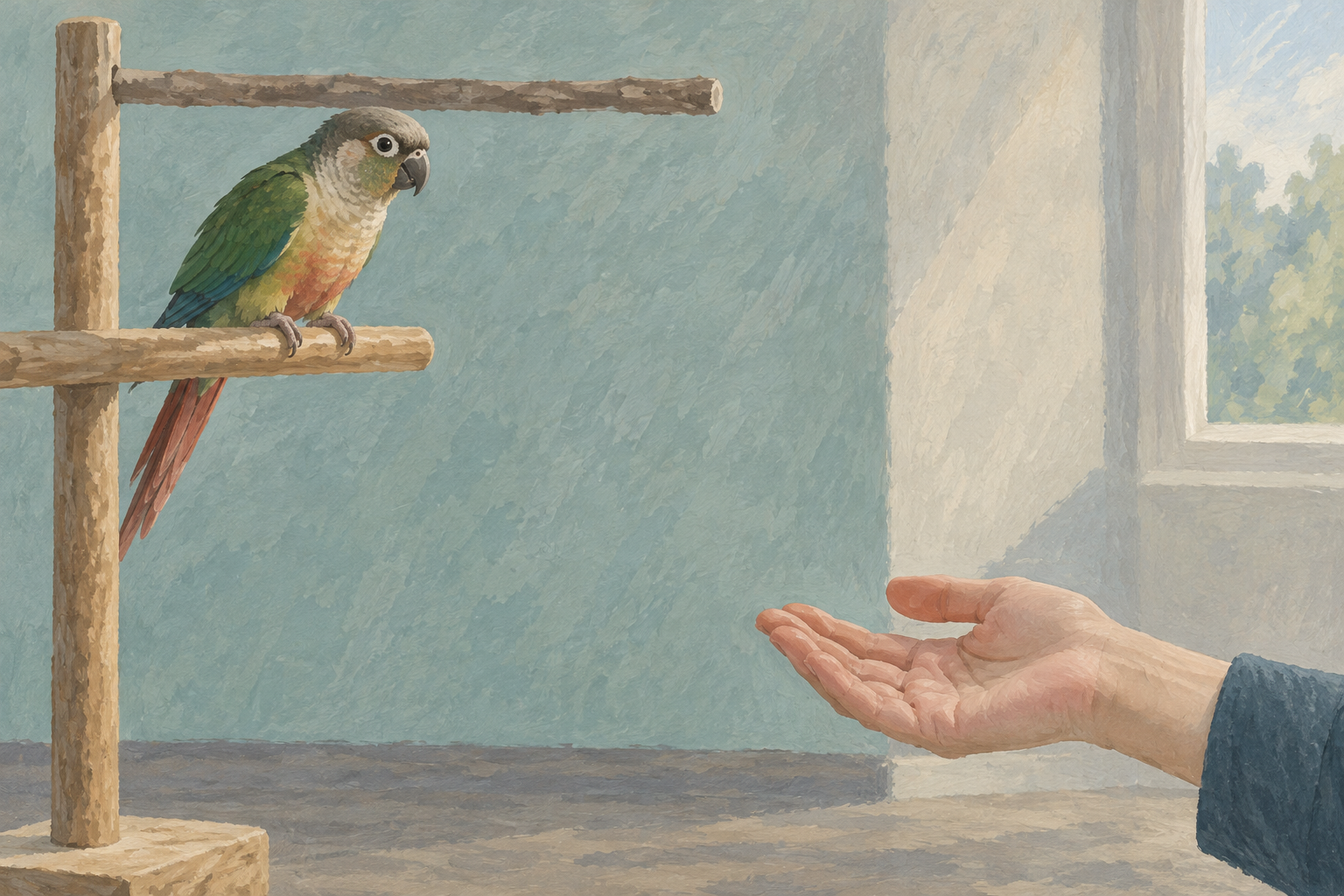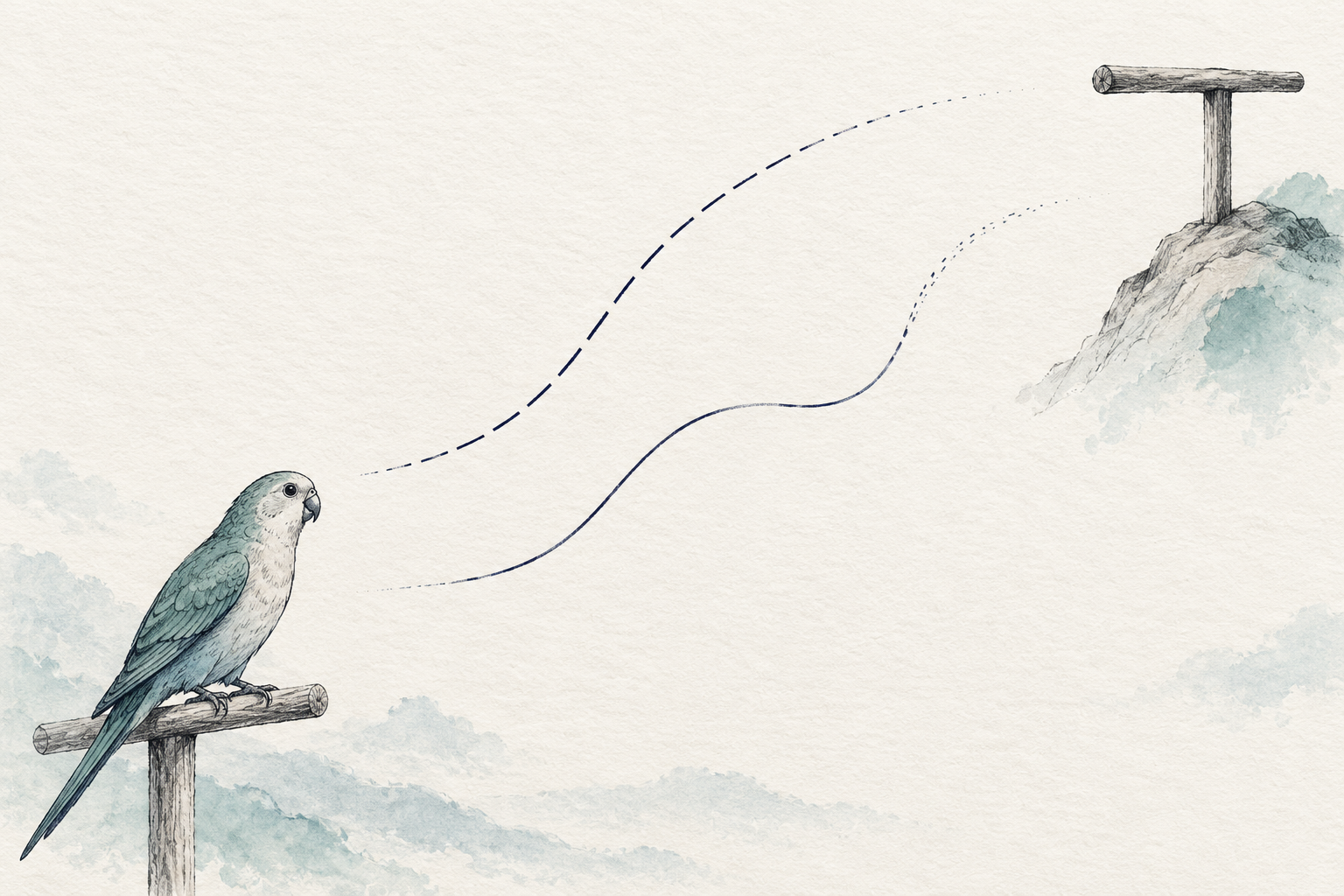
Target training and luring both use something a bird values to help a behavior happen. They are not opposing philosophies, and one is not automatically kinder or more advanced. The difference is the prompt: a target asks the bird to orient toward a designated object, while a lure places a desired item so the bird follows it directly.
Both can sit inside a positive-reinforcement plan. Both can also become confusing if the trainer moves too quickly, marks late, or never fades the prompt. Choosing well means matching the method to distance, precision, the bird's comfort, and the skill being taught.
Same reinforcement family, different prompts
In target training, the bird first learns a simple behavior such as touching the end of a stick with its beak. A brief marker—perhaps “yes” or a click—identifies the correct touch, and a reinforcer follows. Once that relationship is clear, the target can guide movement to a perch, station, carrier entrance, or turn.
In luring, the trainer positions a visible reinforcer so following it produces the desired movement. The bird might step toward a seed, move through a carrier doorway, or rotate its body as a treat-holding hand traces a curve. After the movement becomes predictable, the visible food prompt is reduced or replaced by a smaller hand signal or verbal cue; the reward still follows the completed behavior.
Luring is not “bribery.” It is a prompt with a fading requirement. Targeting is not automatically free of prompts either: a bird can become dependent on seeing the target if the trainer never transfers the behavior to another cue.
Clarity, distance, and prompt dependence
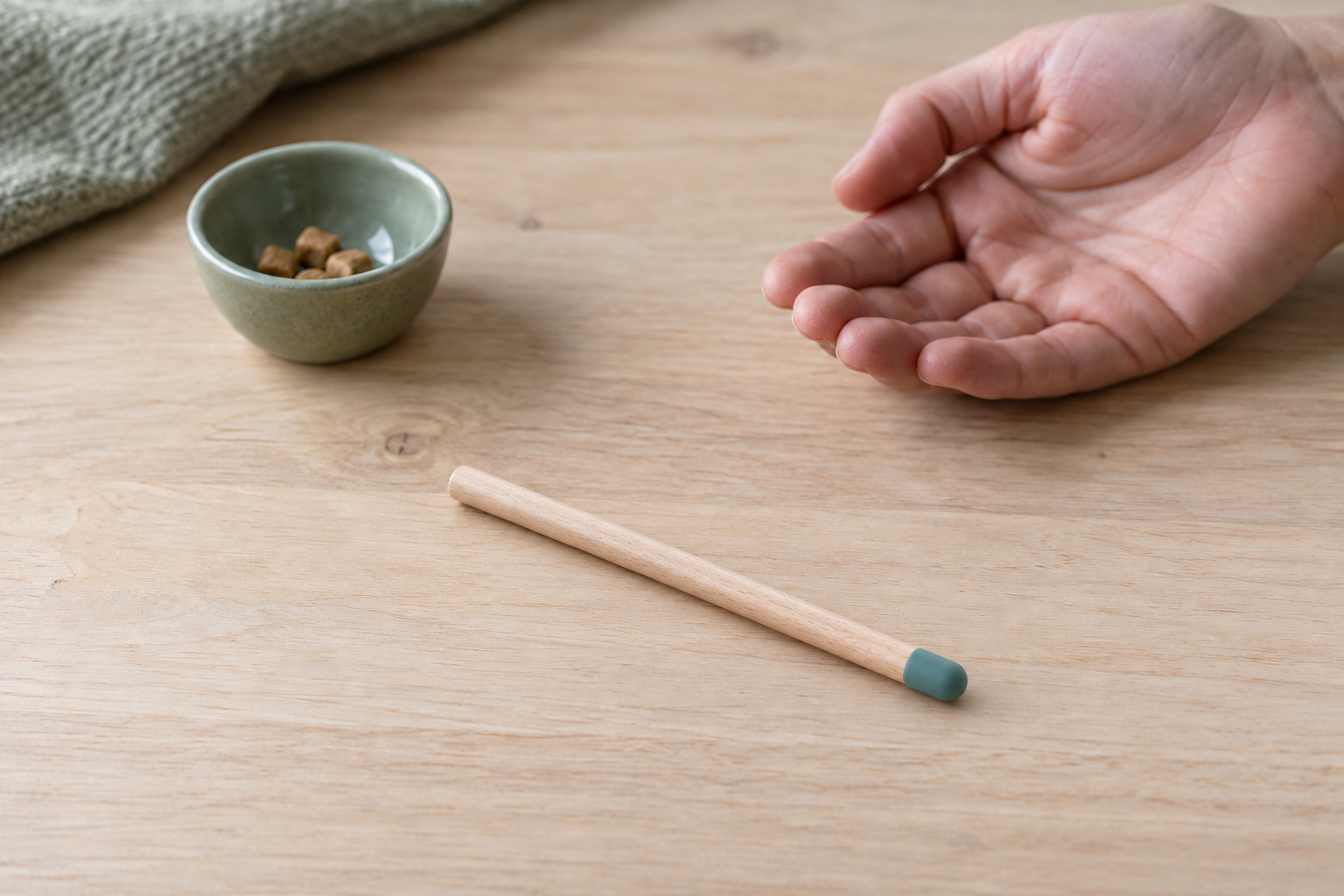
Targeting often provides a crisp rule: touch or follow this object. World Parrot Trust guidance defines targeting as touching a body part to an object and describes using it to move a bird to a new location, into a carrier, or through a turn. Because the trainer can extend the target away from the hand, it may help a cautious bird participate at a comfortable distance.
The target itself must first feel safe. Presenting a stick near a bird that leans away or freezes is not neutral. Pair its presence with valued outcomes at a distance where the bird remains comfortable, and retreat if concern appears. A target should invite approach, not corner the bird.
Luring can be fast to explain because the reinforcer is already meaningful. It works well for a small movement that is easy to follow. Its hidden cost is visual dependence: if the food remains obvious on every repetition, the bird may learn “follow visible food” rather than respond to the intended cue. Close food placement can also bring fingers too near a nervous or highly aroused bird.
Marker timing matters in both methods. The marker should identify the specific movement being reinforced, not the later act of taking food. Reward placement matters too. If a bird moves to a station and then must leave it to collect the reward, the training may weaken the station. Delivering the reinforcer where the completed behavior should occur makes the consequence clearer.
Watch frustration rather than chasing repetitions. Dropping food, turning away, rapid grabbing, lunging, scanning for escape, or losing interest can signal that the step is too hard, the setting too distracting, or the reinforcer poorly matched. Short, relaxed sessions protect learning better than a fixed repetition quota.
Task one: move to a station
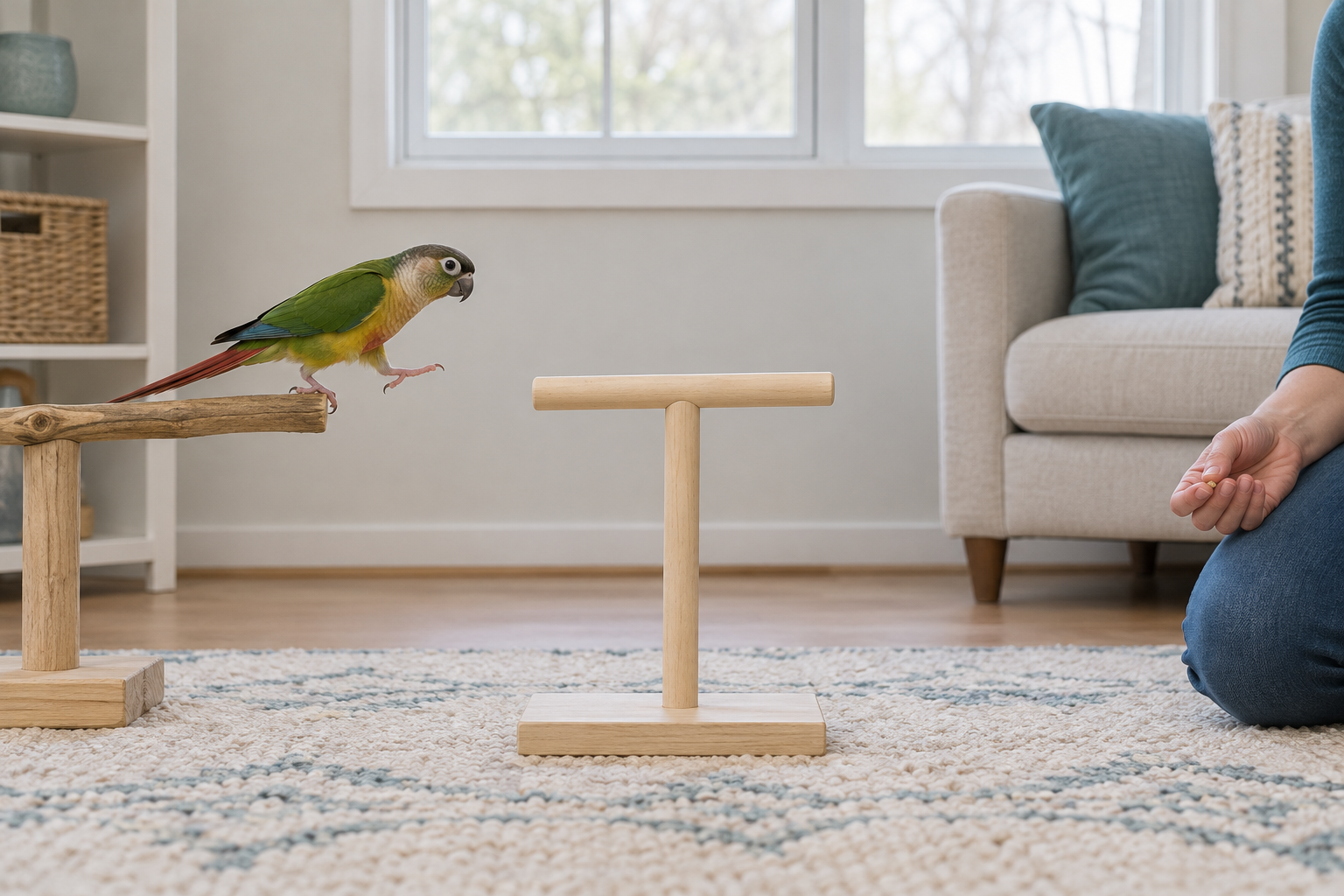
Suppose the goal is a designated perch several feet from the cage.
With a target, first reinforce a touch at the current location. Then position the target a small distance along the route, mark movement toward it, and reward at each successful point. Over sessions, increase distance only while the bird moves confidently. Once the bird regularly reaches the station, present the station cue before the target, then make the target smaller, less obvious, or unnecessary.
With a lure, show a small reinforcer near the next easy step and move it toward the station without pulling the bird beyond its comfort. Mark and reward useful movement. As the route becomes familiar, use the same hand motion with food concealed, then reduce the gesture after adding the station cue.
Targeting usually offers more distance and a stable visual reference. Luring may require less preliminary teaching. Either method is working only if the bird can choose not to follow and the prompt is becoming less necessary.
Tasks two and three: carrier and turn
For carrier entry, distance and emotion are central. The carrier should already be positioned where the bird can observe it without distress. A target can lead the bird toward the doorway in small approximations while the person stays back. This may suit a bird that is comfortable with the target but wary of hands near the carrier.
A lure can create an easy trail: food outside, at the threshold, then just inside. RSPCA carrier guidance uses a gradual version of this approach and advises leaving the door open at first. The risk is rushing because the food seems effective. Do not trap the bird by closing the door unexpectedly after one entry. Entry, remaining briefly, door movement, lifting, and travel are separate skills.
For a turn, both methods can be compact. A target traces a small arc that the bird follows; correct partial rotations are marked and reinforced until the circle is complete. Then a verbal cue or small hand signal is introduced before the target and the target is faded.
A lure can guide the head and body around with a treat-holding hand. Once the movement flows, hide the food in the hand, introduce the new cue, and shrink the gesture. World Parrot Trust training material describes a similar progression in which a large hand prompt becomes smaller as the turn comes under a new cue.
Neither method should pull a bird off balance or force it across a frightening surface. If the bird stops, shorten the movement, improve footing, reduce distraction, or return to an easier approximation.
A decision rule and hybrid plan
Choose a target when distance is useful, the destination matters more than the trainer's hand, or the same portable rule will support several husbandry tasks. Choose a lure when the movement is small, the bird comfortably takes food near the trainer, and the prompt can be faded almost immediately. Choose neither in that moment if the bird is ill, frightened, over-aroused, or unable to move safely.
A hybrid plan is often practical:
- Establish voluntary participation with the easiest prompt.
- Mark one small, observable action.
- Deliver the reward where the finished behavior belongs.
- Introduce the lasting cue before the prompt.
- Reduce the target or lure while keeping reinforcement available.
- Practice in new settings one change at a time.
IAATE identifies positive reinforcement as the generally preferred training strategy because the bird acts to gain something desirable, and it emphasizes the value of voluntary husbandry behaviors. That principle matters more than loyalty to a tool.
The best technique is the one the bird understands, can decline, and eventually performs without needing the original prompt in full view. Targeting and luring are both useful when they increase clarity and choice—and both need thoughtful fading to become real skills.