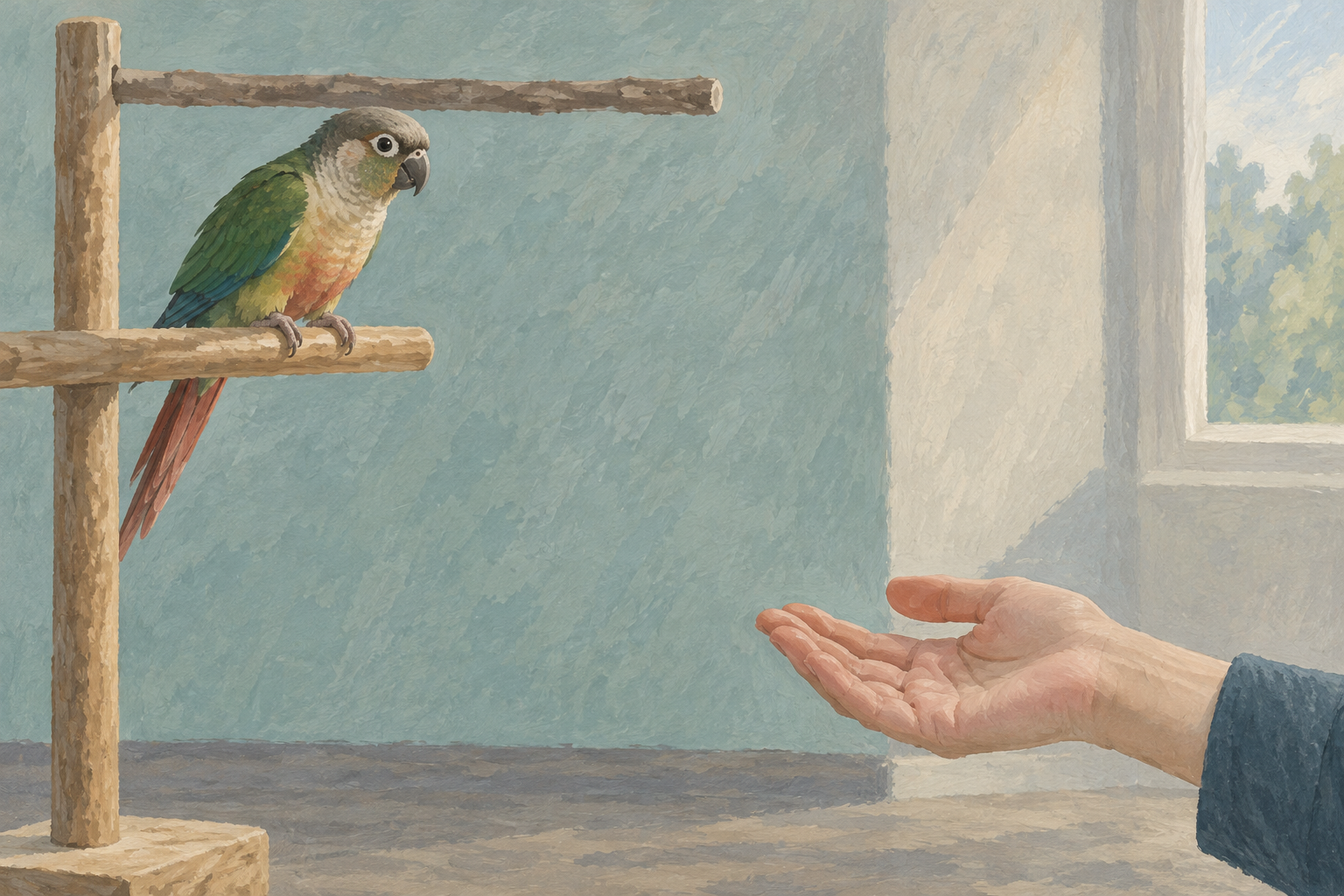
Step-up should be a voluntary transfer skill, not a test of whether a bird will tolerate a hand pushed into its chest. The useful behavior is simple: when invited, the bird chooses to move from a perch onto a steady hand or handheld perch and can step off just as calmly.
Positive reinforcement builds that behavior by rewarding small, observable progress. There is no promised timeline. A new, hand-shy, or previously forced bird may need many sessions before placing one foot on a hand. Safety, choice, and repeatability matter more than speed.
Step-up is a choice-based transfer skill
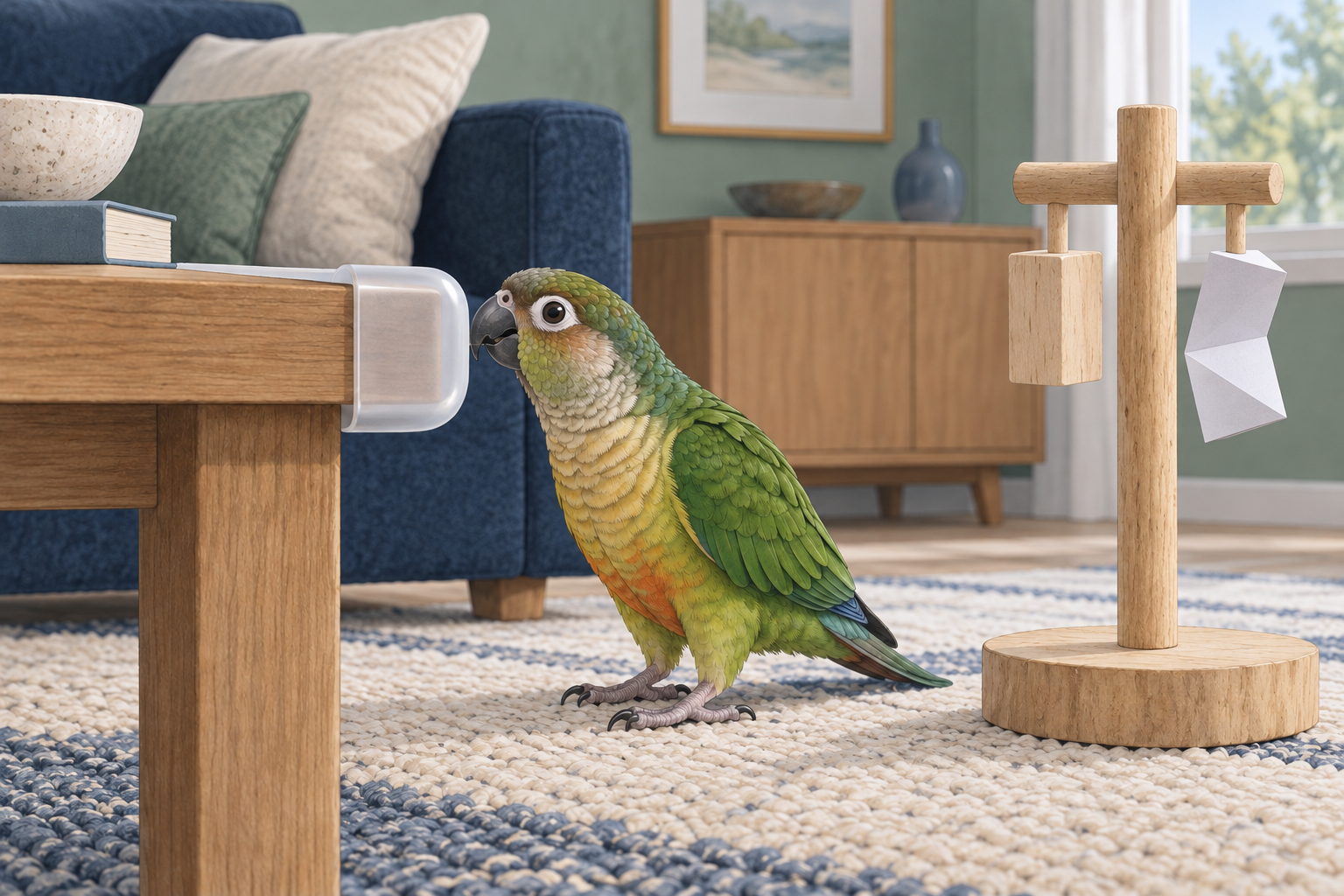
Before training, confirm that the bird is eating normally, able to balance, and not showing a sudden behavior change that may require veterinary attention. Work in a secure, familiar area with doors and windows closed, fans off, other animals removed, and no urgent reason to move the bird.
World Parrot Trust trainer Barbara Heidenreich distinguishes a step-up request from a command enforced through pressure. Pushing into the chest, scooping, peeling toes from a perch, or “taking the bite” can teach the bird that hands predict discomfort and that stronger warnings are necessary.
The prerequisite is not tameness. It is a workable starting point at which the bird can notice you and still eat, move normally, and choose to remain. If the bird freezes, leans away, opens its beak, retreats, or stops taking an otherwise valued reward, increase distance or end the session.
A handheld perch can be the first transfer surface for a bird uncomfortable with hands. It is an option, not a tool for cornering the bird. Emergency restraint and veterinary handling are separate skills and should not be improvised during ordinary step-up training.
Find a reinforcer and a comfortable starting distance
Identify something the bird currently wants in small amounts: a tiny piece of a favored food, access to a toy, attention, or another safe outcome. Preference can change from moment to moment. A reward is a reinforcer only if the behavior it follows becomes more likely.
Choose a brief marker such as “good” or a click. The marker tells the bird exactly which action earned the reward. Deliver it at the instant of the desired movement, then provide the reward. Do not use the marker to summon the bird or repeatedly click without following it with the expected consequence.
Find the starting distance by approaching slowly with the hand or perch held still. Stop before the bird shows avoidance. Mark and reward something easy, such as looking toward the transfer surface while remaining relaxed. Run a few repetitions, then finish while the bird is still participating.
Keep sessions short enough that you can notice subtle changes. One or two useful minutes may be better than ten minutes of fading attention. Prepare rewards in advance, remove distracting objects from your hands, and position the transfer surface so the bird can step across without a jump or awkward stretch.
Shape tiny approximations
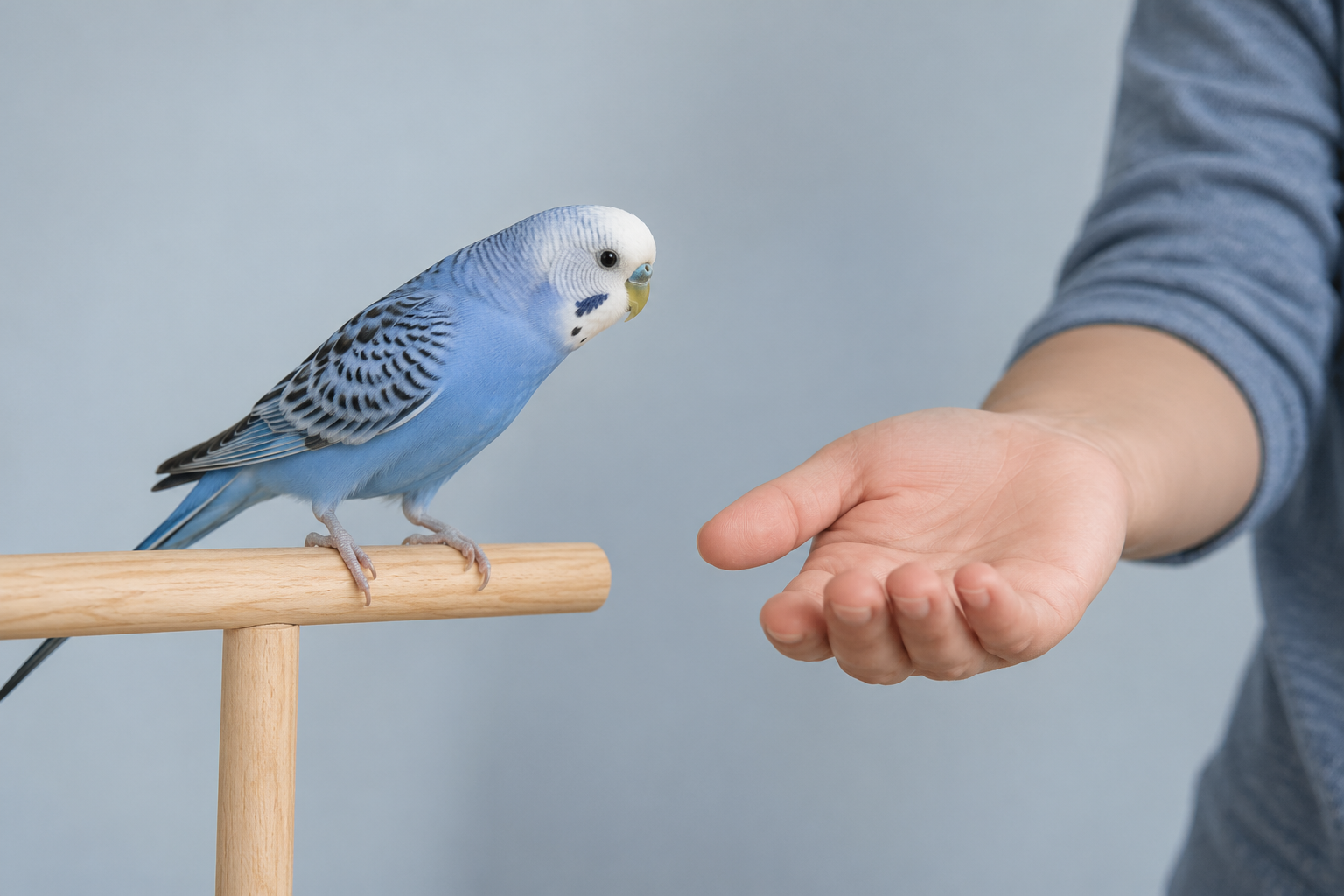
Shaping means reinforcing successive actions that become closer to the final behavior. Do not wait for a complete step-up before the bird has learned what makes rewards appear.
- Orientation: Mark the bird looking toward the hand or perch without retreating.
- Approach: Reward a lean, weight shift, or small step toward it.
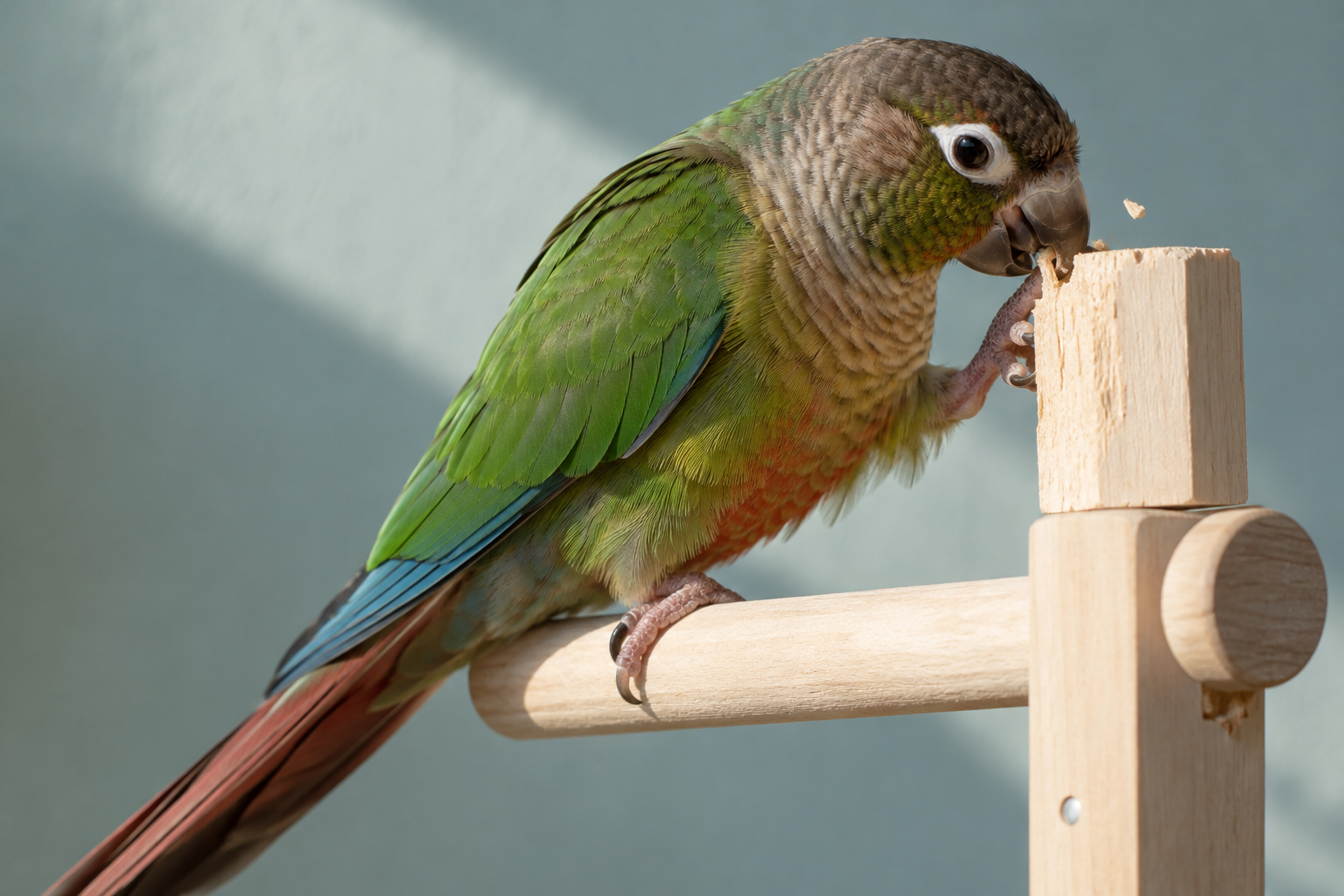
- Contact: Reward calmly touching the surface with the beak or foot. A beak may be used for balance; not every touch is a bite.
- One foot: Mark the moment one foot is placed on the transfer surface. Allow the bird to step back if it chooses.
- Two feet: Reward moving the second foot across while the hand or perch remains stable.
- Brief duration: After the full step is easy, reward remaining for one moment before offering a clear step-down opportunity.
Advance only when the current approximation is easy and repeated. If the bird hesitates, return to the last comfortable action. Make the next step smaller by adjusting distance, height, angle, or the position of the reward. Do not lure so far that the bird must stretch over a feared hand and then discovers it has no easy retreat.
Hands should remain predictable. Avoid following the bird around the cage, lifting suddenly once a foot appears, or carrying the bird somewhere unpleasant after every success. Early repetitions can be step on, reward, step off. This teaches that the bird retains control.
If the bird lunges or bites, do not punish or continue pushing. Create safe distance and review what happened before the escalation. The starting point may have been too close, the reward too weak, the session too long, or the bird may be uncomfortable or unwell.
Add the cue, then change one variable at a time
Add a verbal or visual cue only after the bird is predictably beginning the step-up when the transfer surface is presented. Say the cue once just before the familiar opportunity, then mark and reinforce the response. Repeating “step up” while nothing happens teaches that the words are background noise.
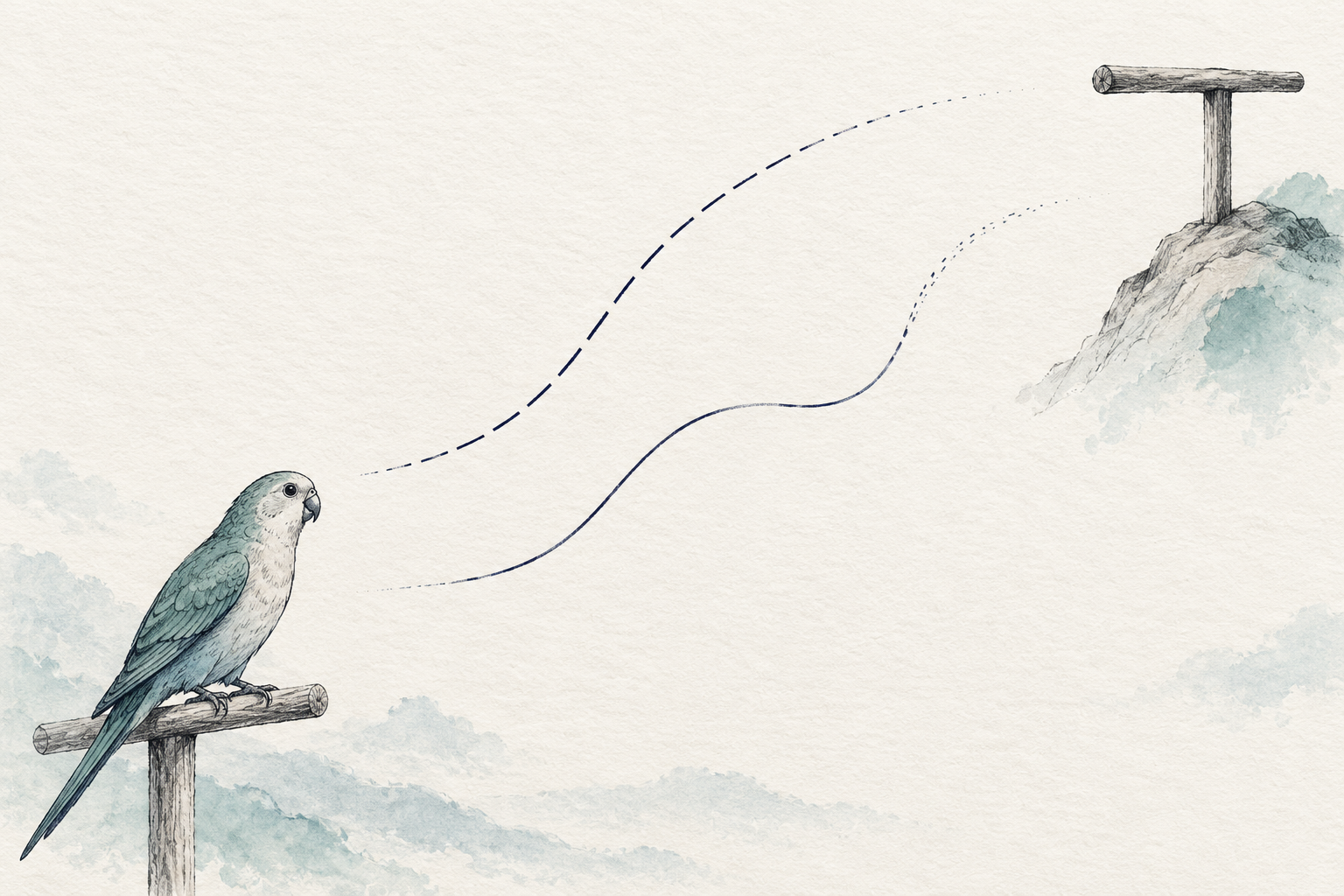
When the behavior is reliable in the original setting, generalize gradually. Change one variable: the other hand, a different handheld perch, another safe location, a slightly longer duration, or one step of movement. Reduce the difficulty if performance drops.
Do not remove all rewards as soon as the behavior appears. You can vary reinforcement later, while still paying well for difficult contexts and preserving occasional easy wins. Everyday consequences can also reinforce the behavior: stepping up may lead to a favored stand, social contact, or safe exercise.
Practice step-down with equal care. Present a stable destination, mark the shift onto it, and reward. A bird that trusts it can leave may become more willing to step on.
Five hypothetical sessions with different outcomes
This example is a sequence of possibilities, not a five-session promise.
Session one: The bird takes a reward while the handheld perch is two body lengths away. The trainer marks calm orientation and stops after four repetitions.
Session two: The perch moves slightly closer. The bird leans forward twice, then steps away. The trainer rewards the earlier lean, restores distance, and ends without following.
Session three: The bird touches the perch with its beak and briefly places one foot. The trainer marks the foot, rewards, and offers an easy retreat. No attempt is made to obtain the second foot.
Session four: The bird steps on with both feet for three repetitions. The trainer keeps the perch still, rewards generously, and practices one calm step-down.
Session five: A visitor has arrived and the bird will not take the usual reward. The trainer does not interpret this as regression or stubbornness. Training is postponed. The next quiet session resumes at an easier approximation.
Stop a session for avoidance, escalating warnings, loss of interest, fatigue, or household distraction. Seek avian-veterinary advice if reluctance or aggression appears suddenly, balance changes, the bird favors a foot, or normal activity and appetite change. For persistent fear or biting after health review, consult a qualified professional who uses reward-based methods.
Reliable step-up grows from many uneventful choices. A steady surface, well-timed marker, meaningful reward, and respected retreat create a skill that can support daily care without making hands something the bird must fight or flee.