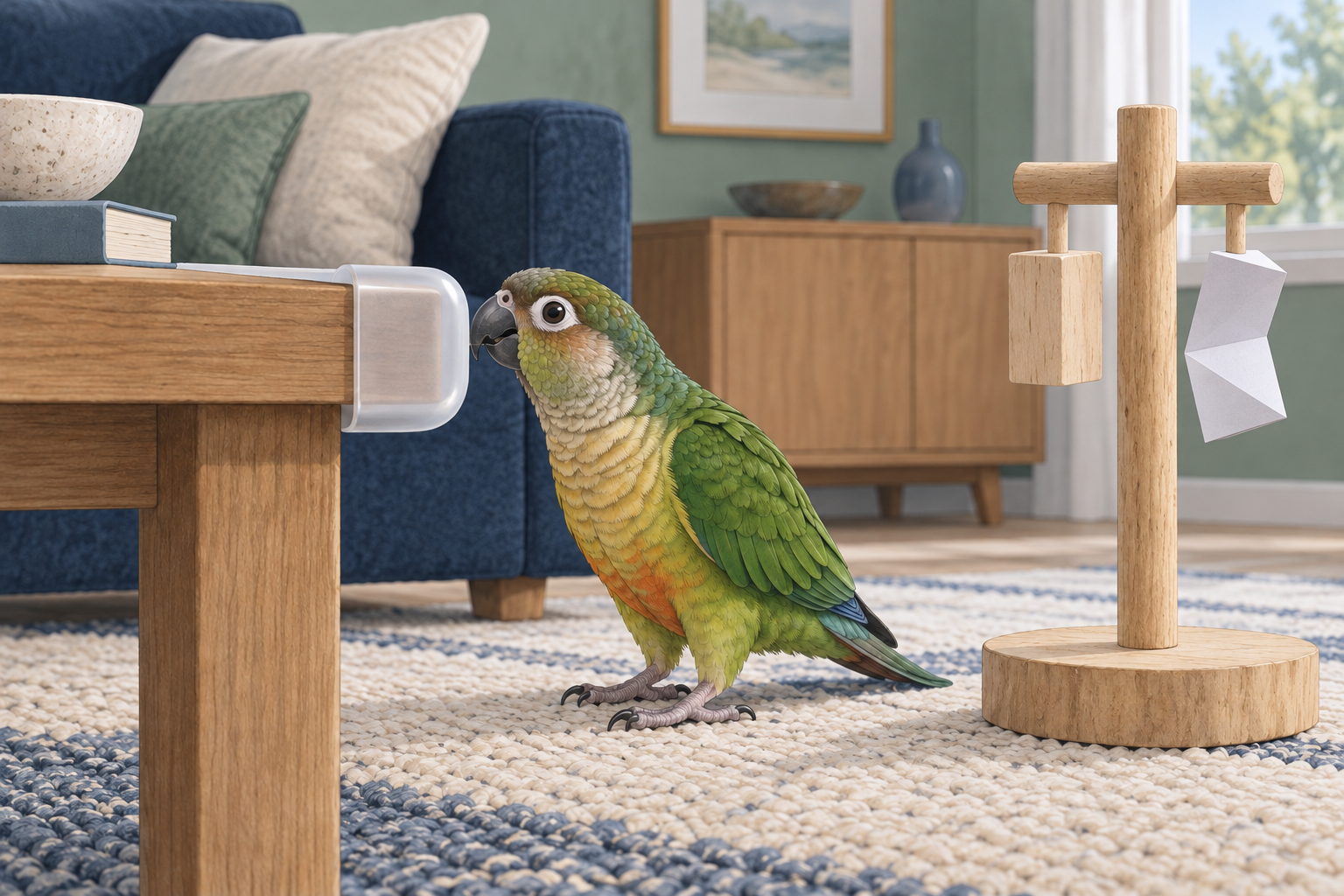
At 8:03 a.m., a parrot looks at a purpose-built toy, looks at the trim around a window, and apparently assigns the trim a higher priority. This is not a tiny act of architectural criticism. A bird's beak is an eating tool, climbing aid, grooming instrument, object tester, and—especially in parrots—a remarkably efficient dismantling device.
The useful goal is not “stop all chewing.” It is to make dangerous or valuable objects unavailable, provide safer work, and learn what kind of material and challenge the individual bird chooses. This fictional workday is playful in structure, but the behavior and safety limits are factual.
Clocking in: a beak is not just a mouth
Bird beaks vary with diet and way of life. The MSD Veterinary Manual notes that birds use their beaks for functions people often perform with hands, including eating and grooming. Parrots also use the beak while climbing and manipulating objects. The tongue, feet, posture, and beak work together as a mobile inspection system.
Chewing therefore does not automatically mean defiance, anger, or a nutritional deficiency. It may be exploration, food processing, play, nest-related behavior, an attempt to reach something interesting, or simply the action that the environment makes available.
Normal use should not become a reason to ignore physical change. An overgrown, damaged, bleeding, unusually shaped, or painful-looking beak requires an avian veterinarian. MSD advises veterinary review for an overgrown beak rather than home trimming. This article does not provide trimming or repair instructions.
Morning shift: climbing, testing, and finding the weak point
The morning assignment is quality control. Cage latch: tested. Perch bark: tested. Suspicious paper edge: tested repeatedly. A parrot may touch a surface before committing weight, use the beak as a third contact point while climbing, or press and scrape to learn what moves.
That curiosity becomes hazardous when the test surface is an electrical cord, painted trim, unknown metal, treated wood, houseplant, adhesive, blind cord, or small detachable part. Supervision is not a force field; a beak can remove material quickly. Protect the home first by routing cords behind physical barriers, blocking unsafe rooms or surfaces, and creating a designated activity area away from irreplaceable objects.
Do not wait for a bird to “understand” that a cord is dangerous. Access management is clearer and kinder than repeated scolding. If a bird keeps returning to one location, ask what that spot offers: height, a view, a grippable edge, soft material, proximity to people, or an easy route. Recreate the useful function in a safer place when possible.
Lunch shift: processing and manipulating food
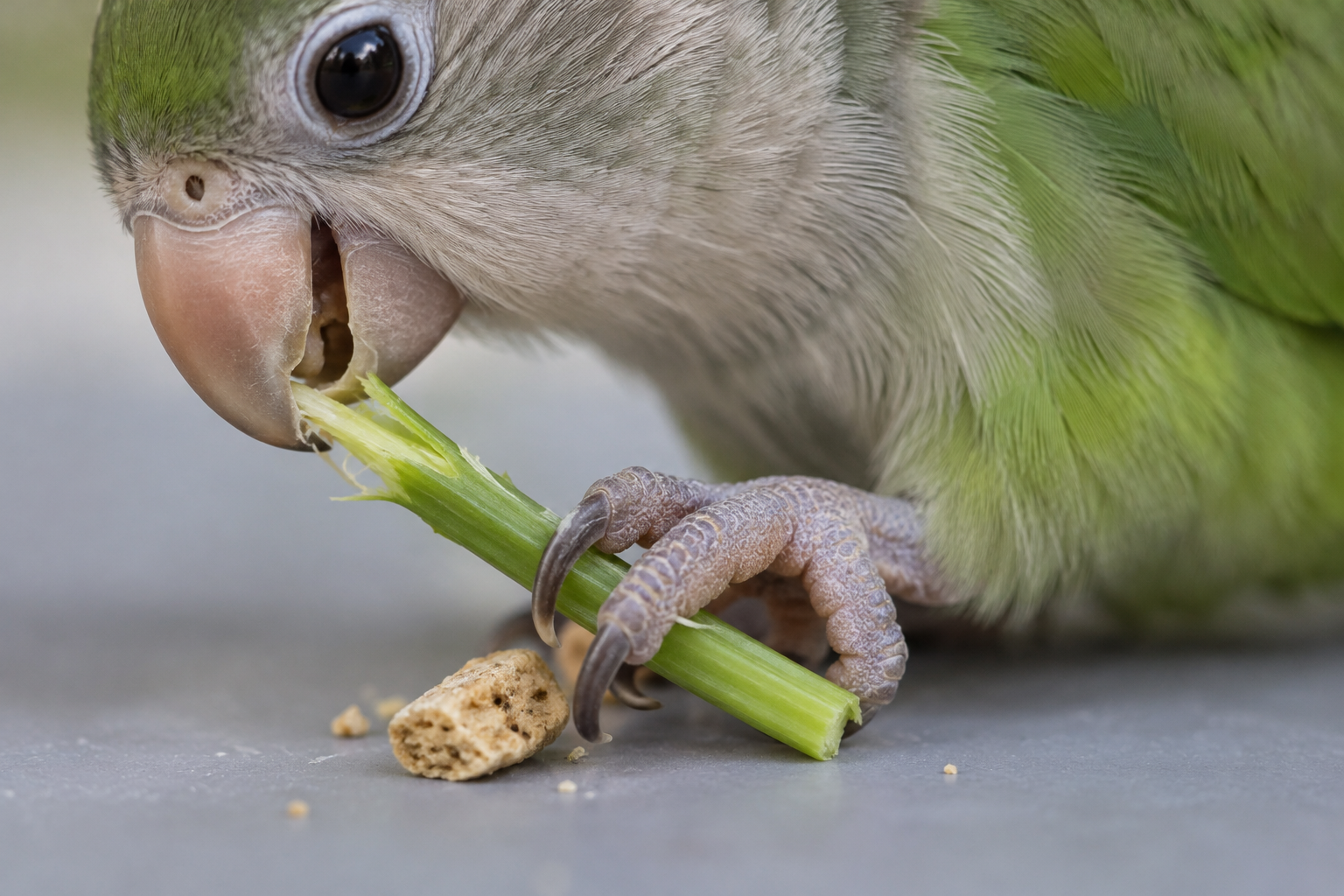
Lunch is not merely consumption. Parrots in natural settings search for and dismantle food materials, and World Parrot Trust describes chewing through barriers and manipulating objects as part of foraging enrichment. In the home, a pellet delivered in an open bowl may meet nutritional intent while leaving much of the processing job vacant.
Safe presentation can add work without adding hunger. A veterinarian-approved portion might be divided among locations, placed in a simple foraging device, or wrapped in a small amount of suitable paper so the bird performs an easy action before eating. Begin below the bird's problem-solving limit: food should be partly visible, the barrier easy, and the bird observed. Difficulty can increase only after confident success.
Foraging is not permission to hide the entire diet, use questionable containers, or assume that every bird recognizes a puzzle. Monitor actual intake. A bird that is ill, losing weight, newly arrived, or changing diets needs an individualized plan from an avian veterinarian, not a surprise obstacle course.
Afternoon shift: the shredding office opens
After lunch, the shredding department receives cardboard. Productivity is immediate; paperwork is not retained.
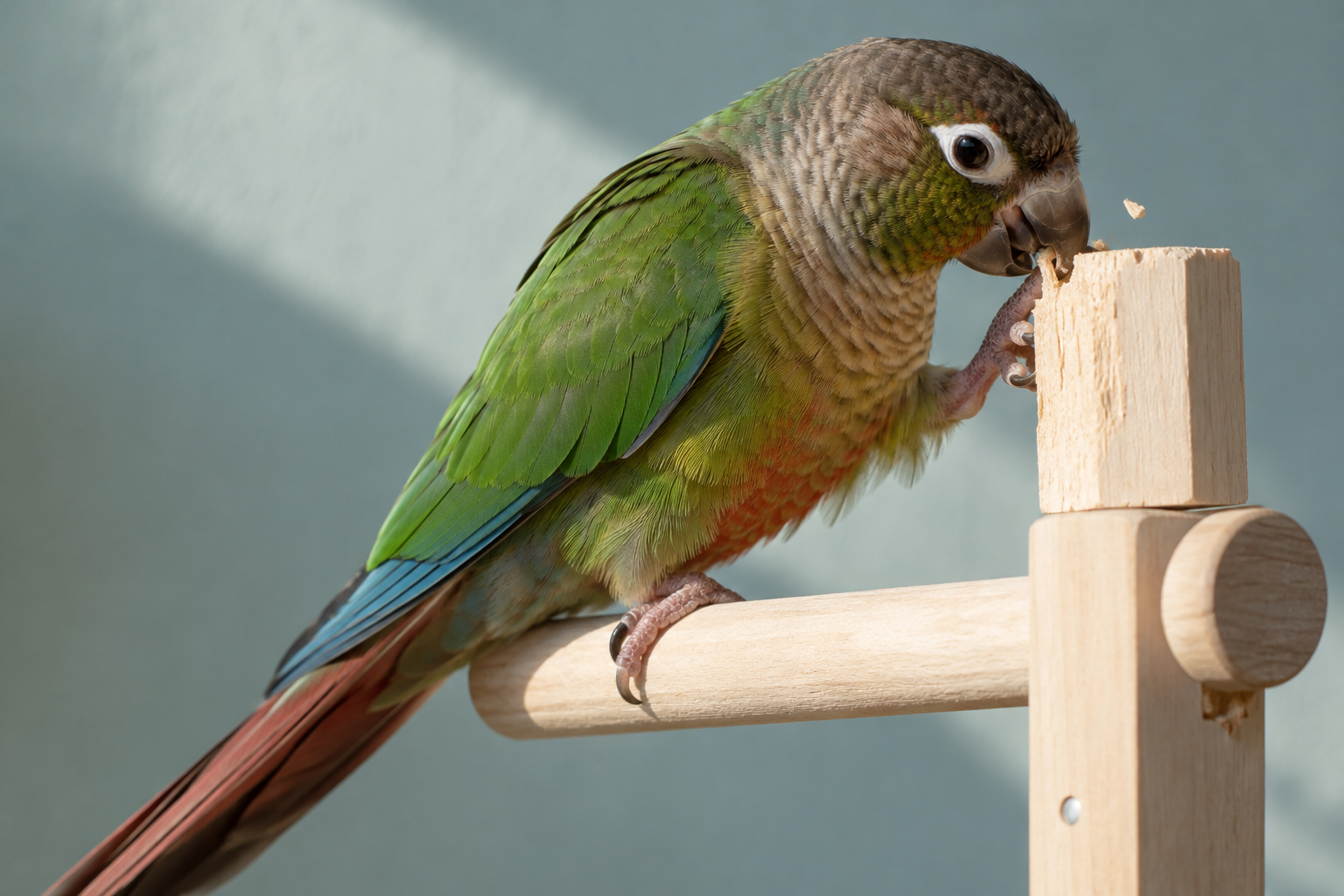
World Parrot Trust explains that parrots naturally pluck, manipulate, strip vegetation, and chew wood. A toy being destroyed can therefore be evidence that it served its purpose. The replacement budget is not a design failure. It is part of providing consumable activity.
Material safety still controls the assignment. “Natural” is not enough. Branches must be correctly identified, clean, unsprayed, and free from mold and contamination. Wood and paper should be untreated; hardware must resist the species' beak strength; bells, chains, clips, fibers, and gaps require regular inspection. Remove frayed rope, exposed wire, loose fasteners, sharp edges, and pieces small enough to swallow.
Watch how the individual uses an item. One bird may peel paper and drop every piece. Another may ingest fibers. A toy that was safe yesterday can become unsafe after its construction changes through chewing. Inspect before offering, during early use, and after damage.
Offer legal chewing outlets, not a single perfect toy
Build a small rotation by function and resistance. Include an easy-to-destroy option, a medium challenge, and a stable object for climbing or manipulation. World Parrot Trust suggests examples such as clean untreated browse, plain paper items, safe wood, and woven plant materials, while emphasizing initial supervision. Exact suitability depends on species, size, construction, and the individual bird.
Present one change at a time if the bird is cautious. Place a new item outside the enclosure at first, pair it with familiar activity, and allow retreat. Curiosity cannot be forced. A bird that avoids an object is not failing enrichment.
Keep a simple log for two weeks: material, location, first response, type of use, damage pattern, and any safety concern. The goal is not to rank toys by human appearance. It is to discover whether the bird prefers peeling, snapping, untying, carrying, searching, or climbing, then provide more than one safe route to that function.
Photograph worn items before disposal if the damage pattern is useful.
Variety does not mean constant novelty. Familiar objects can support confident use, while selected changes keep the environment interesting. Rotate before everything becomes background, but retain enough predictability that the cage remains a secure place.
Protect the home without punishing the bird
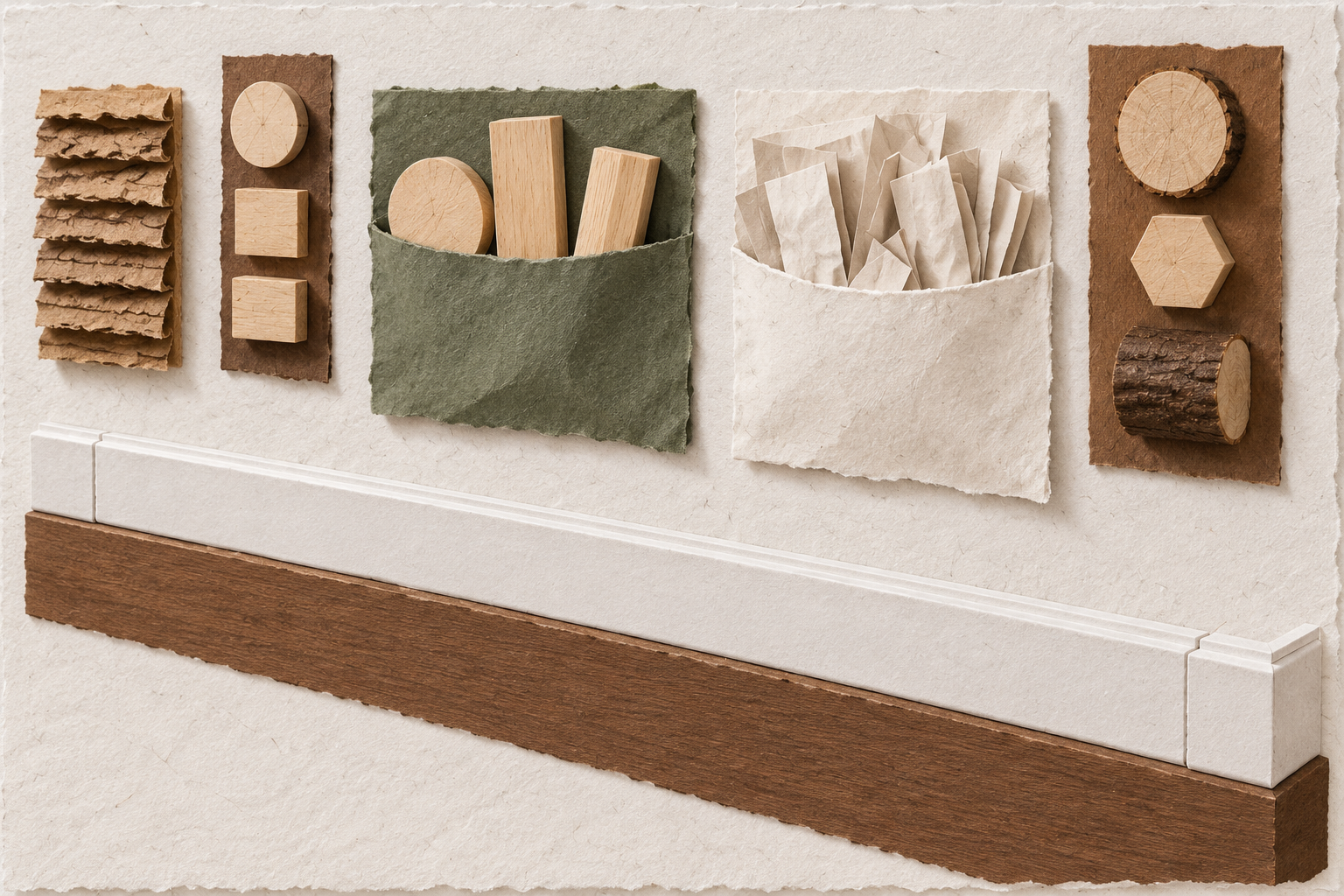
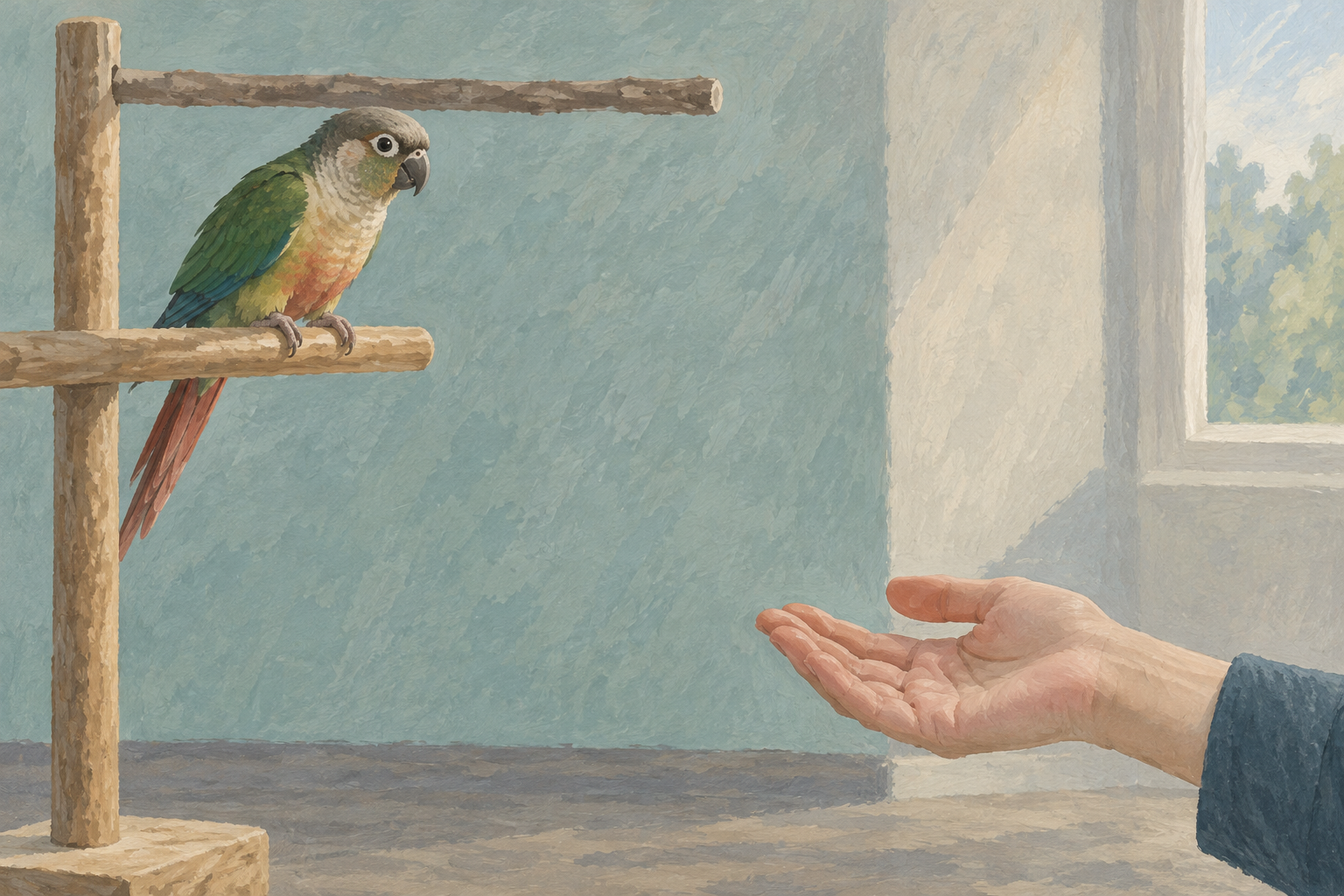
When the bird reaches a forbidden edge, stay factual. Interrupt access calmly, move the bird to a prepared station, and reinforce engagement with an allowed object. Improve the barrier before the next session. Shouting, chasing, cage-banging, or spraying water may add fear or attention without teaching a safe alternative.
Some damage will remain part of living with a bird. Choose sacrificial surfaces, keep valuable objects outside the activity zone, and supervise out-of-cage time closely. World Parrot Trust specifically warns about unsafe household chewing such as electrical cords and window blinds and recommends toys, browse, and supervision as redirection.
Sudden, frantic, repetitive, or self-directed chewing; reduced eating; beak change; or behavior that appears with other signs of illness belongs with an avian veterinarian. A qualified reward-based behavior professional can help when safe management and appropriate outlets do not resolve a serious household pattern.
The closing bell does not turn a bird's beak off. Good care gives that tool legitimate work, protects the places where it must not work, and treats destruction as information—not misconduct.