This guide cannot diagnose a bird or replace veterinary care. If your bird has difficulty breathing, collapses, cannot balance or perch, is bleeding significantly, has experienced trauma or possible poisoning, remains weak on the cage floor, or is deteriorating quickly, contact an avian veterinarian or emergency clinic now. Follow the clinic's instructions rather than trying a home treatment.
Bird illness may begin as a change that is easy to rationalize: less chatter, an unfinished meal, more sleep, or a different posture. Because birds often conceal signs of illness, waiting for an unmistakable crisis can lose valuable time. Your role is not to name the disease. It is to notice meaningful change, call promptly, and give the clinic useful information.
Birds can look “fine” until they do not
In the wild, visible weakness can make an animal vulnerable. Companion birds retain behaviors that may mask illness, and feathers can conceal weight loss or body changes. The MSD Veterinary Manual warns that a bird may appear outwardly normal until illness has advanced.
This is why “he still looks okay” is not a reliable triage rule. A bird can remain on a perch or take a favored treat while something important is changing. A single sign may have several explanations, but clusters, persistence, and departure from the individual bird's normal pattern deserve attention.
When uncertain, call the clinic. Telephone triage by a veterinary team is safer than using an online list to decide that a bird can wait.
Use an existing baseline, not one built during a crisis
A baseline is the ordinary pattern you learn while the bird is well: typical activity, voice, posture, appetite, drinking, droppings, sleep, social responses, and weight trend if your veterinarian recommends home weighing. It makes small changes easier to recognize.
You do not need a complicated tracking system. Brief regular notes are enough. Record what the bird actually eats, not just what was offered. Notice whether droppings have a consistent range of appearance for that diet. Learn where the bird rests and how it usually responds when you enter the room.
Do not delay a call because you lack perfect records. During a concern, write down what changed, when you first noticed it, and whether it is stable, improving, or worsening. That is more useful than trying to create several days of “baseline” while an ill bird waits.
Changes that justify urgent contact
The following groups are prompts to contact an avian veterinarian. They are not a diagnostic checklist, and the absence of one sign does not prove that a bird is well.
Breathing and circulation: Open-mouth breathing when the bird has not just exercised, pronounced tail movement with each breath, wheezing or clicking, repeated stretching of the neck to breathe, blue or very pale tissue, or any obvious respiratory effort requires urgent advice. Move slowly and minimize handling while arranging care; stress can make breathing harder.
Balance, posture, and strength: Falling, inability to perch, repeated loss of balance, marked weakness, seizures, collapse, a sudden head tilt, or staying on the cage floor can indicate a serious problem. A bird that is persistently fluffed, hunched, or unusually sleepy also needs prompt assessment, especially when combined with reduced intake or activity.
Eating, drinking, and weight: Reduced appetite, inability to pick up or swallow food, repeated regurgitation or vomiting, a sudden change in drinking, or an unexpected weight trend warrants a call. Do not assume a full-looking bowl means the bird has eaten; it may contain hulls or discarded pieces. Small birds have limited reserves, so “wait a few days” can be unsafe.
Droppings and elimination: A lasting change in the amount, frequency, color, form, or liquid component of droppings can be important. Fresh foods and diet changes can alter appearance, but that context does not explain every abnormality. Blood, black tar-like material, straining, no droppings, or a major change accompanied by weakness or poor appetite requires urgent veterinary guidance.
Voice, activity, and social behavior: A usually vocal bird becoming quiet, a social bird withdrawing, reduced preening, sleeping at unusual times, irritability, reluctance to move, or loss of interest in routine can be early evidence of illness. These signs are easy to call “mood,” but the MSD Veterinary Manual includes reduced activity and vocalization among changes owners should take seriously.
Eyes, nostrils, beak, feathers, and skin: Discharge, swelling, repeated sneezing, crusting, an eye held closed, facial staining, bleeding, an injured beak, a new lump, a wound, or damaged feathers with skin trauma should be evaluated. Feather changes alone have many possible causes; do not apply oils, sprays, or over-the-counter parasite products without veterinary direction.
Exposure or injury: Treat possible toxin exposure, smoke or fume exposure, burns, animal bites, window or fan strikes, crushing injuries, and significant bleeding as urgent even if the bird initially appears alert. Cats and dogs can cause small punctures that are difficult to see. Tell the clinic exactly what happened and when.
If you are deciding whether a sign is “bad enough,” describe it to the clinic instead. The team can factor in species, size, medical history, and access to emergency care. A website cannot perform that triage.
What to tell the clinic

Have the bird's species, age if known, approximate weight and recent trend, current diet, medical history, medications, and the clinic's prior records ready. Describe the change in observable terms: “she has remained on the cage floor for two hours and did not eat breakfast,” rather than “she seems sad.”
Report breathing changes, appetite, water intake, droppings, vomiting, balance, injuries, and possible exposures. Give the time of onset and whether the problem is worsening. A short video of breathing or movement can help if it can be recorded without approaching or stressing the bird. Ask whether the clinic wants a fresh dropping sample, food packaging, or suspected toxin container brought along.
Prepare transport, not home treatment

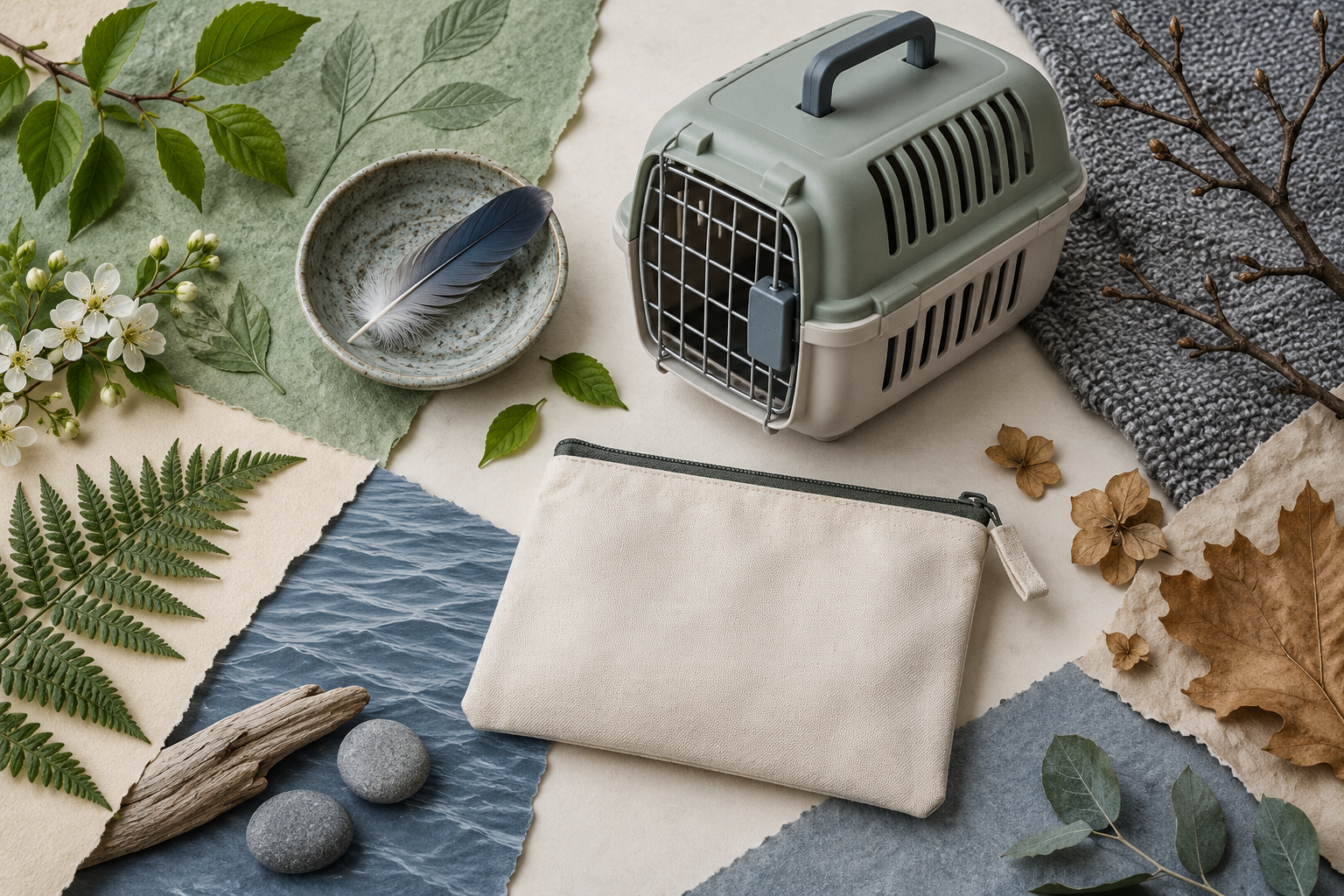
Follow the clinic's instructions for transport. Use a secure, familiar carrier when possible. Keep the setup simple so the bird cannot fall far: the clinic may advise a low perch or no perch for a weak or unsteady bird. Minimize noise, handling, and visual stimulation. Prevent drafts and extremes of temperature without improvising direct heat that could overheat or burn the bird.
Do not force food or water into the beak unless a veterinarian who knows the case gives specific instructions. Aspiration can be fatal. Do not give human medicines, leftover antibiotics, supplements, oils, or remedies recommended for another bird. Do not induce vomiting after a suspected poisoning. These actions can worsen the condition or interfere with treatment.
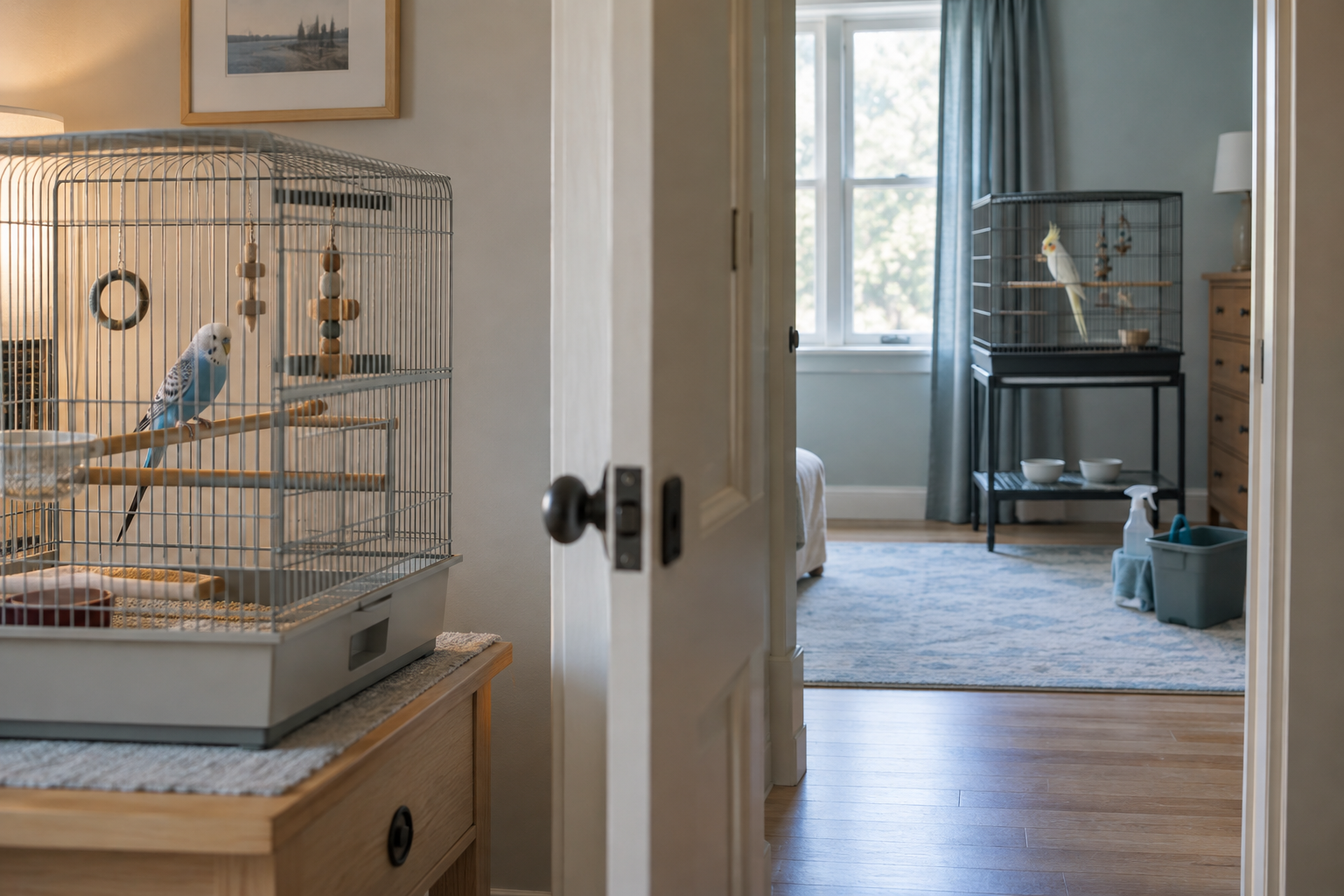
If there are other birds, ask the clinic whether separation is appropriate and how to do it without spreading contamination or adding dangerous stress. Wash hands between care tasks and keep notes about which bird ate or produced which droppings.
Bring the carrier directly to the agreed clinic and tell staff on arrival if the bird is having breathing difficulty or has deteriorated. Avoid opening the carrier in an unsecured waiting area. After examination, request written instructions, medication demonstrations, warning signs, and a clear follow-up plan.
Preparation before illness helps: identify an avian veterinarian, know the after-hours option, maintain a usable carrier, and keep medical and diet information accessible. But when a bird changes, preparation should lead to action—not a longer period of home observation.
You do not need to be certain that a bird is sick before calling. The safest threshold is a meaningful change from normal, an urgent sign, or a concern you cannot confidently explain. Observe carefully, describe precisely, minimize stress, and let an avian veterinary team decide the next step.