The safest introduction begins before the new bird enters the home. Disease exposure, unfamiliar equipment, territorial behavior, and incompatible social preferences cannot be managed by putting two cages side by side on arrival. Health separation comes first; social access comes later.
This guide assumes the household has already decided it can support two birds permanently, including separate housing. It does not prescribe tests, treatment, or one universal quarantine duration. Those decisions depend on species, source, travel history, current regional disease risks, household members, and an avian veterinarian's assessment.
The introduction starts before arrival
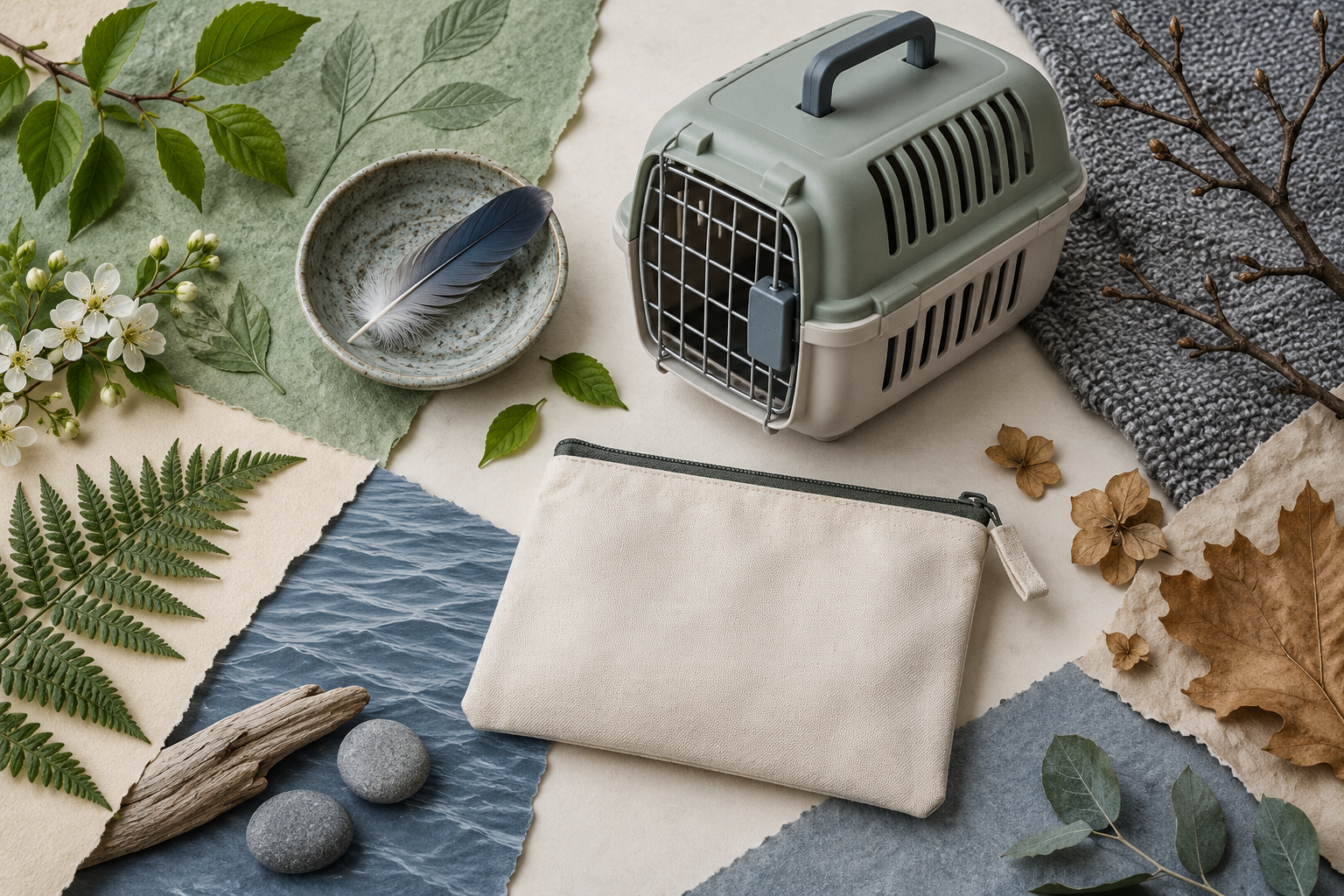
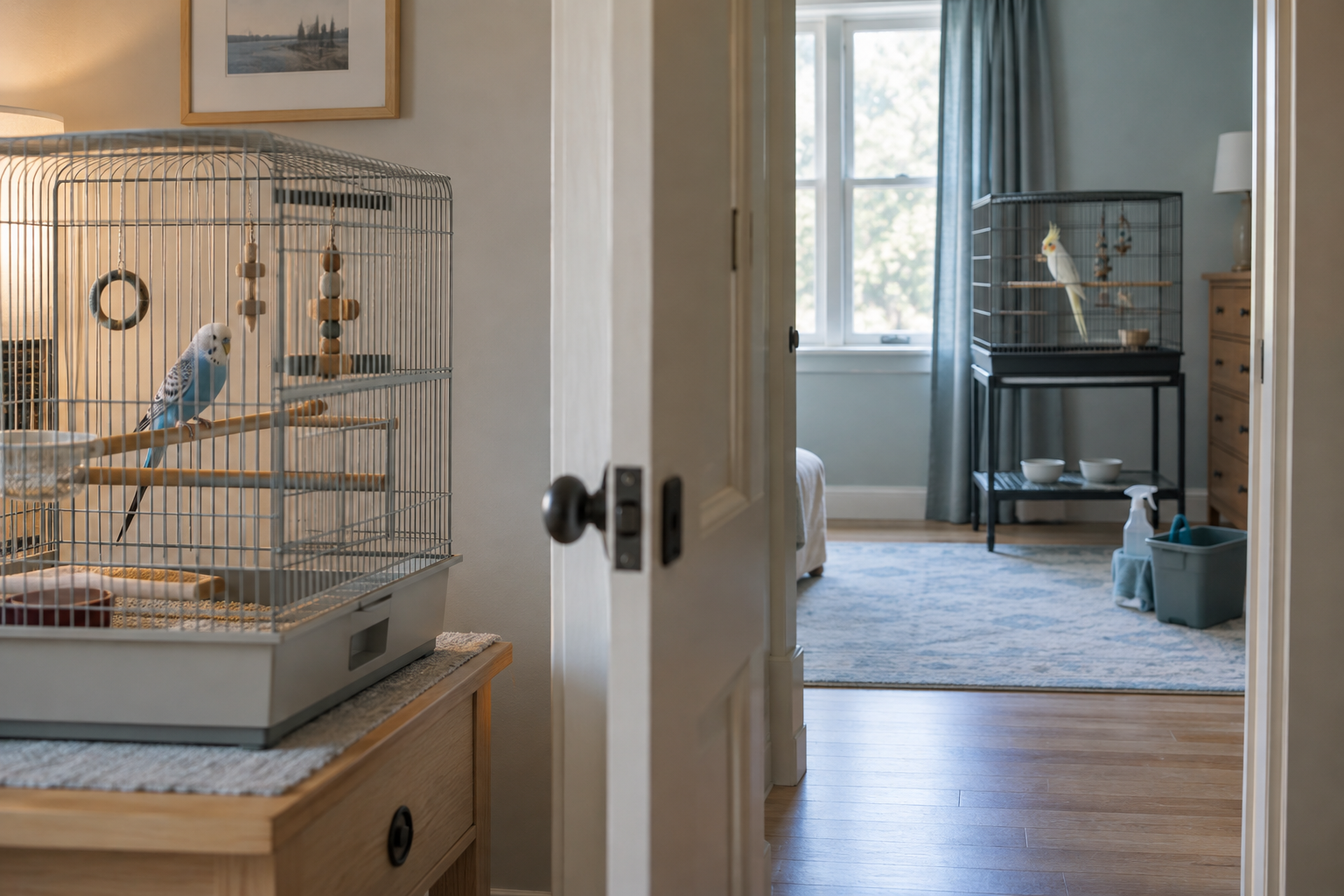
Prepare two complete setups: suitable enclosures, carriers, food and water equipment, perches, enrichment, cleaning supplies, and safe exercise plans. The new bird's setup should be in a separate room where feasible, not a corner of the resident bird's room. Identify how people will move between areas without carrying dirty bowls, paper, dust, or cleaning tools from one group to the other.
Arrange an appointment with an avian veterinarian before arrival or as soon afterward as the clinic advises. Share the new bird's species, age if known, source, previous flock exposure, transport history, diet, medical records, and any recent illness or deaths at the source. Ask what the clinic wants the bird to bring and whether arrival procedures need to change because of local avian disease activity.
The plan must work if the birds never share a cage. If there is only room for one enclosure, or if daily separate exercise is impossible, the household does not yet have a safe introduction plan.
Veterinary quarantine is a plan, not a magic number
Published time recommendations are source-specific. Current CDC pet-bird guidance in the United States says to wait 30 days before introducing a new bird to existing birds and to keep them separated during that period. VCA guidance describes an ideal 30–45-day quarantine in a separate, isolated room. Neither number can evaluate the new bird, interpret testing, or account for a particular exposure. Follow the avian veterinarian's plan and local public- or animal-health advice rather than shortening or extending isolation by guesswork.
Quarantine has several linked parts:
Veterinary evaluation. A physical examination and accurate weight establish a starting point. Testing is not a universal shopping list. VCA's new-bird guidance notes that the need for tests such as chlamydiosis, polyomavirus, avian bornavirus, or circovirus screening depends on examination findings and exposure. Ask which tests are relevant, when samples should be collected, what a result can and cannot rule out, and whether repeat testing or an altered timeline is needed.
Environmental separation. A closed, separate room and separate airspace are preferable where the home and veterinary plan allow. In a small home with shared air circulation, true isolation may not be achievable. Say that plainly to the veterinarian before the new bird arrives; do not treat a curtain, cage cover, or a few feet of distance as equivalent.
Dedicated equipment. Do not share dishes, toys, perches, carriers, cage paper, brushes, towels, or cleaning tools. Label them if necessary. Keep clean supplies from crossing dirty work areas. CDC advises keeping food and water dishes, toys, and cage or perch equipment separate and clean.
Hygiene sequence. Care for the resident bird first, then the new bird, unless the veterinarian gives another protocol. Wash hands with soap and water between groups. Change contaminated clothing or footwear when the setup warrants it. Use cleaning and disinfection products only as directed and safe for birds; never expose birds to fumes. Wet-clean dusty waste rather than sending dried material into the air.
Daily observation. Record appetite, actual food intake, droppings, weight when advised, activity, breathing, posture, voice, and any discharge. A bird can carry some infectious agents without looking obviously ill, so normal appearance does not cancel the plan. Contact the veterinarian promptly about concerning change, and ask whether the quarantine clock or tests need reassessment.
Quarantine ends when the veterinary and household plan says the health phase is complete—not because the birds are calling to each other or because managing two rooms has become inconvenient.
Awareness before access

During health separation, the birds may hear one another through doors or ventilation. Do not move cages closer, exchange objects, or create deliberate contact unless the veterinarian says the infection-control plan permits it. The goal is not social progress during medical quarantine.
After veterinary clearance, begin with indirect awareness. Keep each bird in its secure home while allowing controlled exposure to ordinary sounds from the other area. Reward calm behavior, continue each bird's normal routine, and preserve places to retreat. A bird that becomes silent, frantic, aggressive, or unable to eat in the new context needs more distance or an easier step.
Next, place secure cages in visual range with substantial distance between them. Do not position them so one bird can land on the other's cage or bite toes through bars. Observe from far enough away that human attention does not distort every response. Calm feeding, preening, play, and ordinary movement are more useful than one dramatic greeting.
Reduce distance gradually over multiple sessions only if both birds remain comfortable. Excited displays can resemble friendliness or conflict, so do not interpret one posture in isolation. If either bird repeatedly avoids the exposed side, charges the bars, stops eating, or cannot settle, increase distance and reassess.
Short neutral-space sessions

Direct meetings belong in a bird-safe, neutral area away from both cages. Have one capable adult for each bird where possible, along with separate stands, multiple food stations, and a rehearsed way to return each bird to its own enclosure. Doors and windows must be secured, fans off, hazards removed, and other pets excluded.
Start with distance and a short session. RSPCA guidance suggests neutral space, separate food containers, close supervision, and brief initial meetings. Treat any published time as an example, not a quota. End while both birds are still able to disengage rather than waiting for a confrontation.
Watch sequences, not isolated gestures. Can each bird eat, preen, explore, or turn away? Does one repeatedly pursue while the other retreats? Are access to stands and food balanced? Lunging, chasing, pinning, biting, blocking escape, or a bird becoming immobile or frantic means the session should end safely. Do not let birds “fight it out.”
Never hold one bird near the other to force contact. Do not punish alarm calls or defensive behavior. Increase distance, return to a previous stage, and seek help from an avian veterinarian or qualified bird-behavior professional if interactions remain difficult. A sudden behavior change also deserves health review.
Three valid long-term outcomes
Compatible proximity means the birds repeatedly remain relaxed near one another and may choose shared supervised activities. It does not automatically authorize a shared cage. Continue duplicate resources, monitor access, and keep both cages available.
Neutral parallel living means the birds tolerate one another at a distance but do not seek close contact. They may use separate stands or take turns in shared rooms. This is a successful outcome when both birds can behave normally and receive complete care.
Incompatible separate living means close access produces persistent stress or danger. The birds may need different rooms, separate exercise times, and no direct contact. VCA and RSPCA guidance both acknowledge that some birds never accept one another and may require separate living areas.
Reassess after maturity, illness, reproductive behavior, environmental changes, or any conflict. A previously calm pair can need more space later. Maintain carriers, records, and a separation plan even if the relationship appears stable.
Quarantine reduces risk; it does not certify a bird as disease-free. Gradual introductions create information; they do not manufacture compatibility. Success is not two birds sharing one cage. Success is a process that protects health, gives both birds control over distance, and leaves the household able to support whichever relationship actually develops.