“Natural” is three different claims
“Natural feeding” sounds like one idea, but it usually combines three claims that need separate evidence.
The first concerns origin: whether an ingredient appears in a wild diet or resembles a minimally processed food. The second concerns behavior: whether the bird can search, choose, manipulate, husk, tear, carry, or work to obtain food. The third concerns nutritional adequacy: whether the food actually consumed, over time, meets the needs of this species and individual.
None of those claims proves the other two. A wild-origin ingredient can be offered in a bowl that provides no foraging opportunity. A carefully designed puzzle can deliver a veterinarian-approved formulated food. A varied-looking plate can invite rich behavior while remaining nutritionally incomplete. Conversely, a diet can meet a nutritional target yet give the bird almost nothing to do.
The useful editorial position is not that “natural” is meaningless. It is that the word becomes useful only after we say which meaning we intend. Pet-bird feeding should preserve species-appropriate behavior wherever it can, while nutritional adequacy remains an evidence question rather than an aesthetic judgment.
A wild diet is not a captive recipe
Wild diets are embedded in environments. Food availability changes with season, weather, location, plant stage, and competition. Obtaining it may involve flight, climbing, searching, handling, social learning, and the freedom to reject one source and move to another. The energy spent finding food and the range of possible foods are part of the context.
A captive bowl removes much of that context. Copying the name of a wild food does not copy its abundance, nutrient profile at a particular stage, contamination risk, energy cost, or place within a broader seasonal pattern. It also does not recreate the choices available to a free-ranging bird. The phrase “they eat this in nature” therefore supports curiosity, not a complete menu.
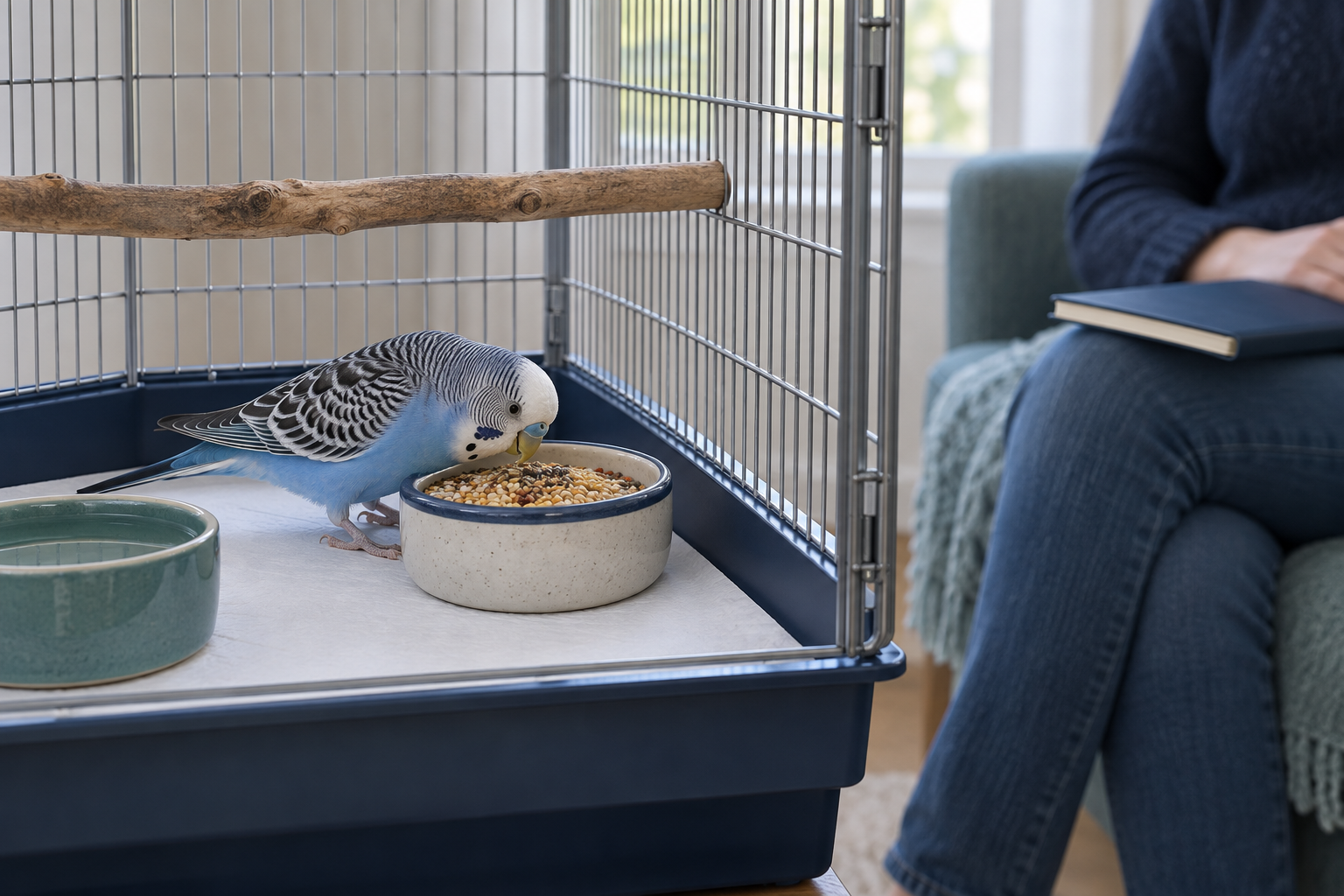
Captivity changes risk in both directions. Companion birds are protected from predators, trapping, violent weather, and periods of scarcity. They may also move less, face constant access to preferred high-energy foods, and select favored items from a mixture while leaving the rest. The MSD Veterinary Manual emphasizes the gap between food offered and food actually consumed; a bowl containing several categories is not evidence that the bird ate a balanced combination.
Romanticizing effort can be harmful too. Wild birds forage because survival requires it, not because hunger is automatically enriching. Enrichment should create achievable work, choice, and movement without manufacturing deprivation. A bird should not have to solve a difficult device to reach all food, and a new foraging system should not make intake impossible to verify.
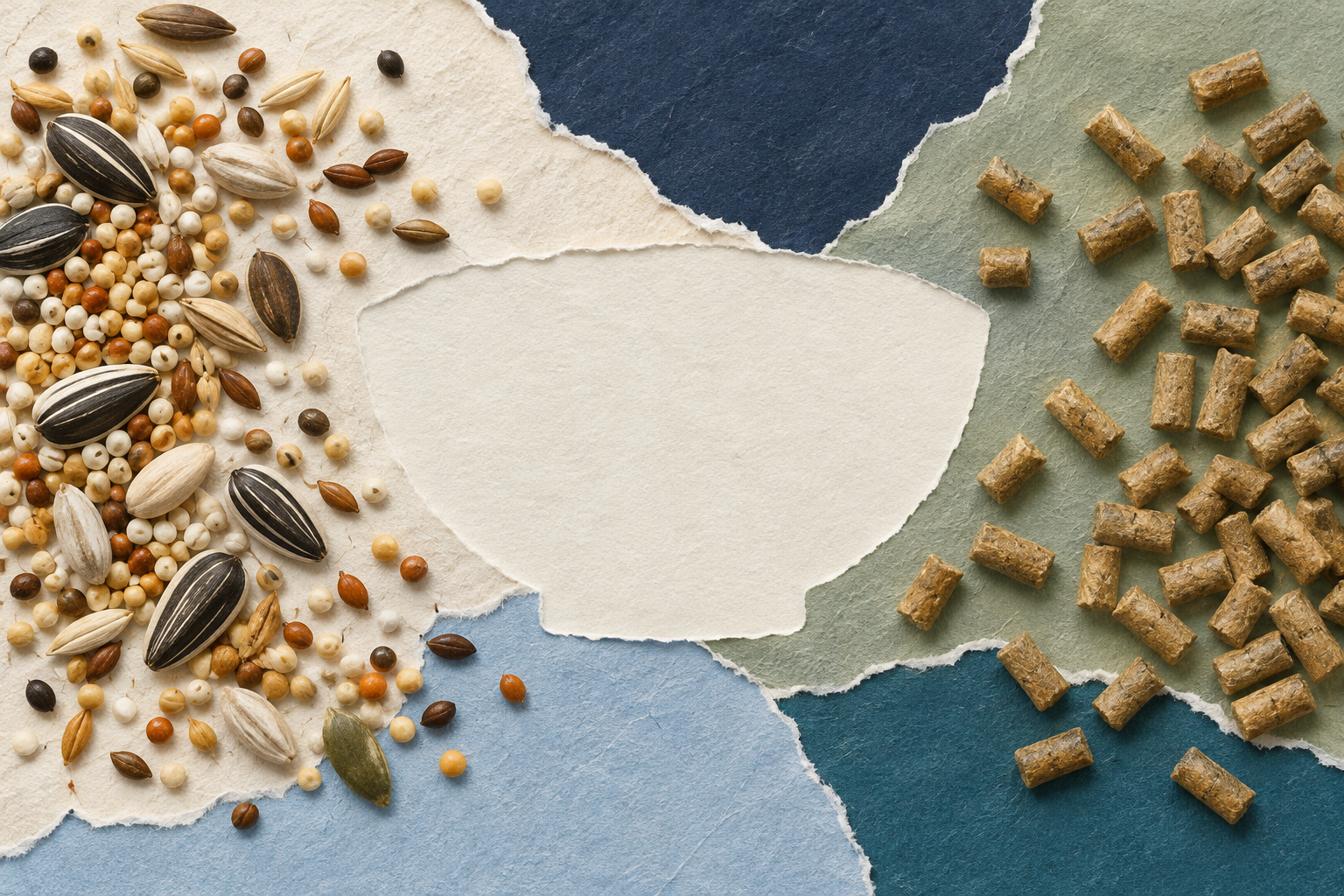
This is why the question cannot collapse into a familiar seeds-versus-pellets argument. Ingredient categories matter, but this article's point is prior to that comparison: neither resemblance to the wild nor the word “complete” tells us what behavior occurred, what the individual consumed, or whether the whole plan is appropriate.
Keep the behavior, not the nutritional guesswork
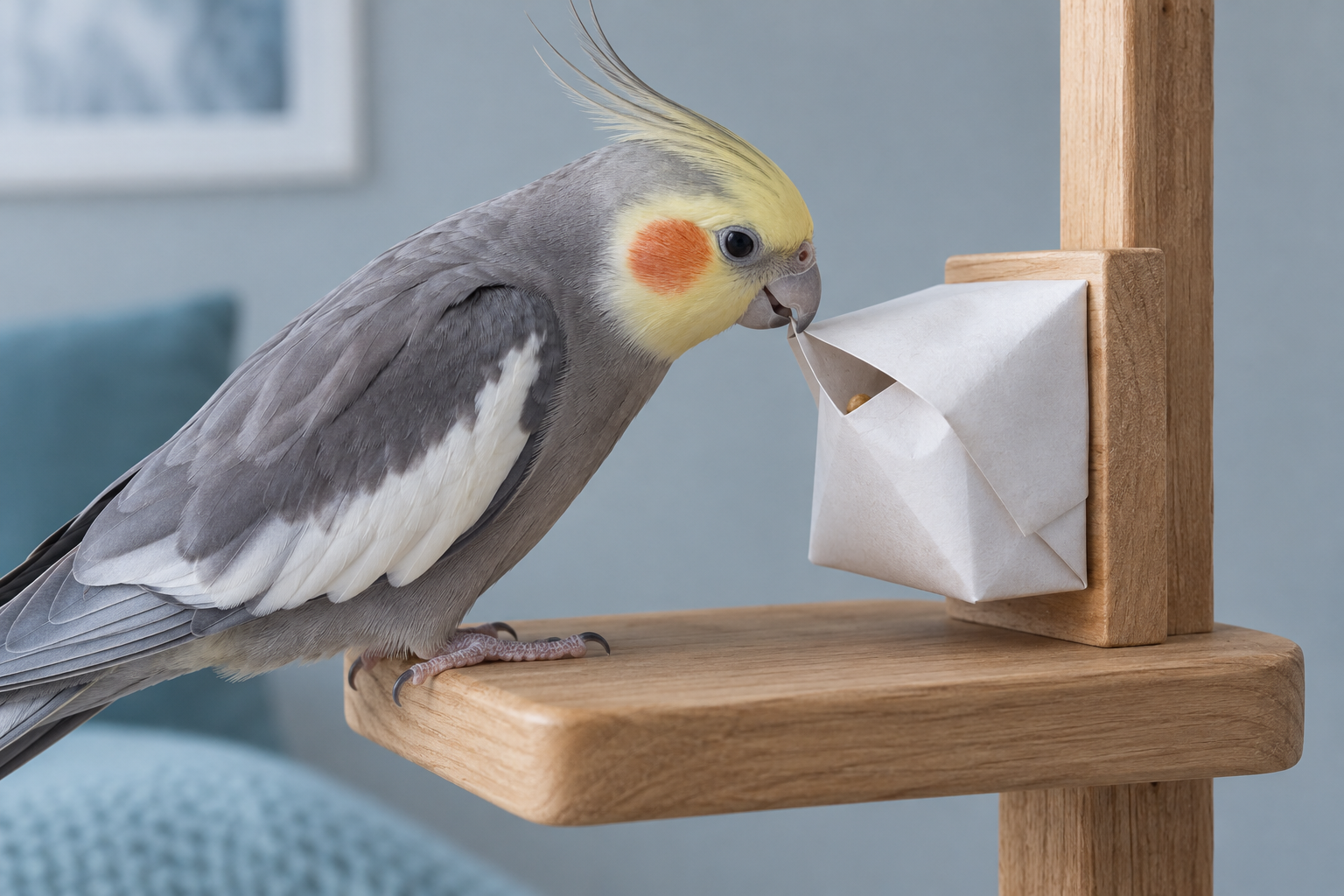
The strongest part of natural-feeding language is its attention to what a bird does. The Association of Avian Veterinarians and the World Parrot Trust both treat foraging as an important part of companion-parrot care. RSPCA enrichment guidance similarly recommends giving birds opportunities to search and work for food.
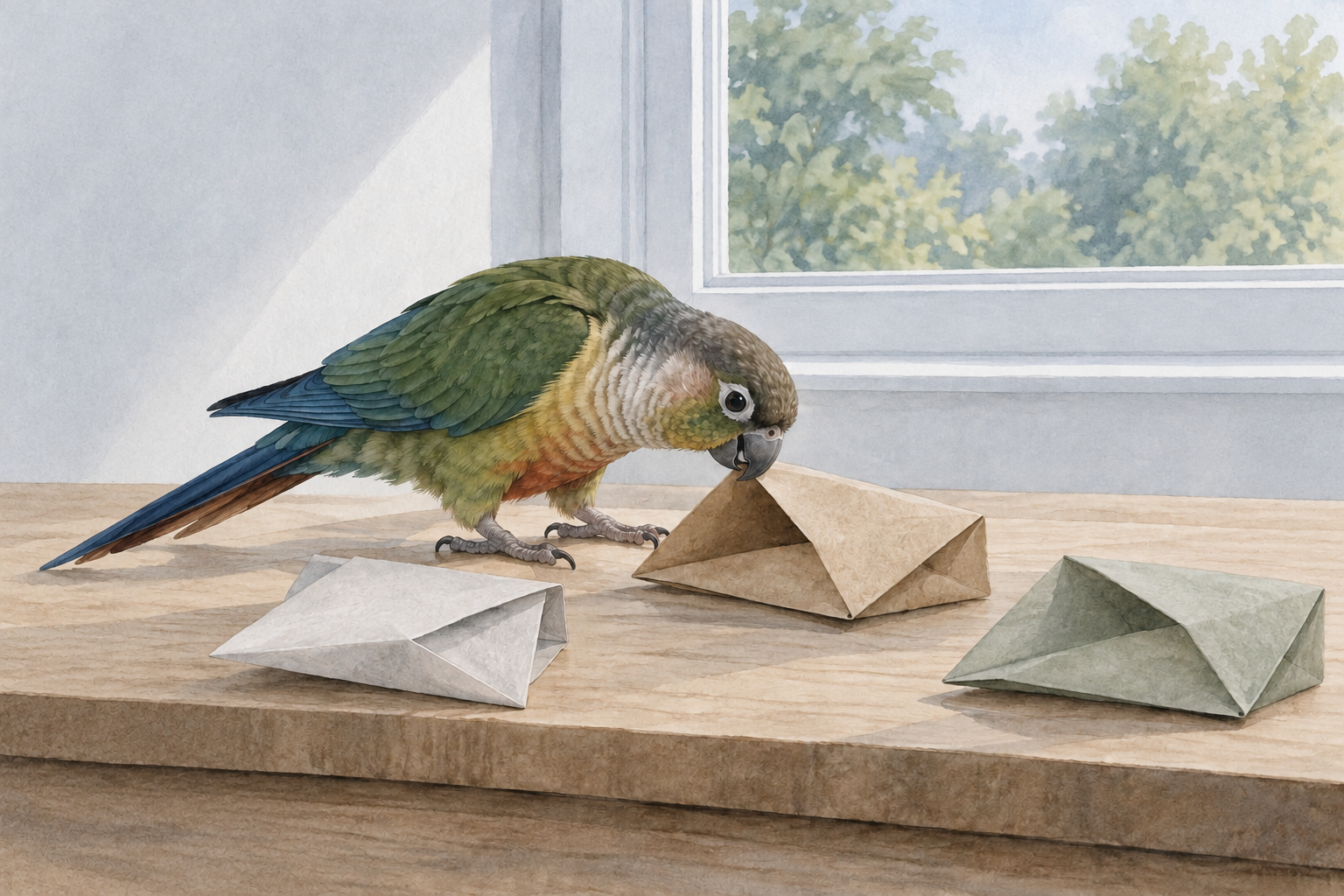
Those goals can sit inside a species- and veterinarian-informed feeding plan. A portion of an already appropriate daily food can be divided among several accessible locations, encouraging movement without adding calories. A familiar food can begin partly visible in clean paper or a simple feeder, then become slightly more challenging after the bird uses it confidently. Different safe textures can invite tearing, holding, or extracting while the nutritional role of each food remains unchanged.
Choice can also be real without becoming unlimited selection. Offering two safe foraging locations or two appropriate vegetables creates agency; filling a bowl with nutritionally unequal favorites and assuming the bird will self-balance does not. Observe what disappears, what is discarded, and what ends up under the grate. “Offered” belongs in the plan, but “consumed” is the more important record.
Behavioral variety should not outrun safety. Materials must be suitable for the species and individual, free of hazardous fasteners or ingestible components, and checked as they are destroyed. Fresh or moist foods require timely removal and clean contact surfaces. Multi-bird households may need more than one station so a confident bird cannot monopolize access. Birds that are fearful of novelty need gradual introduction rather than a dramatic cage redesign.
Consider two examples. In the first, a parrot receives its ordinary formulated food in three easy, clean stations that require short climbs. The behavioral goal is movement and searching; the nutrition source has not been reinvented. In the second, a bird handles a veterinarian-approved fresh item presented in a safe clip and later receives the rest of its planned diet normally. Texture and manipulation are enriched, but the fresh item is not declared nutritionally complete because it looks botanical.
Health changes, diet conversion, weight concerns, young birds, breeding birds, and species with specialized diets require individualized veterinary direction. The MSD Veterinary Manual notes that exact nutritional needs remain incompletely known for many species. That uncertainty is a reason for professional context and careful records—not a license to replace evidence with a photograph of the wild.
A better meaning of natural feeding
Natural feeding should mean: create safe opportunities for species-appropriate feeding behavior within a nutritionally supported plan, then observe what the bird actually does and eats.
That definition can be tested with five questions. Is the plan appropriate for the species and the individual's health? Which foods supply the nutritional foundation, and what evidence supports that role? What searching, movement, manipulation, choice, or social opportunity does the presentation create? Can the caregiver verify intake and hygiene? Which decisions need an avian veterinarian rather than an internet trend?
The answers will vary. A budgie scattering food across a clean, controlled surface does not have the same feeding ecology or household constraints as a large parrot opening a sturdy puzzle. A lorikeet's specialized diet cannot be inferred from general parrot advice. A bird recovering from illness may need easy access rather than added work. “Natural” should adapt to those realities instead of overruling them.
This approach also avoids two false choices. It does not require declaring every commercial food ideal, and it does not shame carefully planned fresh or home-prepared components. It asks a narrower, more demanding question: what supports adequacy, and what supports behavior? When one element does both, excellent. When they come from different parts of the plan, name that honestly.
The wild remains a source of questions about how birds move, choose, and engage—not a recipe card. The best captive plan cannot reproduce a whole ecosystem. It can, however, refuse the empty-bowl version of convenience: nutritionally thoughtful food presented in a life that still allows a bird to behave like one.