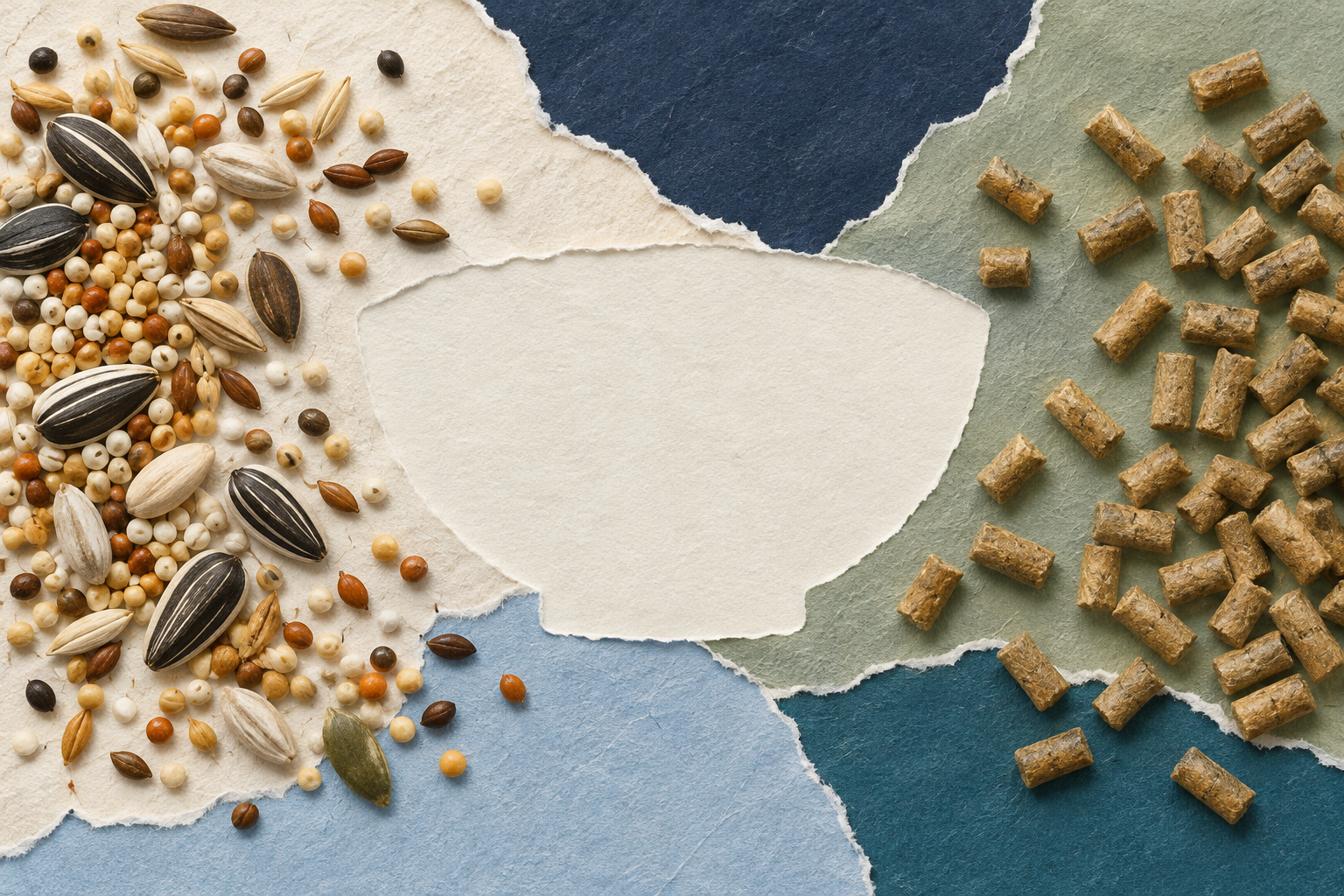
“Seeds are natural” and “pellets are complete” sound like opposite answers. Neither is a complete feeding plan. A seed mix is a category containing ingredients a bird may sort selectively. A pellet is a manufactured formulation whose suitability still depends on its recipe, the species, life stage, health, storage, and whether the bird actually eats it.
The useful comparison is not which word wins. It is what each food can contribute inside a species-appropriate diet developed with an avian veterinarian. For many parrots, an all-seed diet creates well-documented nutritional problems. That does not make every pellet right for every bird, nor does it remove the behavioral value that carefully selected seeds can have.
The false choice begins with missing context
Companion birds do not share one universal menu. MSD Veterinary Manual notes that psittacine diets vary by species and that nectar-feeding lories and lorikeets need specialized food. Association of Avian Veterinarians guidance also identifies a caveat for small parrot species, including budgies, parrotlets, lovebirds, and cockatiels, rather than treating a pellet-only plan as universal.
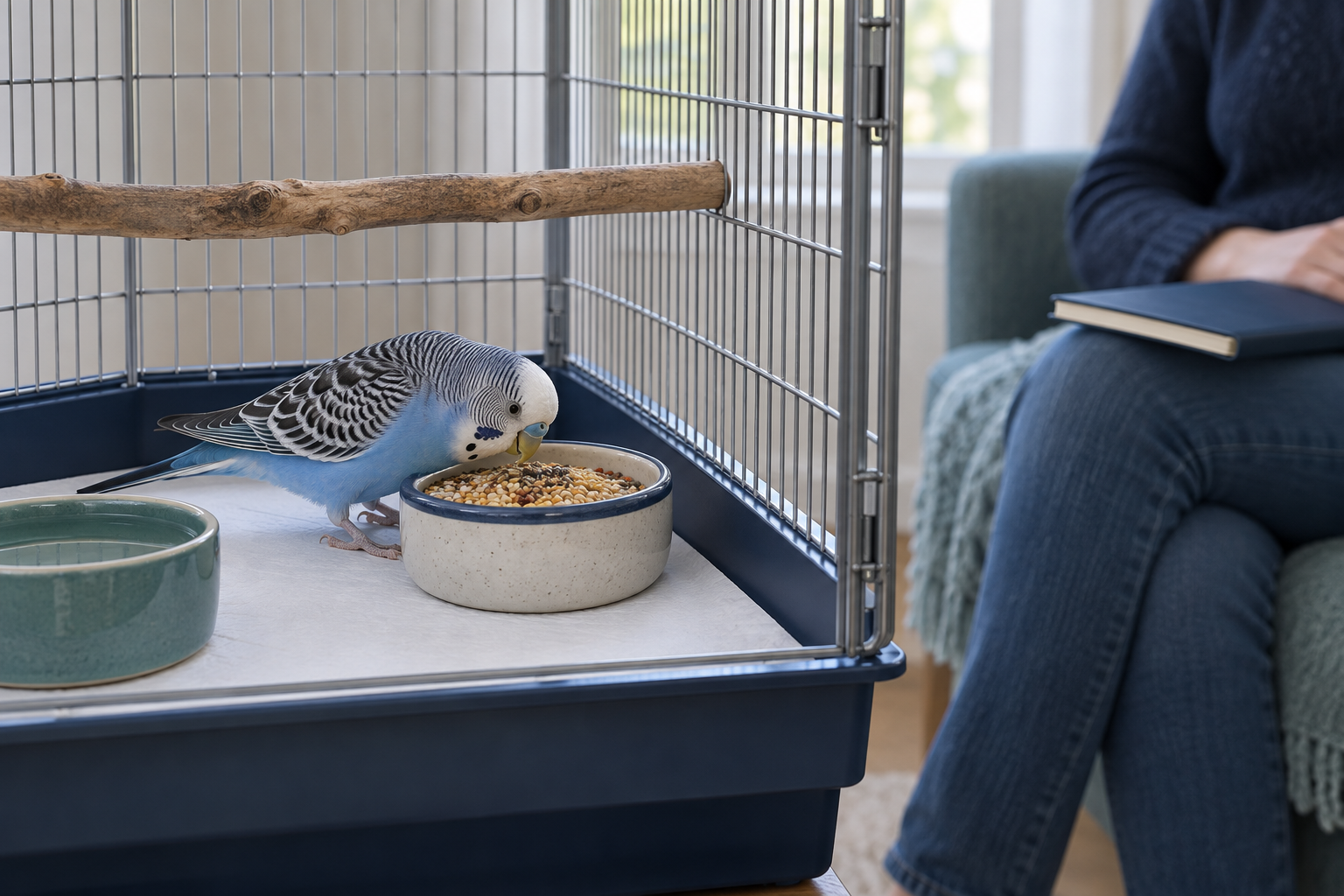
Context begins with five facts: the exact species, current body condition and health, what is offered, what is consumed, and why a food is being used. A bowl containing seeds and pellets does not prove balanced intake. Hulls, discarded pieces, selective eating, and food hidden elsewhere can make the offered diet very different from the eaten diet.
This article compares roles and limitations. It does not prescribe percentages, interpret a brand label, or replace a veterinarian's assessment.
Seed mixes: value and vulnerabilities
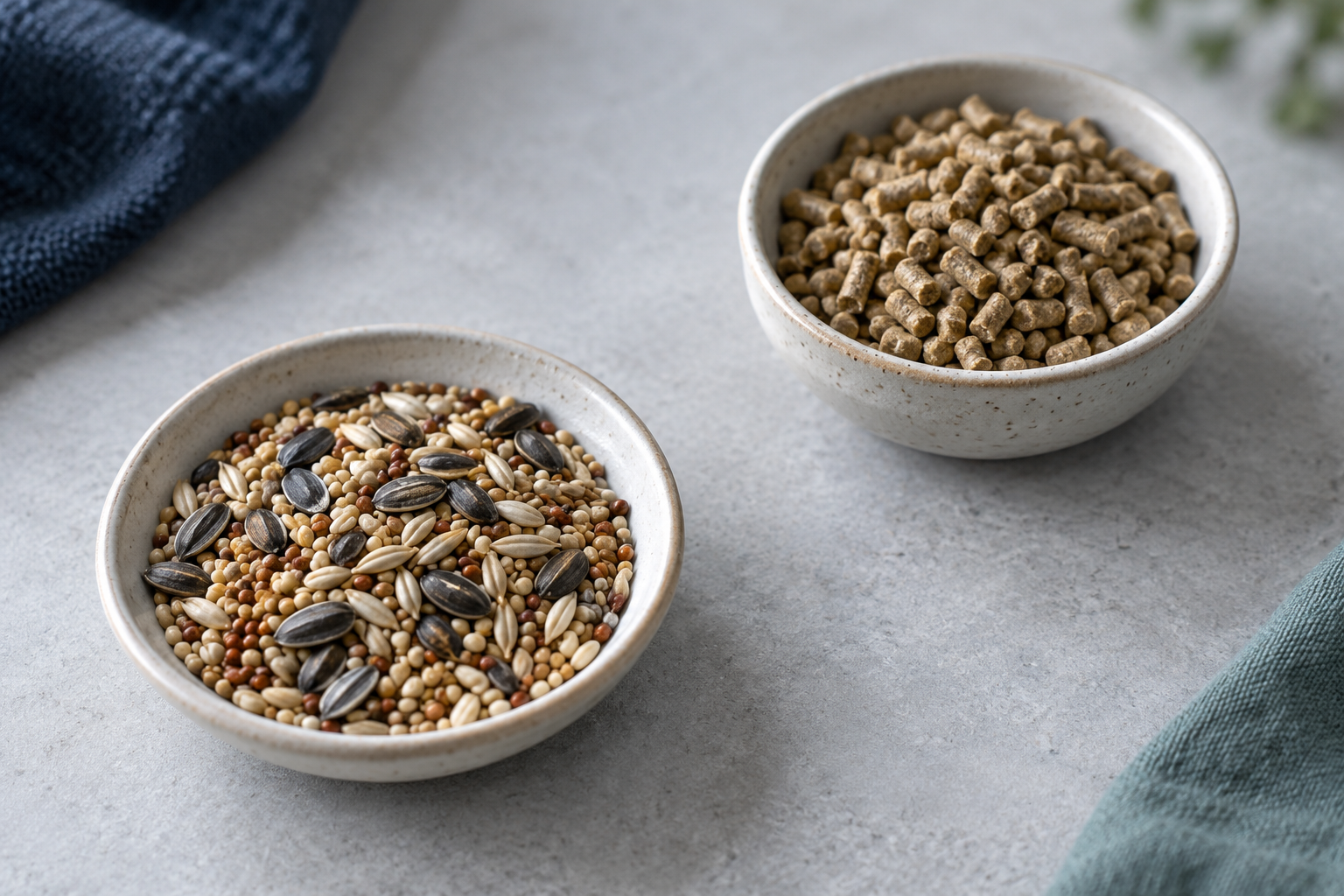
Seeds are familiar, palatable, and easy to separate into small reinforcers. A measured portion can support training or a foraging activity by making the bird search, manipulate, and move. Different seed shapes may add texture and behavioral interest. Those are legitimate uses.
The nutritional problem appears when a loose mix becomes the default diet, especially when the bird chooses preferred high-energy items. MSD Veterinary Manual describes strict seed diets for parrots as deficient in important nutrients including vitamin A, calcium, and particular amino acids. It also notes that selective “cafeteria-style” feeding can produce an unbalanced intake even when other foods are technically present.
Not every seed mix is identical, but variation is part of the difficulty. The ingredient proportions can differ, and the bird can change them again by eating only selected components. Fortification on a hull may be discarded when a parrot removes that hull. Storage matters too: old, damp, or improperly stored seed may deteriorate or support mold.
Energy density is another practical concern. Seeds and nuts can deliver substantial energy in small amounts, which may be useful for a very specific bird but can work against a sedentary bird's needs. That assessment belongs with an avian veterinarian, not a slogan.
Seeds therefore work best when their job is named: a measured diet component for a species and individual that needs it, a high-value training reinforcer, or part of a controlled foraging opportunity. “Natural” does not establish completeness. Wild birds encounter diverse foods, seasonal change, movement, and substantial foraging effort; a captive bowl of favorite seeds does not recreate that system.
Formulated pellets: consistency and limits
A formulated pellet combines ground ingredients and added nutrients so a bird cannot simply remove one visible seed and leave the rest. This can make nutrient delivery more consistent than a loose mix. MSD Veterinary Manual credits pelleted and extruded diets with improving nutritional intake and health in parrots, while also stating that formulations differ in quality and must be evaluated individually.
Consistency is only useful if the product fits the bird and is consumed in an appropriate amount. Pellet size and hardness may affect acceptance. A product intended for maintenance is not automatically appropriate for growth, reproduction, illness, or a species with specialized feeding biology. Added vitamins do not justify adding more supplements; excessive supplementation can be harmful, especially when a formulated food already supplies those nutrients.
Pellets can also reduce some feeding behaviors if every meal arrives as identical pieces in one open bowl. That is not an argument against formulation. It is a reminder that nutritional delivery and behavioral opportunity are different design problems. A suitable formulated food can be placed in multiple stations or simple foraging devices when doing so does not obscure intake. Fresh foods and safe manipulable items can add texture and choice under a broader feeding plan.
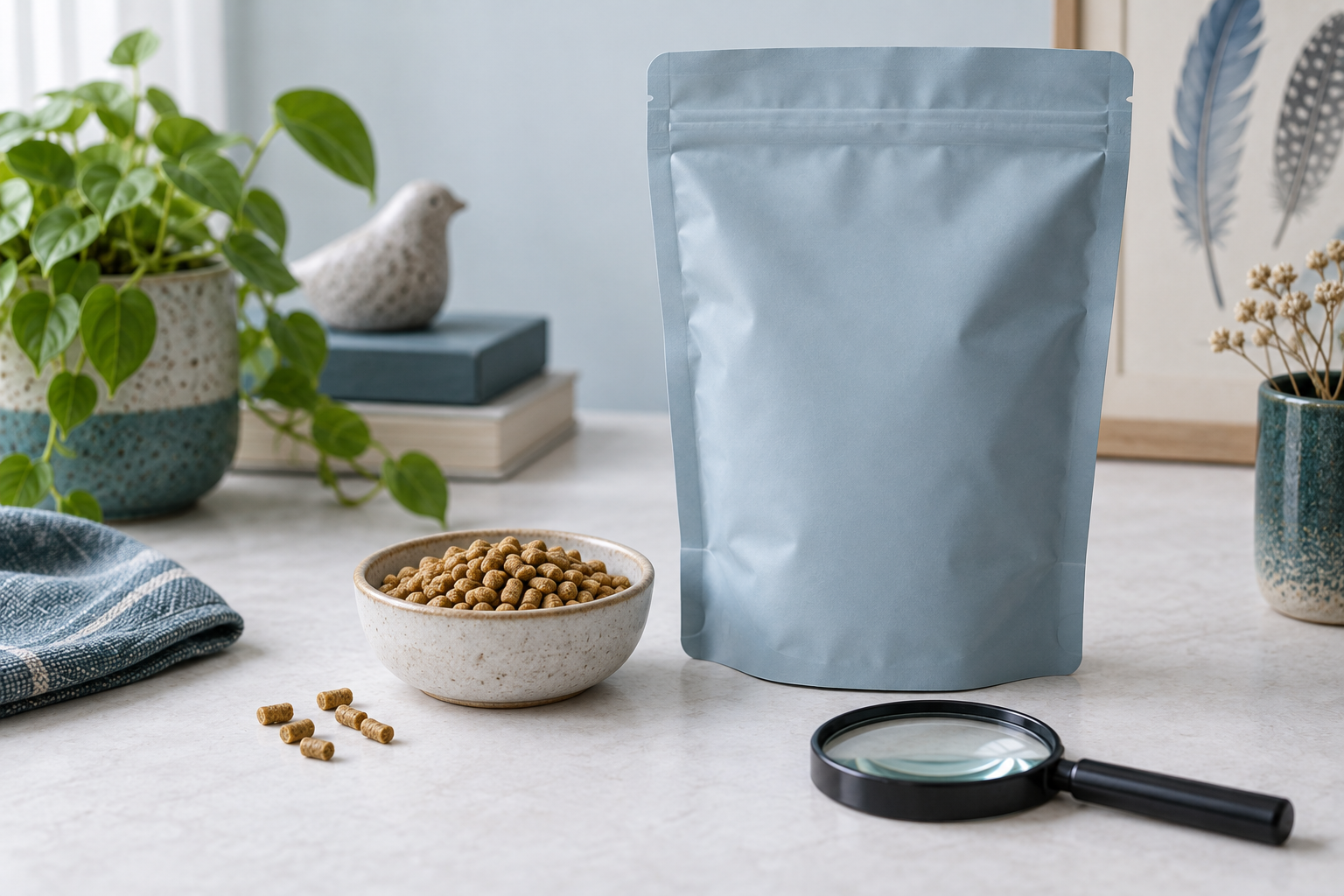
The word “complete” on packaging should not end the investigation. Ingredient order, guaranteed analysis, intended species, life stage, storage directions, and manufacturer evidence require their own label review. A veterinarian can help interpret those details in relation to the bird rather than relying on front-of-bag claims.
How each can fit a whole diet
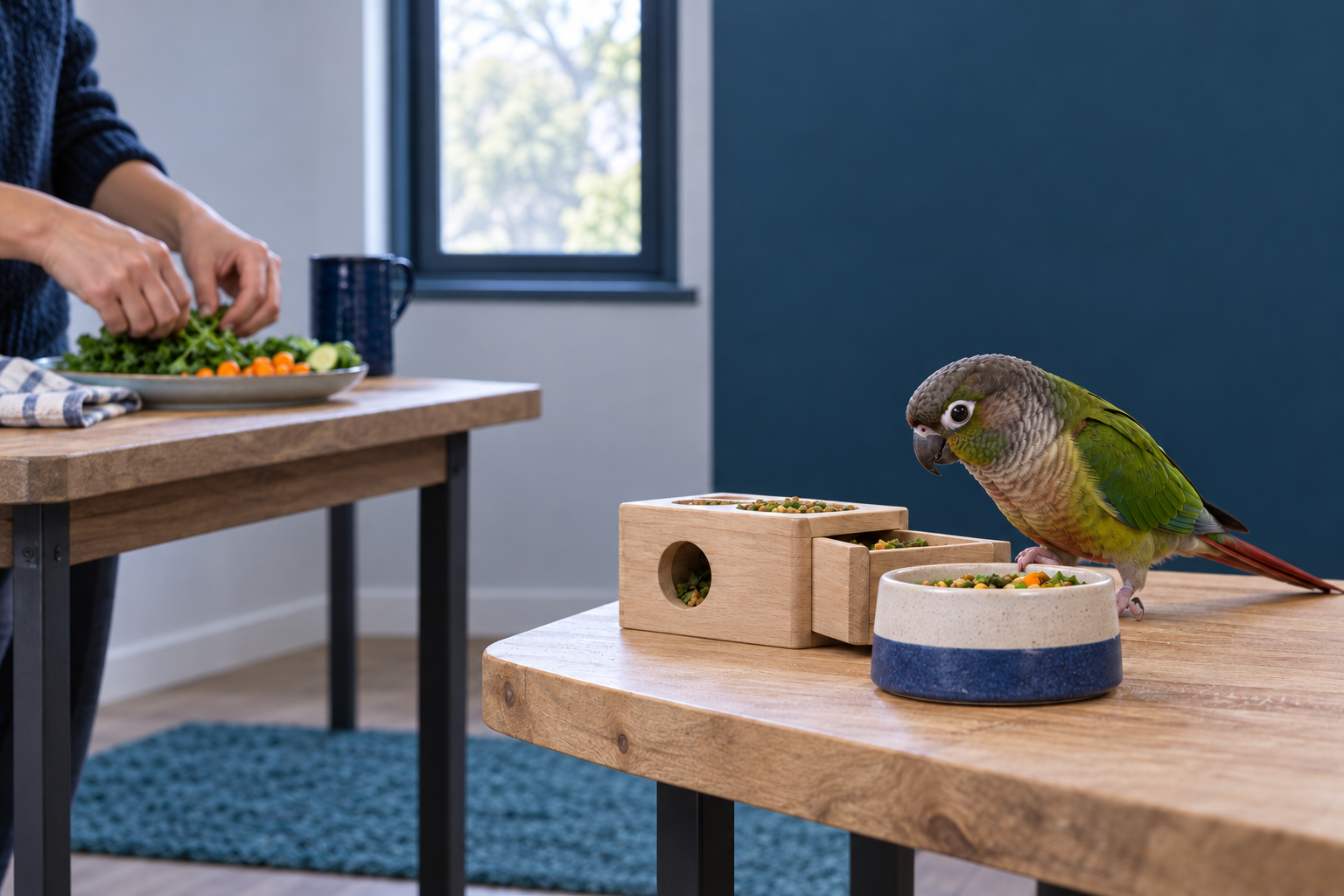
Consider two hypothetical patterns. They illustrate roles, not portions or prescriptions.
Pattern A: a healthy adult parrot eating an appropriate formulation. The pellet provides a consistent nutritional base selected with an avian veterinarian. Fresh produce and other suitable foods add variety. Small, measured seeds are reserved for training and easy foraging, so their behavioral value remains high without letting the bird rebuild an all-seed diet through selection.
Pattern B: a small parrot whose plan intentionally includes both categories. The veterinarian recommends an appropriate formulated food plus a measured seed component and suitable fresh foods. The caregiver offers categories in a way that makes intake observable rather than filling one bowl indefinitely. Body weight, droppings, appetite, and food waste are tracked as trends, and the plan is reviewed if consumption changes.
Neither pattern says that mixing foods in one dish is automatically balanced. If a bird removes only the seeds, the pellet's presence is irrelevant. If a bird eats only pellets that are wrong for its species or condition, formulation alone does not solve the mismatch.
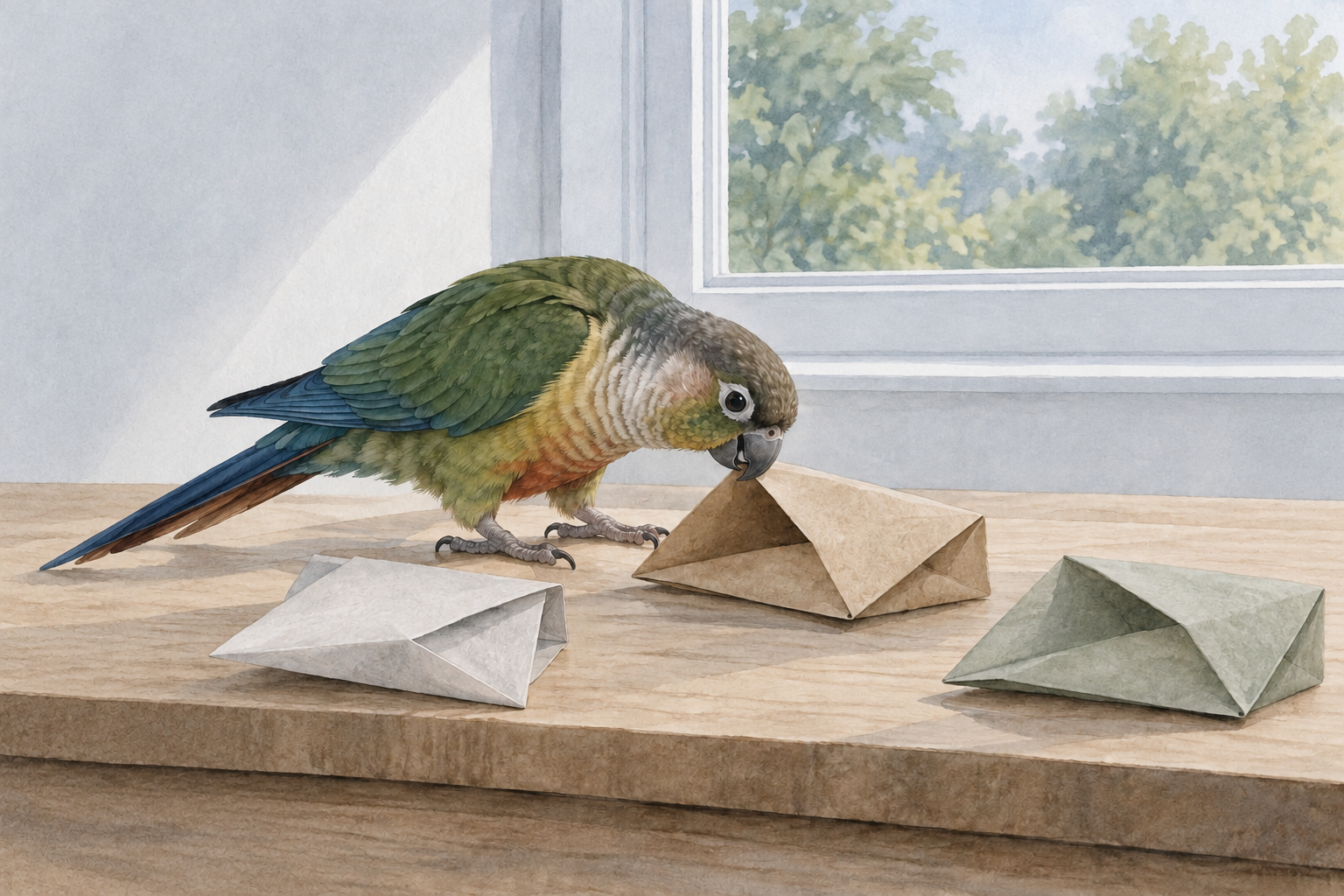
Behavior can be protected in either pattern. A few seeds can be hidden in paper parcels, placed in a shallow search tray, or delivered during training. Pellets can be divided among safe, easy foraging stations. Difficulty should increase only while the bird continues to find and consume enough food; feeding should never become a puzzle that conceals inadequate intake.
Questions that resolve more than slogans
Take a written food record to an avian veterinarian and ask:
- What is known about this species' nutritional requirements and exceptions?
- Is the current body condition or medical history relevant to fat, protein, minerals, or energy density?
- Which foods does the bird actually swallow, and which are discarded?
- Is the formulated product intended for this species, life stage, and health status?
- What role, if any, should measured seeds play in meals, foraging, or training?
- How should weight, droppings, appetite, and waste be monitored if the plan changes?
- Are supplements unnecessary or potentially excessive with the chosen formulation?
If a bird currently eats mainly seed, do not abruptly remove familiar food or use hunger to force conversion. The transition process needs its own gradual, monitored plan. A bird that eats less, loses weight, produces fewer droppings, or seems unwell needs prompt veterinary guidance rather than a tougher schedule.
Seeds and pellets are tools, not rival belief systems. Seeds can carry behavioral value and, for some birds, an intentional dietary role; they are unreliable as an unrestricted, selectable complete diet for parrots. Pellets can improve consistency; they are not interchangeable, universally suitable, or self-validating. The strongest plan names the purpose of each food, measures what the bird consumes, and keeps species and individual health at the center.