Do not begin a seed-to-pellet transition by removing every familiar food. A bird can sort a mixed bowl, crush pellets without swallowing them, or refuse an unfamiliar item while appearing to investigate it. The safe goal is observable intake and a veterinarian-approved diet—not winning a contest against the bird or meeting a fixed deadline.
This process is most relevant to companion parrots for which a formulated food is appropriate. Pellets are not the correct foundation for every bird species or medical condition. Before changing the diet of a newly acquired, underweight, unwell, breeding, or specialized feeder, consult an avian veterinarian.
Do not start by taking food away
The MSD Veterinary Manual advises against beginning a conversion while a bird is ill and emphasizes the problem of selective eating. LafeberVet's conversion guidance likewise recommends a veterinary assessment of health, weight, and body condition before the change, followed by close monitoring of weight and droppings.
Fasting, forced feeding, and abrupt withdrawal are not beginner conversion methods. A bird that does not recognize pellets as food may simply eat too little. Small birds can deteriorate quickly, and feathers can hide loss of body condition. If intake is uncertain, preserve access to the familiar diet and call the clinic.
Define the endpoint with the veterinarian. It may be a formulated base plus species-appropriate fresh foods and measured seed, not pellet-only feeding. The bird's species, current condition, actual intake, and laboratory or examination findings can all change the plan.
Checkpoint zero: establish a baseline
Before offering a new routine, collect information for several ordinary days unless the veterinarian advises otherwise:
- the exact foods, brands, and amounts offered;
- what is swallowed, discarded, or left as hulls;
- the bird's gram weight using a safe, consistent method approved by the clinic;
- usual droppings, activity, voice, and appetite;
- medications, recent illness, and reproductive behavior;
- the avian clinic and after-hours contact details.
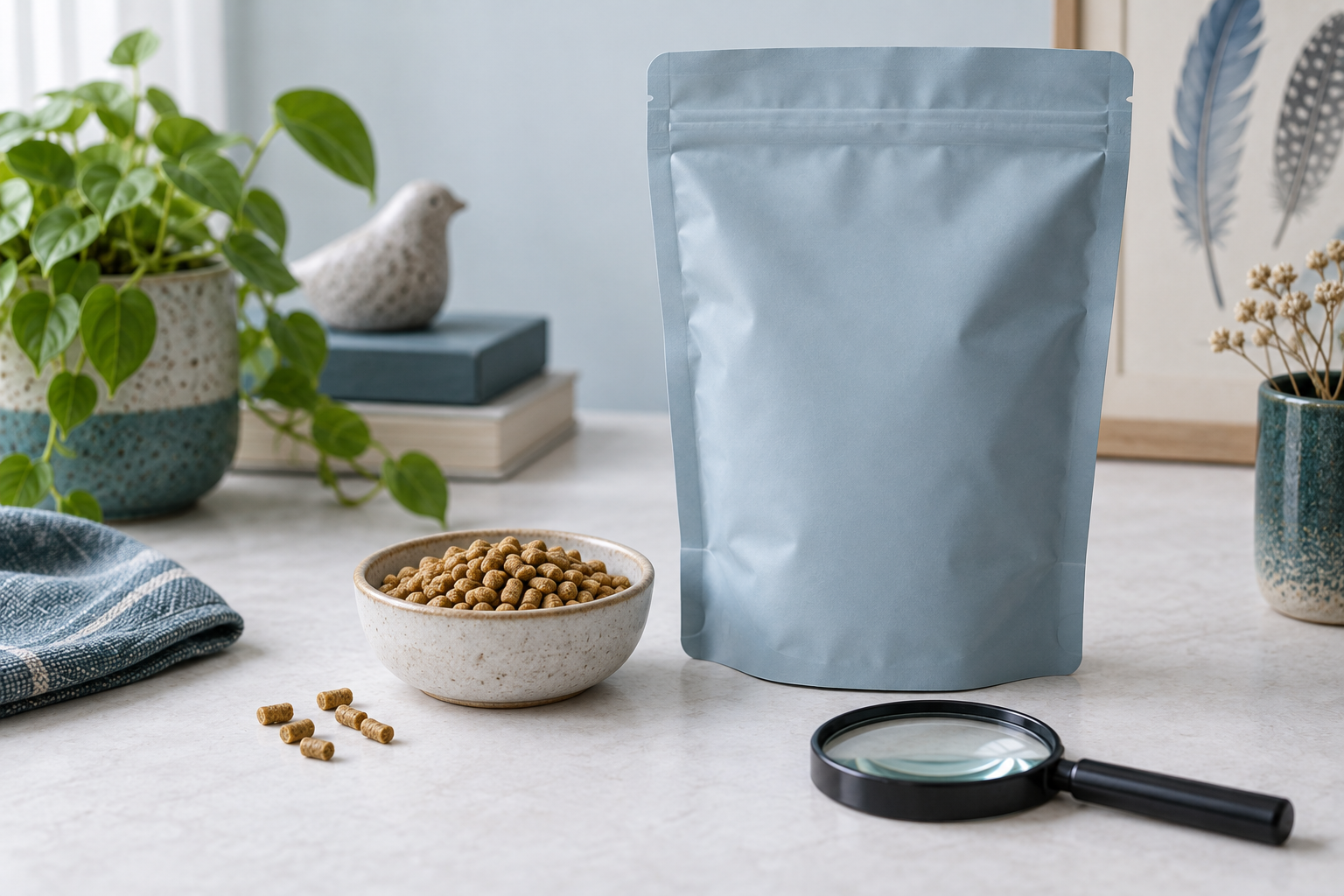
Ask the veterinarian which pellet type and size are appropriate, how often to weigh, what change is concerning for this individual, and whether any health condition makes conversion unsuitable. Do not copy another bird's numerical threshold. The professional plan should tell you when to pause and when to seek urgent care.
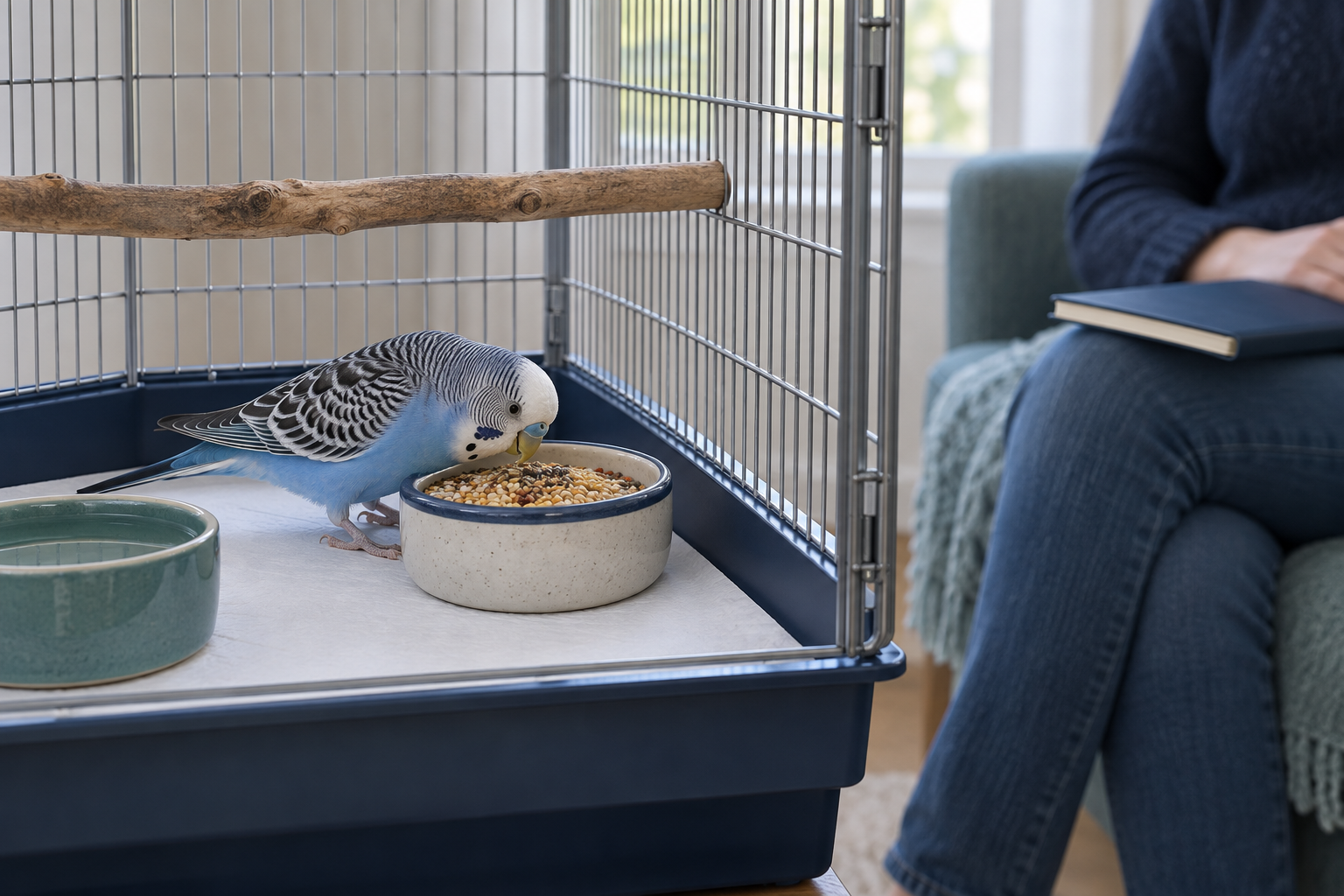
Prepare separate clean dishes so you can distinguish foods. Decide how you will record intake. A simple log can include date, morning weight when advised, familiar food offered and remaining, pellets offered and visibly swallowed, droppings, activity, and any call to the clinic.
The baseline checkpoint is complete only when the bird is stable and you can recognize its current food intake. Owning a scale without a consistent method is not a baseline.
Make pellets recognizable and low-pressure
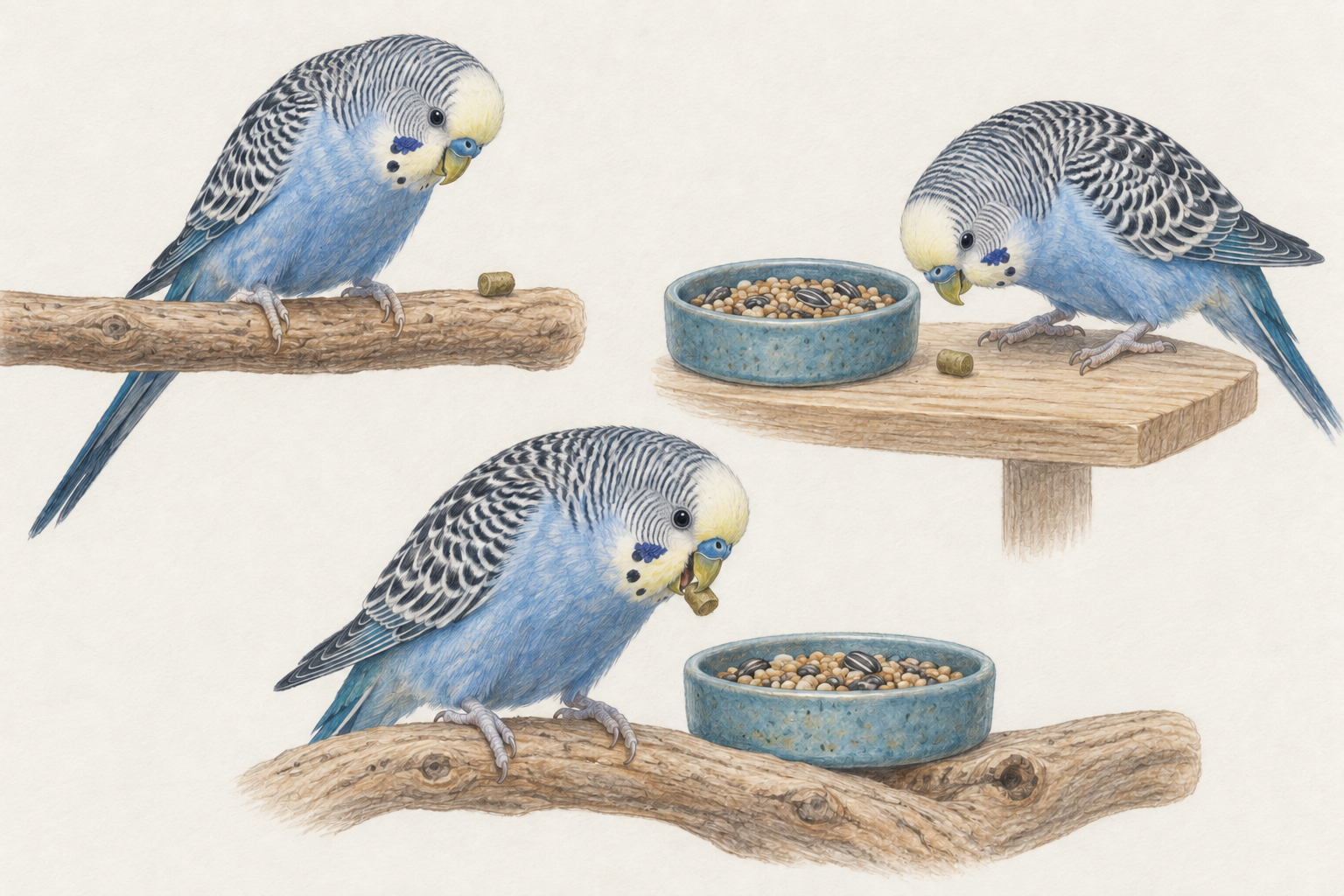
Begin with exposure while the familiar food remains available. Offer a small quantity of the veterinarian-approved pellet in a separate dish near the bird's usual feeding area. Some birds investigate a different size, texture, or presentation. Ground-feeding species such as budgies and cockatiels may notice food on a clean, safe flat surface, as described in LafeberVet's conversion material.
You can place a few pellets beside a known food, offer one as a training item, or demonstrate interest without putting food from your mouth into the bird's dish. Keep the session calm. Remove damp or contaminated food promptly and clean dishes between presentations.
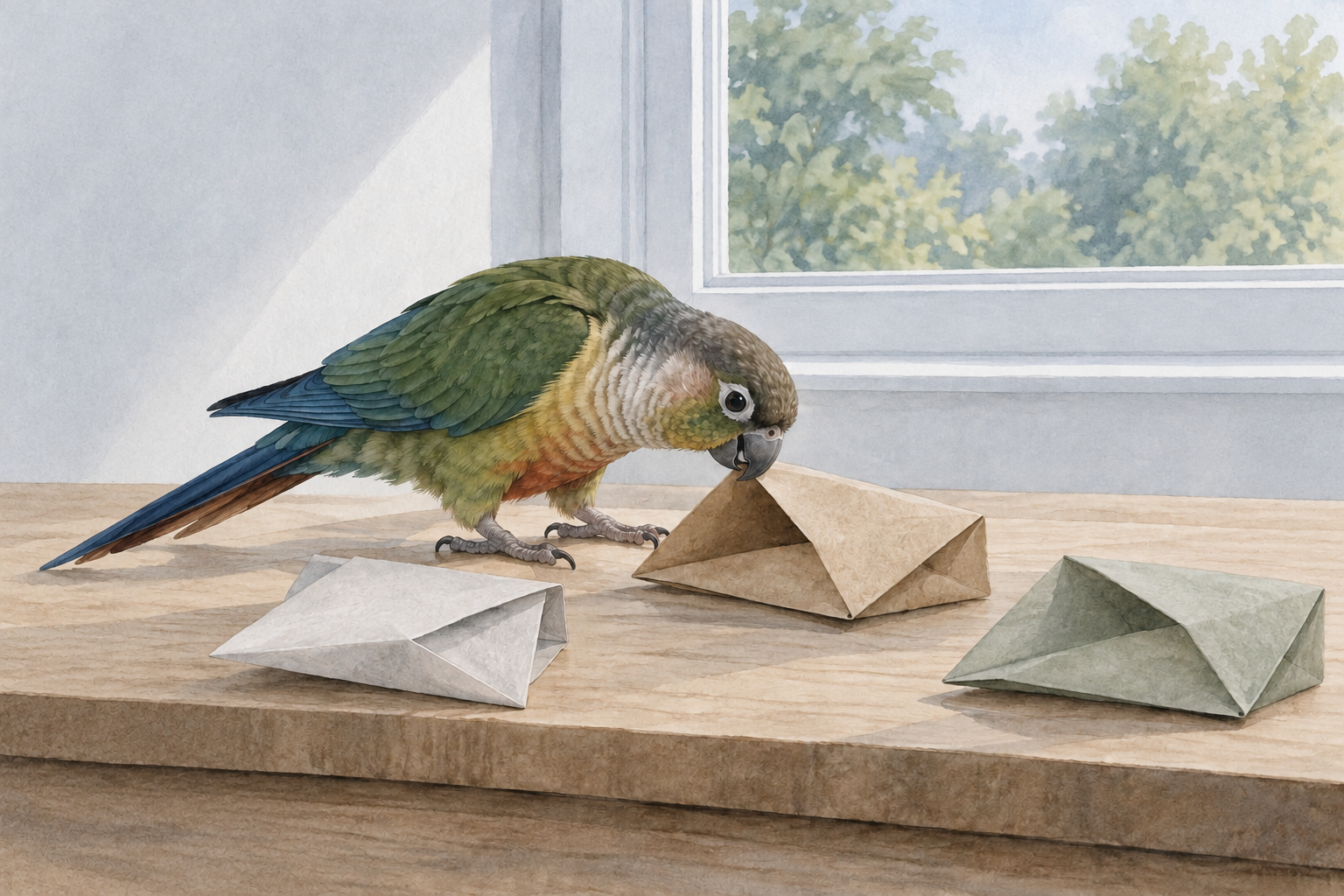
Recognition is not consumption. A bird may pick up, powder, or throw a pellet. Look for swallowing and for changes in what remains. Do not count colored crumbs on the cage floor as a meal.
Introduce one variable at a time. If you change pellet size, brand, dish location, and feeding schedule together, you will not know what the bird accepted. Species and individuals differ; a method that attracts a cockatiel may not suit a lorikeet, finch, or bird with a medical restriction.
This checkpoint is passed when the bird repeatedly swallows some of the new food while maintaining normal intake and behavior—not when it merely touches a pellet.
Change only when intake is observable
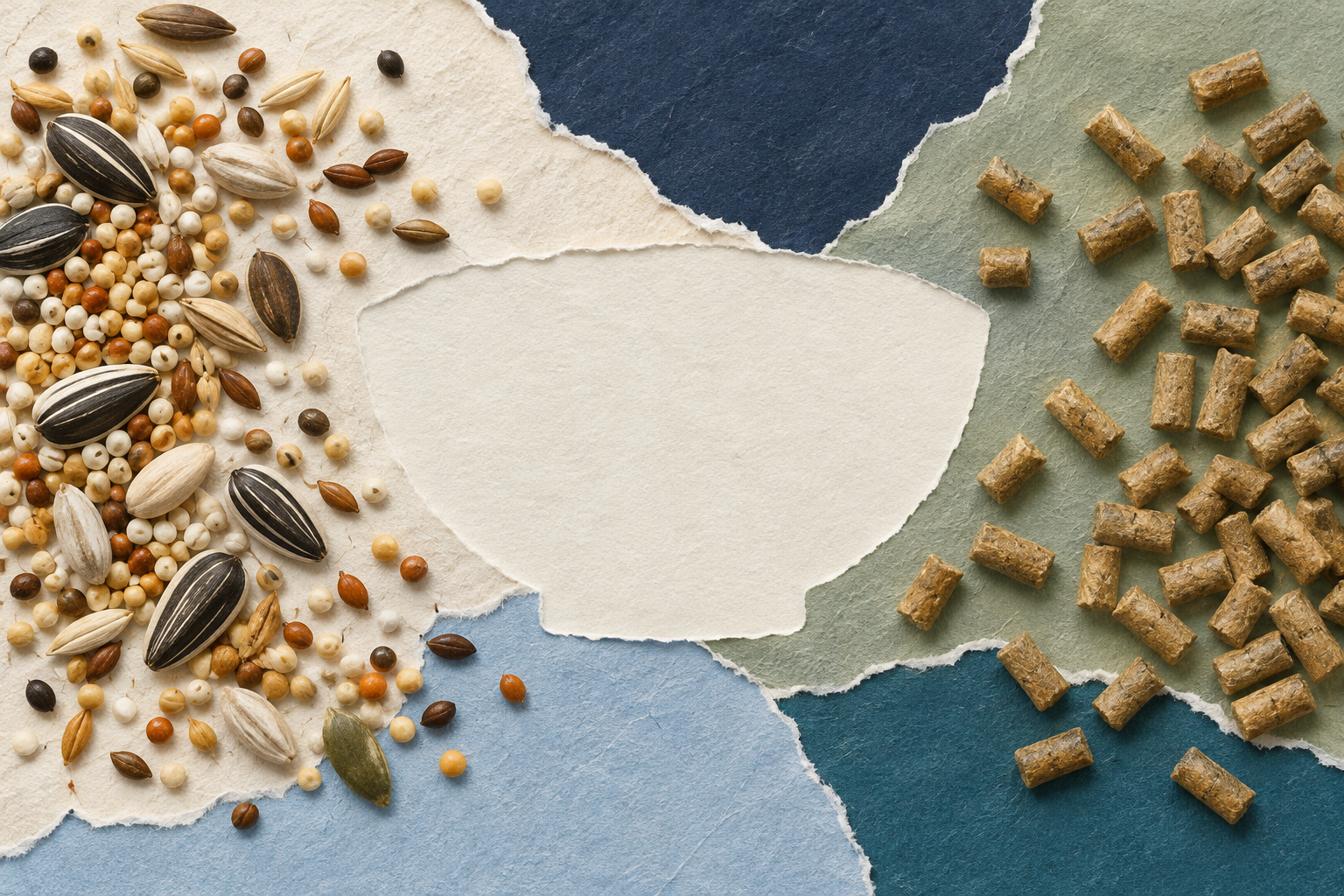
Once consumption is reliable, the veterinarian may approve a measured change in what is offered. Keep the old and new foods quantifiable. Indefinite mixing can be deceptive because a bird may remove every seed and leave the pellets. Separate dishes or timed, supervised offerings can make selection easier to see, but the bird must continue receiving adequate food.
Change gradually and hold each step long enough to observe the result. Do not advance because a calendar says day three has arrived. Advance because the bird is eating the intended foods, maintaining the clinic's acceptable weight and condition, producing an expected pattern of droppings, and behaving normally.
Consider this fictional log entry:
Day 8: Weight taken with the clinic-approved morning method. Familiar food consumed normally. Pellets offered separately; three were visibly swallowed, several crushed. Droppings and activity remained near baseline. No reduction yet. Repeat the same presentation tomorrow.
That entry avoids claiming success from an empty-looking dish. It also avoids changing the plan after one encouraging moment. A later entry might record less familiar food only after the veterinarian-approved checkpoint is met.
Review the log as a sequence of decisions, not a scorecard. If pellets are touched but never swallowed, return to recognition and presentation. If a small amount is swallowed but the familiar food still supplies nearly all intake, hold the current arrangement. If the new food is consumed consistently and the bird remains within the veterinary monitoring plan, ask whether the next measured substitution is appropriate. Each outcome has a safe next step; none requires withholding food to create urgency.
Keep other dietary experiments out of the conversion window unless the veterinarian includes them. Adding several new vegetables, supplements, treats, and pellet products at once makes actual intake harder to interpret. Supplements placed in water or sprinkled over a formulated food can also change taste and may create an inappropriate nutrient load. Record any prescribed supplement exactly, but do not add one simply because the bird previously ate seeds.
Keep sanitation simple and strict. Wash and dry dishes, do not leave moistened pellets or fresh foods to spoil, and prevent droppings from falling into feeding areas. Record unusual water intake or a persistent dropping change rather than assuming the new diet explains everything.
Store both diets according to their packaging and check dates and condition before use. Discard food that is damp, moldy, contaminated, or has an unusual odor. A transition cannot be evaluated fairly—or safely—when the foods themselves have been poorly stored.
Pause, reverse, or call the veterinarian
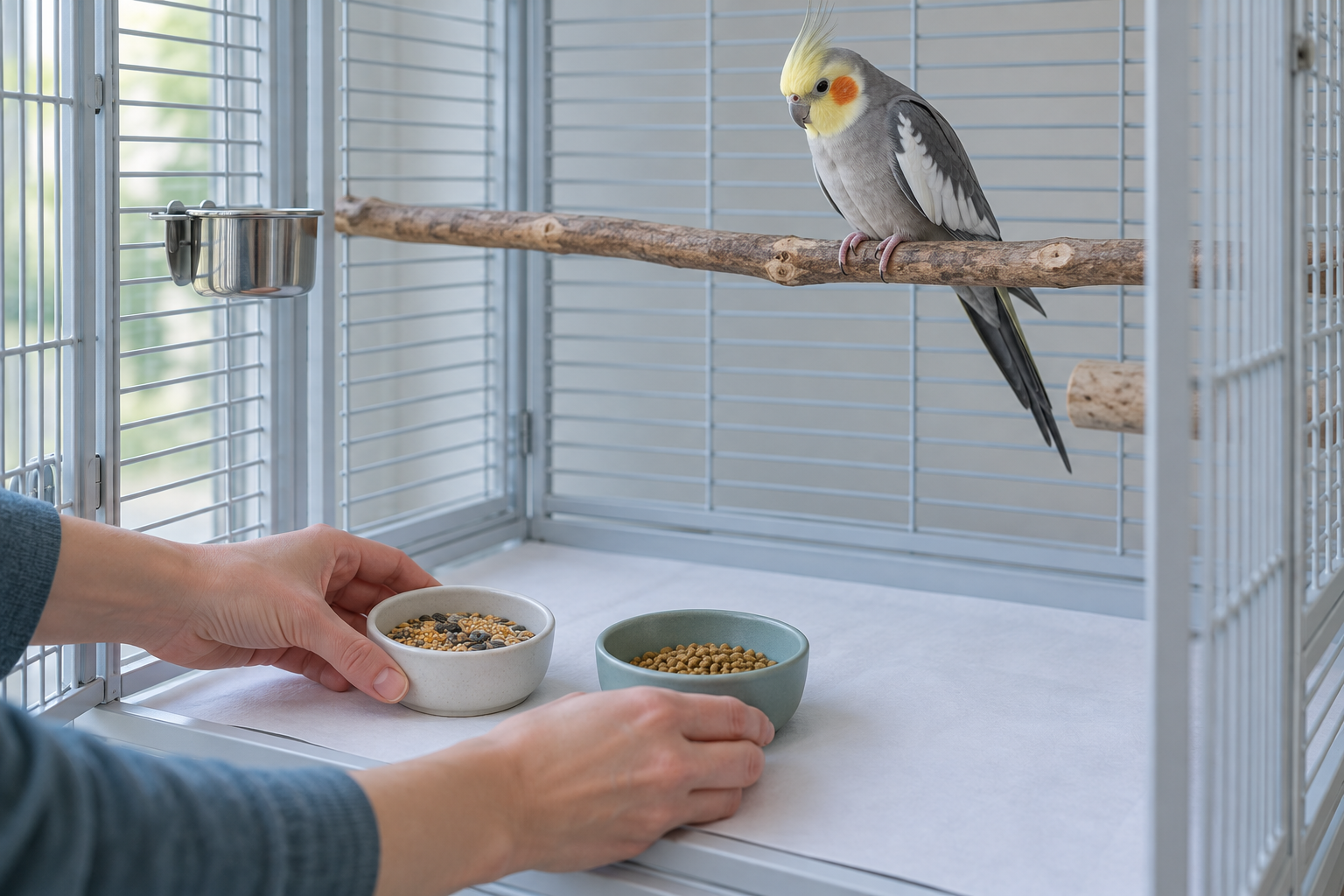
Pause the next reduction if you cannot confirm pellet consumption, if the bird becomes less active, or if the weight or droppings move outside the individualized plan. Restore the last reliably eaten arrangement and contact the clinic for instructions. Do not “wait out” a bird that may be under-eating.
Call promptly for reduced or absent eating, marked lethargy, persistent fluffing, vomiting, breathing difficulty, balance problems, an unexpected weight change, or a significant change in droppings or behavior. These categories do not diagnose the cause, and this article cannot set a safe universal threshold.
If progress stalls while the bird remains stable, review the evidence rather than applying pressure. Is the pellet size practical? Is the dish easy to reach? Does the bird eat only when unobserved? Are crushed pieces being mistaken for consumption? Has the household changed too many variables? Take the log to the veterinarian and choose the next small experiment together.
Conversion may take weeks or months, and some birds need a different species-appropriate nutrition plan. Speed is not the success measure. A safe transition produces a bird that reliably eats the agreed diet while weight, behavior, and droppings remain professionally monitored.