A bird's purchase or adoption fee is easy to see because it appears once, on one receipt. The larger commitment is distributed across housing, food, replacement equipment, professional care, and the household's ability to respond when something changes. That is why a single online “cost of a bird” total is rarely useful.
This roundup includes nine budget lines because each supports a distinct welfare need identified in veterinary or animal-welfare guidance. It does not rank products or promise a universal total. Prices vary by species, location, exchange rate, cage standard, veterinary access, and the bird's health. The few figures below are a dated US spot check from October 13, 2026—not a shopping list or national average.
For each line, record three values: the initial amount due before arrival, the normal replacement or renewal interval, and a contingency amount. Keep quotes and product dimensions beside the figure so a future review compares like with like. Converting irregular costs into a monthly saving target is useful; pretending every month will look identical is not.
Run the worksheet once for an ordinary year and once for a disrupted year. In the second version, change one realistic condition: the regular sitter is unavailable, the nearest bird-experienced clinic is farther away, smoke requires temporary relocation, or a major cage component fails. The exercise does not predict a bill. It reveals which care system has no funded alternative and needs research before commitment.
Setup costs people undercount
1. An appropriate primary enclosure
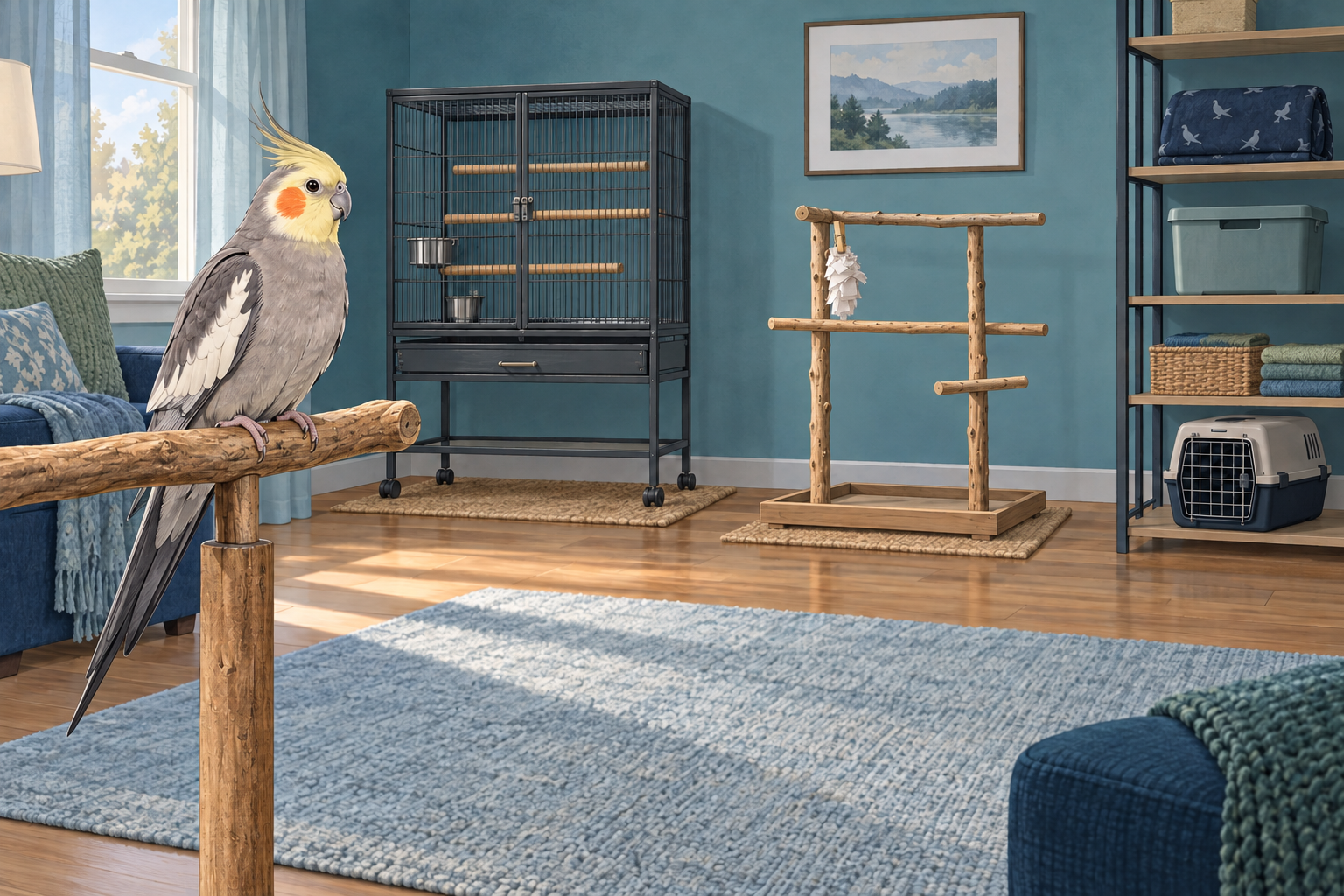
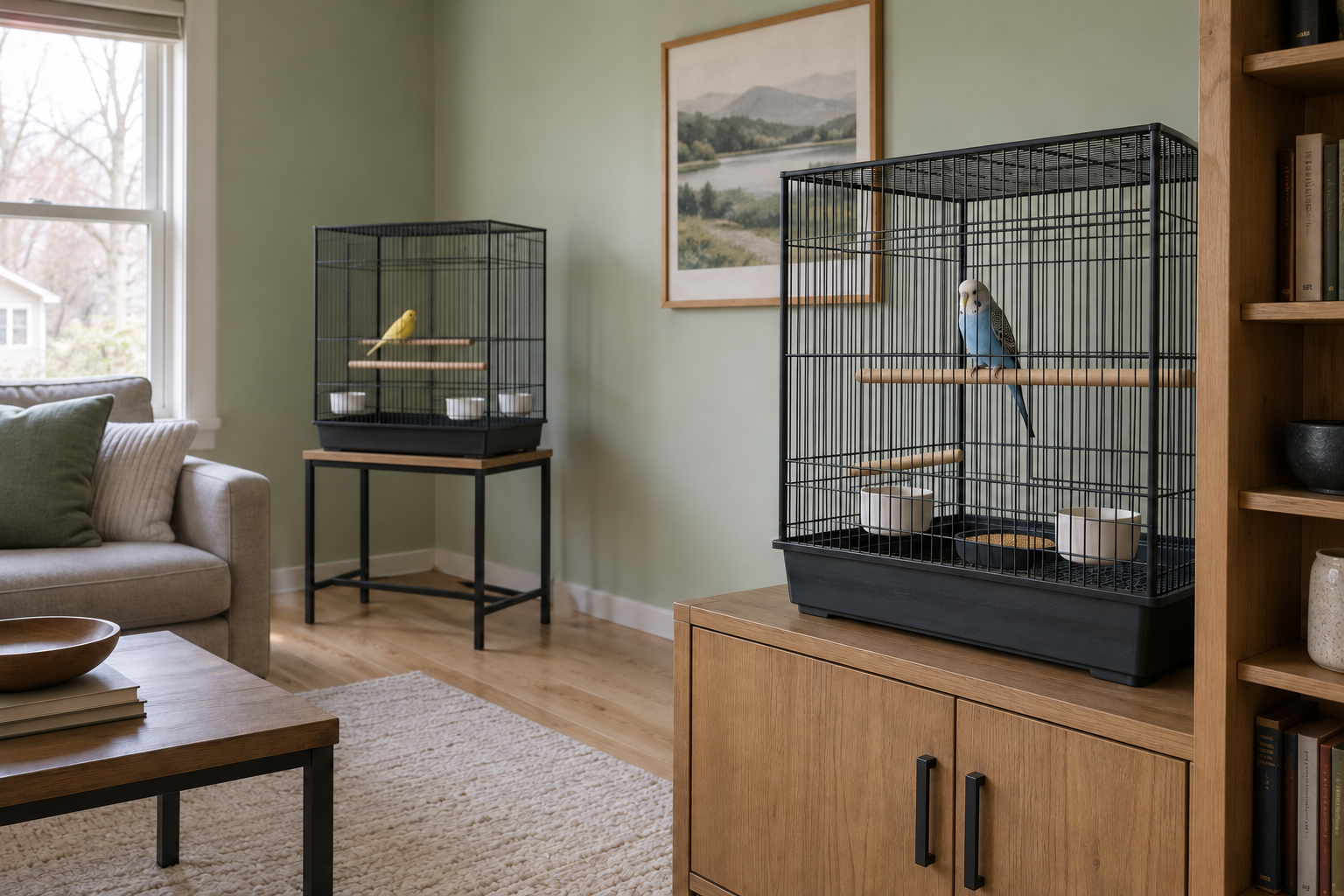
The cage is not simply a place where the bird fits. It must provide safe bar spacing, room for normal movement, secure doors, and usable space after perches, bowls, and toys are installed. Larger parrots also need stronger construction. A cage that fails one of those tests is not a bargain.
For scale, a US Chewy budgie-cage results page displayed examples from about $49 to $140 during the October 2026 spot check. Those listings differ in dimensions and design, and a retailer's species label does not prove suitability. Measure the actual enclosure, check construction and bar spacing, and budget for delivery or assembly before accepting the listed price.
2. Perches and simple enrichment
One smooth dowel and one decorative toy do not make a complete interior. The Association of Avian Veterinarians recommends varied perch types and warns against relying only on uniform dowels; it also describes foraging, problem-solving, foot, and chew activities as useful forms of stimulation. The budget therefore needs safe perches, a modest starter set of enrichment, and space to introduce unfamiliar items gradually.
Avoid buying a large matching bundle before you know how the individual bird moves and interacts. Start with functions—rest, movement, chewing, and foraging—then replace or add items based on observation.
3. A carrier and room preparation
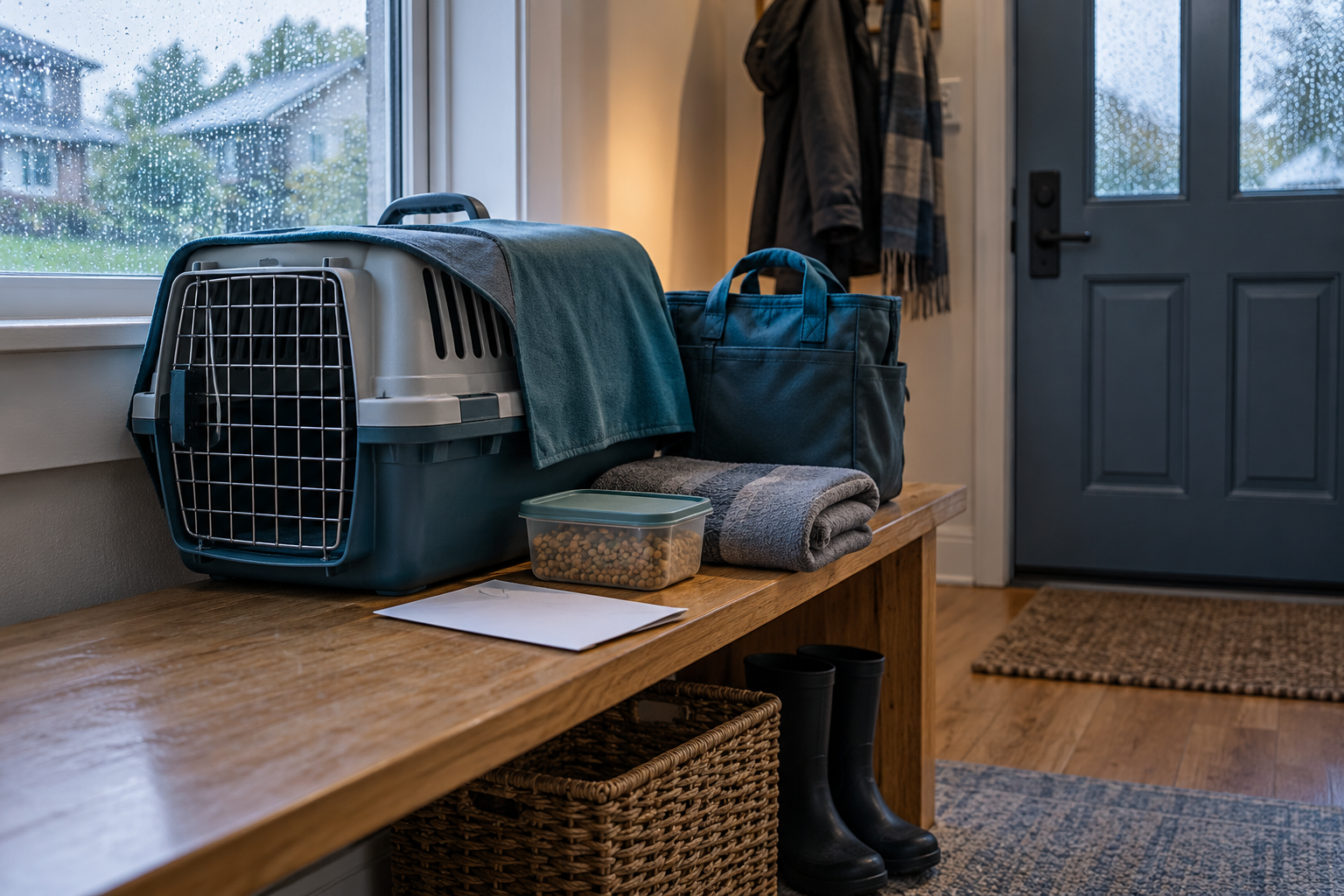
A secure, correctly sized carrier is necessary for the trip home, routine veterinary visits, and evacuation. It should not be treated as an emergency-only purchase stored unopened in a closet. Carrier practice takes time, and a frightened bird should not meet the carrier for the first time during a crisis.
Room preparation can also cost money: screening a risky window, securing a fan, replacing a hazardous appliance, adding a stand, or moving the cage away from fumes. List these changes separately. Hiding them inside “miscellaneous setup” makes the budget look finished before the room is safe.
Recurring and replacement costs
4. A species-appropriate balanced diet
Food spending is more than a bag of seed. Veterinary guidance generally places a formulated diet, with suitable fresh foods and species-specific adjustments, at the center of companion-bird nutrition. Nectar-feeding species and birds with medical needs can require a different plan. Fresh produce may also be discarded when it spoils or when a cautious bird is learning to accept it.
The same US spot check found common pellet listings at roughly $19 for 44 ounces, $24 for 3.5 pounds, and $66 for 5 pounds. Those examples are not interchangeable: formulation, pellet size, species, waste, and storage life matter. Record the food your avian veterinarian recommends, package size, delivery cost, and how long it actually lasts.
5. Cleaning and monitoring consumables
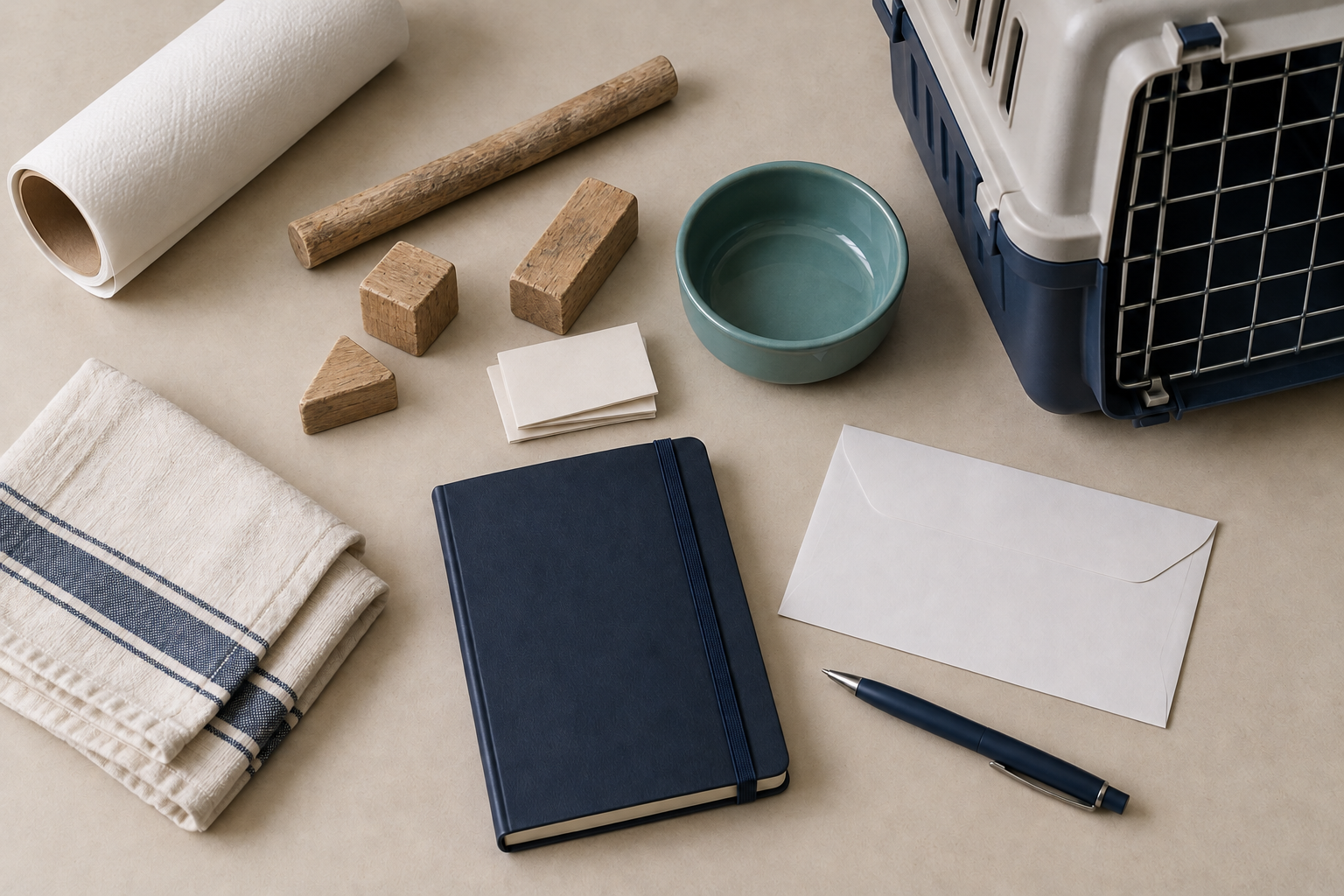
Plain paper liner, dish soap, approved cleaning products, paper towels, replacement bowls, laundry, and waste bags are individually unremarkable. Together they are a recurring care system. VCA advises daily bowl cleaning and disposable paper liner that makes droppings visible; porous or damaged materials may need replacement rather than endless scrubbing.
Create a monthly line for routine consumables and a less frequent line for deep-clean supplies. Do not reduce this category by stretching wet food, soiled liner, or worn cleaning tools beyond safe use.
6. Worn perches, toys, and fittings
Chewing is expected, not product failure. Rope can fray, bells and fasteners can become unsafe, wood can become heavily soiled, and plastic can crack. A toy rotation also needs inspection, not merely rearrangement. VCA's hygiene guidance gives replacement intervals for some porous materials but emphasizes condition checks; an individual bird may destroy something much sooner.
Estimate this line from the bird's size and play style after the first few months. Until then, enter a cautious provisional amount rather than assuming the original setup lasts for years.
Professional and logistical costs
7. Routine and emergency veterinary care
Budget separately for the examination, recommended diagnostics, medication, and after-hours care. A quoted appointment fee may cover only the clinician's time. The AAV recommends regular checkups, while its owner resources stress establishing an avian veterinarian before trouble appears.
Published clinic prices show why local calls matter. Birdhouse Mobile Exotic Veterinary Service listed a $78 established-client wellness exam plus a $55 travel fee in the October 2026 check. That is one provider's schedule, not a benchmark, and it excludes tests and treatment. Ask at least two bird-experienced clinics what a new-patient exam includes, where emergencies go, and which fees are separate. Then create both an annual-care line and an emergency reserve.
8. Transport and competent backup care
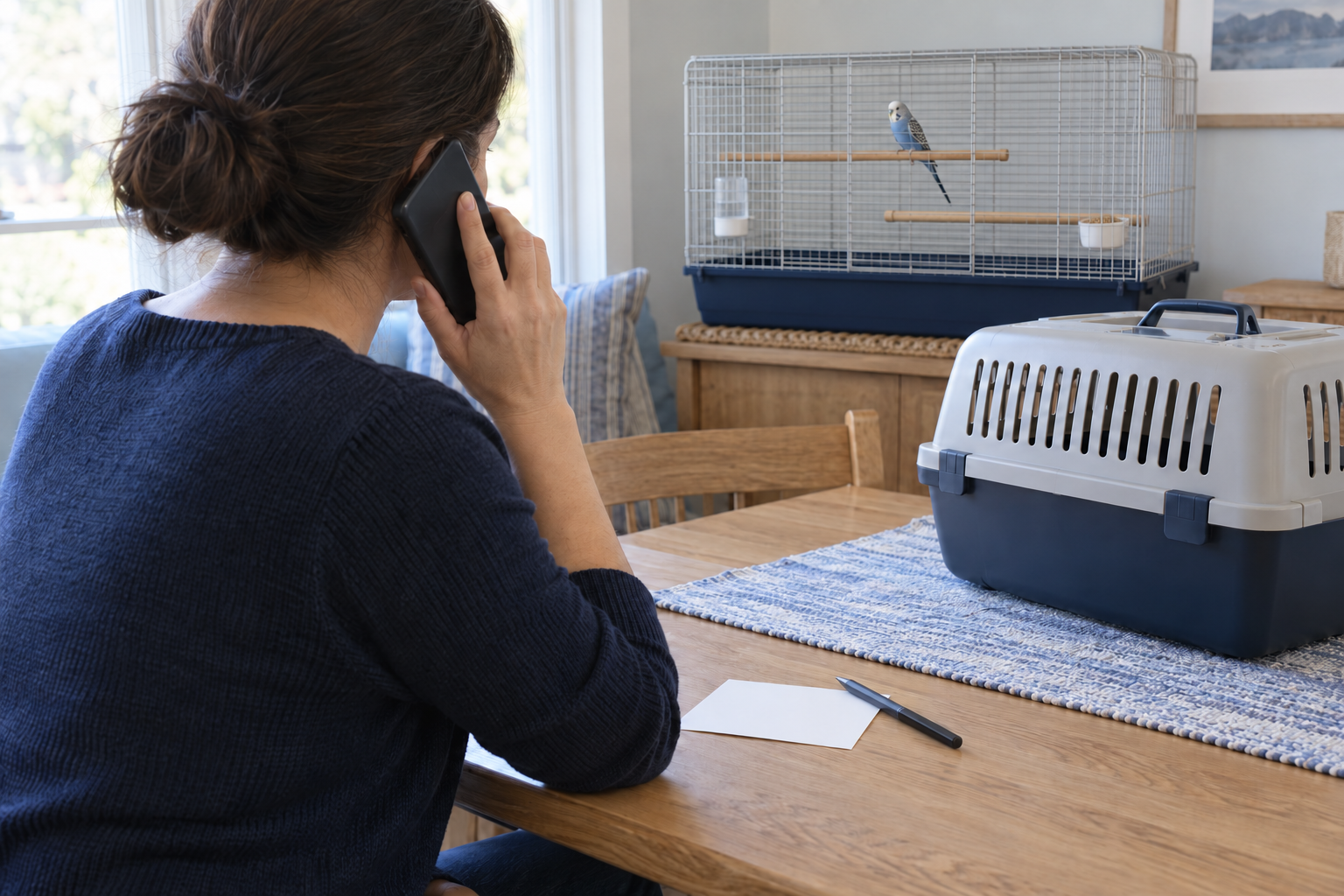
Veterinary trips may require fuel, parking, a taxi that accepts a carrier, or a longer journey to a specialist. Travel and holidays create another question: who can safely feed, observe, and handle this species? A low daily sitting quote is poor value if the person cannot recognize respiratory distress, prevent escape, or follow a precise food and sleep routine.
Collect local quotes for your actual dates and bird. Confirm whether the caregiver visits your home or boards birds, how emergencies are authorized, and whether transport is included. Even owners who rarely travel need a backup person for illness or an unexpected overnight absence.
9. The resilience line
The final category covers disruptions: a damaged cage latch, sudden relocation, extra cooling during heat, cleaner-air arrangements during smoke, a longer route to an emergency clinic, or replacement food after contamination. It also includes the ordinary utility effects of maintaining a safe environment. A reserve cannot guarantee that every emergency will be affordable, but omitting it guarantees that the worksheet understates exposure.
Use two columns when planning. For a small bird, enter the exact cage, carrier, food, consumables, replacement rate, local veterinary quotes, transport or sitting, room changes, and reserve target. Repeat the same headings for a larger parrot instead of multiplying the small-bird total: stronger housing, greater food use, faster toy destruction, and different transport needs do not scale evenly.
Finally, convert annual or irregular costs into a monthly contribution without pretending they occur monthly. Review the worksheet every six months and after a move, diet change, health diagnosis, or change in caregiver availability. The honest question is not “Can I buy this bird?” It is “Can this household keep funding the systems that let this bird live safely when ordinary life changes?”