Pet birds are social animals, but “social” does not mean that any two birds will become friends, share a cage safely, or meet one another’s needs without help. One bird may live a rich life with predictable interaction and meaningful choices. Two birds may benefit from hearing, seeing, or living near another bird—yet still need separate homes for life.
The right question is not simply whether birds prefer company. It is whether your household can support two complete care plans even if the birds never bond. That includes space, daily observation, separate housing, veterinary care, safe exercise, and enough time to manage each individual without forcing contact.
Social need is not automatic compatibility
Species tendencies matter, but they do not erase individual history. The RSPCA identifies several colony-breeding species, including budgies, cockatiels, lovebirds, canaries, and zebra finches, that may live socially when the enclosure, group, and individual birds are compatible. It also stresses that birds need enough room to move away from one another. MSD Veterinary Manual guidance is more general: pet birds are social, and owners of multiple birds should ask an avian veterinarian whether particular individuals should live together or separately.
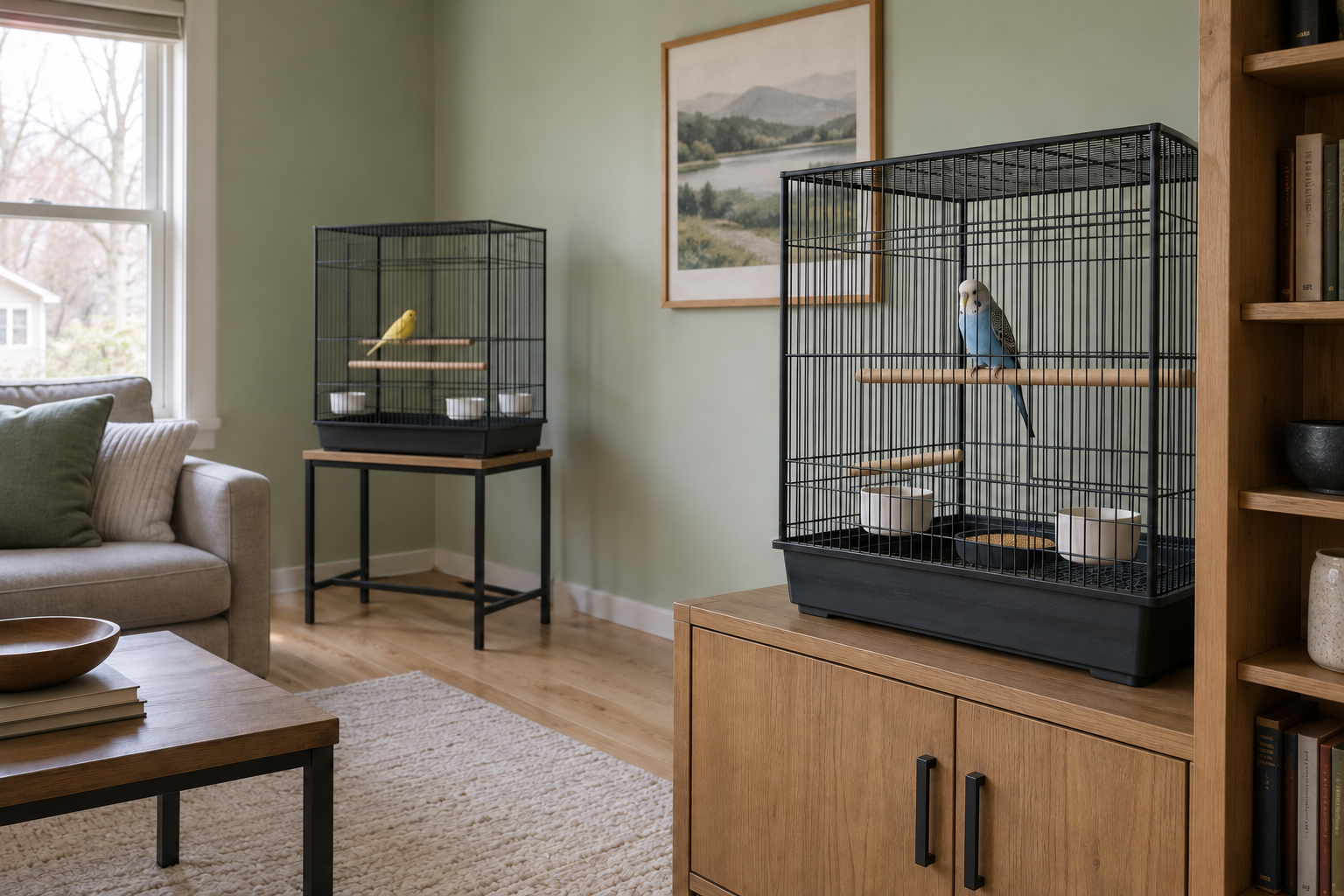
Those statements describe two different needs. Social opportunity can mean hearing another bird, calling back and forth, watching one another, foraging nearby, or sharing supervised space. Co-housing means losing the protective boundary of a cage. A bird can enjoy the first and be unsafe in the second.
Compatibility can also change. Maturity, illness, pain, access to a preferred perch, nesting cues, or competition over food may alter a previously calm relationship. A same-species label, opposite-sex pairing, or shared upbringing is not a safety guarantee. Plan around observable behavior and retreat options, not the relationship you hope to see.
When one bird can have a rich social life
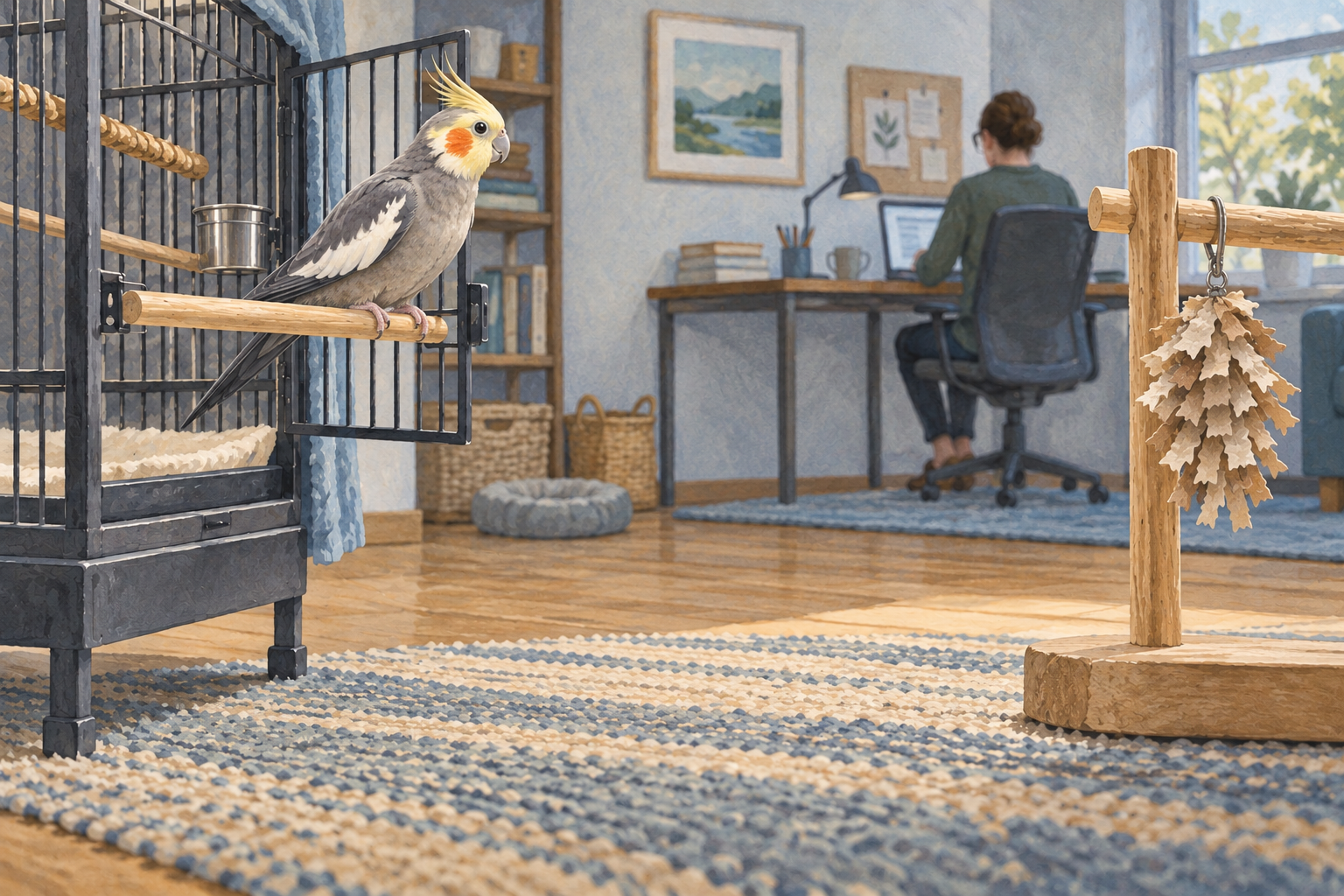
A single bird still needs an active day. A workable routine includes calm household presence, short reward-based training, foraging, movement, changing enrichment, and time to approach or withdraw. Interaction should be scheduled rather than delivered only when the bird screams, and it should not depend on touching. Sitting nearby, offering a choice-based activity, or arranging safe independent foraging can be social and enriching without demanding physical contact.
Consider a hypothetical remote worker with a budgie. The person is home often but protects work blocks and cannot provide continuous attention. They arrange a spacious setup, a safe flight routine, several brief training sessions, and easy foraging activities the bird can use independently. They also watch for changes in appetite, activity, vocalizing, and feather care. This is more credible than assuming “someone is home” automatically solves isolation.
The weak version of a one-bird plan is unlimited access to one person. That can leave the bird without coping skills when work, travel, illness, or relationships change. The stronger version creates predictable contact, independent activities, more than one trusted caregiver where possible, and a contingency plan. Human interaction is not biologically identical to bird company, but a second bird is not a substitute for thoughtful care either.
What two birds actually require
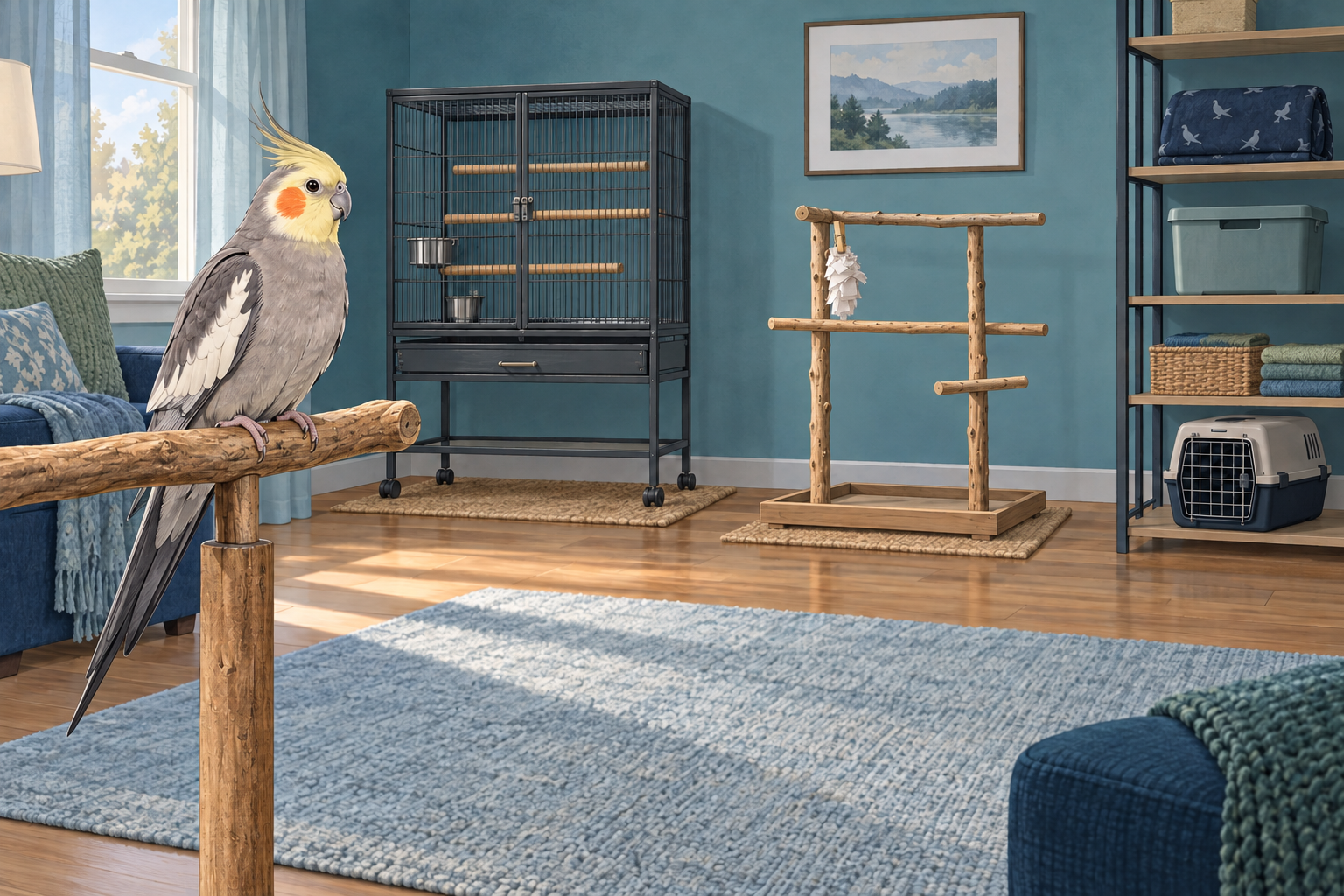
Begin with two suitable cages, not one shared cage and a backup plan. Each bird needs a secure place to sleep, eat, recover, travel, and withdraw. Even birds that later share space may need separation after a veterinary procedure, during illness, or when their relationship changes. The cages, carriers, food stations, perches, toys, and safe out-of-cage routes must fit your home without crowding each other.
The budget also doubles unevenly. Food and consumables may rise predictably, but veterinary costs arrive per patient, and an emergency can affect both birds close together. Boarding, transport, medication, replacement furnishings, and cleaning time are separate obligations. If the plan works only when the birds share every resource, it is not ready for incompatibility.
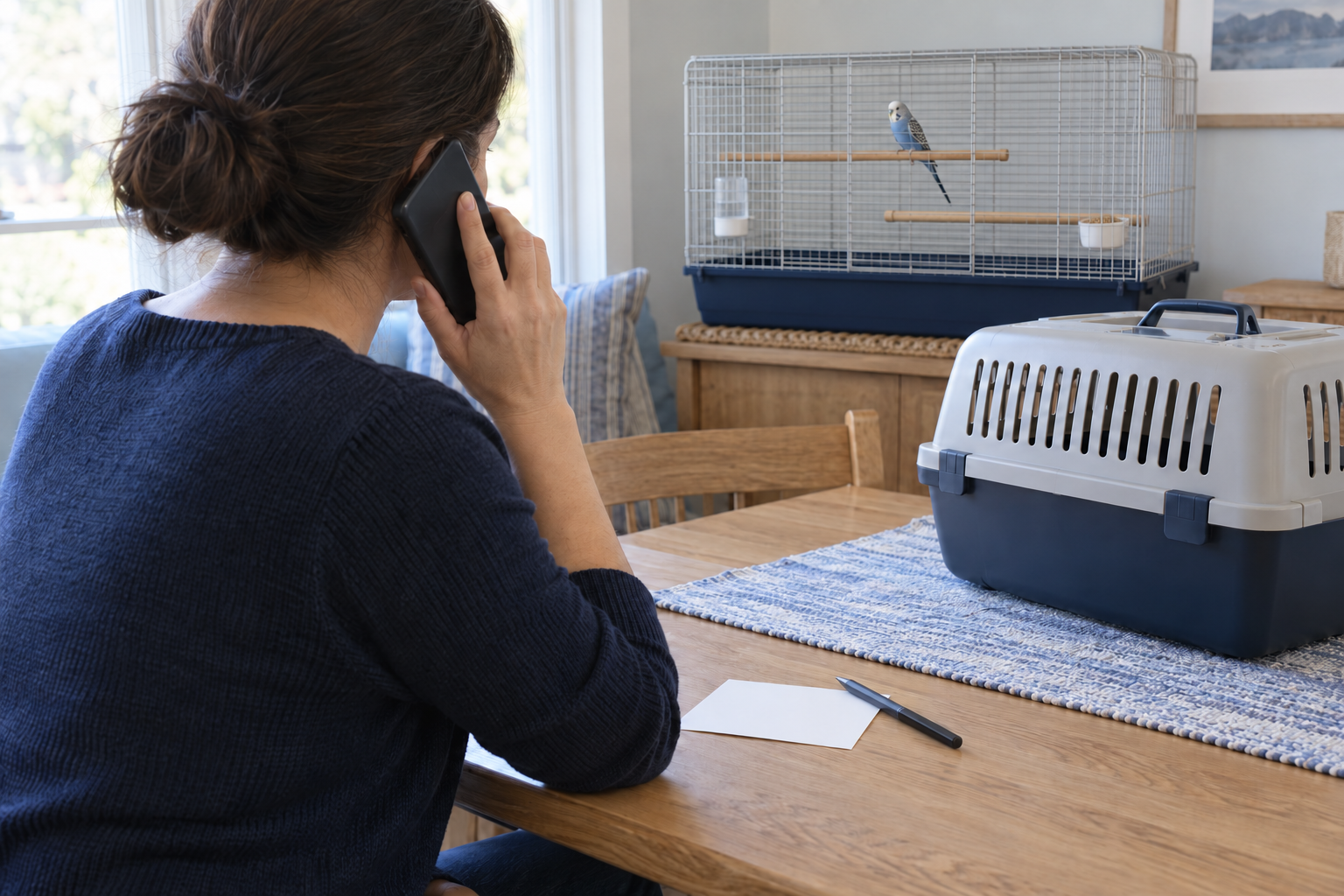
Records and backup care also become individual. A substitute caregiver needs to know which bird uses which carrier, diet, medication, cue, and safe exercise area. During a power outage, evacuation, or urgent clinic visit, both birds must be moved securely without putting them together for convenience. If the species differ, temperature, food, bar spacing, or handling requirements may differ as well. Write two care sheets and test whether one person can complete the essential routine safely. The exercise often exposes hidden assumptions before a second bird arrives.
Daily management becomes more complex. A confident bird may block a cautious bird from food or a favored perch. Two birds may need separate training sessions, different reinforcers, or different exercise times. A larger or more forceful bird can cause serious harm even when an interaction began quietly. Household members must be able to separate the birds promptly without grabbing, chasing, or improvising.
Finally, adding a bird changes relationships rather than filling a vacancy. The newcomer may bond closely with the resident, remain neutral, avoid it, or provoke repeated conflict. The resident may become less interested in human contact—or not. None of these outcomes is a betrayal. They are reasons to choose a second bird because you want and can care for that individual, not because the first bird has been assigned a friend.
Decision matrix: time, space, species, and risk
Use the same five questions before every two-bird decision:
| Question | Ready looks like | Warning sign |
|---|---|---|
| Can each bird live separately? | Two complete setups fit safely | One cage is financially or physically necessary |
| Can the routine serve two individuals? | Separate observation, training, and exercise are practical | The plan assumes they entertain each other |
| Is compatibility uncertain by design? | Neutral, bonded, and incompatible outcomes are affordable | Success requires sharing a cage |
| Is professional care available? | An avian clinic, carriers, records, and emergency transport are planned | Veterinary care is expected to be “the same visit” |
| Can the commitment survive change? | Moves, travel, noise, cleaning, and backup care are considered | The decision depends on the current schedule never changing |
Now apply it to three hypothetical homes.
Home A: one bird, stable routine. A cockatiel has daily exercise, varied enrichment, regular training, and reliable contact with two household members. The bird appears engaged, and the family cannot fit a second full-size setup. Remaining a one-bird home while improving independent enrichment is the responsible result.
Home B: two compatible birds, two homes available. A household wants a second budgie for its own sake, can quarantine appropriately, and has space for two cages permanently. If the birds later choose calm proximity, the family can expand shared opportunities without surrendering separate resources.
Home C: two birds that must remain apart. The resident lovebird repeatedly threatens the newcomer after a gradual introduction. The owner can schedule separate exercise and maintain cages in different areas. This outcome is more work, but it was included in the original decision rather than treated as an emergency failure.
If the answer is “maybe later”
Postponement is a valid care decision. Use the delay to price a second complete setup, locate an avian veterinarian, test a two-bird cleaning schedule, arrange backup care, and decide where permanent separate cages could stand. If those steps reveal that the household can support only one bird well, that information protects both birds.
Once the decision to add a bird is firm, the next task is not an immediate meeting. It is a veterinarian-informed quarantine and introduction plan. Health separation, observation, gradual awareness, and supervised contact belong after readiness has been established.
One bird or two is not a referendum on how much you love birds. It is a capacity decision under uncertainty. Choose the number of complete, individual lives your home can support—even when the birds do not follow the friendship story you imagined.