The worst time to discover that a nearby clinic does not routinely treat birds is when a bird suddenly needs help. A search result that says “exotics accepted” is only a lead. It does not tell you which species the clinic sees, who is available today, what happens after hours, or whether the practice can provide the services your bird may need.
Build a verified care plan while your bird is well. The goal is not to award a clinic a permanent badge of approval. It is to confirm current capabilities, establish a working relationship, and keep a backup route ready because staffing and availability change.
Start before the situation is urgent
Birds can conceal illness, and a meaningful change may become serious quickly. That makes advance preparation part of ordinary care. The MSD Veterinary Manual recommends finding a veterinarian specially trained or experienced in avian medicine and arranging regular checkups. It also points owners toward the American Board of Veterinary Practitioners and Association of Avian Veterinarians directories.
A directory is a starting point, not a guarantee. A listing may be out of date; a veterinarian may have moved; a clinic may see some birds but not others; or emergency coverage may be limited. Even a credential does not tell you whether the doctor is accepting new patients. Verification happens by contacting the practice.
Start the search before acquiring a bird if possible. Veterinary access can affect whether a species is a realistic household fit. If the nearest suitable practice is hours away, the plan may require a reliable vehicle, a travel carrier, time away from work, and an emergency fund large enough to include transport.
Build a local shortlist

Use more than one discovery route. Search the AAV Find-a-Vet directory and the ABVP specialist directory, then ask a local bird rescue, welfare organization, or established bird caregiver for names to investigate. Your current veterinarian may also know which nearby practice receives avian referrals. Recommendations are clues, not substitutes for your own call.
Record each candidate's address, usual phone number, estimated travel time, and website. Then check whether the practice describes avian services specifically rather than using “exotic” as a broad label. Do not assume that a hospital treating reptiles or rabbits also treats pet birds.
Make two lists: routine care and urgent or after-hours care. They may contain different hospitals. A daytime avian practice might refer emergencies elsewhere, while an emergency hospital might stabilize birds only when a particular clinician is on duty. A complete plan names both routes and acknowledges any gaps.
If the first clinic offers telemedicine, ask what it can and cannot handle and whether an established in-person relationship is required. Remote advice may support communication or follow-up, but it does not replace a destination capable of examining and stabilizing a bird when hands-on care is needed.
Travel time matters, but distance is not the only criterion. A slightly farther clinic with clearly stated avian capability and a workable referral pathway may be more useful than a nearby clinic whose answer remains vague. Keep the shortlist small enough to verify—usually two or three routine candidates plus the emergency options they recommend.
Call and verify what the clinic can do
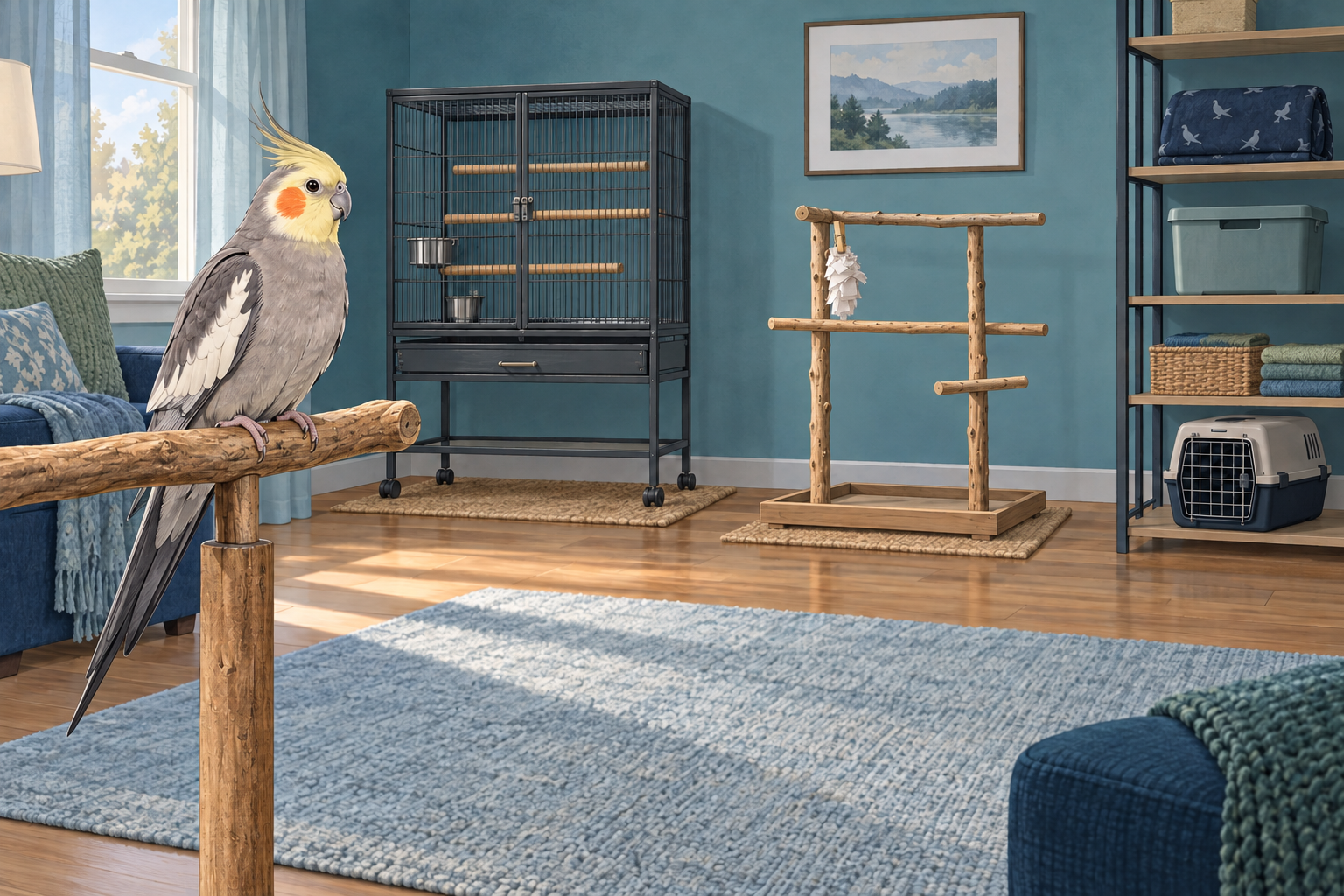
Use a short, neutral script. For example: “I have a cockatiel and I am arranging routine and emergency care before I need it. Does your practice currently see this species? Which veterinarian handles birds, and are you accepting new avian patients?” Then ask practical follow-ups.
- Does the clinician routinely examine this kind of bird?
- How soon can a new patient schedule a wellness visit?
- What records should you bring, and how should the bird travel?
- Where are clients directed outside normal hours?
- Does that emergency facility currently accept birds, and should you call before traveling?
- If advanced diagnostics, hospitalization, or surgery are needed, does the clinic provide them or refer elsewhere?
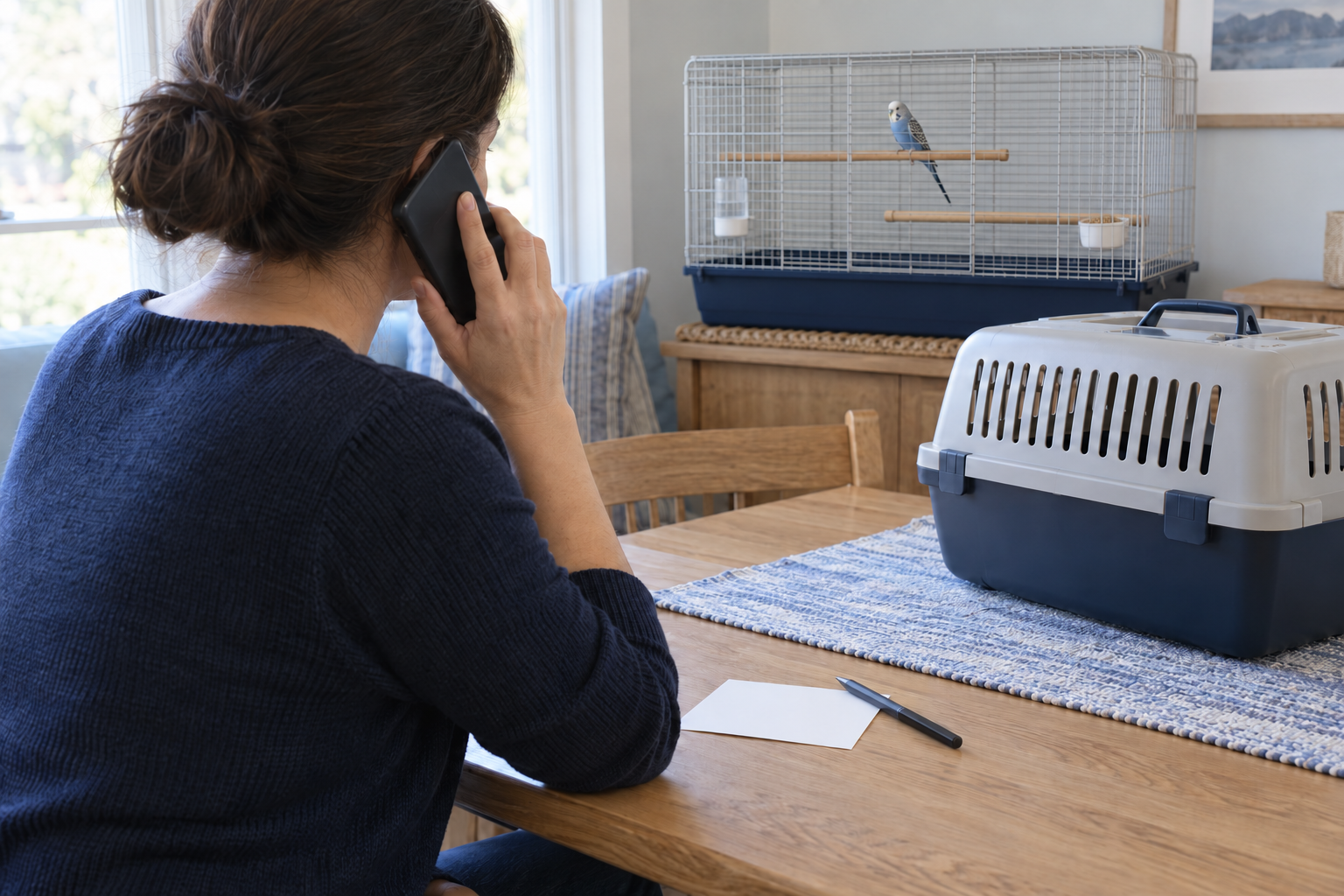
These questions are about workflow, not an attempt to test a receptionist or demand medical advice by phone. Staff may need to check a schedule or ask a clinician. Write down the date, the answer, and the name or role of the person who provided it. Reconfirm later if your plan depends on a particular doctor or service.
Avoid turning one marketing phrase into evidence of competence. “Bird-friendly,” “exotic,” and “all pets welcome” are not standardized promises. Likewise, do not interpret professional titles or licensing rules on your own across jurisdictions. If a credential matters to you, verify it through the relevant credentialing organization and ask the clinic what it means for the care actually available.
Use the first wellness visit as a systems check
A routine appointment lets the veterinarian examine the bird and lets you test the care pathway without crisis pressure. The AAV's owner materials and the MSD Veterinary Manual both emphasize preventive examinations and establishing baseline information. Bring origin and health records, a current medication list if applicable, and concise notes about diet, housing, daily routine, and recent changes.
Ask how the clinic prefers questions between visits, which changes justify an urgent call, and what information helps staff triage efficiently. Confirm the after-hours instructions again. Ask whether the clinic recommends a particular carrier setup and which records should travel with the bird.
This visit is also a chance to evaluate communication. Are species and household circumstances considered rather than assumed? Are recommendations explained? Are costs and referral limits discussed clearly? You are not grading bedside manner from one awkward moment; you are deciding whether you can exchange accurate information and follow the plan.
Keep the relationship current. Follow the veterinarian's advice about preventive visits, and update the practice when your phone number, address, bird roster, or relevant medical history changes. A clinic that has an established record can work with more context than a practice hearing your bird's name for the first time during an emergency.
Create a backup card for phone, wallet, and carrier

Store a compact contact card in three places: your phone, a printed household location, and the bird's travel kit. Include the routine clinic, the after-hours destination, both phone numbers, addresses, travel routes, and the date you last verified them. Add your bird's species, name, age if known, current medications, and veterinarian-approved emergency notes. Do not turn the card into a home-treatment guide.
Tell other caregivers where the carrier and card are kept. A sitter should know whom to call, what transport they are authorized to arrange, and how payment decisions will be handled. If the emergency hospital asks callers to phone first, put that instruction in bold.
Review the card at least when routine veterinary details change, before travel, and when a clinic announces staffing or service changes. Call again rather than relying on an old screenshot. The durable outcome is not finding a “perfect” veterinarian once. It is maintaining a verified path from the first concerning change to professional help.