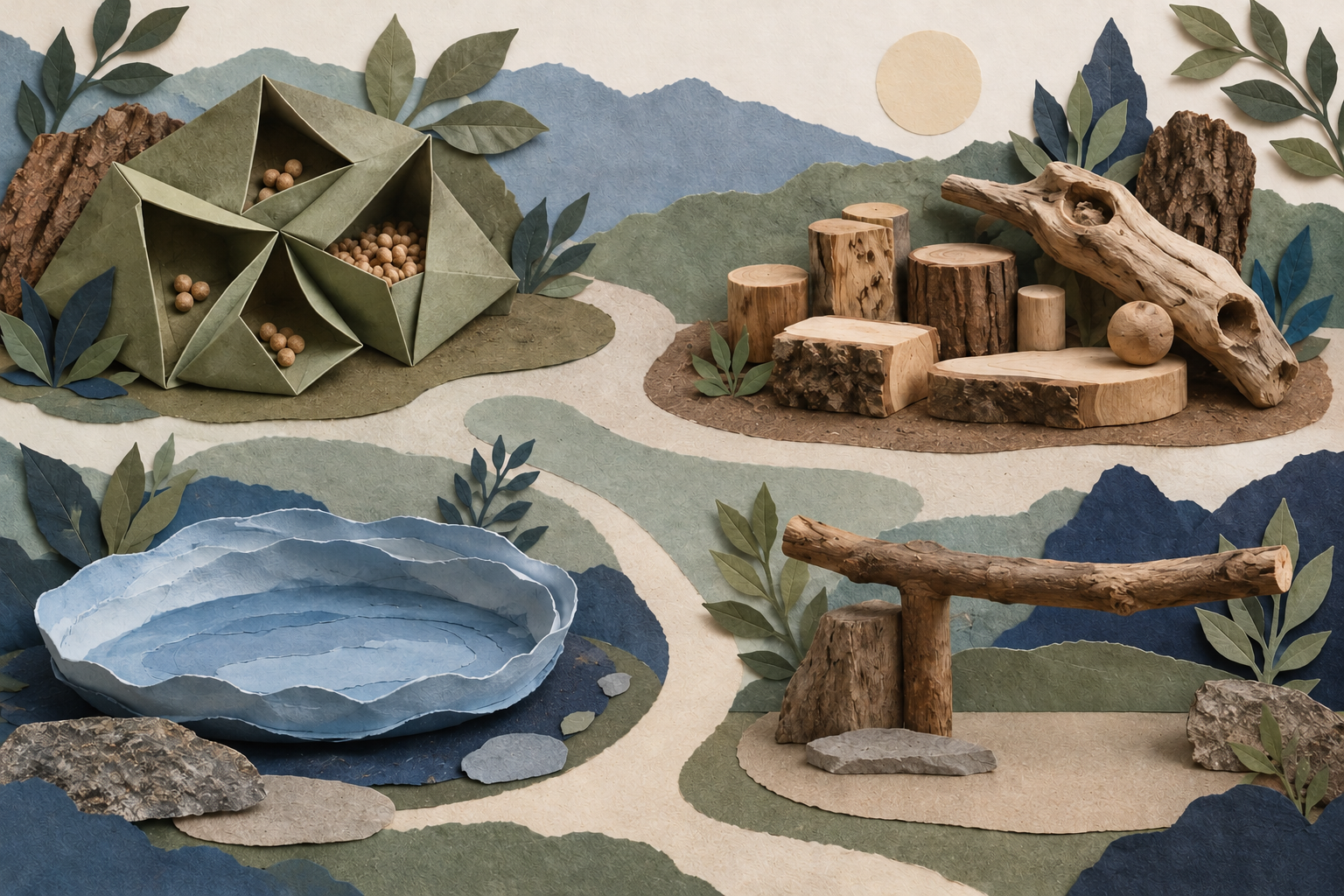
Enrichment is not measured by toy count. It should give a bird safe opportunities to search, manipulate, move, bathe, learn, make choices, or interact in ways that suit the species and individual. The Association of Avian Veterinarians groups enrichment into sensory, nutritional, manipulative, environmental, and behavioral forms; MSD likewise identifies toys, foraging, and social interaction as parts of preventive care.
These 12 ideas were selected because an avian-veterinary or established parrot-welfare source supports the underlying activity and because each can begin at a very easy level. No item is universally enjoyable or safe. Introduce one change at a time, supervise unfamiliar activities, inspect materials and attachments, and leave enough open space for normal movement. Retreat, freezing, frantic escape, repeated failure, or attempts to swallow material mean the setup needs to change.
Before offering an idea, define its job in one phrase—“search for visible food,” “move between two stable stations,” or “choose whether to bathe.” That makes the outcome observable. If the bird does not use it, change the difficulty or presentation instead of declaring the bird bored, stubborn, or uncooperative.
Choose across functions rather than trying all twelve at once. One search task, one movement option, one manipulation activity, and one calm social or training opportunity reveal more than a crowded cage. Keep the bird's normal access to food, water, rest, and open movement intact while testing any addition.
Search and solve
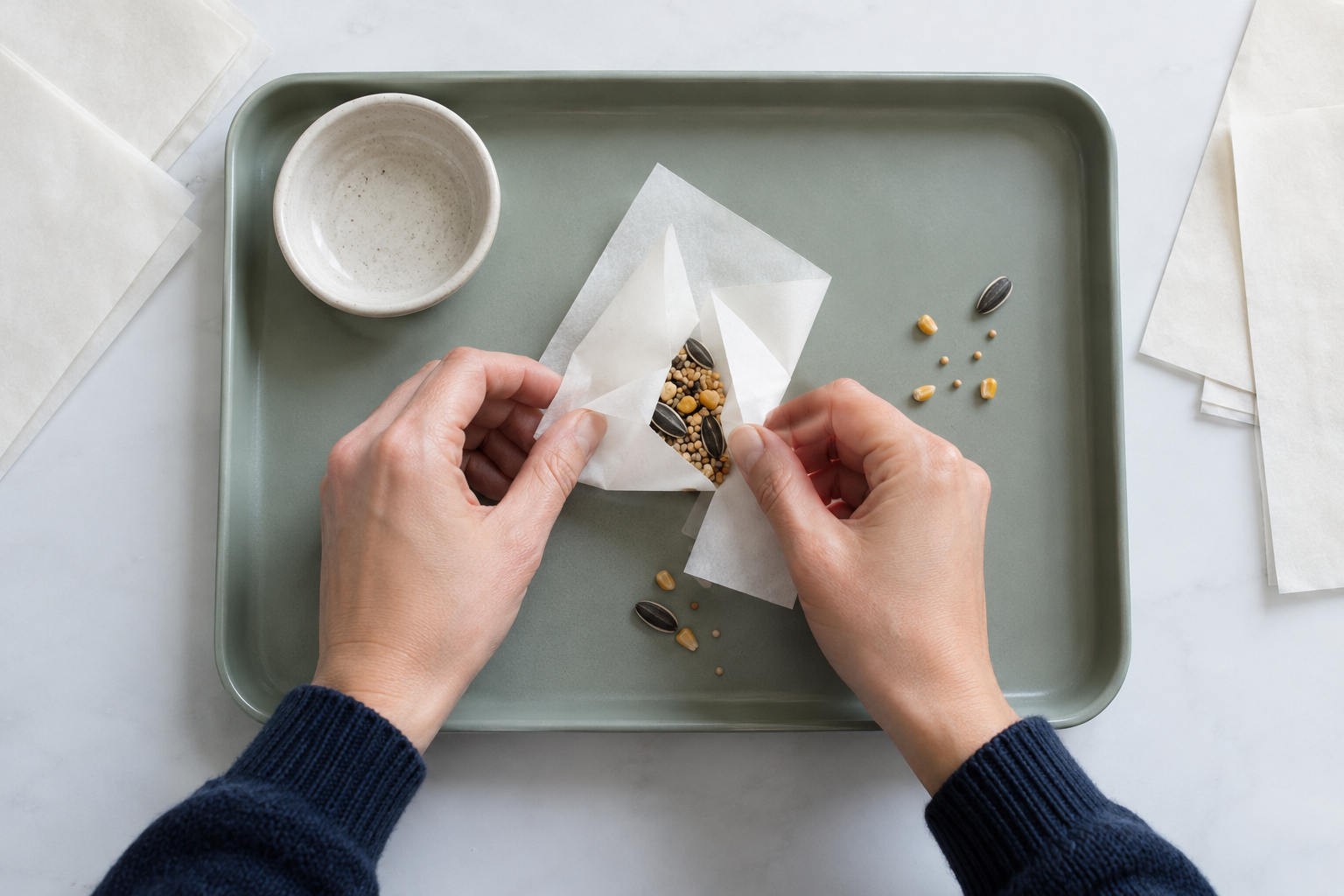
1. A visible paper forage
Place a familiar food item partly visible in a loose fold of plain, unprinted or otherwise bird-safe paper. Let the bird see the food go in. The beginner version requires one small nudge; an experienced bird can open several folds. RSPCA and World Parrot Trust resources support paper-based foraging. Remove wet, heavily shredded, or swallowed material, and never fasten it with staples, tape, or unsafe string.
2. A shallow scatter search
Distribute part of the bird's normal food across a clean, shallow tray or several easy-to-see locations. MSD specifically recommends multiple small feeding locations to encourage movement. Begin on an uncluttered surface with every item visible. Increase distance before adding concealment. Do not use an ingestible, dusty, mold-prone, or unidentified substrate, and do not scatter food where droppings or cleaning residue can contaminate it.
3. A simple container choice
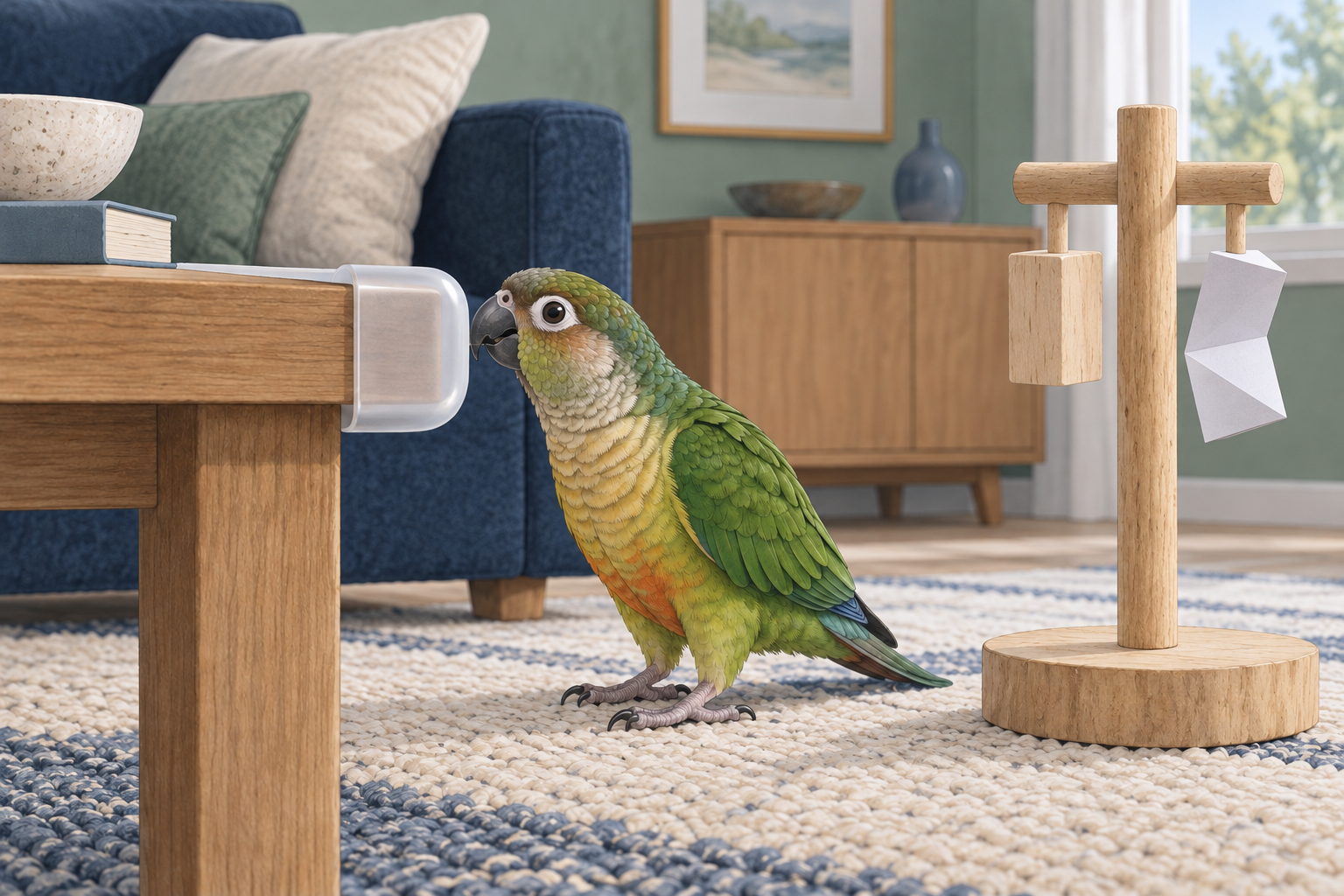
Put a familiar food item in one of two identical open cups while the bird watches. Both cups should be easy to inspect; the goal is choosing and searching, not testing memory. Later, partly cover the cup if the bird remains relaxed. World Parrot Trust foraging guides describe cups and small boxes as concealment options. Avoid containers with tight openings, sharp edges, detachable pieces, or a depth that could trap the bird.
Shred and manipulate
4. A verified destructible station
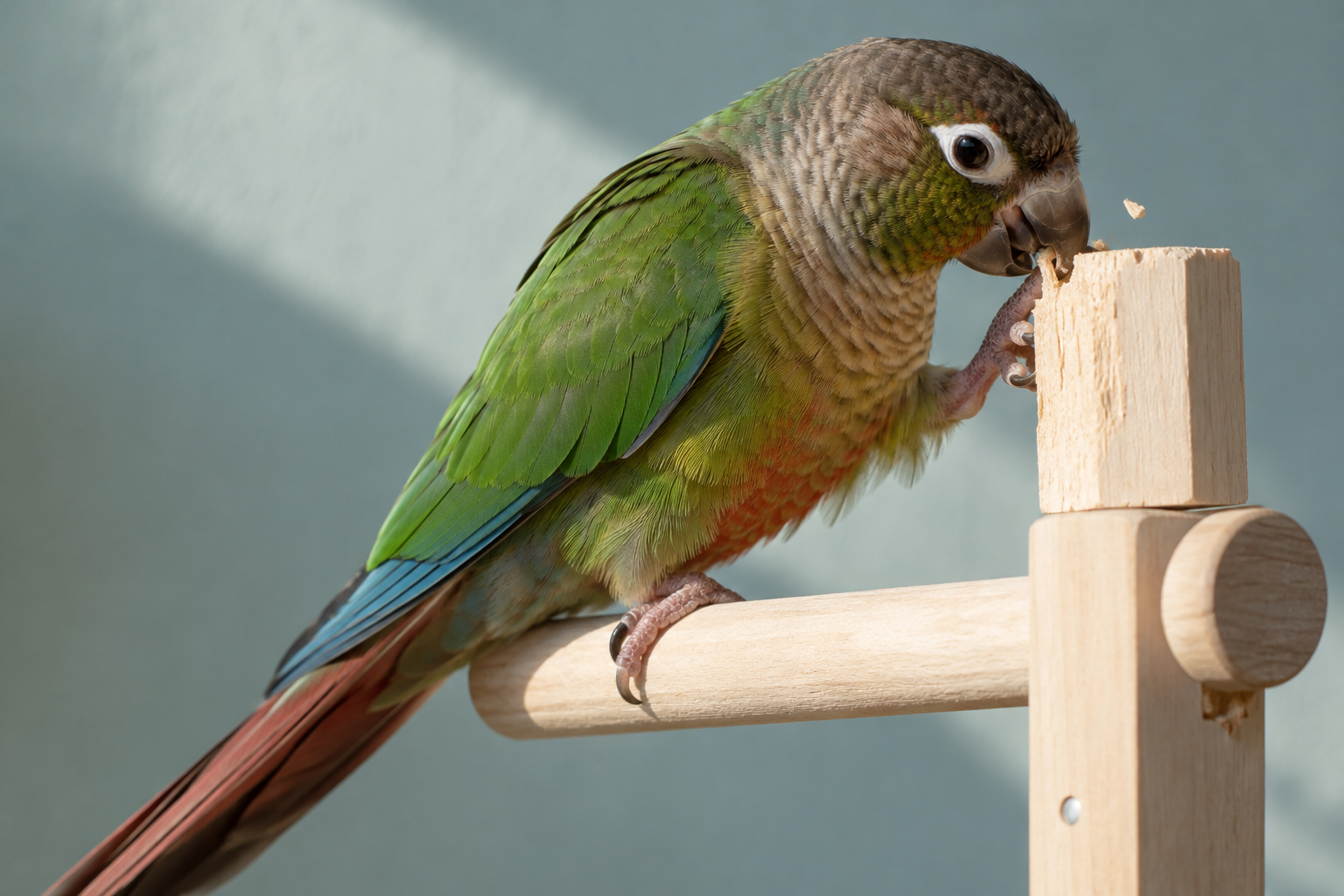
Offer one piece of plain cardboard, untreated bird-safe wood, or another material specifically verified for the bird. RSPCA guidance includes paper, cardboard, and untreated wood while stressing non-toxic materials. Mount it so feet, neck, and beak cannot become caught. Watch what the bird does: shredding and dropping is different from swallowing. Replace the item when wet, soiled, splintered dangerously, or reduced to risky hardware.
5. A foot-toy sorting tray
For a parrot that naturally grasps objects, arrange a few appropriately sized, bird-safe foot toys in a shallow tray. The task can be as simple as picking up and dropping objects of different textures. AAV basic-care guidance recognizes foot and problem-solving toys as enrichment. Start with one familiar object and one new one. Exclude tiny pieces, brittle plastic, paint that can flake, lead-containing hardware, and gaps that could catch toes.
6. A whole-food manipulation task
Present part of the approved daily fresh food in a form that takes gentle work: a broccoli floret secured safely, a strip of leafy green woven loosely through bars, or pomegranate arils in a washable dish. AAV and World Parrot Trust materials describe whole foods as both nutrition and activity. Count the food within the diet, wash it, and remove it promptly. Never improvise with skewers, clips, pits, or plants whose material safety has not been checked.
Move and bathe
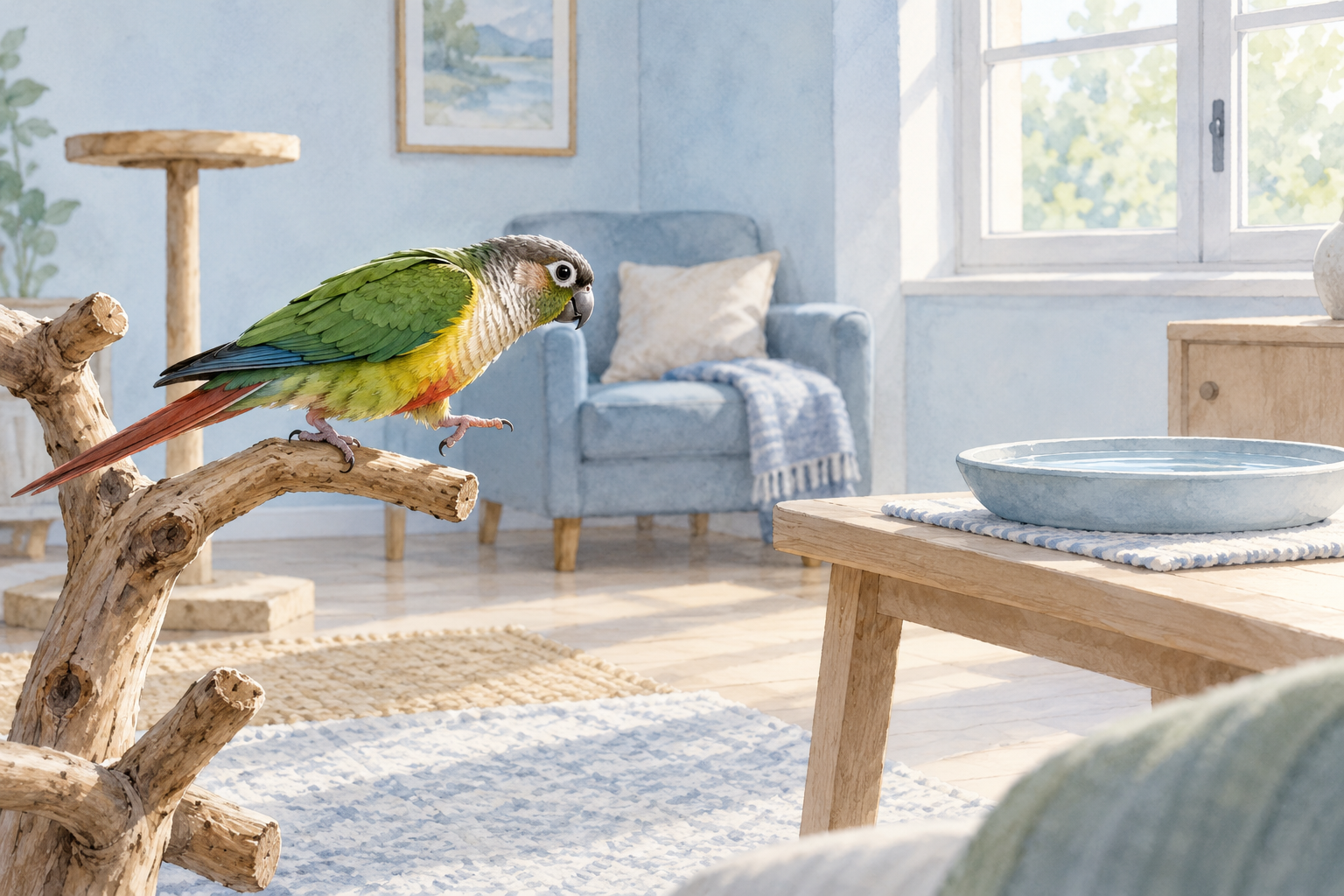
7. A short climbing route
Create a stable route between two familiar perches using suitable horizontal bars, a secure ladder, or a verified climbing element. The AAV identifies climbing as natural behavior and a form of exercise; RSPCA guidance supports ladders, ropes, nets, and safe branches in adequately sized spaces. Begin low and short. Check every attachment, keep falls clear of hard objects, and adapt for disability, poor flight, arthritis, or an unsteady bird with veterinary guidance.
8. A station change
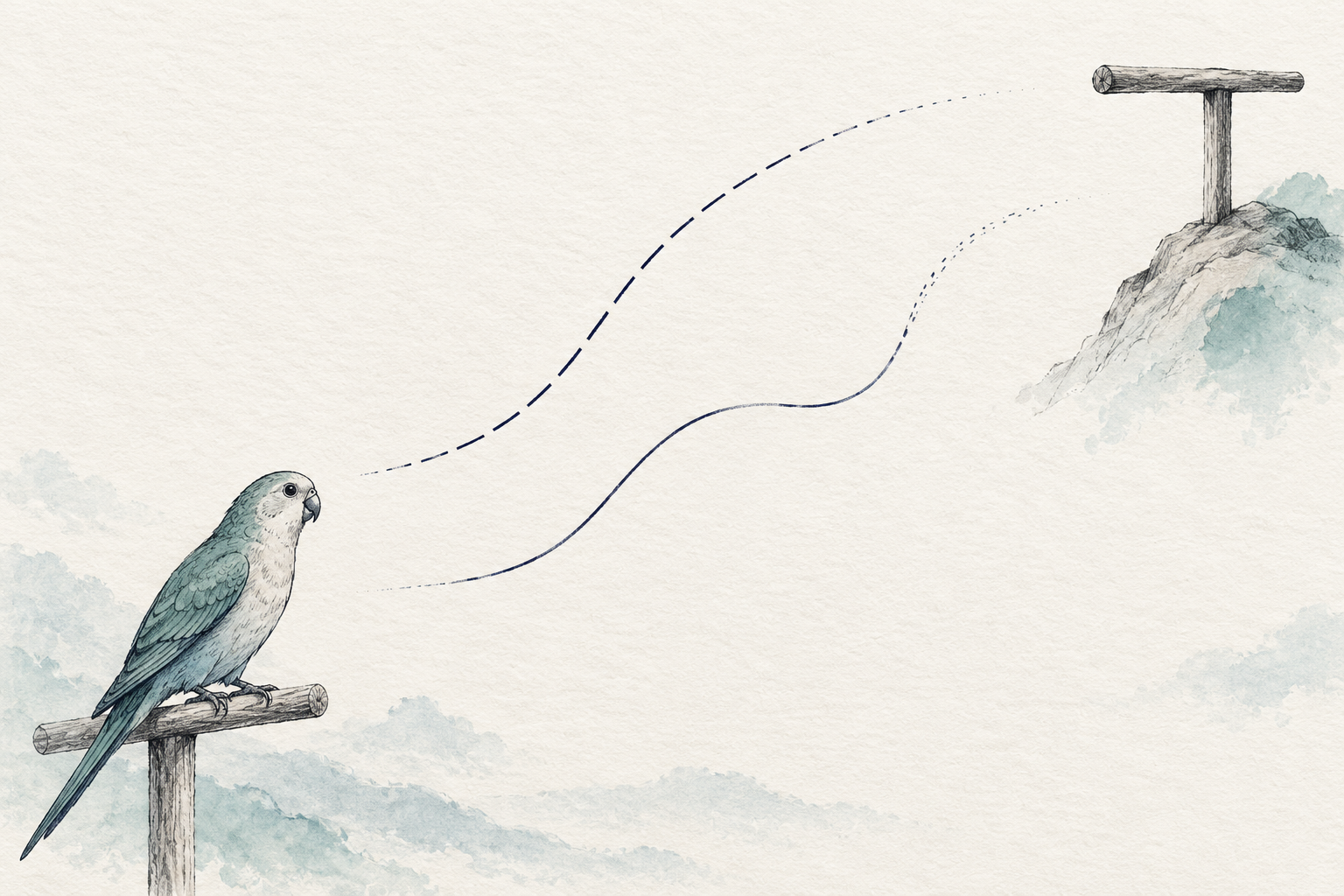
Teach the bird to move between two stable stations for a small reward. At first, place them close enough for one easy step. Later, change their angle or location to invite climbing or flight only where the room is secured. This combines movement with a predictable training cue. Do not lure a hesitant bird across a gap it cannot confidently negotiate, and stop before fatigue or frustration changes the bird's posture and response.
9. A bathing choice
Offer an individual-appropriate option such as a shallow stable dish or a fine mist of plain room-temperature water, following species and veterinary guidance. RSPCA and World Parrot Trust sources include bathing as enrichment and feather-care behavior. Make refusal possible: never force a bird under running water or spray toward the face. Bathe early enough for feathers to dry comfortably, clean the vessel, and prevent access to deep water or unsafe bathroom fixtures.
Listen, train, and choose
10. Controlled sound—with silence available
Try a brief period of low-volume household sound, calm speech, or species-appropriate audio while watching the bird's response. Sensory enrichment should expand choice, not create nonstop noise. Keep a quiet area available and stop if the bird freezes, calls frantically, retreats repeatedly, or cannot settle. Do not use loud recordings to provoke vocalization, leave media running all day, or assume a reaction means enjoyment.
11. A two-minute training game
Practice one already introduced reward-based behavior: touch a target, step to a perch, enter a carrier, or return to a station. The task should be easy enough for frequent success and the bird should be free to disengage. AAV and RSPCA guidance support positive, gradual training. Use tiny rewards counted within the diet, end while the bird is participating comfortably, and never convert the game into forced handling.
12. A two-option choice
Present two safe, familiar alternatives—two perches, two manipulation objects, or two ways to receive approved food—and honor the option the bird approaches. Rotate only one variable so the choice remains understandable. Agency is the activity: there is no wrong answer. Avoid repeatedly presenting a feared object until the bird “gives in,” and do not infer a permanent preference from one selection.
When an idea is too hard or unsafe
Difficulty should increase only after relaxed, reliable engagement. If the bird backs away, becomes very still, lunges defensively, abandons food, repeats a frantic action, or loses balance, return to an easier version or remove the setup. If it takes too long to find food, keep the normal diet accessible while teaching the task; foraging should not cause unintended restriction.
Inspect activities before every use and again afterward. Look for frayed fibers, exposed wire, sharp edges, loosened fasteners, trapped moisture, mold, chewed plastic, or missing pieces. Supervision is not a cure for a fundamentally unsafe design. Retire damaged items immediately.
Keep a short rotation log: function offered, setup, response, and any safety concern. This prevents buying twelve variations of the same activity while movement, bathing, or choice is absent. If behavior changes suddenly, feather damage appears, or the bird becomes persistently withdrawn or distressed, contact an avian veterinarian. Enrichment supports welfare; it does not diagnose or treat disease.
A useful weekly rotation may contain only a few successful activities. Repetition is not failure when the bird remains engaged; constant novelty can be stressful. Preserve familiar options while adding one carefully chosen variation, and retire ideas that repeatedly produce avoidance despite an easier presentation.