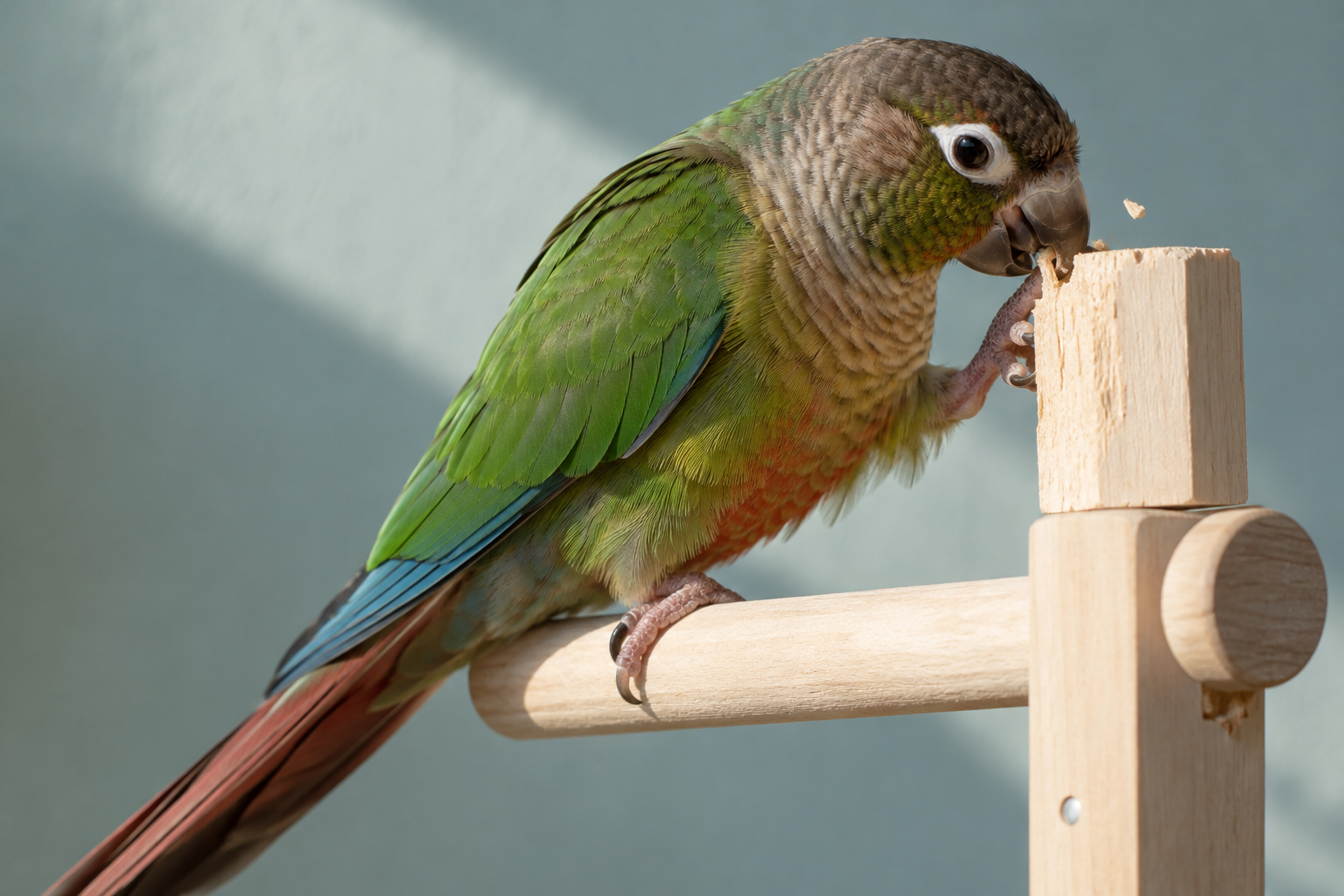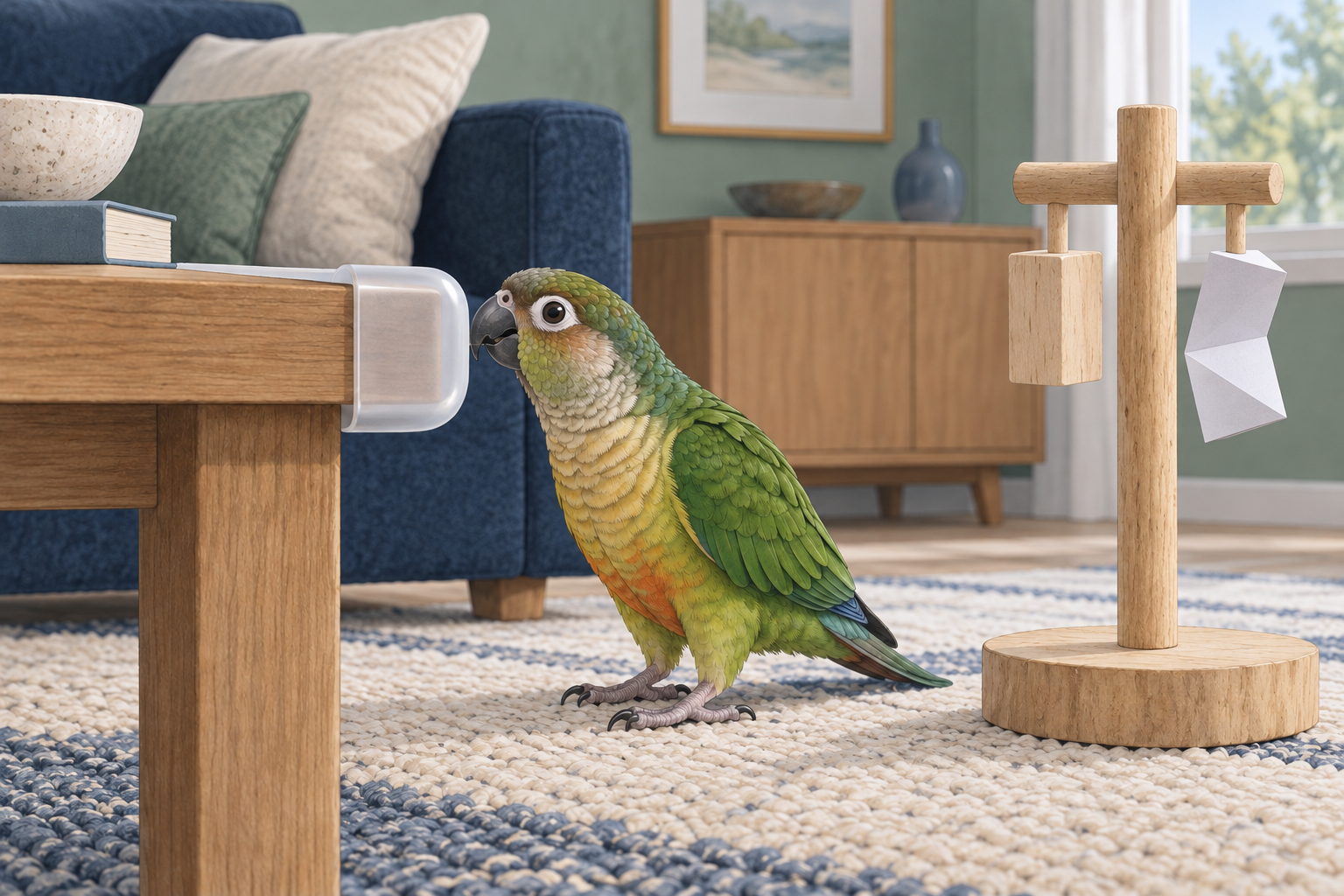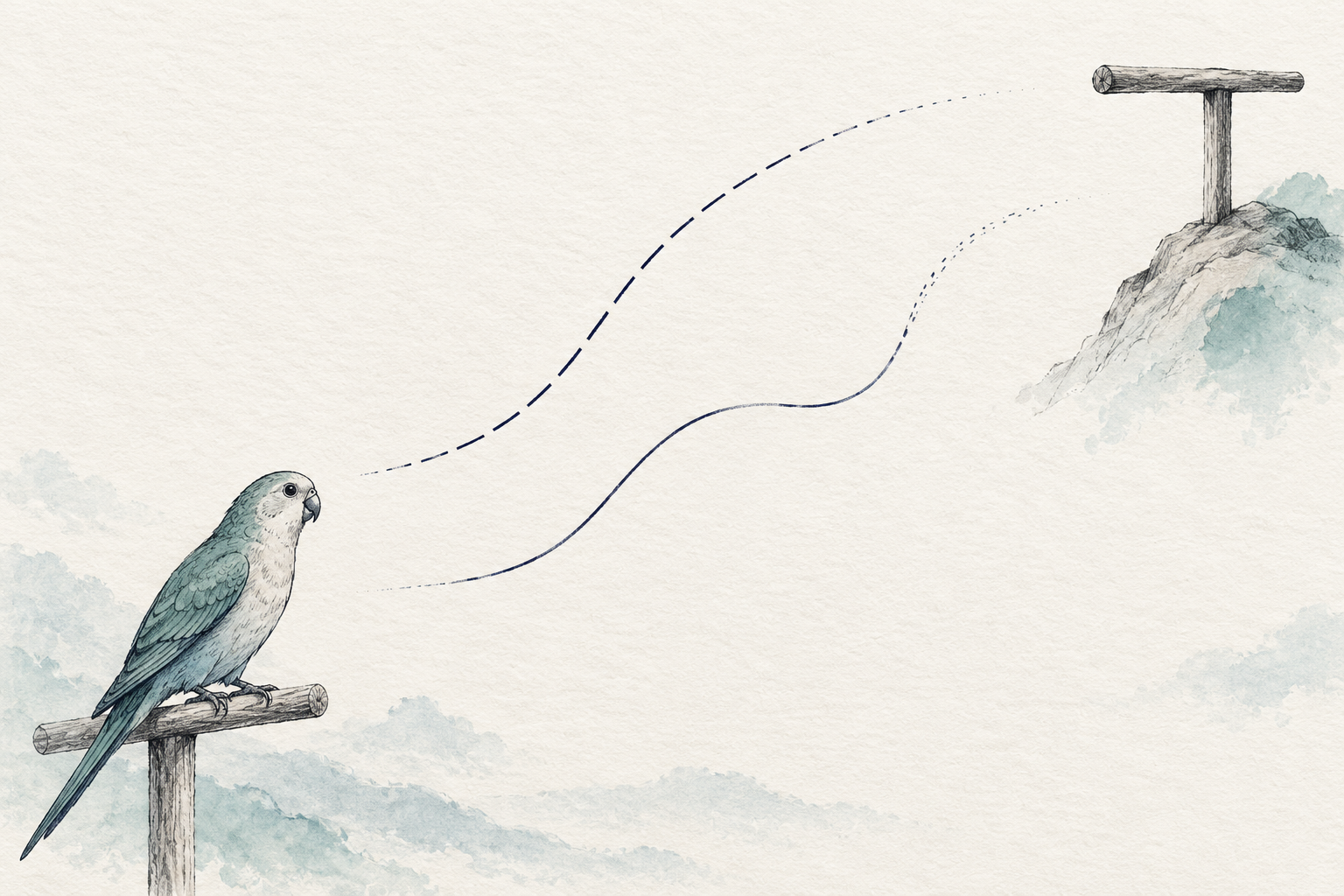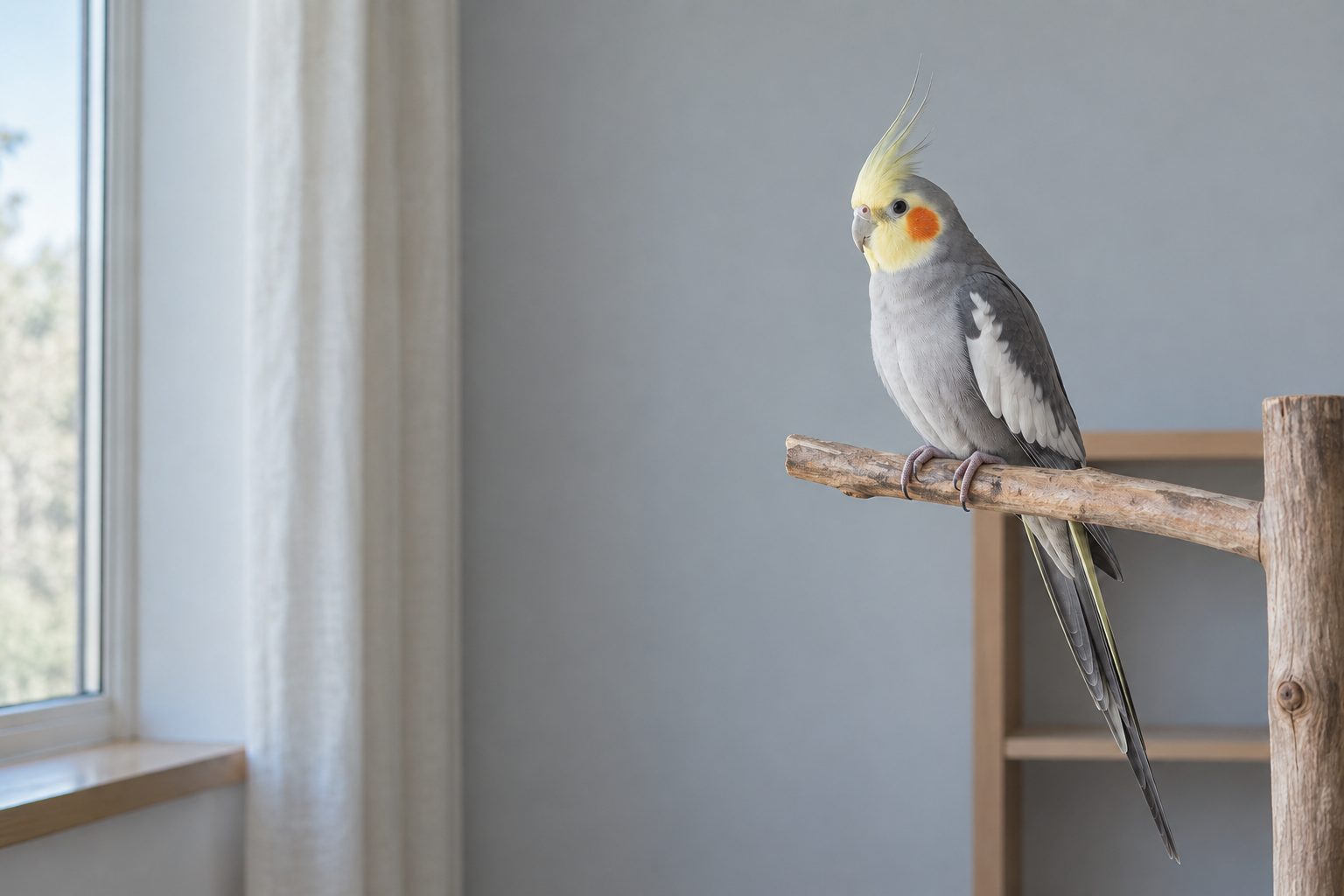
Pet bird body language is not a dictionary in which one feather position always means one emotion. A bird may fluff briefly while resting, change posture before flight, open its beak during play, or become still when frightened. The meaning depends on the whole bird, the sequence of events, the setting, and what is normal for that individual.
A safer method is simple: describe first, interpret second, and act conservatively. This reduces the temptation to label a bird as happy, dominant, jealous, or aggressive from a single photograph or gesture. It also makes your observations more useful if you need help from a veterinarian or behavior professional.
A signal is not a sentence
Start by separating what you can see from the story you are telling about it. “The bird hates me” is an interpretation. “The bird leaned away, held its feathers close, and moved to the far end of the perch when my hand entered” is a description.
Descriptions can be compared over time. They also allow several explanations to remain open. The bird might be afraid of hands, startled by the speed of the approach, protecting space around a resource, or feeling physically unwell. You do not need to decide immediately. You can pause, increase distance, remove pressure, and gather more information.
Veterinarian Christal Pollock's LafeberVet body-language guide groups visible signals into broader patterns such as comfort, fear or stress, and warning behavior. The value is not in turning those groups into rigid labels; it is in noticing clusters. One raised feather is ambiguous. Posture, eyes, wings, tail, feet, vocalization, and movement together are more informative.
Describe the whole bird
Use a head-to-tail scan and neutral words.
Posture and balance: Is the body upright, horizontal, crouched, leaning away, leaning forward, or unusually low? Is weight evenly supported? Does the bird move smoothly, or does it wobble, miss the perch, or favor one foot?
Feathers: Are they sleek, loosely fluffed, tightly held, lifted in a particular area, or persistently puffed over the whole body? A short fluff-and-settle can be ordinary grooming or comfort. Sustained fluffing combined with sleepiness or inactivity can be a health concern.
Head, eyes, and beak: Note head height and direction, blinking, pupil changes where visible, whether the beak is closed or open, and whether the bird reaches toward or away from something. Pupil changes can accompany excitement, interest, fear, or arousal; they do not provide a complete answer by themselves.
Wings and tail: Are the wings relaxed against the body, held away, lifted, drooping, or used to move away? Does the tail fan, tremble, bob with breathing, or simply adjust for balance? Different species display differently, so compare with known normal behavior for that bird.
Feet and movement: Is the bird gripping securely, shifting weight, stepping toward an object, retreating, lunging, freezing, or trying to fly? Movement often tells you whether the bird wants more distance. Respecting that information can prevent escalation.
Sound: Record the actual sound—soft chatter, alarm calls, hissing, growling, silence, or a changed voice—rather than assuming its emotional meaning. The MSD Veterinary Manual notes that birds are naturally vocal, but a notable reduction or change in vocalization can also accompany illness.
Video can help when the behavior is safe to record. Capture a short sequence from a distance without provoking the bird to repeat it. A clip that includes what happened immediately before and after is more useful than a close-up of the most dramatic second.
Add sequence, setting, and baseline
Next ask four questions.
- What happened just before? A hand approached, a door opened, another bird called, a vacuum started, or the bird had been resting.
- What happened next? The bird relaxed when distance increased, pursued a person, returned to eating, or remained withdrawn.
- Where and when did it happen? Near a cage door, food bowl, favored person, dark corner, bedtime, or unfamiliar object.
- Is this different from the bird's baseline? A normally active bird becoming quiet deserves different attention from a brief pause in an already calm routine.
Repeated patterns are more informative than isolated moments. Keep concise notes: date and time, setting, observable behavior, immediate trigger, your response, and what followed. Avoid emotional labels in the first line. This record may reveal that approaches from above consistently cause retreat, that a session is too long, or that a behavior appears only around a particular object.
Context does not excuse pushing through a warning. If a bird leans away, freezes, opens its beak, or moves to escape as you continue approaching, pause. Give space before the bird must use a stronger behavior such as lunging or biting. Training should make desired actions easier and safer, not prove that a person can ignore refusal.
Three scenes, three conservative responses

These fictional scenes show the method. They are not diagnoses.
Scene one: the hand at the cage door. A cockatiel had been preening. When a hand enters, the bird becomes tall and still, holds feathers close, turns sideways, and moves along the perch away from the fingers. Instead of deciding the bird is “moody,” describe the distance-increasing behavior. Withdraw the hand, complete only essential care slowly, and later work below the bird's fear threshold with brief reward-based sessions. If the response appeared suddenly in a previously comfortable bird, consider pain or illness and call the avian clinic.
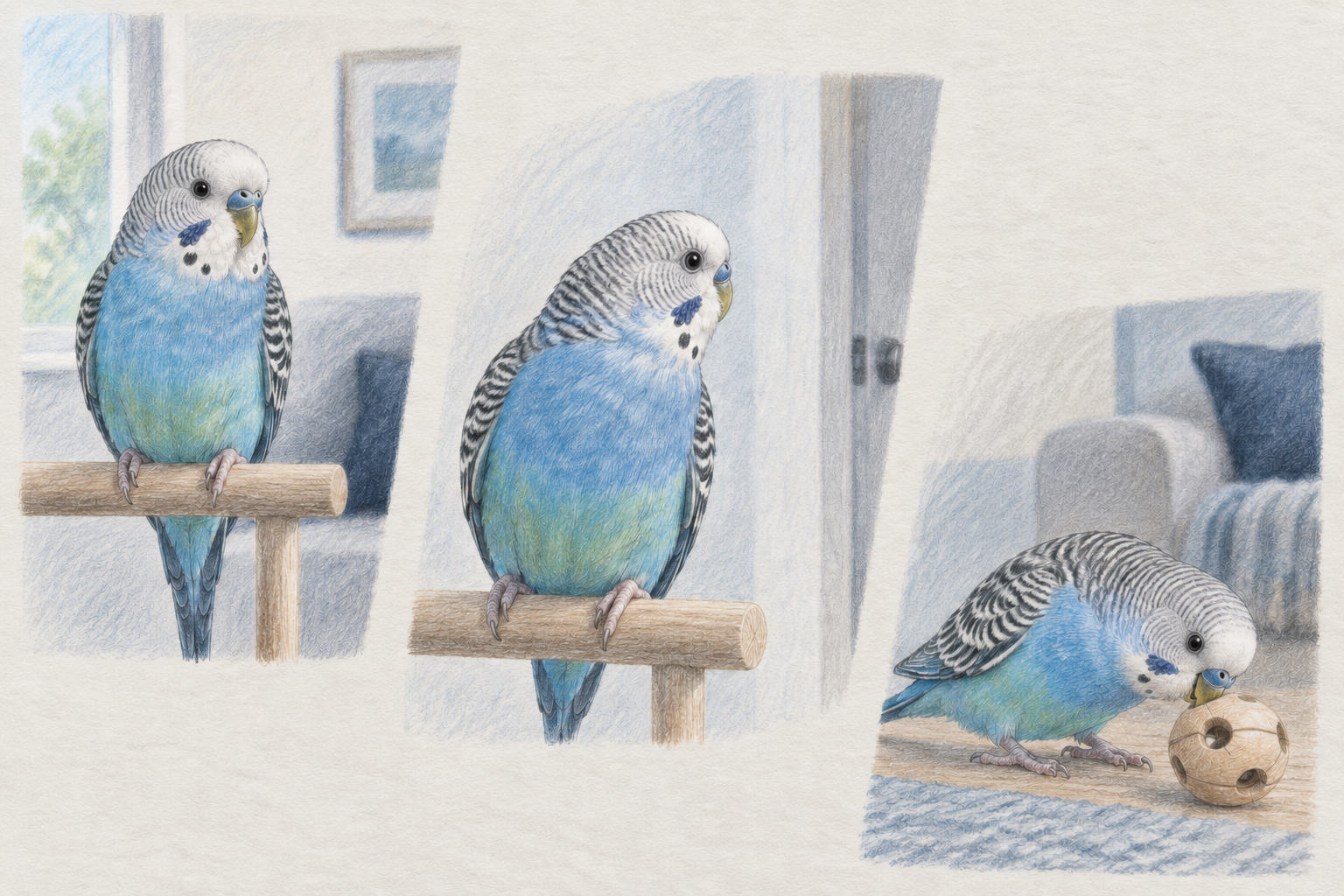
Scene two: the animated budgie. During a familiar training session, a budgie approaches quickly, vocalizes, moves between perches, and shows rapid pupil changes. That cluster may reflect high arousal, but it does not tell you whether the next moment will be playful, frustrated, or defensive. Slow the session, offer an easy known cue, keep fingers out of the bird's face, and watch whether posture softens. End before arousal escalates.
Scene three: the quiet bird after a household change. A normally active parrot is quieter after furniture is moved. The bird remains balanced, eats when unobserved, and gradually resumes activity when the room becomes calm. Reducing novelty and allowing time may be reasonable while continuing close observation. If the bird also eats less, stays fluffed, sleeps more, breathes differently, produces unusual droppings, or fails to return toward baseline, treat the change as a health question rather than a training problem.
In each scene, the response protects safety while leaving room for uncertainty. It does not require mind-reading. It uses the least intrusive action likely to reduce pressure and then reassesses the whole pattern.
When observation becomes a health question
Behavior and health cannot be cleanly separated. Birds often conceal illness, and early signs may be changes in routine rather than an obvious injury. Contact an avian veterinarian promptly for a sustained or sudden change in appetite, activity, vocalization, posture, balance, breathing, droppings, or usual social behavior. Breathing difficulty, collapse, marked weakness, active bleeding, or remaining on the cage floor can require urgent care.
Do not attempt to train away behavior that may reflect pain or illness. Bring the veterinarian a neutral description, the timeline, relevant video, diet information, and any recent environmental changes. Avoid assigning a diagnosis based on online examples.
Reading body language well does not mean always knowing what a bird feels. It means noticing enough detail to respond without forcing the bird, recognizing patterns over time, and escalating when the pattern may be medical. Describe first. Interpret cautiously. Choose the action that preserves safety and the bird's ability to move away.