A cage described as “small,” “medium,” or “for cockatiels” has not yet told you whether it is safe. Marketing labels are inconsistent, and the photograph on a product page can hide scale, bar spacing, awkward doors, or a shape that leaves little usable room.
Choose a cage by measuring the bird, the enclosure, and the way the bird will move through it. Then check the details that affect escape, entrapment, cleaning, and everyday care. No single dimension works for every species, individual, or setup, so treat this guide as a decision method rather than a universal size chart.
Ignore the size label; take measurements
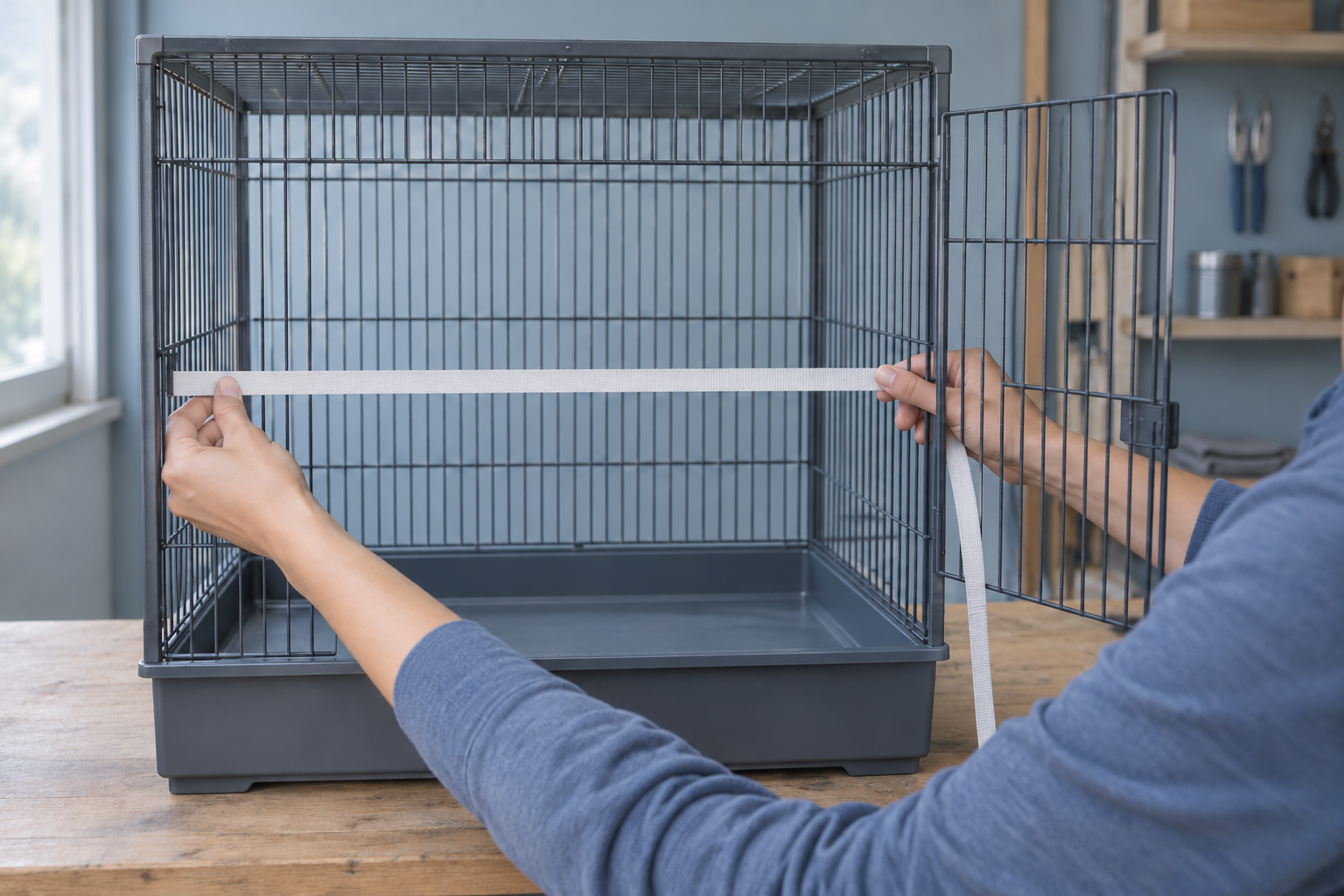
Record the cage's interior width, depth, and height. Do not assume the external dimensions are usable space; roofs, stands, seed guards, and decorative frames can add centimeters without giving the bird more room. Ask for the clear dimensions between the bars and for the usable space above the tray or grate.
Measure the main door opening as well as feeder doors. A bird, your hand, a perch, and a carrier transfer all need workable access. Record the distance between bars at several locations, including curved areas, corners, and door frames. Check whether the spacing changes around feeder openings or decorative details.
Before buying, write down:
- internal width, depth, and height;
- bar spacing at the narrowest and widest points;
- main and feeder-door openings;
- lock type and any gaps around moving parts;
- interior clearance after perches and bowls are installed;
- tray, grate, and cleaning access;
- manufacturer information about materials and finish.
If a seller cannot provide these basics, a species picture on the box is not a substitute.
Space must support movement
The MSD Veterinary Manual advises that a cage be large enough for a bird to extend its wings without touching the sides and describes rectangular cages as preferable to round ones. That is a starting test, not the full requirement. A bird also needs to move between perches, turn without scraping tail feathers, climb without colliding with bowls, and use its feet and wings in species-appropriate ways.
The World Parrot Trust's species profiles illustrate why species-specific checking matters. A budgie is a small, active flier, while a cockatiel has a substantially larger body and a long tail. Two cages with the same marketing label may affect them very differently. An enclosure that is technically tall may still be cramped if most of its width is occupied by a perch and toys.
Sketch the usable interior. Add the likely perch locations, bowls, and a few enrichment items at their real sizes. Look for clear movement routes rather than packing every surface. The RSPCA recommends providing enrichment without restricting a bird's ability to move freely in the cage.
More cage volume is generally useful only when the spacing, construction, and room placement remain safe. A large enclosure intended for another animal may have gaps that admit a head, poorly placed access doors, or a finish not documented for bird use. “Largest” does not cancel “appropriate.”
Plan for safe exercise outside the cage too. A cage should not be made smaller on the assumption that the bird will always be out, because routines change and temporary confinement may be necessary. At the same time, even a generous cage is not a reason to omit suitable movement, flight, social contact, and enrichment.
Bar spacing and orientation are safety features

Bar spacing must prevent the bird from putting its head through and becoming trapped, while still allowing secure climbing where that behavior is typical. It should be consistent across the whole enclosure. Pay special attention to tapered gaps, decorative scrolls, damaged welds, and the spaces beside doors and removable trays.
Veterinary references publish example spacing by broad bird type, but those figures vary and can age. LafeberVet's caging reference, for example, provides narrower sample ranges for budgies than for cockatiels. Use such numbers as prompts to verify a particular species and individual with a current avian-veterinary or reputable species source—not as permission to ignore the bird in front of you.
Horizontal bars can provide useful climbing surfaces for many parrots; vertical bars may still be part of a safe design when spacing and construction are appropriate. Rather than selecting solely by orientation, inspect how the bird will grip, climb, and move without encountering loose wire, sharp ends, pinch points, or widening gaps.
Run a hand and a cloth carefully over accessible surfaces. Snagging can reveal a rough weld or edge. Reject a cage with broken bars, flaking coating, rust, or an unidentified repair. If the material or finish is unclear, ask the manufacturer for documentation and discuss it with an avian veterinarian before exposing the bird.
Doors, locks, materials, and cleaning access
The main door should be large enough for calm transfers and routine setup changes. A tiny opening encourages awkward reaching and can make emergencies harder. Watch what happens when the door is open: Does it create a sharp corner? Can it fall shut? Is there a gap around the hinge where toes or a head could be trapped?
Many parrots learn to lift simple sliding doors or feeder hatches. Test every closure from inside and outside. A secure lock should not create a new pinch point, and any added fastener should be made from a material suitable for bird contact. Do not depend on a clip that a persistent bird can manipulate or that a caregiver will forget to replace.
Good cleaning access is part of preventive care. You should be able to change the liner, remove bowls, wipe bars, and inspect the bottom without dismantling the entire home or forcing the bird into a frightening confrontation. Examine the relationship between the grate and tray: accumulated debris should be visible and removable, and gaps should not permit escape or entrapment when a component is pulled out.
Perches and bowls must attach securely without distorting bars. Natural perches should vary in appropriate diameter and texture, but they also need positions that keep droppings out of food and water and leave movement routes open. Avoid placing a single uniform dowel as the bird's only standing surface.
Shape affects usable space. Rectangular designs generally make it easier to arrange clear routes, corners for retreat, and stable fittings. Decorative domes and complex silhouettes may look attractive but can reduce interior width, introduce converging gaps, or make cleaning harder. Judge the space the bird can use, not the cage as furniture.
Apply the checklist to two fictional cages

Imagine a budgie listing called Cage A. The seller calls it “roomy” and shows two budgies inside. The external measurements include a wide seed guard, but the interior length is not listed. Bar spacing is described only as “small,” and the feeder doors lift without locks. The correct next step is not to guess from the photo. Request the interior measurements and spacing, confirm every opening and lock, and compare them with current budgie-specific guidance. If the seller cannot answer, reject the listing.
Now consider Cage B for a cockatiel. It provides verified, consistent spacing and a broad rectangular interior, but its main perch crosses the center at tail height and the door is too narrow for a calm transfer. The cage is not automatically right because its dimensions look generous. Ask whether perches can be repositioned and whether the access works safely. If not, continue searching.
Neither example is a product endorsement, and neither can be decided by one measurement. Use a sequence: verify the individual bird's needs; measure usable space; check every gap; inspect construction and finish; test doors and locks; place essential furnishings on a sketch; and confirm that cleaning and transfers can happen safely.
The best cage is not the one with the most decorative features or the most confident label. It is the enclosure whose dimensions and details you can verify, that supports natural movement without crowding, and that remains safe during ordinary care. When the species, an unusual body size, disability, or material is uncertain, take the measurements to an avian veterinarian before buying.