A cage liner has three practical jobs: make waste easy to see, make the tray easy to clean, and avoid adding an unnecessary exposure. It does not need to look like forest floor, absorb every odor, or entertain the bird. In many companion-bird cages, the best-performing option is deliberately boring.
This is a research-based category review, not a hands-on test or a diagnosis guide. Recommendations assume a cage with a grate or other design that prevents routine access to the tray. If a bird can reach and chew the liner, material safety and the enclosure setup need individual review.
The scorecard: visibility, removal, exposure, and upkeep
Each system is judged on five questions.
- Can a caregiver see daily changes in droppings and debris?
- Can the soiled layer be removed completely and promptly?
- Does the material add dust, fragrance, grit, fibers, or an ingestion opportunity?
- Does the system encourage daily attention rather than hiding buildup?
- Can the household sustain its cost, storage, and waste routine?
Visibility matters because a change in a bird's normal droppings can be useful information to share with an avian veterinarian. A liner cannot identify disease. It can only preserve a readable record. The AAV recommends plain paper changed daily so owners can monitor droppings, while VCA similarly favors disposable paper and warns that particulate coverings make observation difficult.
No material earns points merely for being sold for birds. Packaging is not evidence that a product suits a particular enclosure or bird.
Plain paper and commercial paper systems
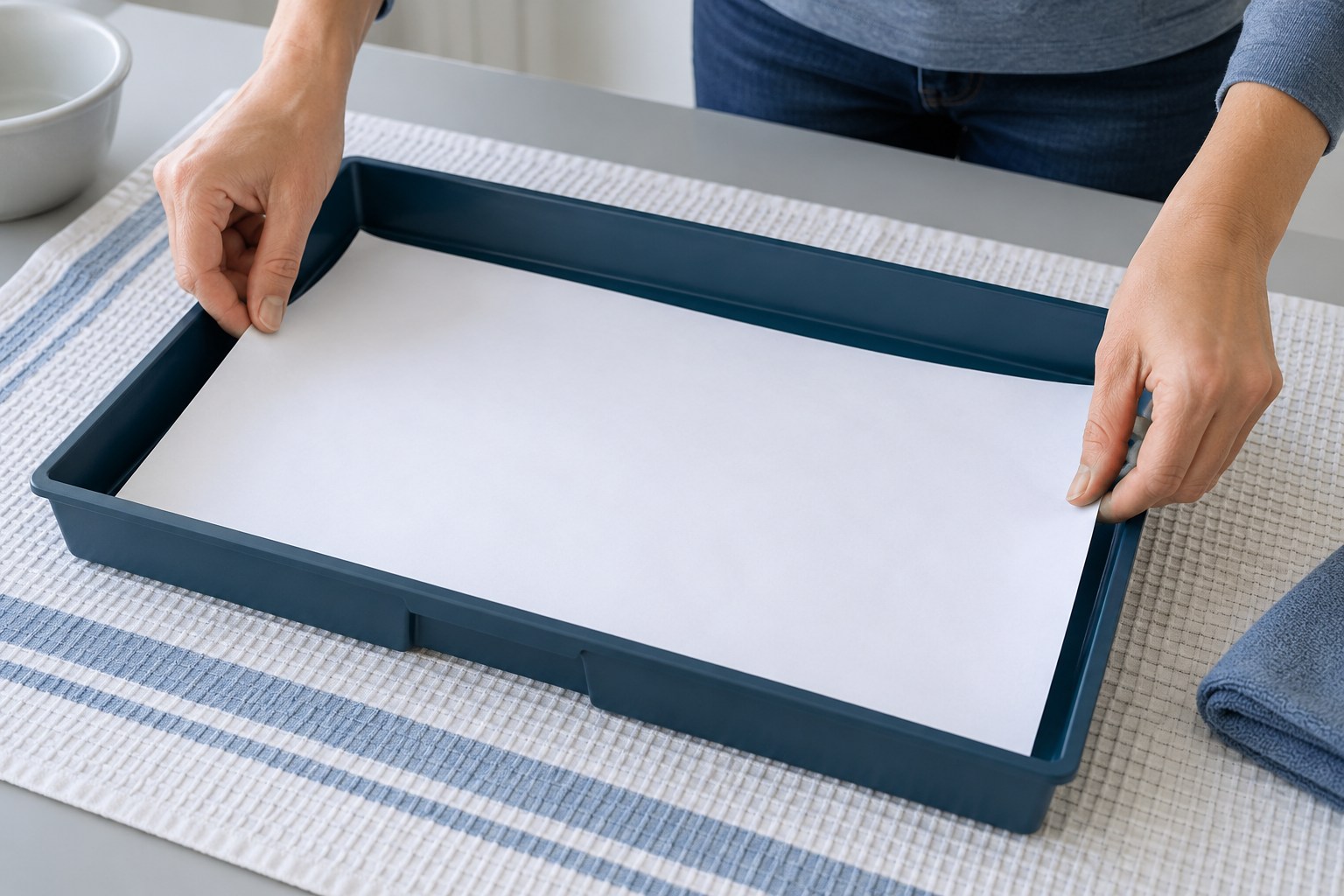
Plain unprinted paper, paper towels, and ordinary newspaper score highest for visibility and complete removal. A fresh sheet creates a clear daily surface; the entire soiled layer can be lifted out; and the supply is easy to size. White paper offers the clearest contrast. Newspaper is less visually clean but remains readable when changed promptly. VCA notes that modern newsprint does not contain lead, although ink may mark light feathers if a bird reaches it.
The weakness is waste. A correctly sized sheet used daily can feel disposable in every sense. Reduce excess by cutting paper to the tray dimensions and using only the layers required for practical removal. Do not stack a week's worth and peel only the top when moisture has reached lower layers. A clean-looking surface does not make hidden damp paper clean.
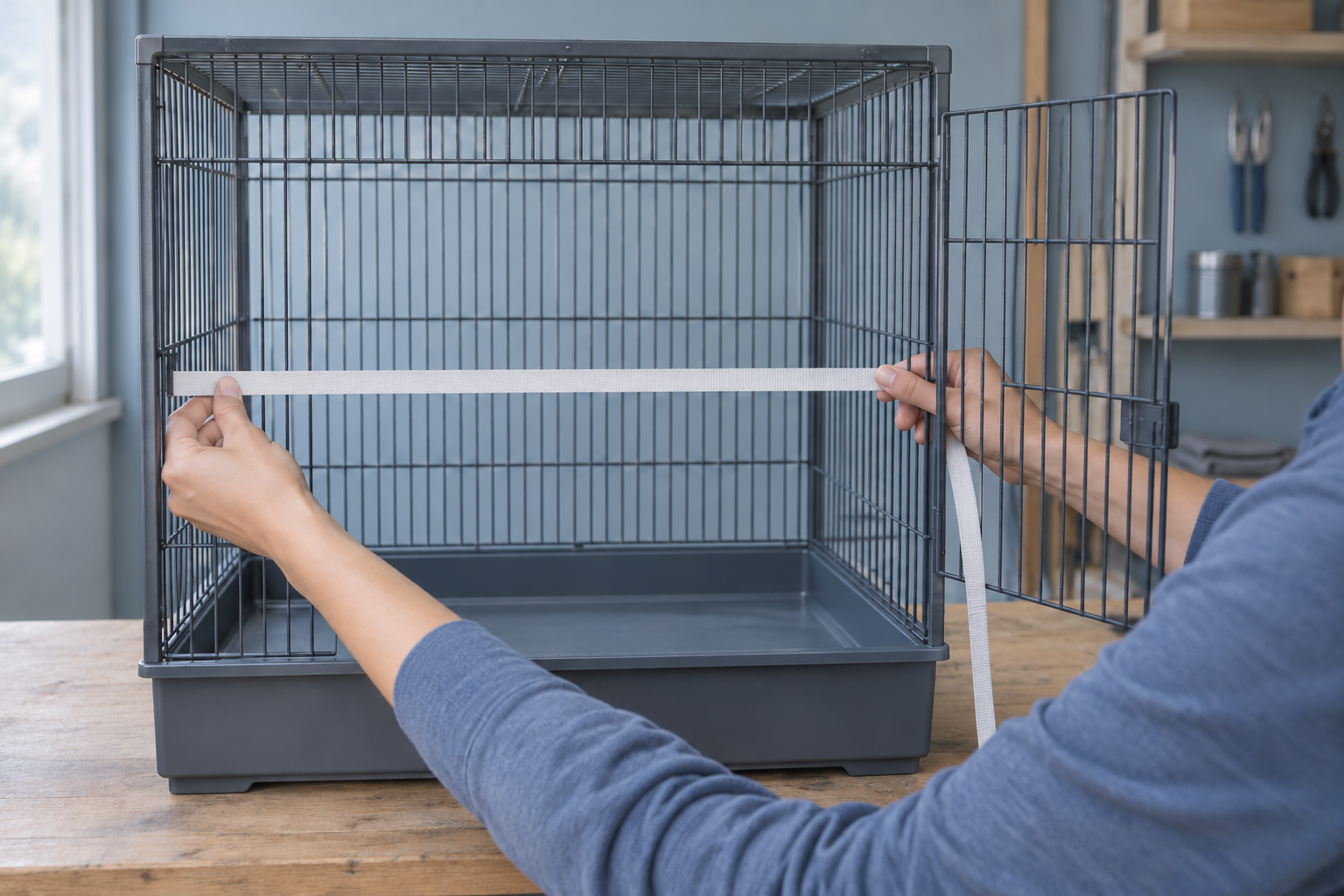
Pre-cut commercial paper liners perform much like plain paper when they are uncoated, correctly sized, and free of added fragrance. Their advantage is convenience, not superior bird health. Check the actual material and whether a waxy, adhesive, treated, or absorbent layer is present. If the manufacturer does not disclose enough to assess safe use, the unknown counts against the product.
Paper pellets and loose recycled-paper bedding are different from flat paper. They absorb moisture and can reduce visible mess, but that very concealment lowers the monitoring score. VCA lists shredded or recycled paper among particulate options it does not recommend for cage bottoms because of ingestion, maintenance, and visibility concerns. A product described as paper is not automatically equivalent to a plain sheet.
Loose substrates: pellets, plants, sand, and grit
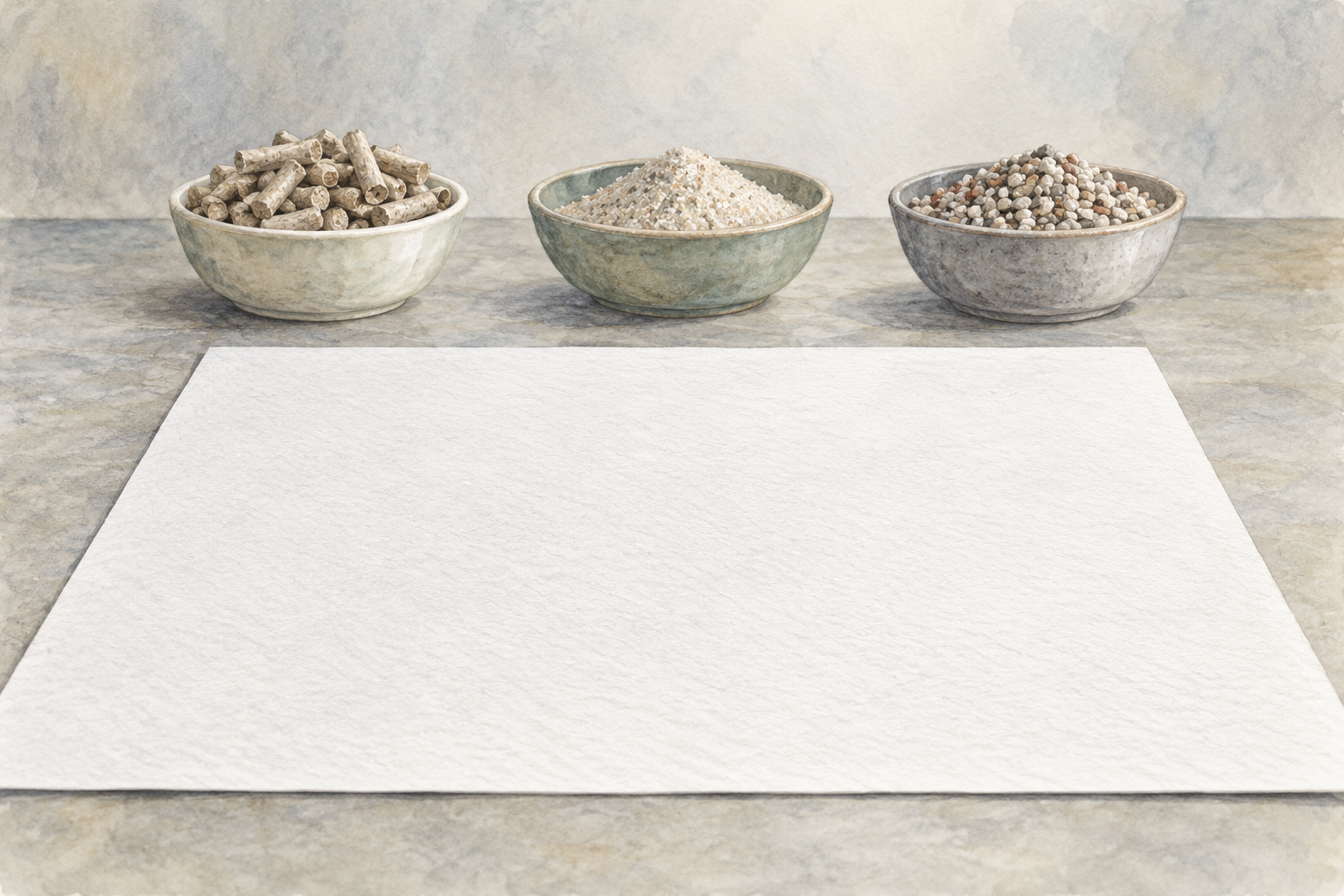
Loose substrates often promise absorbency or a natural appearance. For a typical parrot, budgie, cockatiel, or similar companion bird above a tray, they usually solve the wrong problem. Droppings disappear into the material, wet areas can remain below the surface, and scattered particles complicate complete daily removal.
Wood shavings or chips score poorly. Aromatic wood dust may irritate the respiratory system; pieces can be ingested; and damp organic material can support microbial growth when left in place. Even a product marketed as kiln-dried or low-dust still obscures the tray. This review does not generalize bedding standards from poultry, mammals, or ground-dwelling species to caged companion birds.
Corncob, plant-fiber, husk, or similar organic substrates also hide droppings and moisture. A package's words “natural,” “biodegradable,” or “odor control” do not answer how quickly wet material is removed or whether the bird can reach it. Environmental benefit must include manufacturing, transport, replacement frequency, and disposal—not just plant origin.
Mineral, clay, or cat-litter-style products receive the lowest score. Dust, fragrance, clumping agents, and ingestion are avoidable uncertainties, and the surface masks daily evidence. VCA specifically advises against clay and cat litter for bird cage bottoms.
Sandpaper liners, sand, and grit are not routine cage-floor upgrades. VCA warns that birds may ingest material from sandpaper liners, with possible irritation or obstruction. The AAV explains that pet parrots do not need supplied grit or gravel and that excessive mineral material can damage or obstruct the gastrointestinal tract. Some species that swallow seed whole have different grit biology, but that question belongs with an avian veterinarian; it does not make a deep sand tray a universal choice.
Loose substrate may appear tidy because waste is visually diluted. That is cosmetic performance, not hygiene performance. If a system makes yesterday difficult to distinguish from today, it fails the core job.
Reusable mats and bare trays
Reusable washable mats can reduce disposable paper use, but only with disciplined rotation. The material must be smooth, nonfraying, nonabsorbent or fully washable, free from exposed foam or adhesive, and inaccessible to the bird. A mat that retains stains, odor, detergent, or moisture does not provide a reliable observation surface. Fabric and looped material add snagging and fiber risks if the bird can reach them.
Plan at least enough mats for one to be in use while another is cleaned and dried completely. Follow the enclosure manufacturer's instructions and ask an avian veterinarian about any material the bird may contact. This category lacks the straightforward veterinary support that plain disposable paper has, so uncertainty should lower confidence rather than invite stronger marketing claims.
A bare removable tray can work as a cleaning surface when it is smooth, intact, inaccessible, and washed thoroughly every day. It produces no liner waste and makes fresh droppings visible. Its disadvantages are practical: dried material may adhere, cleaning takes more time, and a scratched or damaged coating may be difficult to assess. Never use a tray surface whose metal, coating, or cleaning compatibility is unknown.
Cleaning products require their own safety plan. VCA emphasizes removing chemical residue and keeping birds away from harmful fumes. A reusable system is not environmentally responsible if it leads to infrequent cleaning, heavy chemical use, or a bird's exposure to wet surfaces and vapors.
Choose the system you will inspect every day
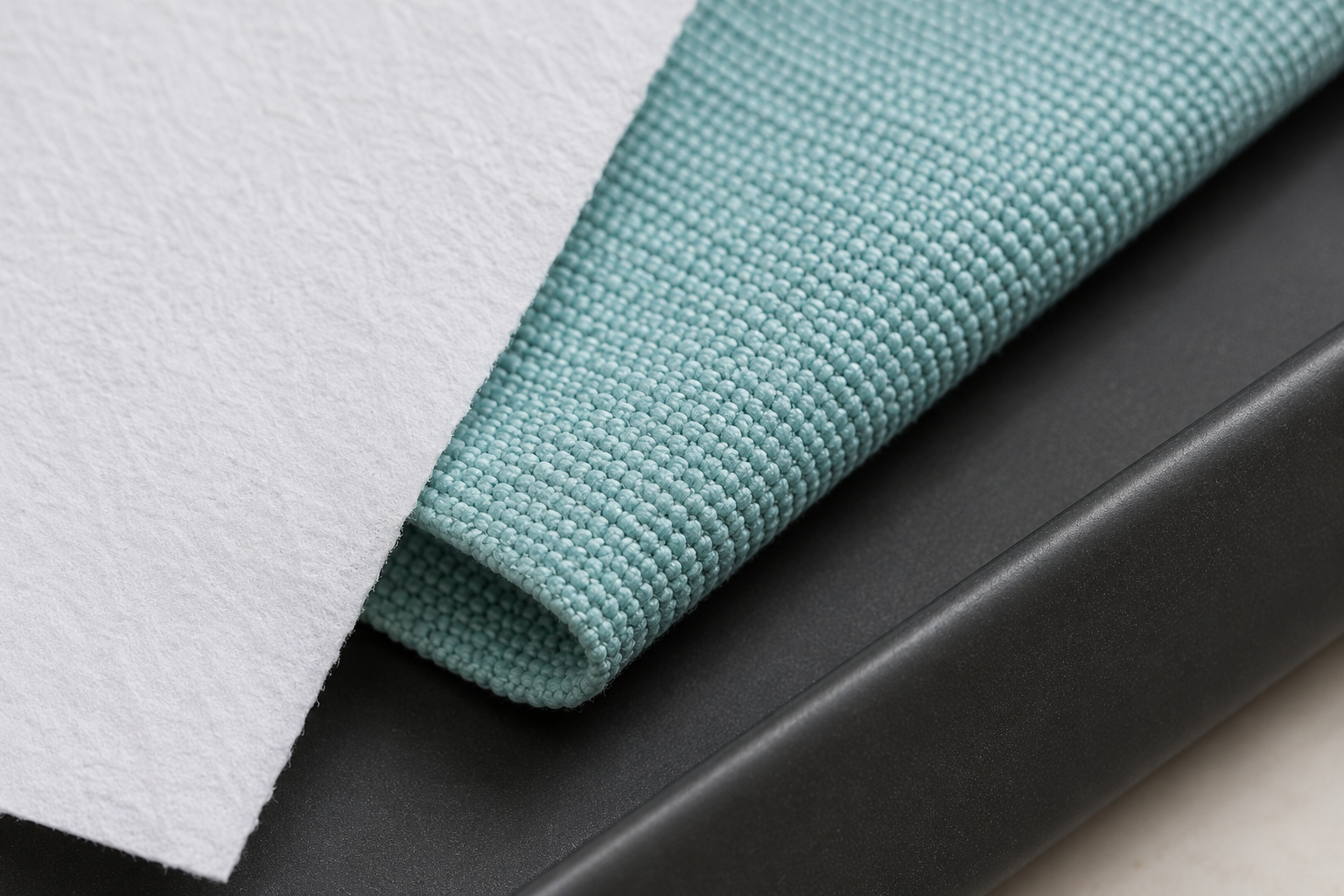
For most grated companion-bird cages, plain flat paper is the strongest default because it wins on visibility, full removal, low complexity, and professional support. Pre-cut paper can buy convenience. A carefully managed bare tray may reduce paper waste. Reusable mats remain a cautious, setup-specific option rather than a general recommendation. Loose substrates and sand-style products perform poorly against the core scorecard.
| System | Daily visibility | Complete removal | Added exposure | Maintenance burden | Overall role |
|---|---|---|---|---|---|
| Plain paper | High | Easy | Low when plain and inaccessible | Low | Strong default |
| Pre-cut flat paper | High | Easy | Check coatings and fragrance | Low | Convenience option |
| Paper pellets | Low | Variable | Dust and ingestion depend on product/access | Medium | Usually avoid for tray monitoring |
| Plant or wood substrate | Low | Difficult | Dust, moisture, ingestion uncertainty | Medium to high | Poor fit for typical companion-bird trays |
| Sand, grit, or clay | Low | Difficult | Dust and ingestion concerns | Medium | Not a routine default |
| Reusable mat | Medium if pale and clean | Requires full wash | Fiber, coating, and residue depend on material | High | Setup-specific |
| Bare smooth tray | High | Wash rather than lift out | Surface and cleaner must be verified | High | Possible with strict daily cleaning |
Whichever system you choose, look before you remove it. Note a meaningful change in the context of the bird's normal pattern, then contact an avian veterinarian when concerned. Do not diagnose from color, count, or wetness alone. The best liner is not the one that makes waste disappear; it is the one that makes daily care honest.