Bird-proofing is not a one-time hunt for dangerous objects. Hazards move with cooking, cleaning, visitors, open doors, other animals, repairs, and the bird's growing confidence. A safer system uses layers: eliminate, isolate, switch off, supervise, and store securely.
This guide helps prevent exposure; it does not diagnose poisoning or provide treatment. If a bird may have inhaled fumes, chewed a hazardous material, been bitten, struck a fan or window, burned itself, or developed breathing difficulty or weakness, contact an avian veterinarian or emergency clinic immediately. Follow professional instructions rather than attempting a home remedy.
Use layers, not a memory test
Start a room-by-room audit with five control columns.
- Eliminate: remove a product or object from the bird's environment entirely.
- Isolate: place the bird behind a closed physical barrier before the hazard appears.
- Switch off: stop fans, hot appliances, and other moving or heated equipment before flight time.
- Supervise: keep an attentive adult present for risks that cannot be removed.
- Store securely: use closed storage that a beak, child, or other animal cannot open.
Supervision is the final layer, not permission to leave every hazard active. A person cannot reliably intercept a fast flight toward a fan, a dog lunge, or invisible fumes. Assign a stronger control wherever possible.
Record who controls each risk and when. “Close the office door before the cage opens” is a routine. “Watch the cat” is a hope.
Photograph or sketch each room after it passes, then note temporary exceptions such as cooking, cleaning, repairs, or visitors. A safe room can become unsafe for an hour; the control plan must cover that hour too.
Kitchen and air: eliminate or isolate
The kitchen should be physically separated from the bird. The MSD Veterinary Manual and CDC both advise against housing birds where food is prepared, and veterinary toxicology sources warn that fumes from overheated polytetrafluoroethylene, commonly associated with some nonstick coatings, can be rapidly fatal to birds. Coatings can occur on cookware and other heated household products, so verify appliances and replace uncertain items rather than relying on distance or an open window.
Combustion fumes, smoke, aerosols, pesticides, solvents, strong cleaning products, perfume, air fresheners, and scented candles can also harm a bird's sensitive respiratory system. Do not spray in another corner and assume dilution makes it safe. Eliminate nonessential airborne products from the bird's environment and isolate the bird well before unavoidable work such as painting, pest treatment, or repairs. Ask the avian clinic how to plan major projects.
Store cleaners, medicines, alcohol, nicotine products, adhesives, paints, and hobby chemicals in closed cabinets outside bird areas. Never mix cleaners. Use any necessary product only according to its label while the bird is safely separated, and ventilate appropriately before return. “Natural,” “green,” or scented does not prove that a product is safe for birds.
Avoid cleaning cages and bird dishes in a kitchen sink. The CDC recommends an outdoor area when practical or a laundry sink or bathtub that is cleaned and disinfected afterward, reducing cross-contamination with human food areas.
Living spaces: switch off and block escape
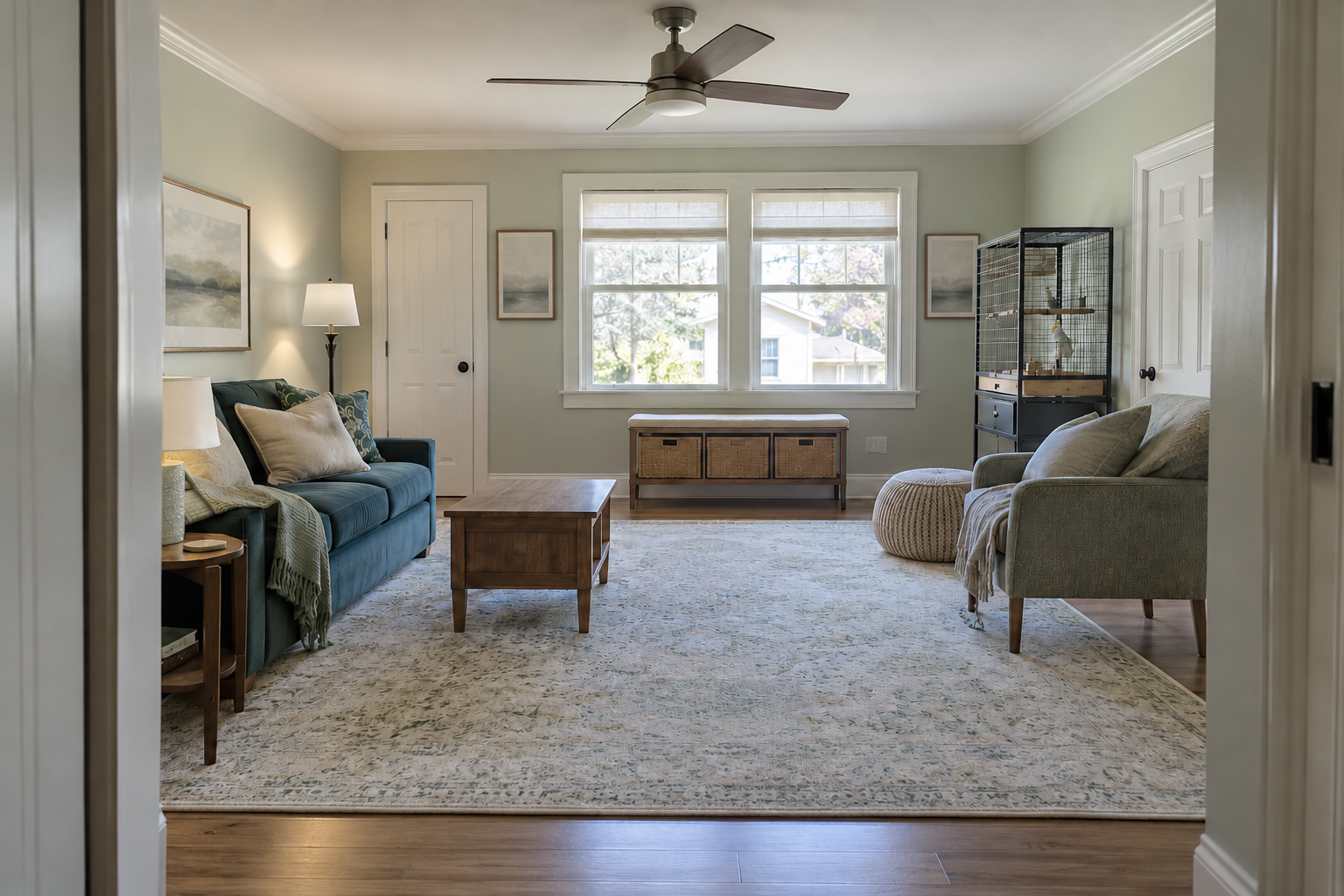
Turn ceiling and portable fans off before opening the cage. Confirm that blades have stopped. Secure windows and exterior doors, and tell everyone in the home that the bird is out. Screens are not automatically escape-proof; inspect frames, latches, and chewable mesh.
Large clear windows and mirrors can look like open flight paths. Use curtains, blinds, decals, or another visible barrier while the bird learns the room. Do not carry an unrestrained bird through an exterior doorway, even if it usually stays on a shoulder.
Block access to open flames, hot pans, radiators, space heaters, fireplaces, and recently heated surfaces. Close toilet lids, drain sinks and tubs, cover aquariums, and remove open buckets or pans of water. The MSD Veterinary Manual identifies open water as a drowning risk.
Route electrical cords behind solid barriers or bird-inaccessible covers. Unplugging removes electrical current but not the risk of ingesting insulation or metal. Remove glue traps and other sticky pest products; a flying bird can become trapped. Check recliners, sofa mechanisms, doors, and drawers before moving them when a bird is free.
Create landing places that are more attractive than shelves, lamps, and door tops. Safe stands do not replace supervision, but they give the bird predictable destinations and make movement easier to manage.
Things a beak can reach
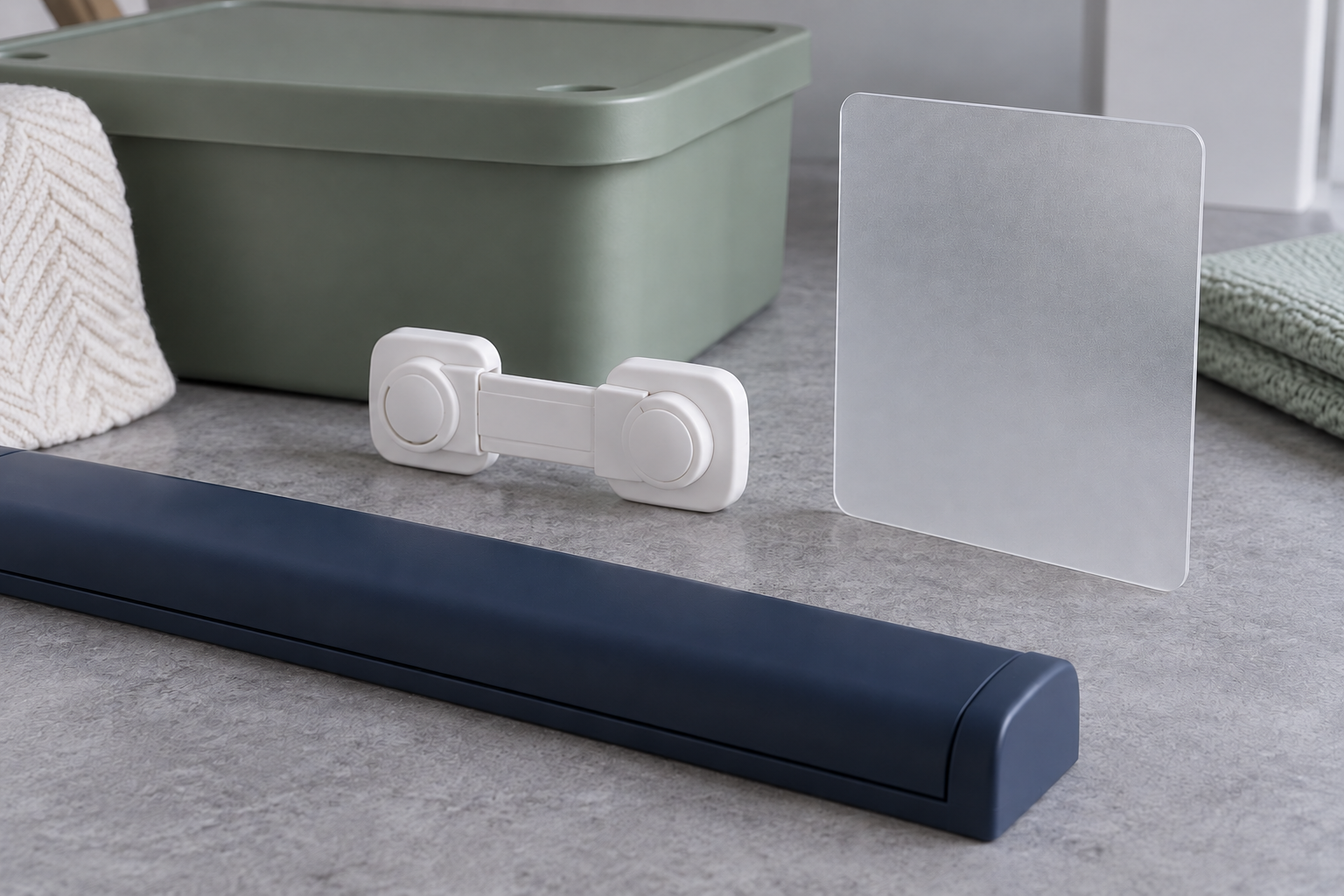
Audit from the bird's height and likely landing points. A parrot can open packages, remove paint, reach through bars, and carry an object to a different room. Small birds can enter narrow gaps that a person overlooks.
Keep known toxic foods out of reach, including avocado, and verify every unfamiliar food before offering it. Do not turn one short list into proof that everything omitted is safe. Plants require exact identification; common names are unreliable, and pesticides or fertilizers can add risk even when the plant itself is considered suitable.
Inspect cage hardware, bells, chains, curtain weights, jewelry, paint, solder, hardware cloth, and old fixtures for accessible metals or deteriorating coatings. Lead, zinc, and other materials can be hazardous, but appearance alone cannot certify composition. Buy from reputable sources, retain material information, remove damaged or unknown items, and ask the avian veterinarian about testing when exposure is possible.
Remove small objects that can be swallowed or trap toes and tongues: earrings, batteries, magnets, pins, rubber pieces, frayed fibers, loose clips, and broken toy parts. Review children's craft areas and home offices, where glue, ink, staples, and electronic components may be available.
Store rubbish and compost behind a secure door. Moldy food, medication packaging, sharp cans, and contaminated tissues can all become reachable when a curious bird learns to lift a lid.
Children and other pets: separation is a control
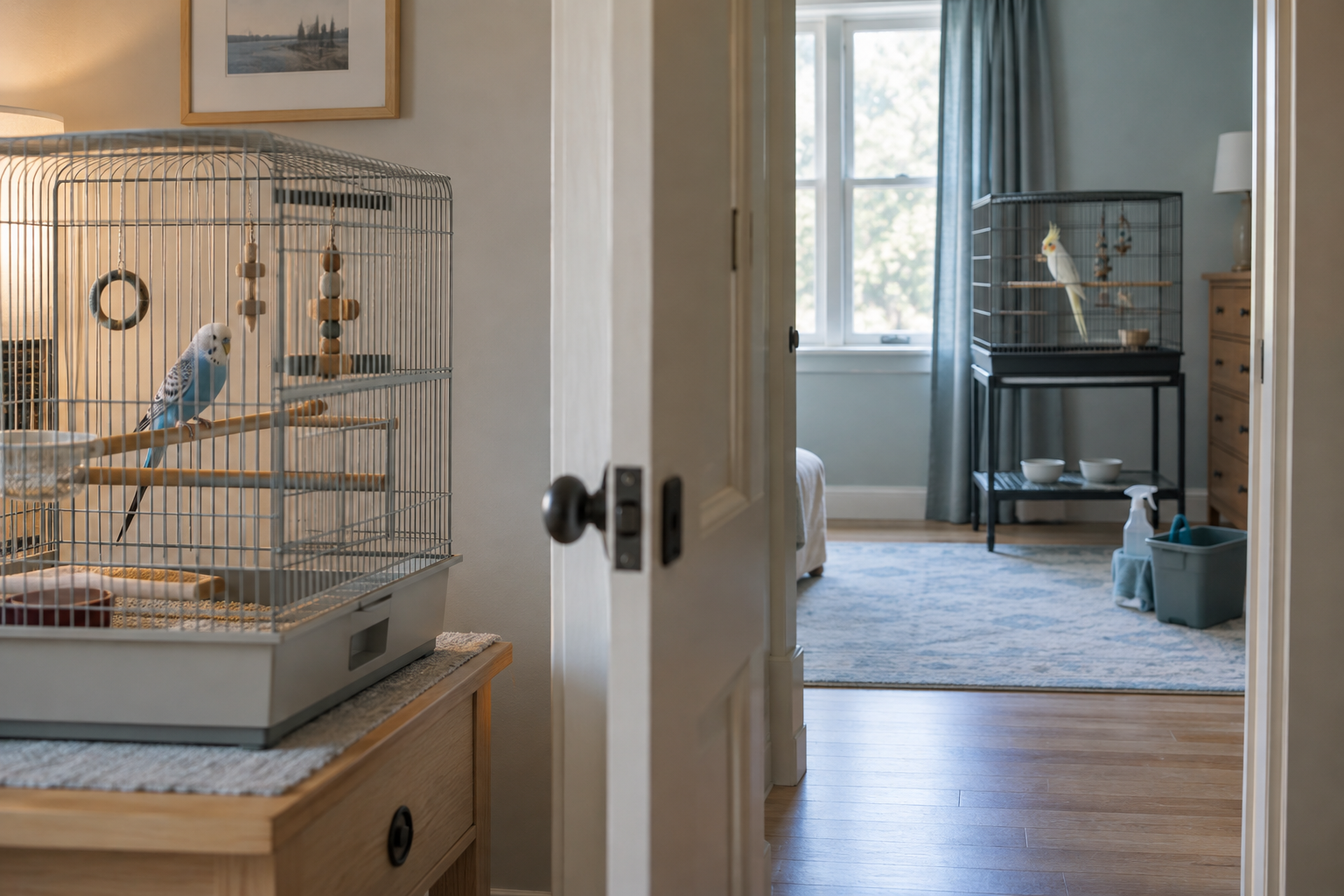
No dog or cat is made bird-safe by friendliness, training history, or supervision alone. A brief bite, scratch, paw strike, or grab can cause severe injury, and a bird may provoke pursuit by flying unexpectedly. Use closed doors, secure enclosures, and scheduled access so predator and bird are not loose in the same space.
Supervise children closely and teach them to wait for the bird to approach. No chasing, grabbing, tapping the cage, feeding without permission, or opening doors. Give children a safe role such as placing a prepared reward in a dish while an adult controls the cage door.
Visitors need the routine too. Post a simple notice at exterior doors when the bird is out, and explain that fans stay off and room doors stay closed. During parties, deliveries, or maintenance visits, isolation in a secure prepared room may be safer than trying to supervise every entrance.
Physical separation also protects the other animal or child from bites and scratches. The CDC notes that bird bites and scratches can transmit germs even when an injury looks minor. Seek appropriate human medical advice after a concerning injury.
The 60-second pre-flight check
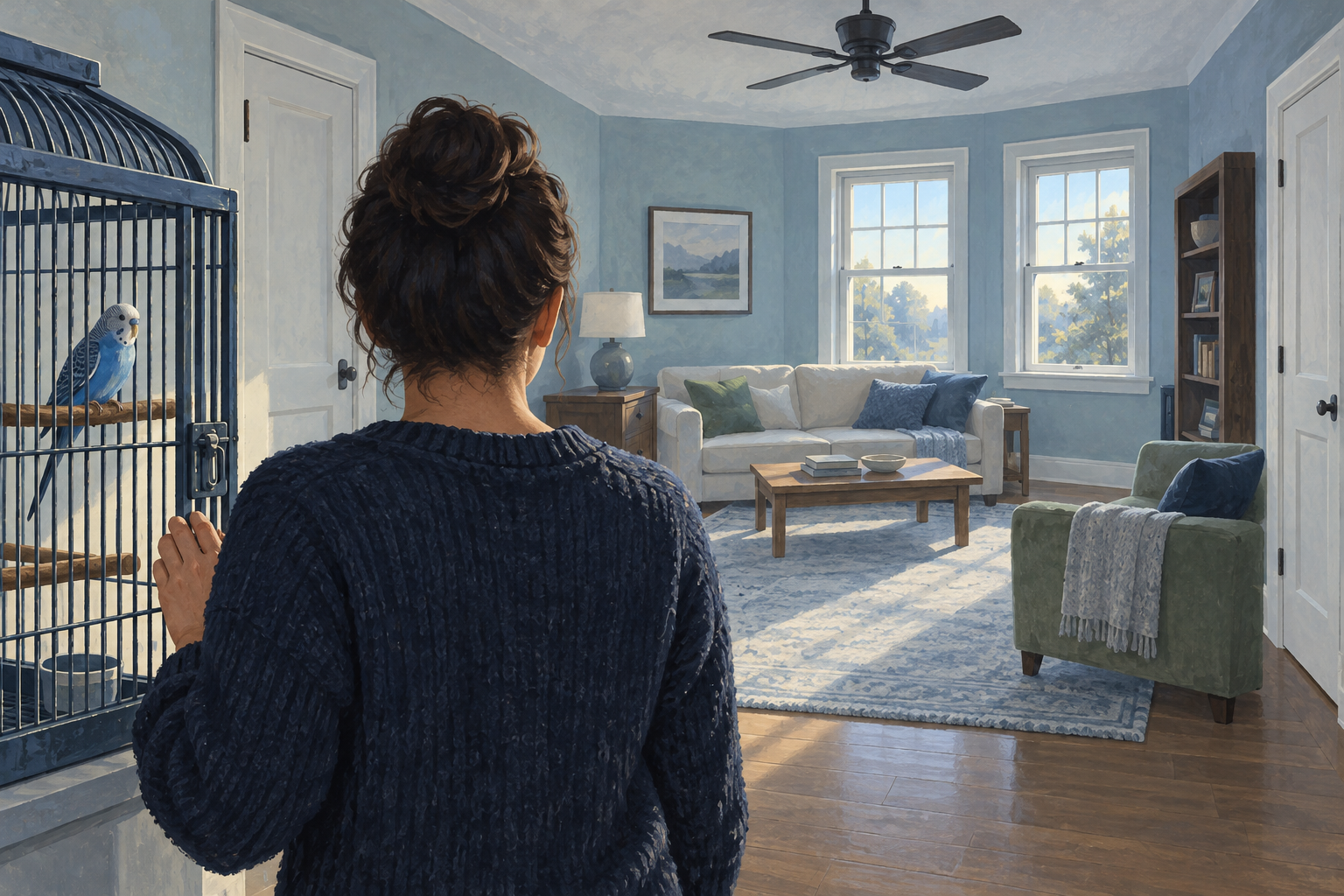
Before the cage opens, pause at the doorway and confirm:
- Fans, flames, and hot or moving equipment are off.
- Windows, exterior doors, and escape routes are secured.
- Other animals are behind a closed barrier; children and visitors know the routine.
- Open water, cords, toxic items, plants, food, and small objects are inaccessible.
- Air is free of cooking fumes, smoke, sprays, fragrance, and active chemical use.
- Safe landing places are ready, and an attentive adult is present.
- The avian clinic and emergency contact information are accessible.
Run the full room audit again after renovations, new appliances, new furniture, holiday decorations, a move, or a change in household members or pets. Do not assume a product is safe because it was used without an obvious incident.
Bird-proofing works when safety is built into the room before the bird flies. Eliminate what you can, isolate what remains, switch equipment off, store hazards securely, and use supervision as the final layer—not the only one.