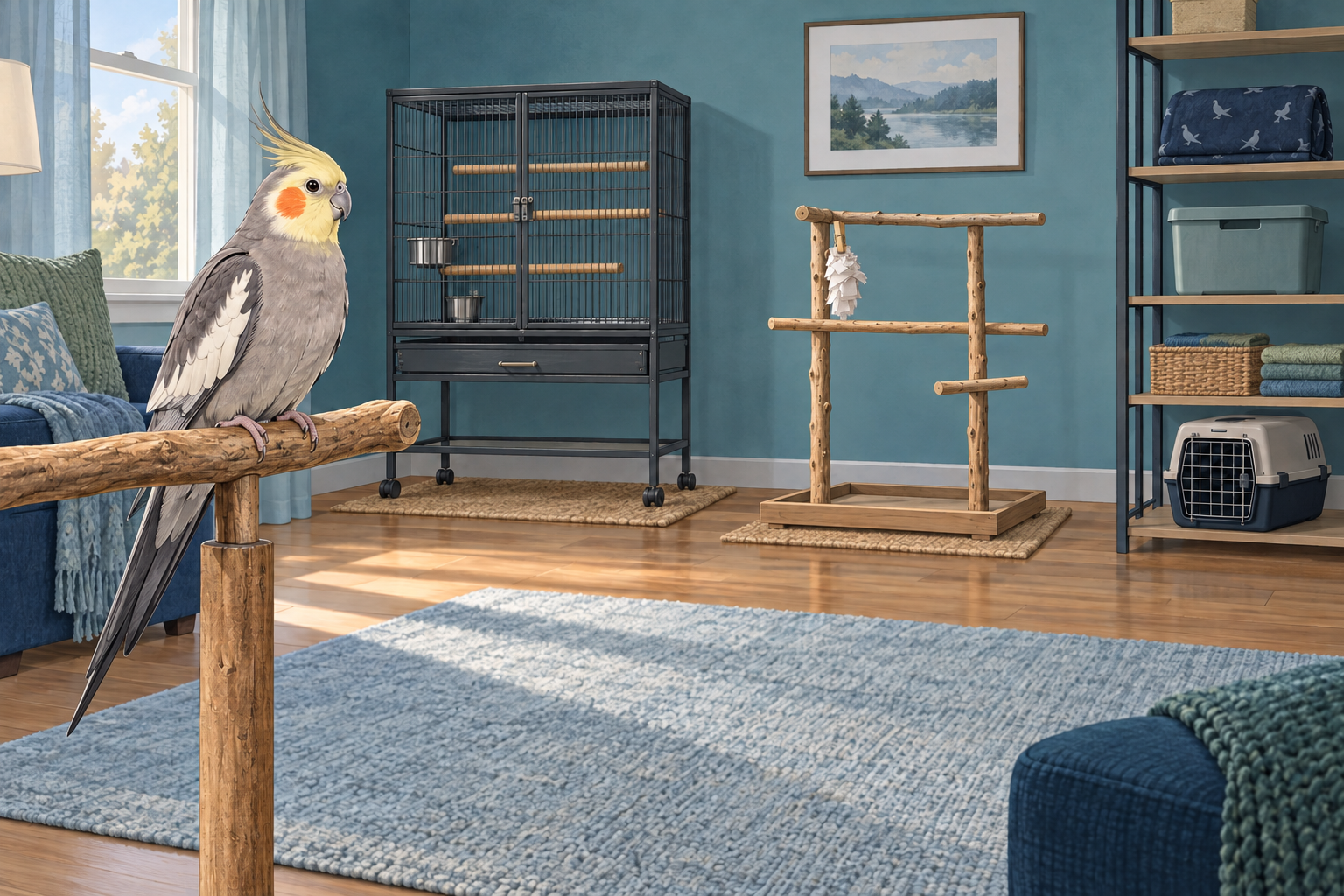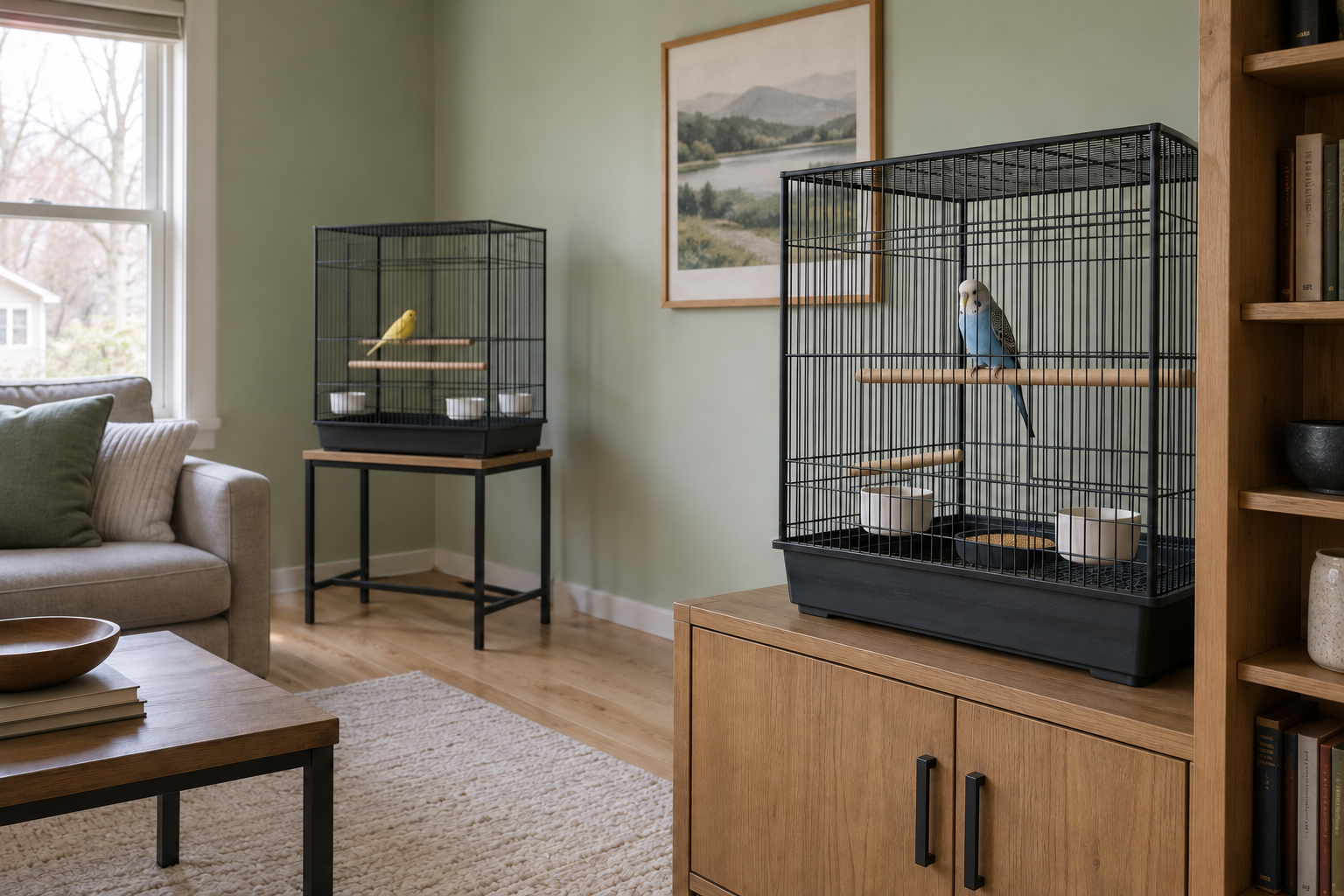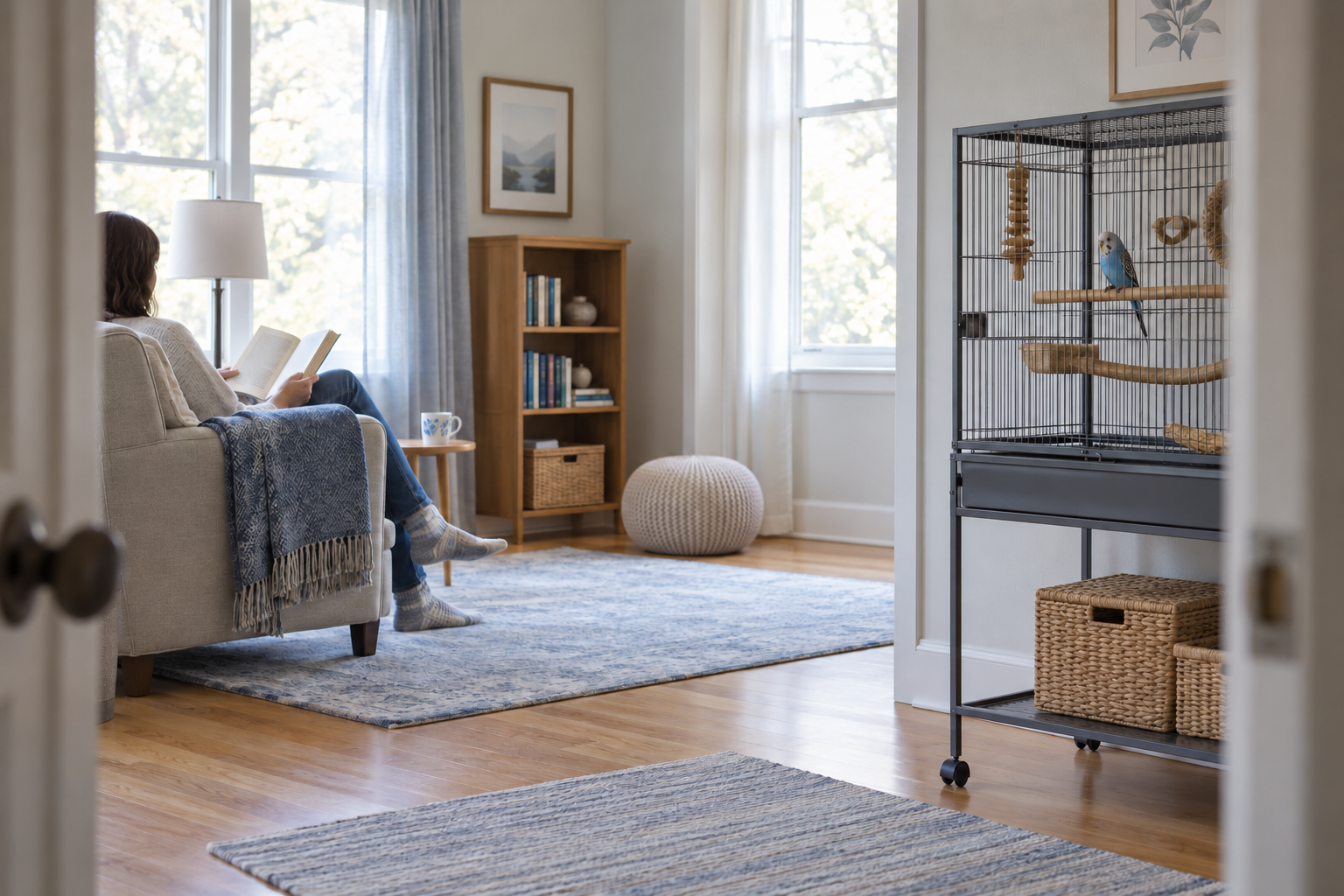
The first month with a pet bird is not a race to create a perfect bond. It is a period for making the home predictable, learning what is normal for this individual, and arranging professional care before a small concern becomes an emergency. A calm start may look uneventful from the outside. That is often a good sign.
This guide assumes you have already chosen the bird and prepared a safe cage and room. It focuses on the transition itself. Species, age, previous handling, health, and temperament all affect the pace, so use the timeline as a framework rather than a promise.
Before arrival: confirm readiness, not another shopping list
Keep the first setup simple enough to observe and maintain. Confirm that the cage is secure, the room is free from obvious hazards, fresh water will be easy to provide, and the bird can reach familiar food without crossing a frightening new space. Ask the previous caregiver, breeder, shelter, or rescue what the bird currently eats and how it is offered. The first days are not the time for a sudden diet conversion.
Choose an avian veterinarian or a veterinarian experienced with birds before the bird comes home. Ask how new-patient visits work, where to go after hours, and how the clinic wants a bird transported. The MSD Veterinary Manual recommends a prompt examination for a newly acquired bird and notes that birds commonly conceal signs of illness. Booking ahead is easier than searching while worried.
Decide who will handle routine tasks and when. A consistent lights-out period, quiet sleep location, and predictable feeding and cleaning rhythm matter more than an elaborate welcome. If children or other household members are involved, agree that no one will chase, grab, tap the cage, or insist on contact.
Day one: safety before friendship
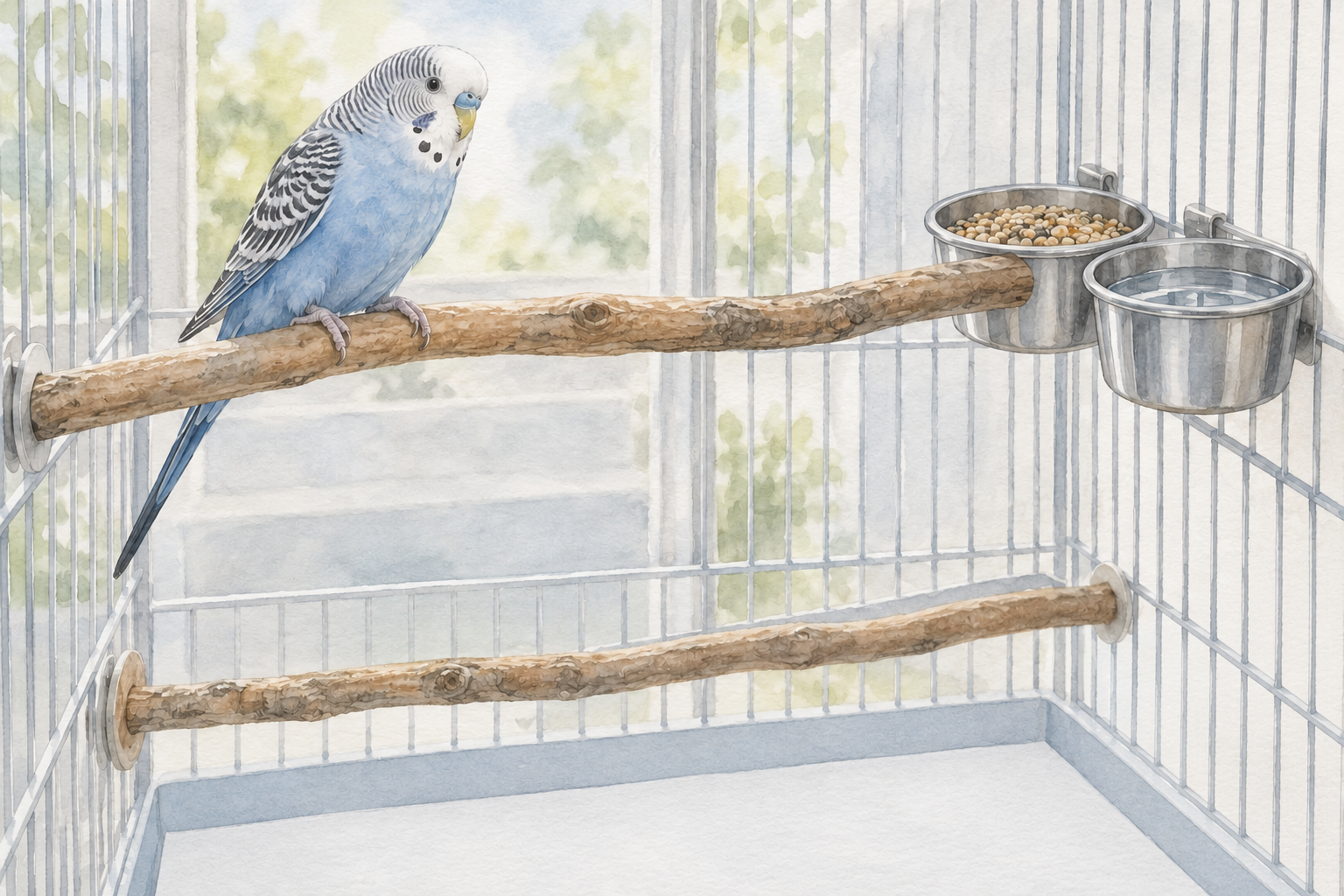
Move the bird into the prepared enclosure with as little commotion as practical, then give the bird time to look and listen. Keep voices gentle and movements deliberate. Avoid a parade of visitors, repeated attempts to touch the bird, and constant rearrangement of the cage.
Make familiar food and water easy to find. Observe from a respectful distance: Is the bird perching steadily? Does breathing appear quiet and unforced? Does the bird locate food and water? Are droppings appearing? Do not expect immediate eating while you are watching; a cautious bird may wait for privacy.
For a fictional example, imagine Alex bringing home a budgie called Moss. Alex wants to begin finger training that evening, but Moss becomes tall and still whenever a hand approaches. Instead of pushing through, Alex changes the goal: replace food and water slowly, sit nearby for a few minutes, and leave the room calm. Moss is not being “stubborn.” The bird is supplying information about the distance it can currently tolerate.
Contact a veterinarian promptly if you see breathing difficulty, loss of balance, marked weakness, active bleeding, repeated vomiting, a bird remaining on the cage floor, or another sudden serious change. A first-day adjustment does not make a medical warning safe to ignore.
Week one: learn this bird's normal
Your most useful task during the first week is careful, low-pressure observation. Note when the bird becomes active, which foods it actually consumes, how much it vocalizes, where it prefers to perch, what droppings usually look like, and which routine movements cause alarm. These notes create a baseline; they are not a diagnosis.
Watch the whole pattern rather than one isolated moment. A bird may briefly fluff its feathers while resting, become quiet after a busy period, or hesitate around an unfamiliar object. More concerning is a sustained or worsening change combined with reduced appetite, altered droppings, unusual sleepiness, breathing effort, weakness, or poor balance. If you are unsure, call the avian clinic and describe what changed and when.
Keep necessary care predictable. Approach from where the bird can see you. Use the same calm cue before opening a door. Clean without surrounding the bird with hands and tools. Do not fill every part of the cage with new toys; the RSPCA advises leaving enough room for a bird to move freely, and unfamiliar items can be introduced gradually.
The new-bird examination belongs in this early period, even if the bird appears well. Bring any records and information about origin, previous diet, and observed behavior. Ask the veterinarian about species-specific preventive care, nutrition, household hazards, and a suitable method for monitoring weight at home. If there are other birds in the household, ask the clinic for quarantine guidance rather than improvising introductions.
Weeks two to four: build predictable choices
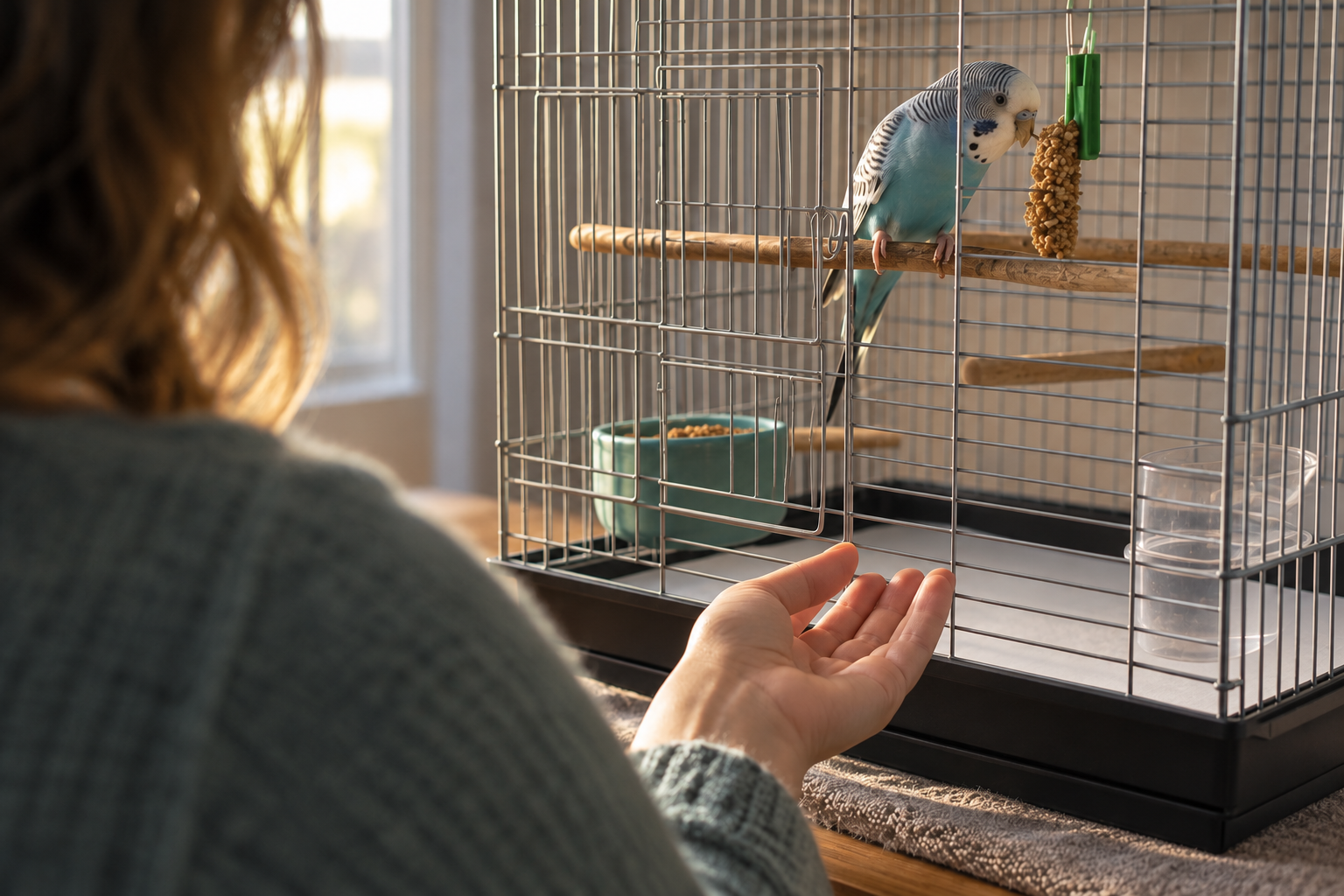
Once the bird is eating reliably and showing more settled behavior, begin offering small choices. You might sit at a comfortable distance and pair your presence with a favored item, or teach the bird that a simple cue predicts a routine event. Training should be brief, reward-based, and easy to leave. The RSPCA's training guidance emphasizes gradual progress at the bird's pace and stopping when the bird is distressed.
Do not measure trust by whether the bird accepts petting or steps onto a hand. A useful early success may be taking food while you are nearby, remaining relaxed during a water change, moving toward a familiar perch, or entering a carrier without panic. Some birds have little previous handling; others may be social but cautious in a new room. Forced contact can turn uncertainty into a learned fear of hands.
Continue the established food while discussing any long-term improvement with the veterinarian. A diet change should be planned and monitored so that selective eating or reduced intake is not mistaken for successful conversion. This is especially important in a small bird, where a meaningful change can be easy to miss by looking at the bowl alone.
Give the bird safe opportunities for natural movement and mental activity appropriate to its species and current confidence. Rotate changes rather than delivering them all at once. Maintain the sleep routine. Notice household patterns too: cooking fumes, open doors, ceiling fans, other pets, and unsupervised access can become risks when a bird grows bolder and begins exploring.
Alex's week-three goal for Moss is not “make him tame.” It is more specific: Moss remains comfortable while Alex rests a hand outside the cage, then chooses to approach a familiar treat. If Moss leans away or freezes, Alex increases the distance. That small adjustment protects the bird's ability to say no and keeps the session useful.
The month-one checkpoint
At the end of four weeks, review what you know rather than judging how affectionate the bird has become. Can everyone in the home follow the safety routine? Is the bird eating consistently? Do you recognize its usual activity, vocalization, posture, and droppings? Has the veterinary examination happened, and do you know whom to call after hours? Can routine care occur without a daily struggle?
Write down the next few practical goals: perhaps carrier comfort, a veterinarian-guided nutrition transition, calmer cage-door routines, or one simple training behavior. Keep them small and observable. If fear, biting, screaming, feather damage, or another concern is growing, seek help from an avian veterinarian and, when appropriate, a qualified reward-based behavior professional.
A successful first month is not a bird performing on schedule. It is a household that has become safer and more predictable, an owner who can notice meaningful change, and a bird who is beginning to make choices without being rushed.