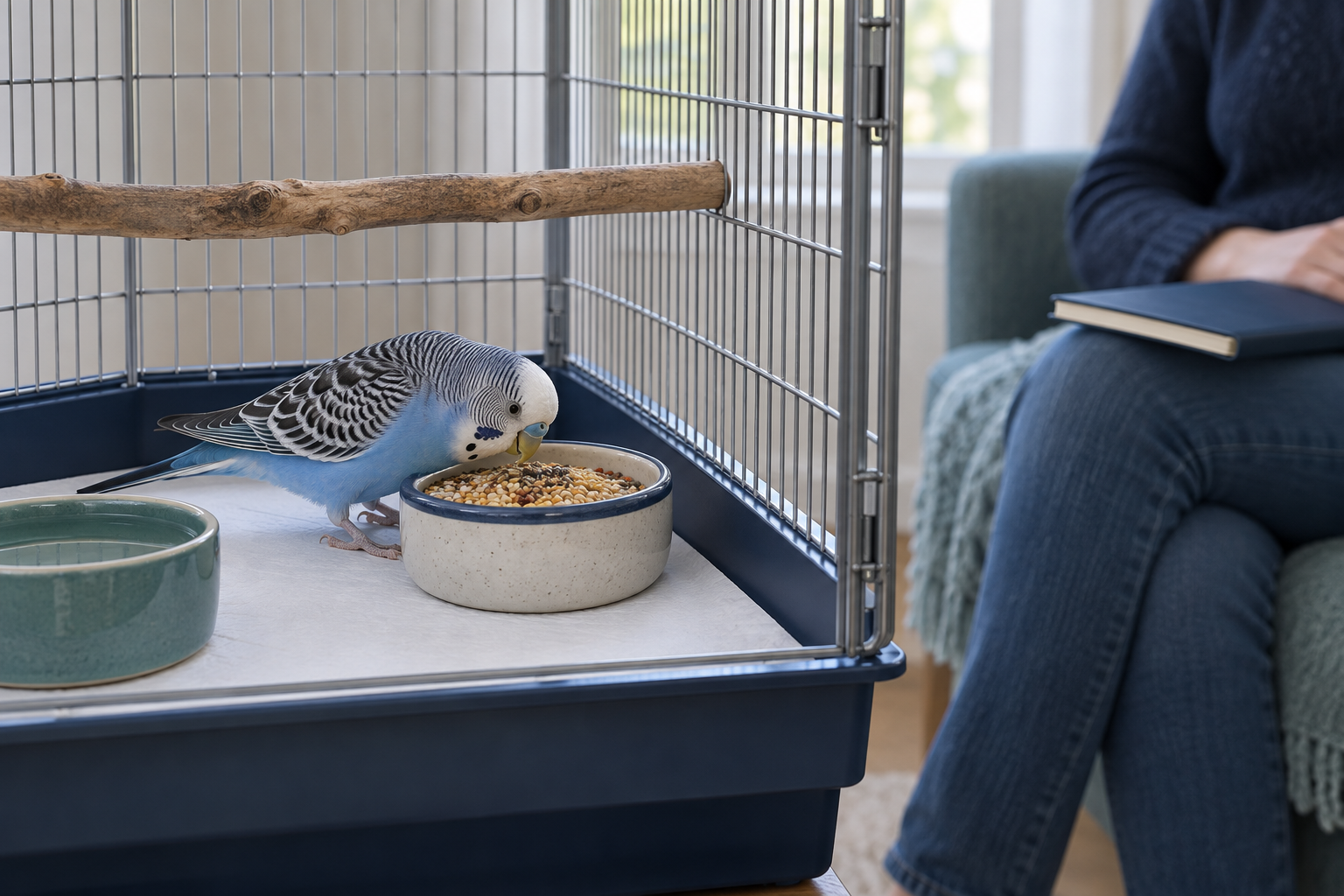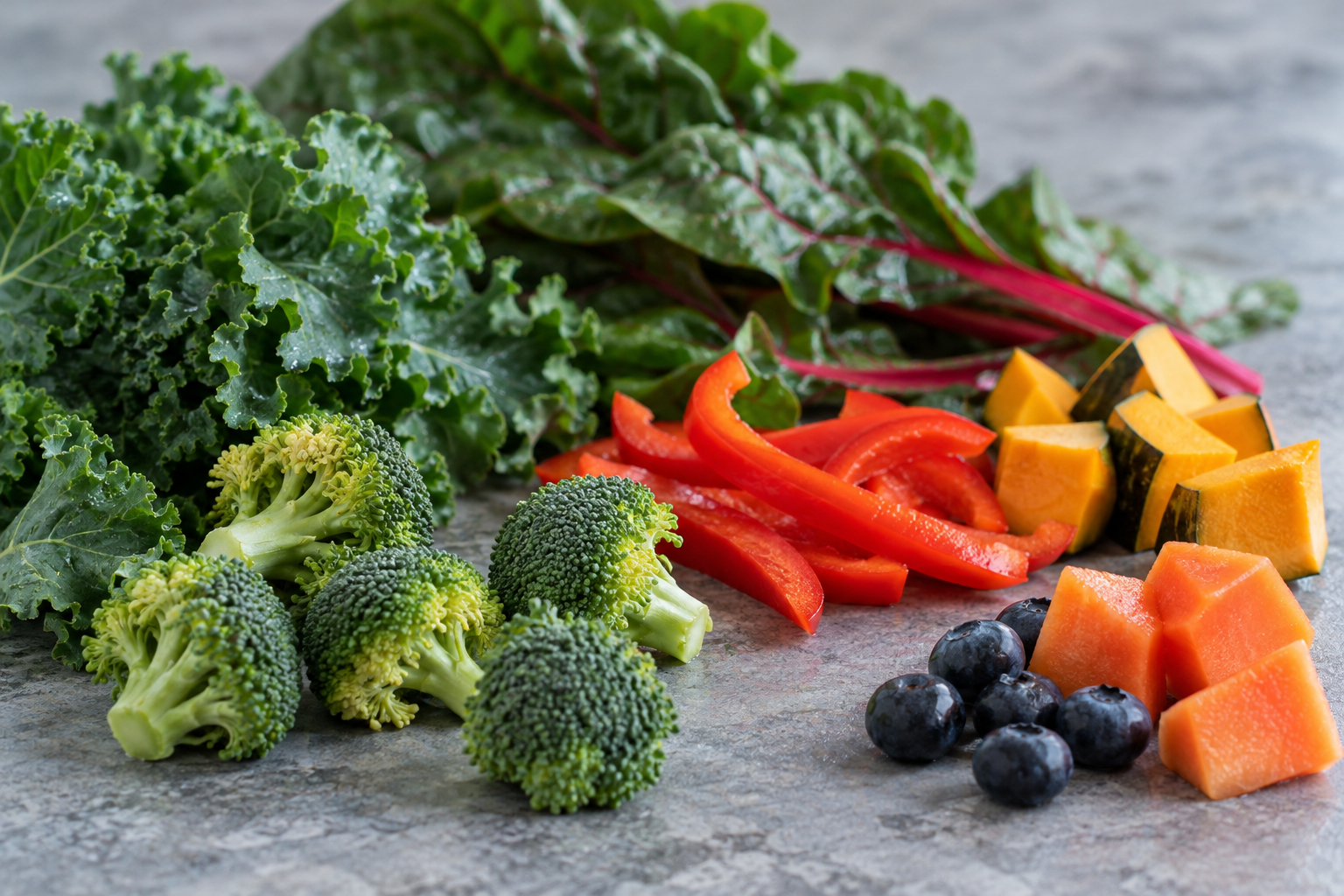
A safe-produce list should tell you more than whether a plant name received a green check mark. The edible part, preparation, freshness, and the bird's species all matter. This roundup includes 15 foods that appear across at least two veterinary or established bird-welfare references. Vegetables lead because fresh fruit is generally a smaller part of a balanced companion-bird diet, not because fruit is forbidden.
Wash produce under clean running water, remove spoiled areas, and use clean utensils and dishes. Cut pieces to suit the bird's size and feeding style without creating a choking or entanglement risk. Fresh food deteriorates quickly, especially in warm rooms; remove it promptly when soiled, wilted, or at the end of the feeding period your avian veterinarian recommends. These foods add variety to a suitable base diet. They are not treatments, supplements, or universal portion prescriptions.
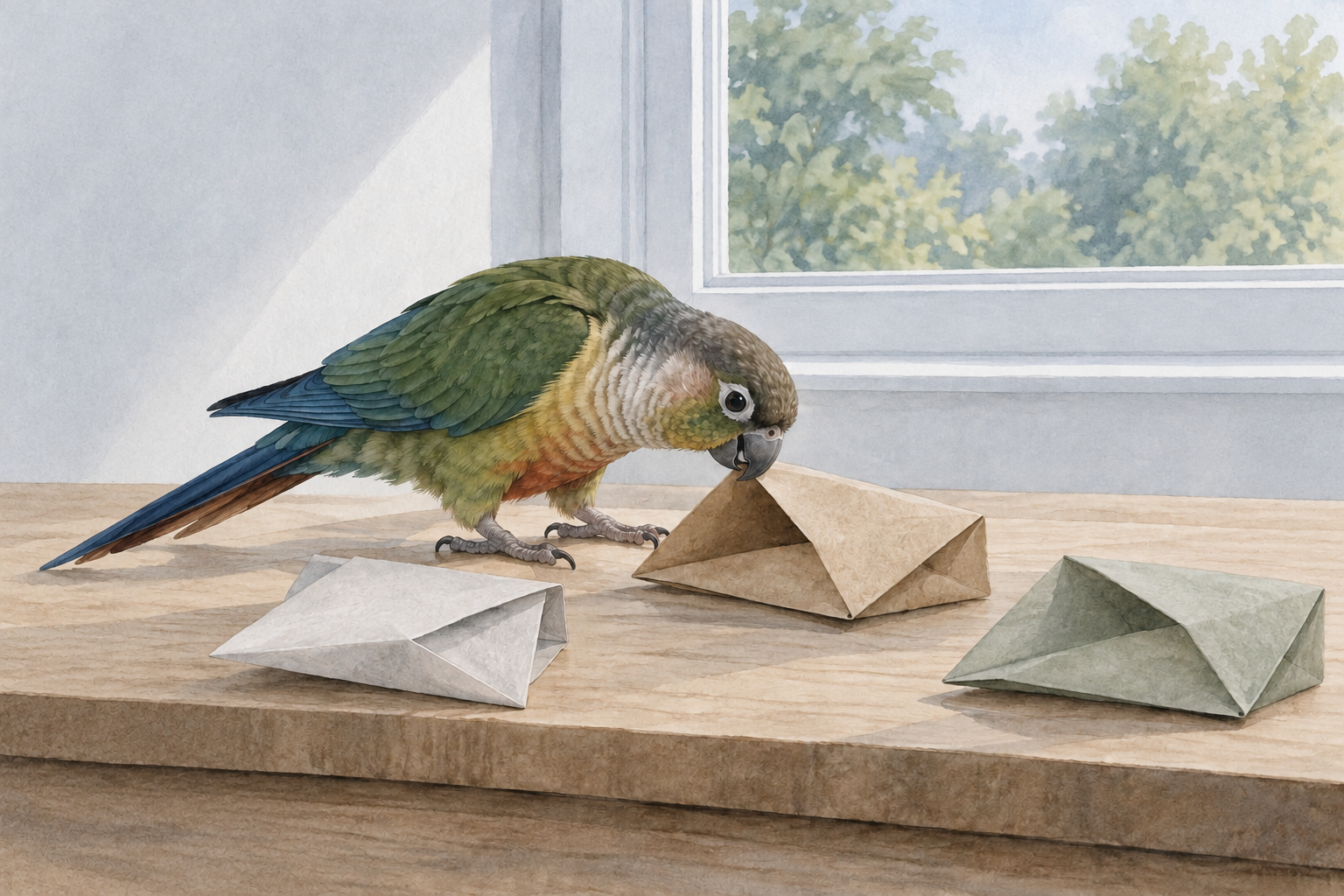
Acceptance can take repeated, low-pressure exposure. Change one presentation variable—shape, placement, or whether a safe item is raw or plainly cooked—while keeping the ingredient recognizable. Record actual intake rather than counting a peck as a completed diet change. Never withhold the established food to force experimentation, and involve the veterinarian if intake or weight falls.
Leafy and cruciferous rotation
1. Kale
Offer clean leaves and tender stems, chopped, clipped as a whole leaf, or woven loosely through cage bars for a supervised foraging presentation. Kale contributes color and texture to a vegetable rotation. Store it refrigerated and serve it fresh, not slimy or yellowed. A bird ignoring chopped kale may accept a larger leaf, but never leave clips or ties that can trap toes.
2. Dandelion greens
Use food-grade leaves from a grocer or a source you know is free from pesticides, exhaust, and animal contamination. Wash thoroughly and offer chopped or as a securely presented leaf. They provide a different bitter flavor and tearing texture. Do not collect roadside or unidentified wild greens; “natural” does not establish safety.
3. Swiss chard
Both leaf and crisp stalk can offer contrasting textures when washed and cut appropriately. Use chard as one option in a varied plate rather than the daily centerpiece. Refrigerate unwashed or well dried, then wash before service. Species-specific nutrition and any medical restriction belong with the avian veterinarian, not with a one-food health claim.
4. Broccoli
Florets, leaves, and tender stalk portions appear in veterinary bird-food references. Rinse between florets, trim damaged areas, and serve raw or lightly cooked without salt, oil, sauce, or seasoning if the bird's veterinary plan permits. Broccoli can double as a manipulation activity because its structure invites picking. Discard pieces once they become contaminated or stale.
5. Spinach
Offer washed leaves in rotation, chopped or clipped securely. MSD and VCA include spinach among produce suitable for pet birds, but inclusion is not a command to feed large quantities. It supplies another leaf shape and flavor. Avoid canned or seasoned spinach, and ask the veterinarian how it fits a particular species or bird with a medical diet.
Color and texture from vegetables
6. Bell or mild-to-hot peppers
Wash the whole pepper, remove the stem and spoiled tissue, and offer flesh in strips, dice, or a larger supervised section. World Parrot Trust and veterinary references include sweet and hot peppers; birds do not experience pepper heat as humans do. The role here is variety and color, not a vitamin cure. Avoid pickled peppers, sauces, and seasoned leftovers.
7. Pumpkin or other suitable squash
Serve clean flesh in small raw pieces where appropriate or cooked plain until cooled; dense skins and hard pieces should match the bird's ability to manipulate them safely. Pumpkin and squash add a soft or firm texture depending on preparation. Do not offer sweetened pie filling, buttered squash, or moldy decorative pumpkins. Refrigerate cut produce and discard questionable portions.
8. Carrot
Wash and scrub the root, then grate, dice, ribbon, or offer a suitably sized stick. Carrot's changing shapes make it useful for introducing unfamiliar textures without changing the ingredient. Serve it plain. A bright orange food is not a substitute for a balanced formulated diet, and it should not be promoted as a treatment for vitamin deficiency.
9. Sweet potato
Veterinary sources list sweet potato as an appropriate fresh option. Cook it plain and cool it before offering; remove tough or damaged areas and avoid sugar, salt, butter, marshmallow, and spice. A small soft portion can help a bird encounter a new texture. Refrigerate cooked leftovers promptly and use clean serving utensils rather than sharing from a seasoned family dish.
10. Peas
Fresh or properly thawed plain peas can be served shelled, while an appropriate clean pod may provide manipulation for some parrots. Peas are a distinct texture within a vegetable rotation. Check that frozen products contain no sauce or added salt. Remove uneaten moist food promptly, and do not assume every species should receive the same amount simply because the pieces are small.
Fruit as selected variety
11. Apple flesh—never the seeds
Wash the fruit, remove the core and every seed, and offer only sound flesh in bird-sized slices or dice. MSD specifically lists apple seeds among foods to avoid, while RSPCA and World Parrot Trust guidance includes de-seeded apple flesh. The safety distinction is the point: “apple” on a list does not make the entire fruit interchangeable.
12. Blueberries
Offer washed, intact berries to a bird able to handle them, or cut them for a smaller bird. Their skin, pulp, and staining juice create a different sensory experience from firm vegetables. Use fresh or properly thawed plain fruit, inspect for mold, and protect nearby surfaces. Blueberries add variety; they do not need a “superfood” claim to earn a place.
13. Papaya
World Parrot Trust, VCA, and MSD materials include papaya. Wash the outside before cutting so the knife does not carry surface contamination into the flesh. Offer ripe flesh in modest, bird-appropriate pieces; follow a veterinarian's direction about seeds for the particular species rather than generalizing from parrot lists. Refrigerate cut fruit and serve it fresh.
14. Pomegranate
Open a clean fruit and offer a small cluster of arils or separate arils in a dish. Pomegranate can support picking and manipulation as well as dietary variety. Inspect carefully for mold inside the fruit, which may not be obvious from the rind. Its juice stains, so use washable surfaces. Do not turn the challenge into an inaccessible or frustrating feeder.
15. Banana
Remove the peel and offer plain fresh flesh in a slice or small piece. Banana is soft, energy-dense, and quick to smear or spoil, so it works better as a limited fruit option than a cage fixture. Never serve sweetened banana chips as if they were equivalent to fresh fruit; check dried products for added sugar, oil, and preservatives.
Three rotating plates and the food-safety clock

Build variety by changing combinations, not by placing all 15 foods in one bowl. An illustrative green plate might pair kale, broccoli, and peas. A color-and-texture plate might use pepper, carrot, and cooled sweet potato. A fruit-accent plate might combine a vegetable such as chard with a little papaya or blueberry. These are examples, not portion formulas.
Use a separate clean dish, note what was actually eaten, and remove leftovers according to room conditions and veterinary guidance. Hot weather, moist cooked food, and a bowl contaminated with water or droppings shorten the useful window. Wash and dry dishes before reuse.

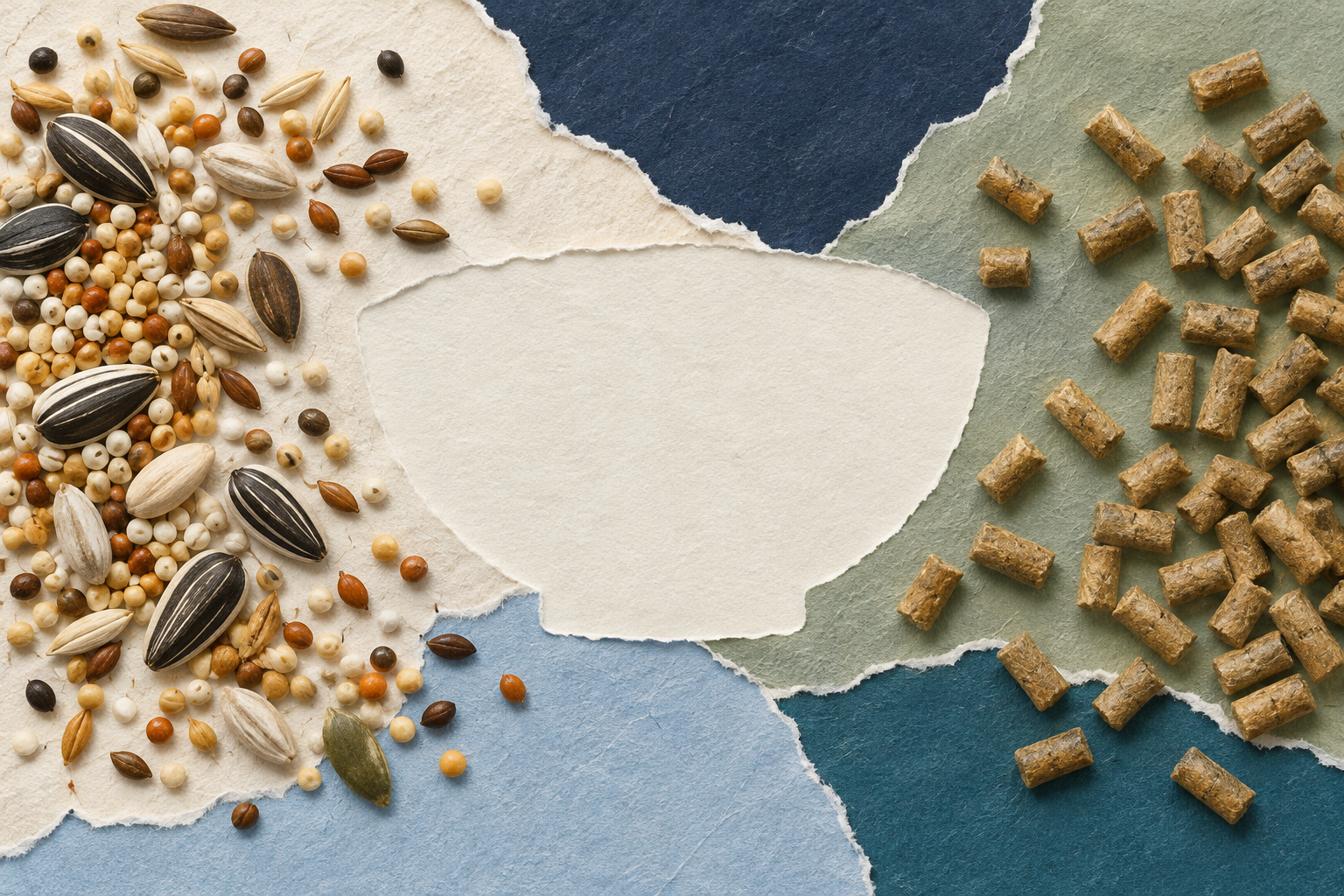
Introduce unfamiliar foods without abruptly removing a bird's established diet, and monitor body weight and droppings during any broader nutrition change. Lorikeets and other specialist feeders, birds with iron-storage concerns, and birds receiving therapeutic diets need individual advice. If appetite falls, weight changes, or droppings alter persistently, contact an avian veterinarian rather than trying to correct the problem with more produce.
The value of a list is not collecting every item. It is making a smaller set of checked foods easy to prepare, rotate, observe, and remove safely while the bird's complete diet remains coherent.