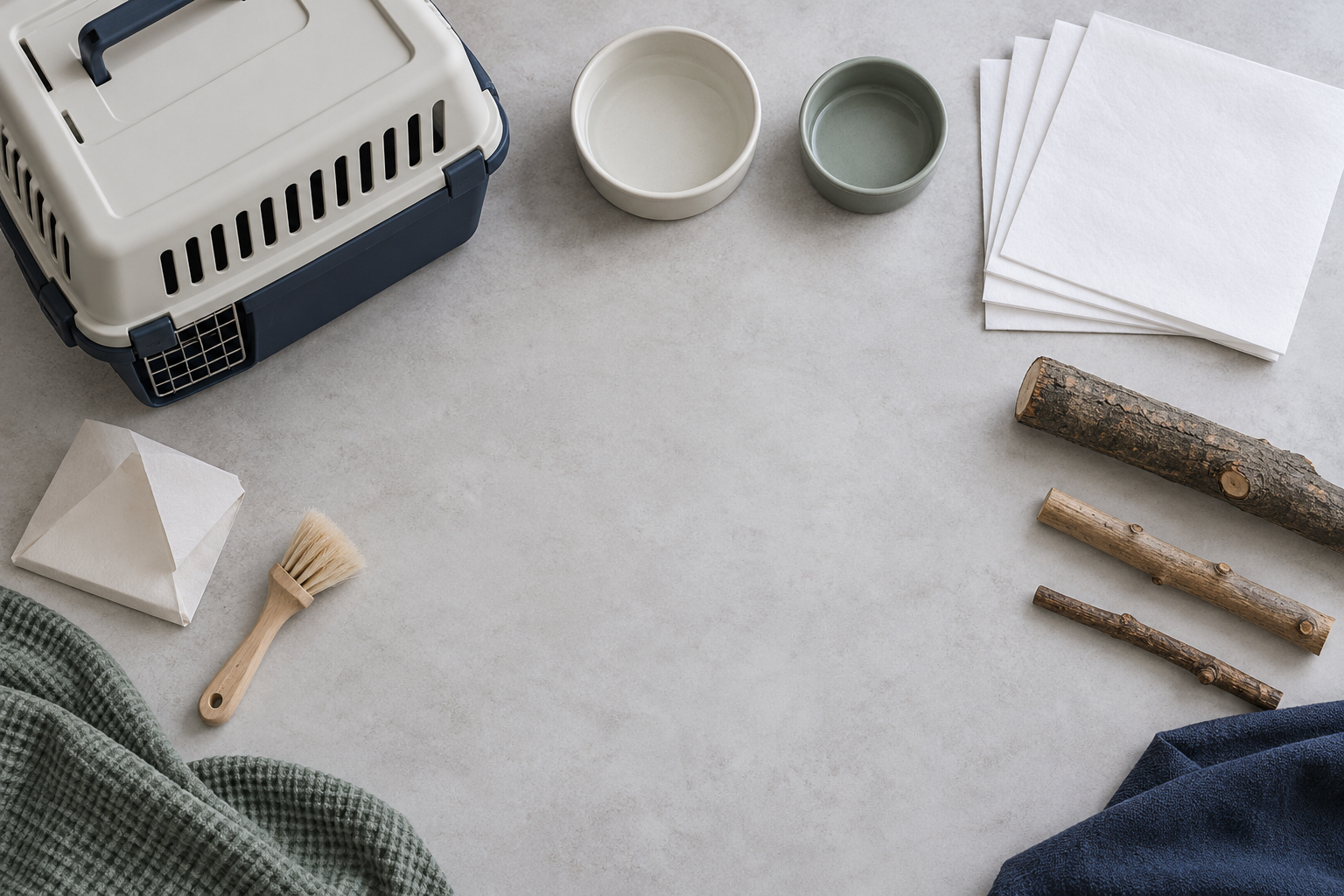
A useful pre-arrival list is organized by function, not by the number of products in a shopping cart. This roundup includes ten items supported by avian-veterinary or welfare guidance: safe housing, food and water access, varied footing, visible waste, transport, weight trends, hygiene, diet continuity, activity, and rest. Each entry gives a selection test and a reason not to buy blindly.
“Essential” means it should be ready before arrival. “Species-dependent” means the design must be chosen for the bird rather than copied from a generic list. “Optional” means it may be useful later but cannot compensate for weak basics. Decorative themes, electronic gadgets, and large toy hauls are therefore outside this list.
Use those labels on a three-column worksheet. Put the ten functions below in the first two columns, then place covers, extra stands, specialty lighting, bathing equipment, or other additions in “species-dependent” or “optional” until professional guidance and observation justify them. This prevents an attractive accessory from taking the budget or cage space needed for a secure carrier, safe perches, or clean bowls.
The home itself
1. A secure primary cage — essential and species-dependent
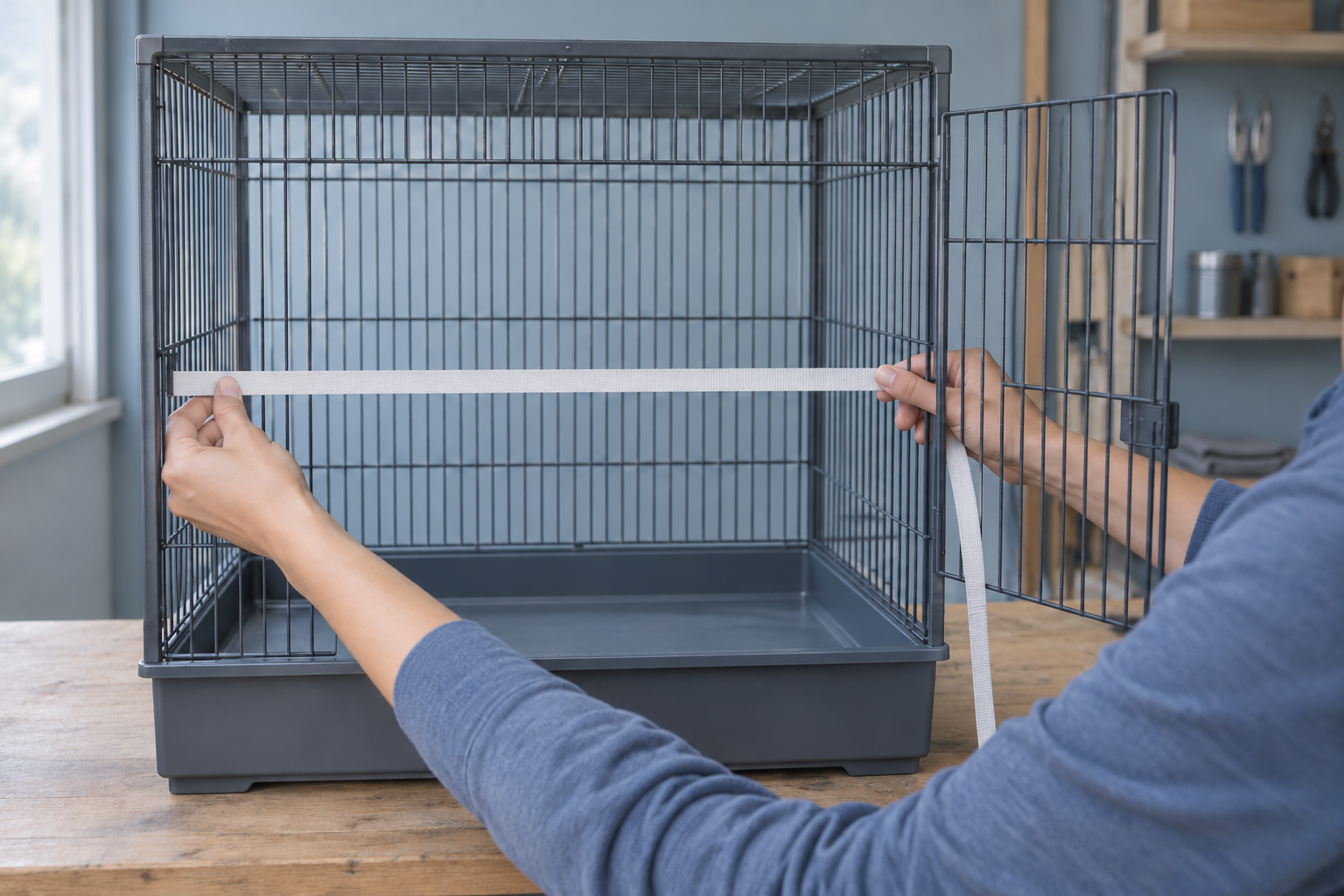
The cage must allow normal movement after bowls, perches, and a few activities are installed. It also needs safe bar spacing, non-toxic construction, secure access doors, and a shape the bird can use. The Association of Avian Veterinarians says a bird should at minimum be able to extend its wings fully and that more space is better; RSPCA guidance likewise emphasizes uncluttered movement.
Selection test: map the bird's full wingspan and tail movement inside the usable interior, then inspect every gap and latch. Do not buy blindly: a product title containing a species name is marketing, not a safety certification.
2. Separate, cleanable food and water vessels — essential
Bowls should be sturdy, non-toxic, correctly sized, easy to remove, and positioned away from falling droppings. VCA notes that cracked materials can trap contamination and that larger birds may require securely attached stainless-steel dishes.
Selection test: can you remove, wash, rinse, dry, and replace each bowl without a struggle, and can the bird reach it from a stable perch? Do not buy blindly: deep decorative cups and damaged plastic may be difficult or unsafe for a small bird.
3. Perches with useful variation — essential and species-dependent
Feet should not meet the same diameter and surface all day. AAV guidance favors clean, pesticide-free natural wood and varied sizes, and warns that one uniform dowel should not be the only perch. Placement should support movement while keeping tails clear of walls and droppings out of bowls.
Selection test: confirm the wood or manufactured material is bird-safe, stable, washable or replaceable, and appropriate to the bird's feet. Do not buy blindly: abrasive covers marketed for nail trimming can damage feet, while rope requires close inspection for loose fibers.
Observation and safe movement
4. Plain, visible cage liner — essential
Disposable plain paper makes cleaning straightforward and lets caregivers observe droppings. Both AAV and VCA recommend paper rather than particulate bedding such as corncob, wood shavings, or cat litter, which can conceal changes, create dust, or be swallowed.
Selection test: can the liner be changed daily without disturbing the cage structure, and can you see color, amount, and wetness clearly? Do not buy blindly: an absorbent-looking substrate is not necessarily suitable for a bird.
5. A secure travel carrier — essential and species-dependent
The carrier supports the journey home, veterinary visits, and emergency movement. RSPCA and VCA guidance describes a suitable carrier with secure footing, enough room for safe posture, and protection appropriate to the journey. It should become familiar through gradual training.
Selection test: verify ventilation, door security, safe spacing, stable low footing, and how it will be restrained in a vehicle. Do not buy blindly: a large open cage can expose a bird to injury during abrupt movement, while an undersized carrier may restrict posture or damage the tail.
6. An electronic gram scale — essential for monitoring, not diagnosis
Birds can conceal illness, and weight trend is one useful piece of baseline information. The AAV encourages home weighing on a gram scale; the World Parrot Trust includes one in its companion-parrot first-aid list.
Selection test: the scale should read consistently in grams and accept a stable, cleanable perch or container. Ask the avian veterinarian how and when to weigh this individual. Do not buy blindly: a number cannot diagnose disease, and a normal-looking reading does not override changes in breathing, appetite, droppings, balance, or behavior.
Daily care materials
7. Dedicated cleaning tools — essential
Set aside brushes, cloths, bowl-cleaning tools, plain paper, and veterinarian-approved products for the bird's equipment. VCA recommends daily dish and liner care, periodic cage scrubbing, thorough rinsing, and keeping the bird away from cleaning fumes.
Selection test: can every product be identified, stored safely, rinsed completely, and used with adequate ventilation while the bird is elsewhere? Do not buy blindly: “natural,” scented, or household-safe labels do not establish respiratory safety for birds.
8. The bird's current food — essential for continuity
Arrival is not the moment to force a diet conversion. Obtain the exact food, presentation method, and recent feeding information from the breeder, rescue, shelter, or previous caregiver. Veterinary guidance recommends gradual dietary transitions because a bird can appear to investigate new food without consuming enough.
Selection test: confirm the product and batch are fresh, correctly stored, and genuinely familiar to the bird. Do not buy blindly: replacing familiar food with a supposedly superior option on day one can make intake difficult to judge. Plan improvements with an avian veterinarian after the bird is eating reliably.
Activity and rest
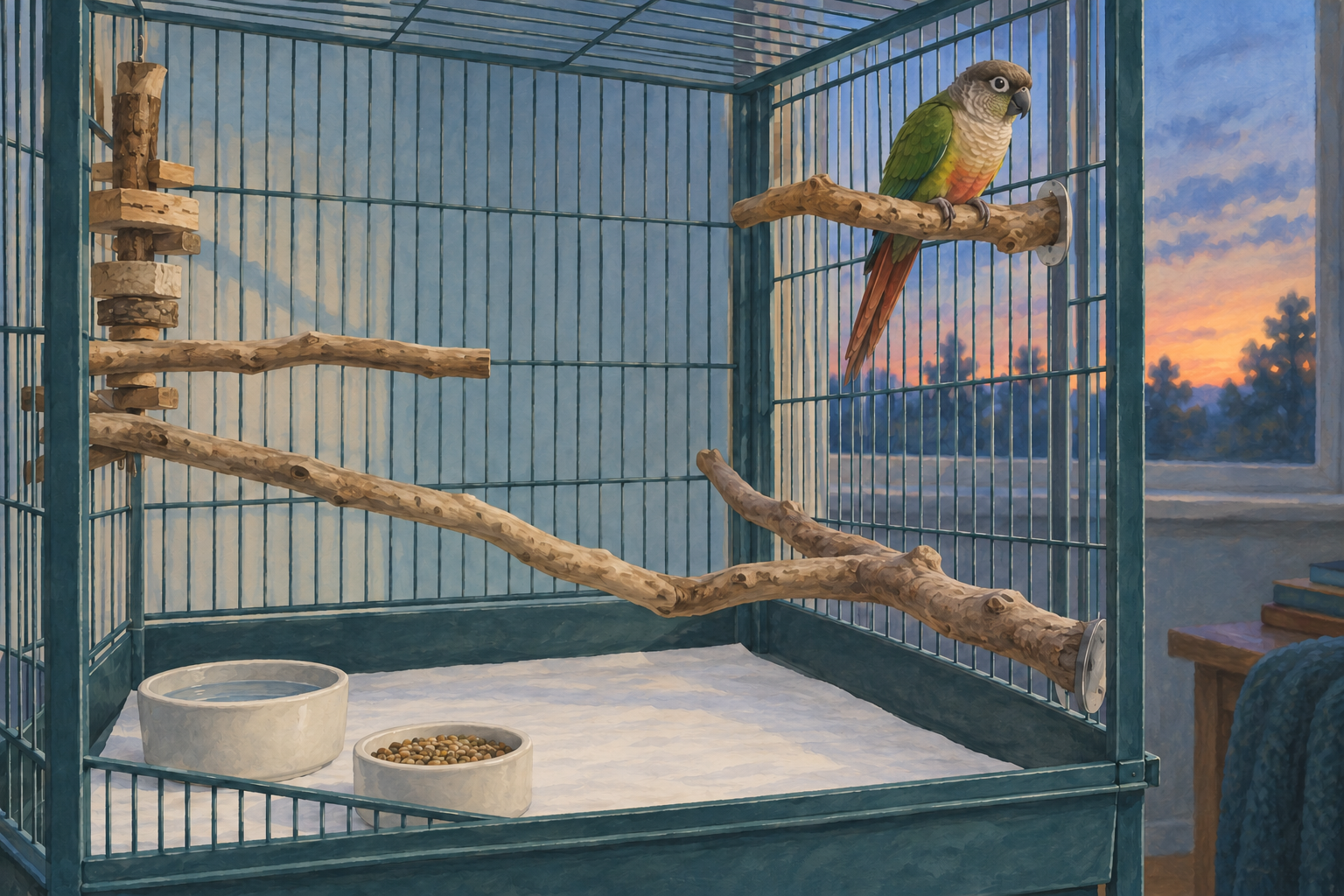
9. One or two simple enrichment options — essential, with species-dependent design
Start with safe functions such as foraging, chewing, manipulation, or movement—not a crowded ceiling of unfamiliar objects. AAV, MSD, and RSPCA sources all support environmental enrichment while stressing safe materials and room to move.
Selection test: inspect attachments, gaps, fibers, coatings, and any pieces the bird could swallow; introduce the item at a comfortable distance. Do not buy blindly: no toy is universally safe, and a cautious bird may need days to approach something new.
10. A repeatable sleep strategy — essential; a cover is optional
AAV guidance says most companion birds do best with a consistent 10–12 hours of sleep and suggests a quieter sleep location when the household stays active late. The essential is a predictable, dark-enough, quiet, safe routine. A cover is only one possible tool.
Selection test: can the household maintain the schedule without blocking ventilation or exposing the bird to late-night light and noise? Do not buy blindly: covering every cage does not solve a bright, noisy room and may frighten a bird unfamiliar with fabric movement.
Arrival-eve readiness audit
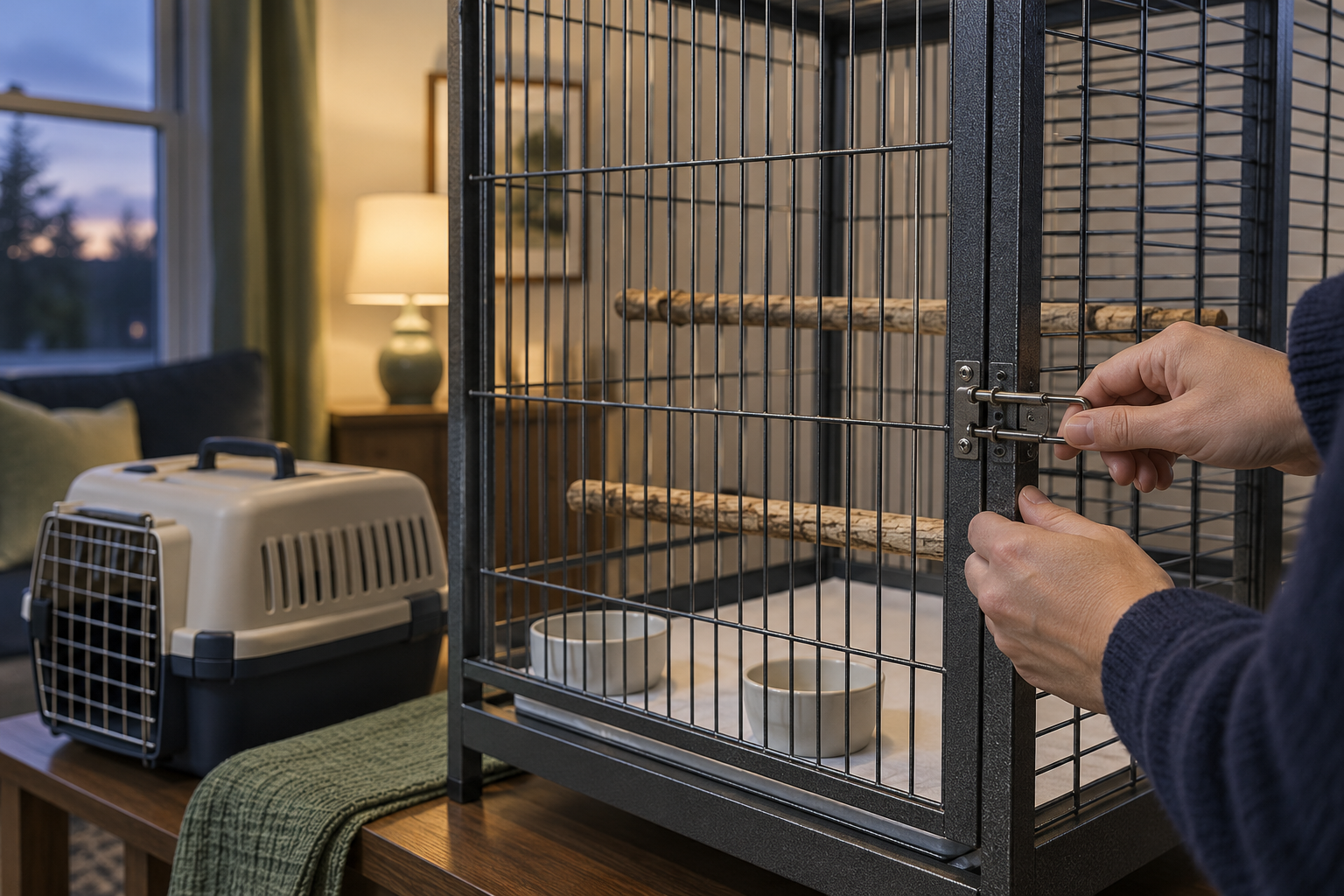
The night before arrival, verify cage stability, door security, bowl access, perch placement, liner visibility, and a safe path from carrier to enclosure. Remove overcrowding. Put the veterinarian's number, after-hours destination, previous records, and transport plan where every caregiver can find them. Confirm who will handle feeding, cleaning, observation, and lights-out.
Photograph the finished setup from several angles. The images give the veterinarian useful context and create a baseline if a perch, bowl, or toy later shifts into an unsafe position.
Leave purchase receipts and material information with the care record. If a coating chips, a fastener corrodes, or the bird begins chewing an unexpected surface, you will need to identify the product and material rather than rely on memory. Record the cage's exterior dimensions too, since future transport or relocation may depend on doors, lifts, and vehicle space.
Anything else can wait unless the species or avian veterinarian requires it. A complete habitat is not the one with the most accessories; it is the one whose ten core functions work together and can be maintained calmly from the first day.