A balanced bird diet cannot be reduced to one colorful bowl or one ratio copied from the internet. Pet birds include parrots, finches, canaries, softbills, and nectar-feeding species with different digestive adaptations and nutritional needs. Age, health, activity, reproductive status, and what the bird will actually eat also matter.
The practical goal is to build a species-appropriate foundation, add useful variety, and observe intake closely enough to notice when the plan is not working. This guide explains that framework. It does not prescribe a therapeutic diet or a universal percentage formula. Confirm major changes with an avian veterinarian, especially for a newly acquired, underweight, overweight, breeding, or unwell bird.
Start with the species, not a universal plate
First identify the bird accurately and research its natural feeding ecology and established companion-care guidance. “Bird food” is too broad a category. A budgie does not have the same diet as a lorikeet; a cockatiel is not nutritionally interchangeable with a toucan; even closely related species may use foods differently.
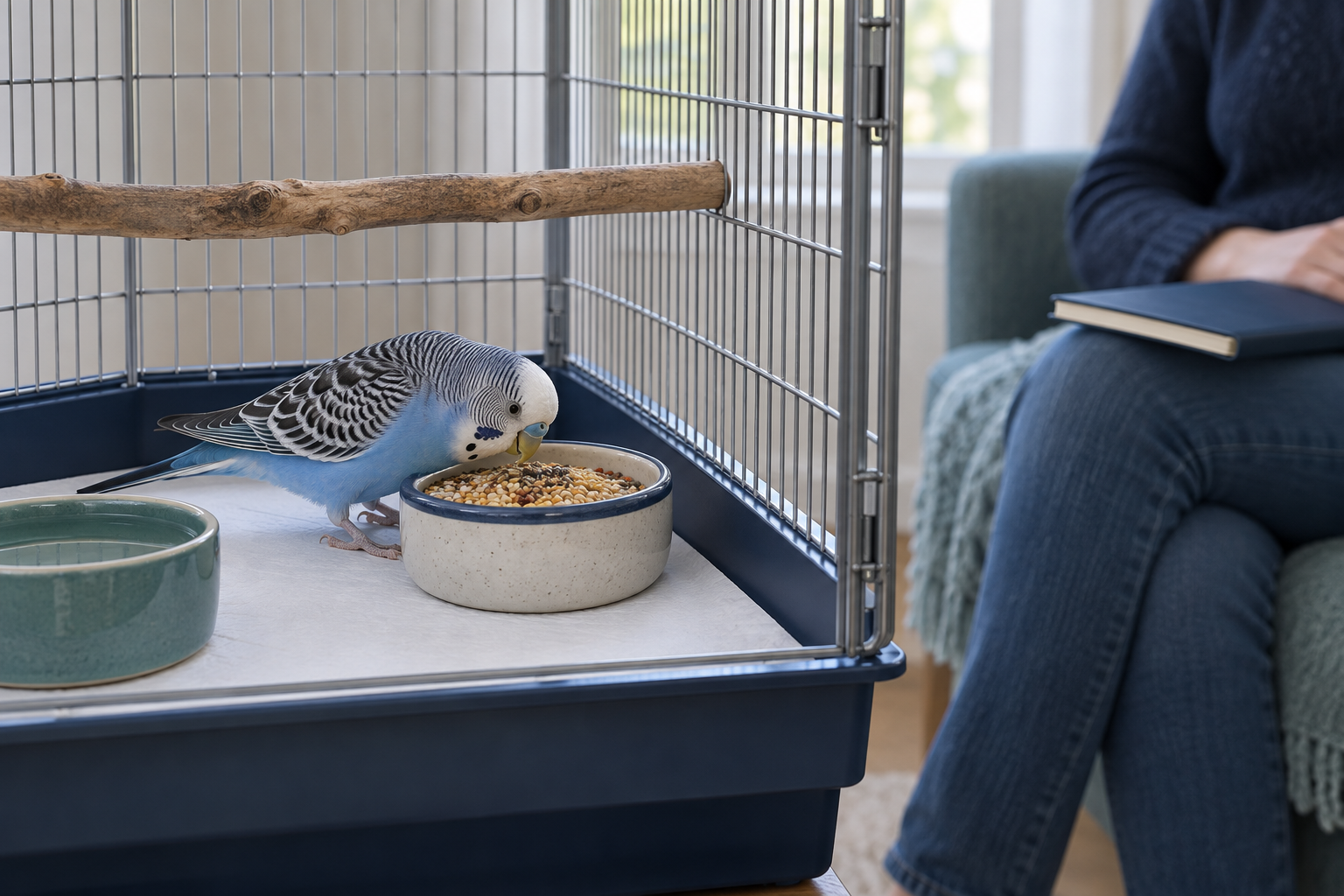
Ask what the individual currently eats and how it is presented. A bowl that contains several foods does not prove the bird consumed all of them. Parrots can be highly selective, and seed hulls can make a dish look full after the edible portion is gone. The MSD Veterinary Manual advises obtaining a detailed diet history, including what is offered, what is eaten, and how much.
If the bird is new, keep the familiar diet stable while arranging an avian-veterinary examination and planning any transition. Abruptly removing the only recognized food can cause dangerous under-eating. A better diet on paper is not better if the bird does not consume enough of it.
Build the nutritional foundation
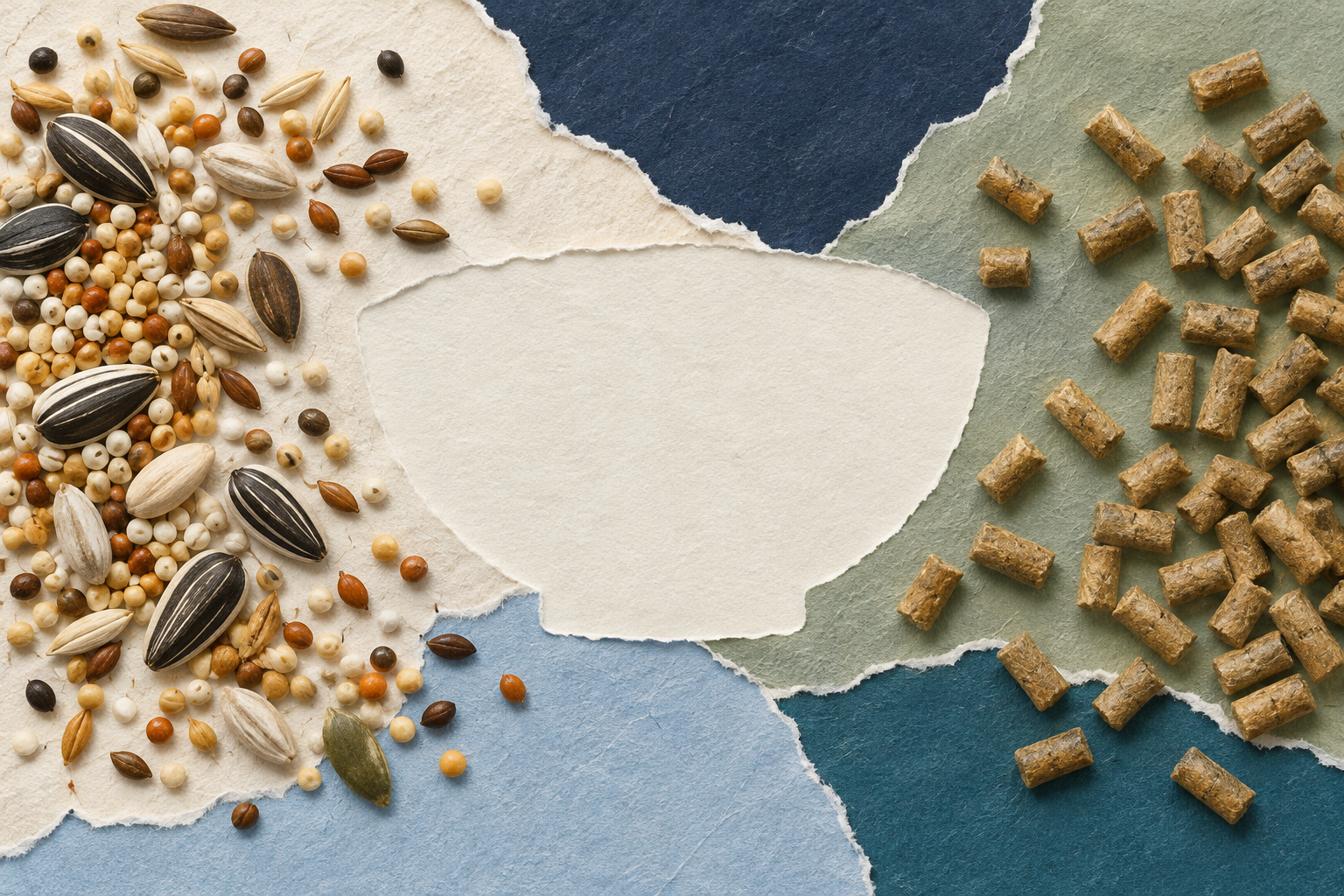
For many companion parrots, a reputable formulated food may provide a more consistent nutritional base than a self-selected seed mix. The RSPCA warns that seed-only diets are not complete for parrots, and the World Parrot Trust explains that common seed mixes can be high in fat and allow selective eating. Formulated foods are not all identical, however, and they are not the correct foundation for every bird species.
Use four questions to define the foundation:
- What does credible guidance recommend for this species?
- Is the food intended as a complete base, a complementary item, or a treat?
- Does the individual reliably consume it rather than discard it?
- Are body condition, weight trend, droppings, and veterinary findings consistent with the plan?
Those questions are more useful than forcing every bird into one fixed split. The World Parrot Trust's nutrition guide notes that diet proportions vary among species and that many captive birds use less energy than free-living birds. That makes both nutrient balance and portion awareness important.
Fresh, clean water must be available in a container the bird can use without contamination. Check it more than once a day and replace it whenever food, droppings, or bathing has soiled it. Clean bowls and preparation surfaces, remove perishable food before it spoils, and follow the avian clinic's advice for local water quality and hygiene.
Add variety without turning treats into the diet
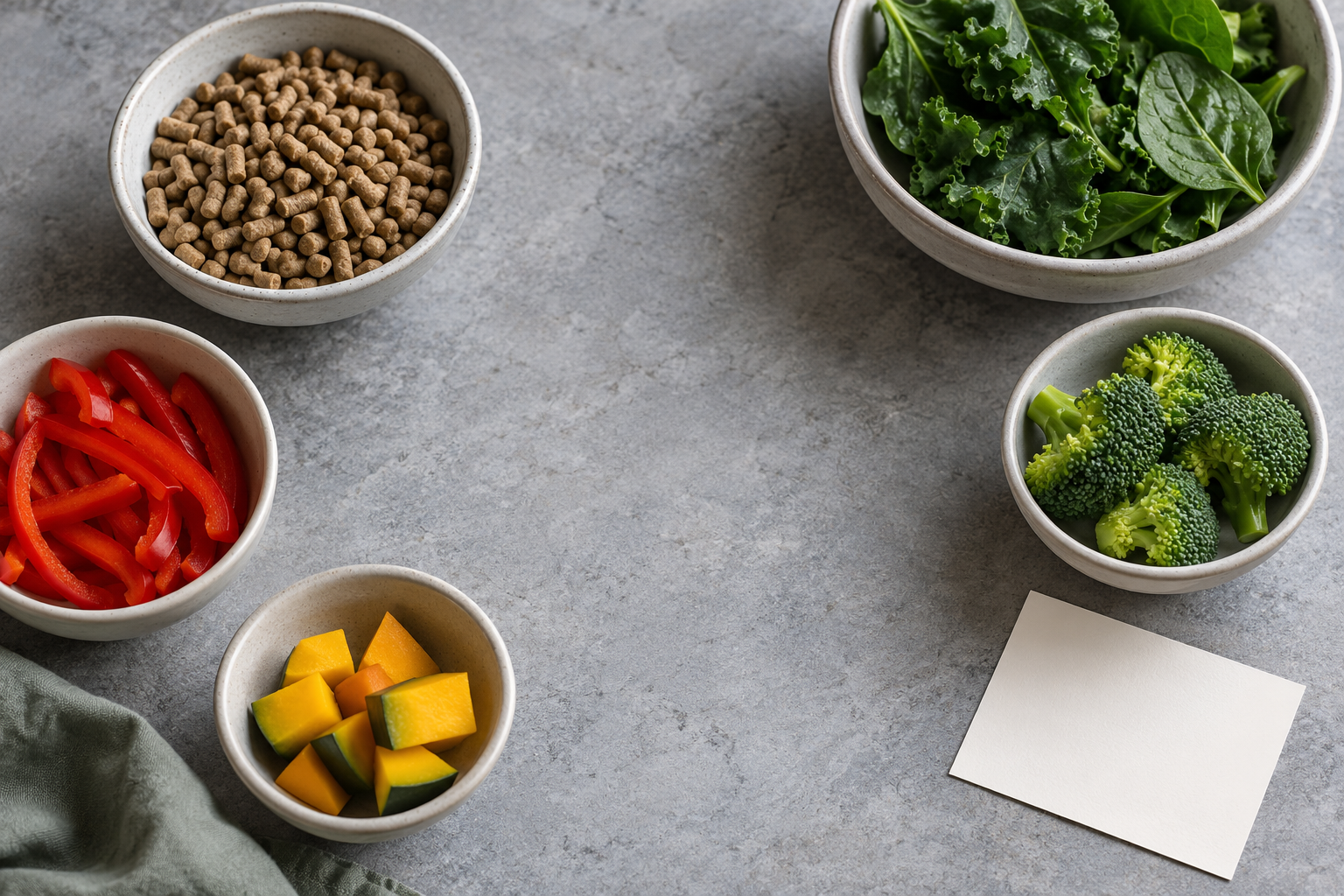
Species-appropriate vegetables and other fresh foods can add variety, texture, foraging opportunities, and nutrients. The RSPCA recommends a varied diet for parrots that includes suitable vegetables and some fruit alongside an appropriate primary food. The exact choices and quantities should reflect the species and the rest of the diet.
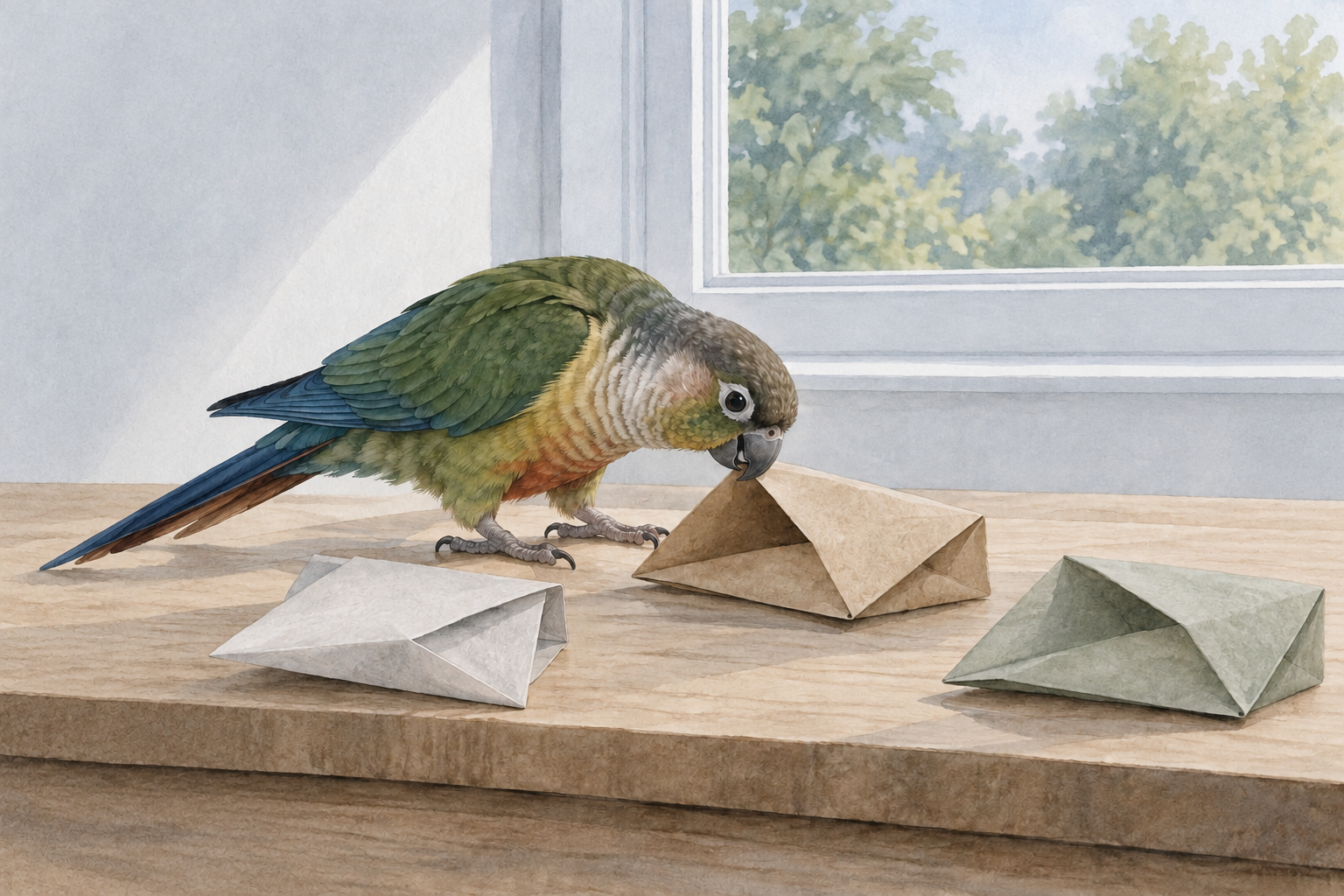
Introduce one manageable change at a time. Offer a small piece in a safe form, watch whether the bird investigates or eats it, and remove leftovers on schedule. Presenting the same suitable item in different shapes or locations may help a cautious bird learn that it is food. Do not interpret one refusal as a permanent preference, but do not let repeated experiments replace adequate intake.
Treats are useful in training and enrichment when they remain small and deliberate. A favored seed or nut can have high motivational value; an unrestricted bowl may displace the nutritional base. “Natural” does not automatically mean balanced, safe, or suitable in unlimited amounts.
Avoid building a diet from viral lists. Some human foods are unsafe for birds, and preparation matters. Before offering an unfamiliar plant, ingredient, supplement, grit, mineral product, or homemade mixture, verify it with a species-appropriate veterinary or recognized avian-care source. Supplements can create excesses as well as correct deficiencies, particularly when added to a food that is already formulated to be complete.
Food can also support natural behavior. Foraging through clean paper, finding portions in simple bird-safe devices, or moving between feeding locations can add activity. Begin with easy tasks and ensure the bird still obtains enough food. Foraging is enrichment, not a test that should make a nervous or inexperienced bird go hungry.
Observe actual intake, not bowl appearance

Daily observation connects the diet plan to the living bird. Notice which items disappear, which are shredded but not swallowed, and which are consistently ignored. Look under and around the cage for discarded food. For seed eaters, separate hulls from intact seed before deciding that a bowl is full.
A veterinarian may recommend regular weighing on an accurate gram scale. Use the same safe method and a consistent time so the trend is meaningful. A number by itself cannot diagnose health, but an unexpected change can prompt an earlier call. Body condition requires hands-on professional assessment; feathers can hide both weight loss and excess body fat.
Also watch for changes in appetite, drinking, activity, and droppings. Diet affects droppings, so a new fresh food may temporarily alter color or water content. That does not mean every change is harmless. Reduced intake, persistent abnormal droppings, vomiting, weakness, breathing difficulty, or a broader behavior change warrants prompt veterinary advice.
During a planned food transition, track both the old and new foods. Do not assume that crumbled pellets or peeled vegetables were swallowed. The World Parrot Trust recommends monitoring body weight during conversion and seeking veterinary advice if weight loss becomes concerning. Your veterinarian can set an appropriate monitoring plan for the individual bird.
Review the diet after life changes. Illness, a new medication, breeding activity, reduced flight, aging, or a move to a different household can change risk and intake. Do not respond by adding random supplements or sharply restricting food. Take the record of what is offered and eaten to the avian clinic.
Two frameworks, not two prescriptions

For a small parrot such as a budgie or cockatiel, the framework may begin with a veterinarian-approved formulated base, daily access to suitable vegetables and other fresh items, and measured high-value foods used for variety or training. The caregiver watches selective eating, weight trend, and the bird's ability to recognize new foods. The exact products and proportions depend on the species and individual.
For a non-parrot cage bird such as a canary or finch, do not simply copy that parrot plan. Begin with current guidance for that species and discuss whether a formulated diet, species-specific seed components, greens, live food, or other items belong in the foundation. Feeding ecology and life stage can change the answer. The same observation rules still apply: know what is offered, determine what is consumed, maintain hygiene, and monitor the bird rather than the bowl.
These examples are educational frameworks, not prescriptions. Nectar-feeding birds, softbills, birds with liver or kidney disease, chicks, and breeding birds require more specialized plans. Homemade diets and therapeutic restrictions should be developed with an avian veterinarian or qualified veterinary nutrition professional.
A balanced routine is not defined by maximum variety or a perfect-looking photograph. It is species-appropriate, nutritionally coherent, accepted by the bird, safely prepared, and monitored over time. Start with the right foundation, add variety with purpose, and let evidence from the bird and its veterinary care guide the next change.