Adoption and responsible purchase are not labels that prove what an individual bird has experienced or what support you will receive. A good rescue may know a bird's daily behavior in a foster home; a responsible breeder may provide detailed early-life and health records. Either route can also leave important questions unanswered.
The practical answer is conditional: consider adoption first where a reputable bird rescue is available, but evaluate the organization rather than the word “rescue.” If you buy, require verifiable captive-bred origin, independent eating, appropriate care, health documentation, and a real contingency policy. The same welfare standard should follow the bird through either door.
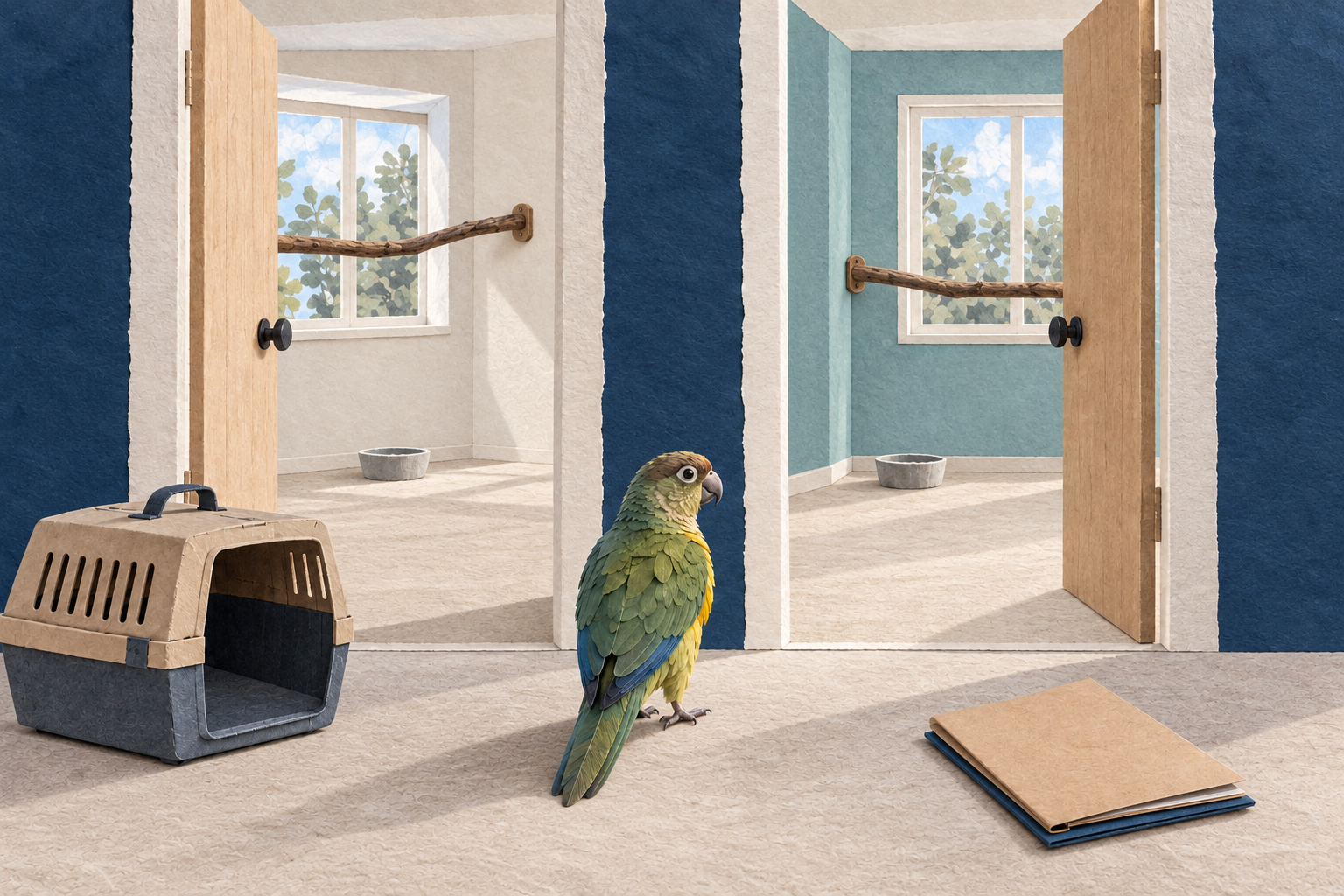
Two routes, one welfare standard
Before comparing sources, decide what every acceptable source must demonstrate. The bird should be legally and ethically sourced, housed in clean and species-appropriate conditions, eating independently, observed for health concerns, and matched to a home that understands its needs. The source should answer questions without pressure and should care what happens if the placement fails.
The MSD Veterinary Manual recognizes both knowledgeable rescues and reliable breeders or specialist bird stores as possible sources. It advises asking for proof of origin and written health information, and recommends examination by a veterinarian experienced with birds. The World Parrot Trust encourages adoption from a well-regarded rescue; if someone buys, it advises checking for a reliable captive source, proper weaning, and references.
These positions point to a useful distinction: a preference for adoption is a welfare value, while a decision about one organization is an evidence review. Do not assume every surrendered bird is difficult, every young bird is easy, every rescue is rigorous, or every breeder is careless.
What adoption may reveal—and may not
A rescue or foster network may have observed an adult bird across ordinary routines: morning calls, reactions to hands, preferred foods, tolerance of other birds, and comfort around household activity. That information can be more useful than a short meeting. An organization may also offer education, multiple visits, matching support, and a requirement that the bird be returned rather than privately passed on.
Ask for the bird's known history, veterinary records, diet, current medication, identification, reason for surrender, and observed behavior. Separate “unknown” from “normal.” A gap in history is not automatically a red flag when the organization explains it honestly and has arranged current veterinary assessment.
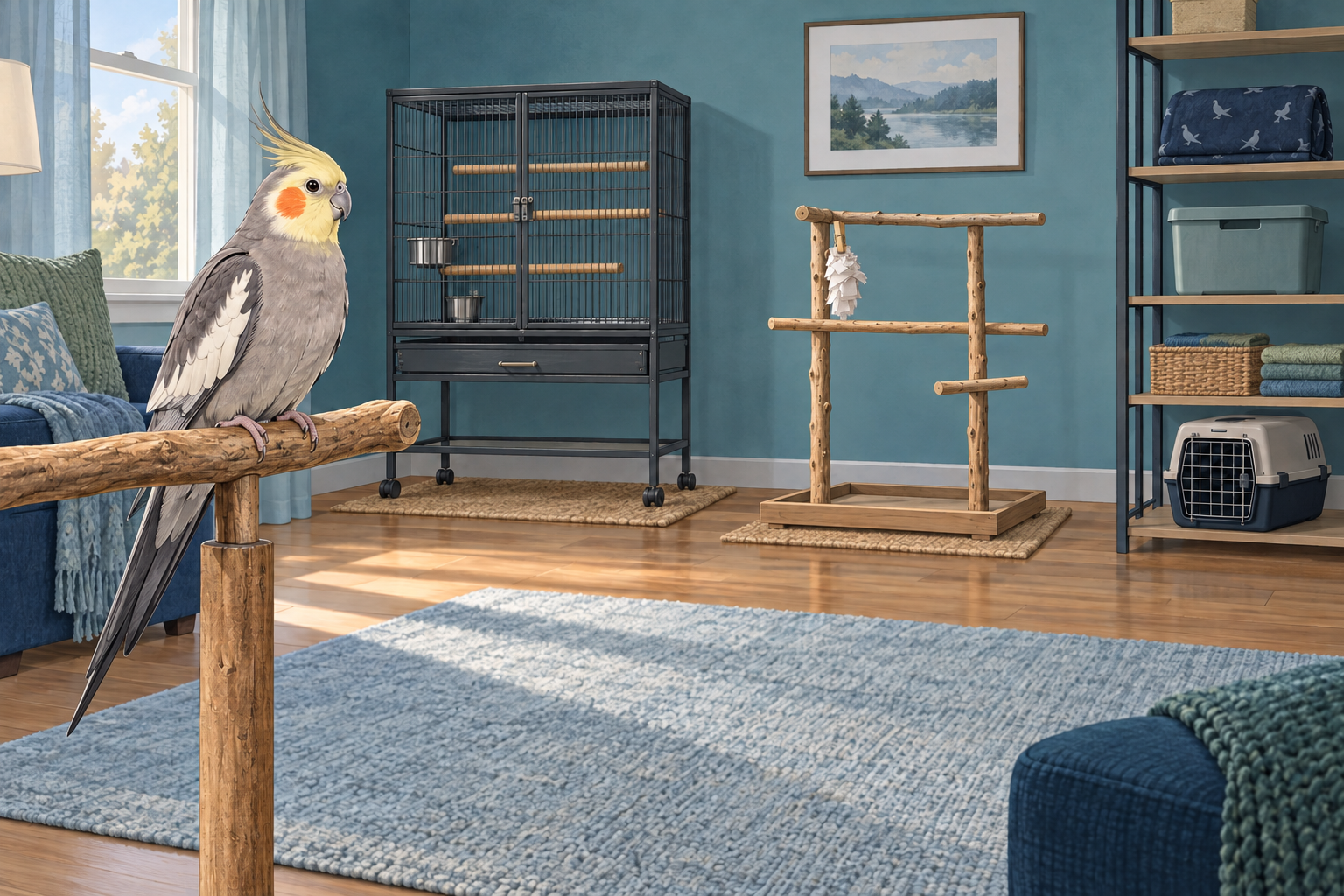
Imagine a hypothetical rescue file for a cockatiel called Cedar. It states that the earlier diet is partly unknown, lists the date and findings of the rescue's examination, records weight observations, explains that Cedar approaches a handheld perch but avoids fingers, and describes the return process. That file contains uncertainty, but it makes the uncertainty visible.
By contrast, be cautious if an organization will not show where birds are kept, cannot identify its veterinary relationship, describes every bird with the same flattering language, dismisses health questions, or encourages a rapid handoff without discussing the household. A demanding application is not proof of quality, but transparent standards and bird-specific records are meaningful evidence.
What a breeder or seller should prove

A breeder or specialist seller should be able to document that the bird was bred in captivity and explain its origin. Laws differ by country and species, so verify local requirements independently; do not rely on a verbal assurance that paperwork is unnecessary. Never accept a wild-caught bird. The World Parrot Trust describes serious welfare, conservation, and disease consequences associated with the wild-bird trade.
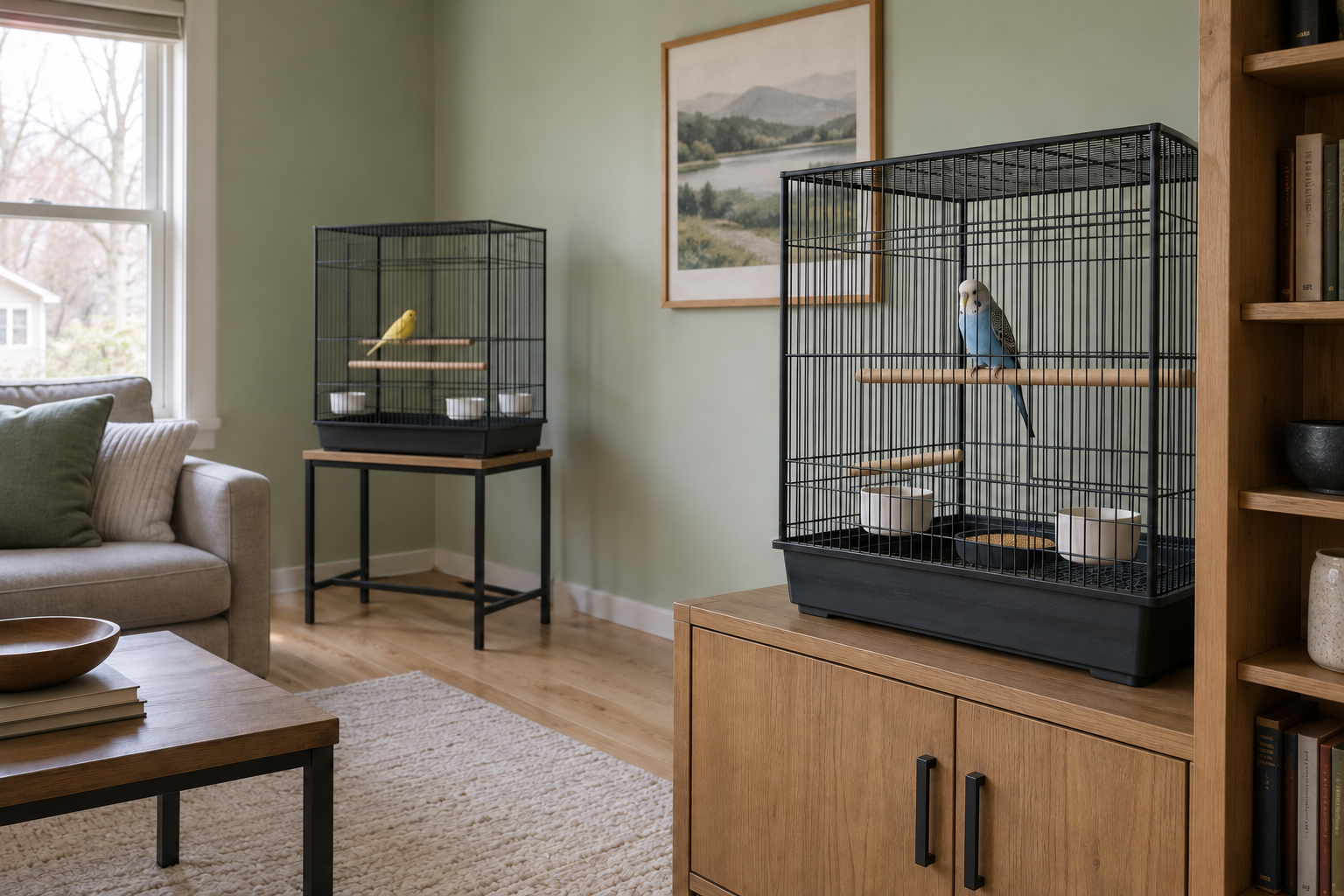
Ask to see the living conditions, including the adult birds where appropriate. Look for clean enclosures, fresh food and water, room to move, suitable social and enrichment opportunities, and birds that appear alert. Ask what the young bird eats without assistance. A buyer should not be expected to finish hand-feeding an unweaned bird. Request health and identification records, the date and scope of veterinary checks, and a written agreement explaining what happens if the bird is found unwell.
Good evidence is specific: hatch or acquisition information, diet and weight records, an honest description of handling, avian-veterinary documentation, references, and time to review the agreement. Red flags include cash-only urgency, parking-lot exchange, several conflicting ages, refusal to show records, vague claims that a color mutation guarantees temperament, or a seller who treats a very low price as the only reason to act immediately.
A clean website is not a welfare audit. Ask how many birds are raised at once, how social development is supported, how illness is handled, and whether the source will remain available for questions. Then verify material claims with the veterinarian who will care for the bird.
Compare both routes on six criteria
Use one matrix rather than two emotional stories.
1. Welfare now. Can you observe housing, food, cleanliness, movement, social conditions, and the bird's current behavior? A rescue foster home and a breeder facility will look different, but both should withstand reasonable questions.
2. Transparency. Does the source distinguish known facts, professional findings, previous-owner reports, and unknown history? Confidence without records is not transparency.
3. Health documentation. Are examination records current and attributable to a veterinary clinic? What testing was performed, what was not, and who is responsible if a problem is found? The CDC recommends an avian-veterinary visit within a few days of purchase or adoption, regardless of source.
4. Household fit. Does the organization discuss sound, space, social needs, lifespan, other animals, children, and your daily schedule? A source that tries to make every bird fit every home is selling a handoff, not evaluating a placement.
5. Support. Is advice bird-specific and evidence-based? Can you ask questions after placement? Support should not require you to buy unnecessary products or accept medical guidance from someone who is not a veterinarian.
6. Contingency policy. Is there a written trial, return, or rehoming process? Who must be contacted if the placement fails? A policy cannot guarantee a perfect match, but it reveals whether the source plans beyond the transaction.
Apply all six criteria to the actual organization. Adoption may offer rich adult-behavior information but incomplete early history. A breeder may document origin and development but have little evidence about adult personality. Those are uncertainties to manage, not automatic verdicts.
Questions to ask before money or commitment changes hands

Use the same verification script with either route:
- What is known—and not known—about origin, age, diet, health, and previous homes?
- Is the bird fully eating on its own, and what food does it actually consume?
- Which veterinarian examined the bird, when, and what records can I receive?
- What behavior has been observed across routine situations rather than one meeting?
- May I see the current housing and ask for references?
- What identification and legally required provenance documents accompany the bird?
- What support and return process are written into the agreement?
- What would make you decide that my household is not a suitable match?
Walk away from pressure, unverifiable origin, an unweaned bird, concealed living conditions, missing promised records, or instructions to skip veterinary care. Do not pay a deposit merely to preserve a scarce opportunity while essential questions remain unanswered.
No route removes the need for your own preparation. Confirm the species fit, find an avian veterinarian, budget for routine and emergency care, prepare safe housing, and plan quarantine when other birds are present. A responsible acquisition is not defined only by where the bird came from. It is a documented handoff from a source willing to protect the bird before, during, and after the decision.