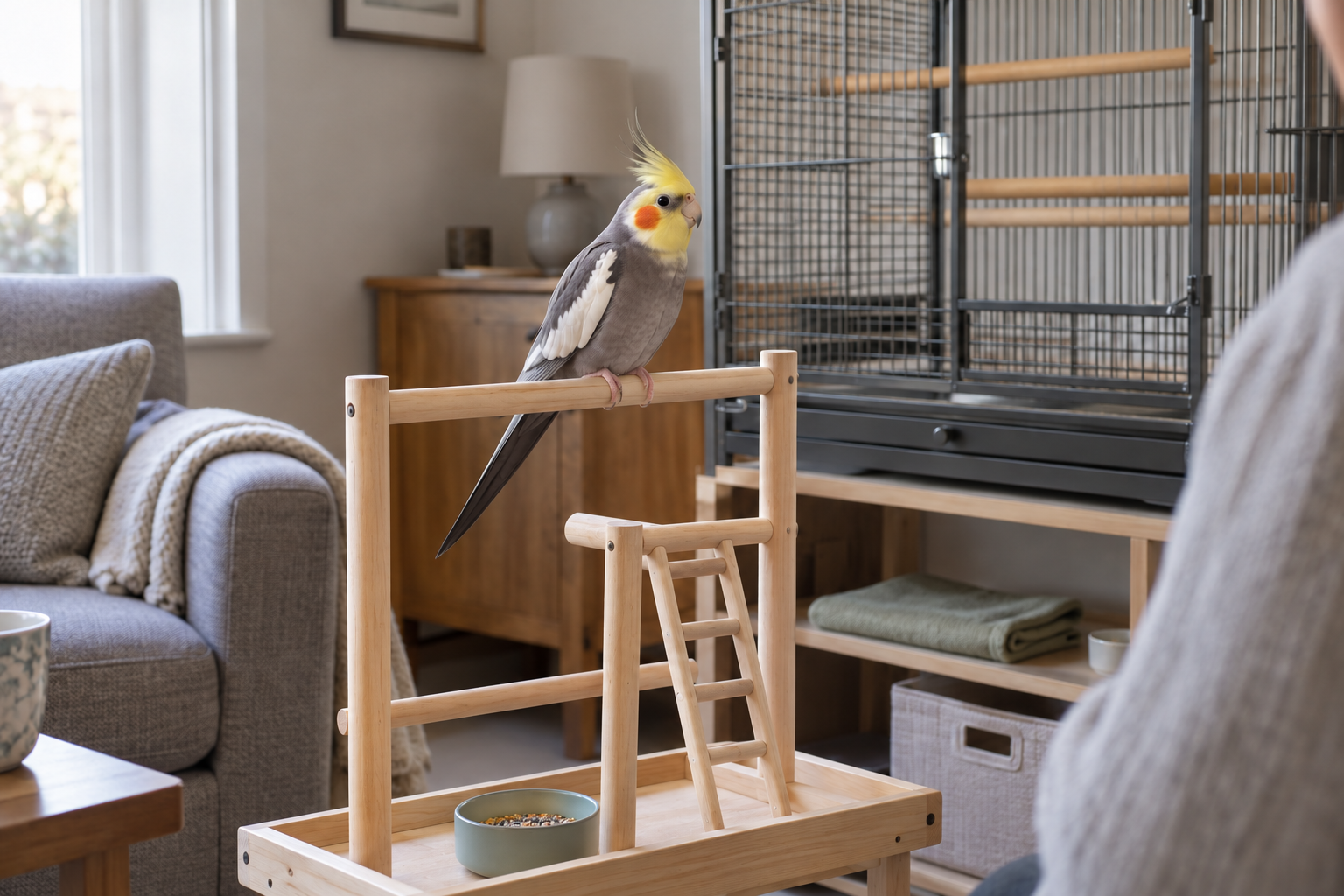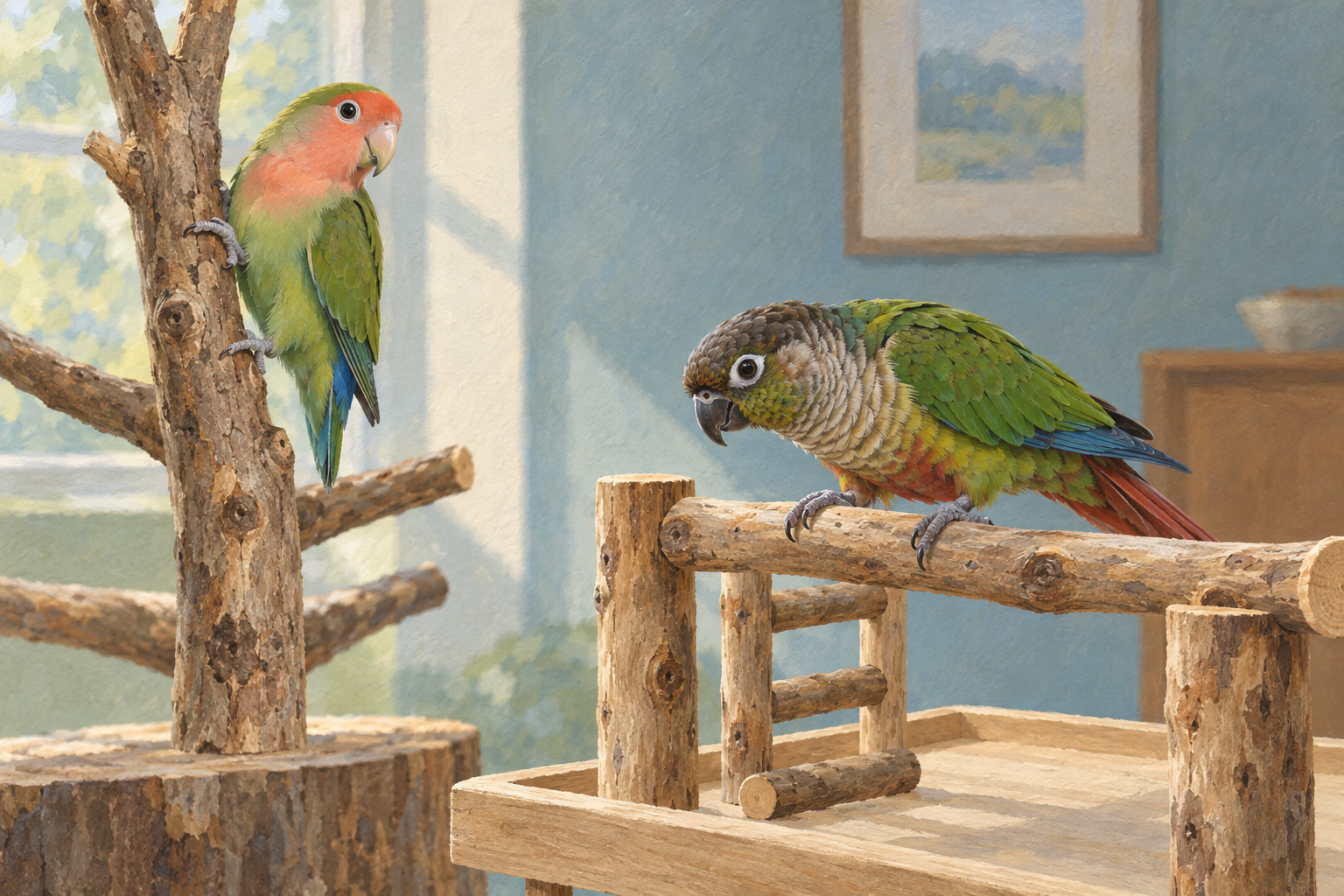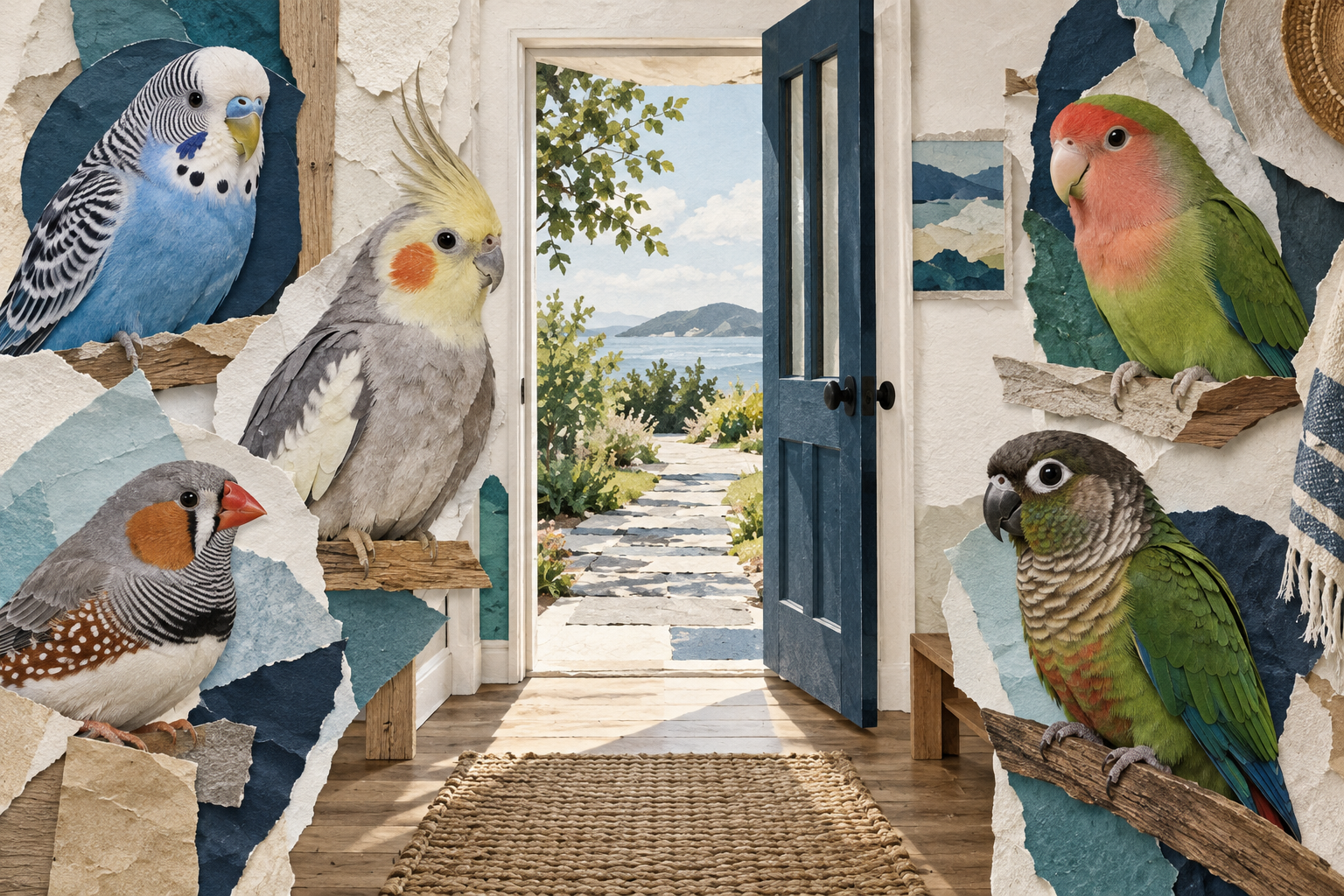
This is not a soulmate quiz. No sequence of cheerful buttons can predict an individual bird's personality, guarantee affection, or make a noisy apartment quiet. This quiz does something less magical and more useful: it turns household constraints into a research shortlist.
Keep every answer visible. A result is a path to investigate, not permission to bring a bird home. If the honest result is “no bird fits right now,” the quiz has worked. You have protected a bird and your future household from a mismatch.
The rules: shortlist, never destiny
For each question, write A, B, or C. Do not choose the answer you hope to become after adoption. Choose what your home can reliably provide during work deadlines, illness, travel, and ordinary tired days.
This quiz covers budgies, cockatiels, canaries or finches, lovebirds, and small conures as broad research pathways. Within every pathway, species and individuals differ. Housing, diet, social needs, longevity, veterinary access, source, and local law still require separate verification.
There is no universal “beginner bird.” The MSD Veterinary Manual advises considering time, cost, cage size, veterinary care, and noise, not just appearance or talking ability. Keep that practical list beside your score.
Questions 1–3: sound, dust, and usable space
1. What level of everyday sound can the household truly absorb?
- A: Frequent chirps and calls are workable, but piercing bursts would create conflict.
- B: Regular whistles, contact calls, and occasional louder moments are acceptable.
- C: Sound sensitivity, shift work, close neighbors, or lease rules make repeated bird noise risky.
“Small” does not mean silent. Canaries and finches may vocalize throughout the day; budgies chatter; cockatiels whistle and call; lovebirds and small conures can produce sharp sounds. Visit adult birds in a calm, ethical setting and listen from realistic distance. A phone recording cannot reproduce the effect in your room.
2. How would the home handle feather dust and scattered debris?
- A: Regular wiping, vacuuming, and air-quality planning are manageable.
- B: Some mess is acceptable, but a notably dusty species may be difficult.
- C: A household member has a respiratory condition or unresolved sensitivity.
Cockatiels are powder-down birds, and all birds scatter hulls, feathers, food, and paper. A purifier cannot replace cleaning or medical advice. If health is a concern, discuss the actual home and species with the appropriate human clinician and an avian veterinarian before deciding.
3. Is there room for a species-appropriate enclosure and safe daily movement?
- A: Yes, including door clearance, flight or exercise space, and a quiet sleep routine.
- B: Space exists, but only after measuring and rearranging.
- C: The plan depends on a decorative small cage, permanent confinement, or an unsafe shared room.
If C describes the only available setup, stop here. A bird does not become suitable because a product box says “starter cage.”
Questions 4–5: contact and ordinary daily time
4. What relationship is the household actually seeking?
- A: Watching natural movement and listening are satisfying; handling is optional.
- B: Gentle interaction and training are wanted, without demanding cuddling.
- C: The bird must enjoy touch, bond to a particular person, or perform on request.
Canaries and finches often suit observation-centered homes better than hands-on expectations. Parrots can learn to interact, but no species guarantees handling tolerance. A bird that prefers distance is still communicating successfully.
5. How much dependable time is available every day?
- A: The household can provide care, supervised activity, enrichment, and social attention on a stable schedule.
- B: Care is dependable, but prolonged direct interaction would be difficult.
- C: Most weekdays leave only food-and-water minutes, with enrichment postponed to weekends.
Budgies, cockatiels, lovebirds, and conures are socially and cognitively active. Another bird is not an automatic solution: compatibility is not guaranteed, housing may need to remain separate, and two birds double many responsibilities. Finches and some other colony-oriented species have their own social and space requirements rather than being “hands-off decorations.”
Questions 6–7: years and professional care
6. Can the household commit across major life changes?
- A: Housing, finances, travel, succession care, and a multi-year commitment have been discussed.
- B: The commitment is possible, but the backup-care plan is unfinished.
- C: A move, education change, or uncertain household consent makes even the next few years unclear.
Small parrots may live for many years, and published lifespans vary with definition and source. Do not shop from the lowest number you find. Plan for the longer plausible commitment, then verify species-specific evidence.
7. Is avian veterinary care reachable and affordable?
- A: A clinic and after-hours path have been called and verified.
- B: Names exist, but availability and travel have not been confirmed.
- C: The plan assumes a general clinic will treat birds without asking.
Move C to “not ready yet.” Veterinary access is a prerequisite, not an accessory.
Result cards: five research paths—and a valid pause

Count the pattern, but do not total it like a personality score. Start with the pathway whose constraints match your strongest A answers and whose cautions do not collide with any C answer.
A single C can outweigh several A answers when it represents a welfare limit. No verified veterinary route, no safe enclosure space, or a household member who cannot tolerate bird noise is not “balanced out” by enthusiasm. Several B answers mean more research: write the missing measurement, phone call, budget, or household agreement beside each one and finish those tasks before choosing a pathway.
Budgie pathway. Research this route if you can support an active, social small parrot, accept steady chatter, and enjoy training without demanding touch. Verify flight space, companionship strategy, diet, sourcing, and avian care. “Small and common” does not make a budgie disposable or automatically easy.
Cockatiel pathway. Consider it if whistles, contact calls, powder down, daily social time, and a longer commitment are workable. Research individual handling history and observe adults. A famously gentle image cannot guarantee quietness, affection, or compatibility with another bird.
Canary or finch pathway. Explore this route if watching, listening, and supporting species-appropriate social life are more important than handling. These birds still need generous movement space, thoughtful grouping, enrichment, daily maintenance, and veterinary care. “Observation bird” does not mean low-effort.
Lovebird pathway. Research lovebirds if you can accommodate energetic climbing, chewing, assertive communication, and consistent training. Pair status does not define care quality, and the name does not promise sweetness. Investigate the exact species, individual history, housing, and social plan.
Small-conure pathway. Explore small conures if the household can handle active play, destructive chewing, sharp calls, close daily management, and a potentially long commitment. “Relatively quiet” only means quieter in comparison with some parrots; it is not an apartment guarantee.
No bird fits now. Choose this result when space, sound tolerance, health concerns, time, household agreement, finances, or veterinary access remain unresolved. Revisit later after changing the conditions. Waiting is a responsible bird-care decision, not a failed quiz.
Verify the shortlist in real life

Take no more than two pathways forward. Read the AAV's species handouts and independent veterinary or welfare guidance. Meet adult birds through an ethical rescue, foster program, or experienced caregiver; juvenile behavior and retail environments can mislead. Ask about the difficult parts as deliberately as the charming ones.
Then perform three final checks: measure the real space, verify veterinary access by phone, and write the daily care plan for an inconvenient week. If a pathway survives all three, research the exact species and individual. If none survives, keep the “not now” result. A good match begins with accurate limits, not a flattering label.