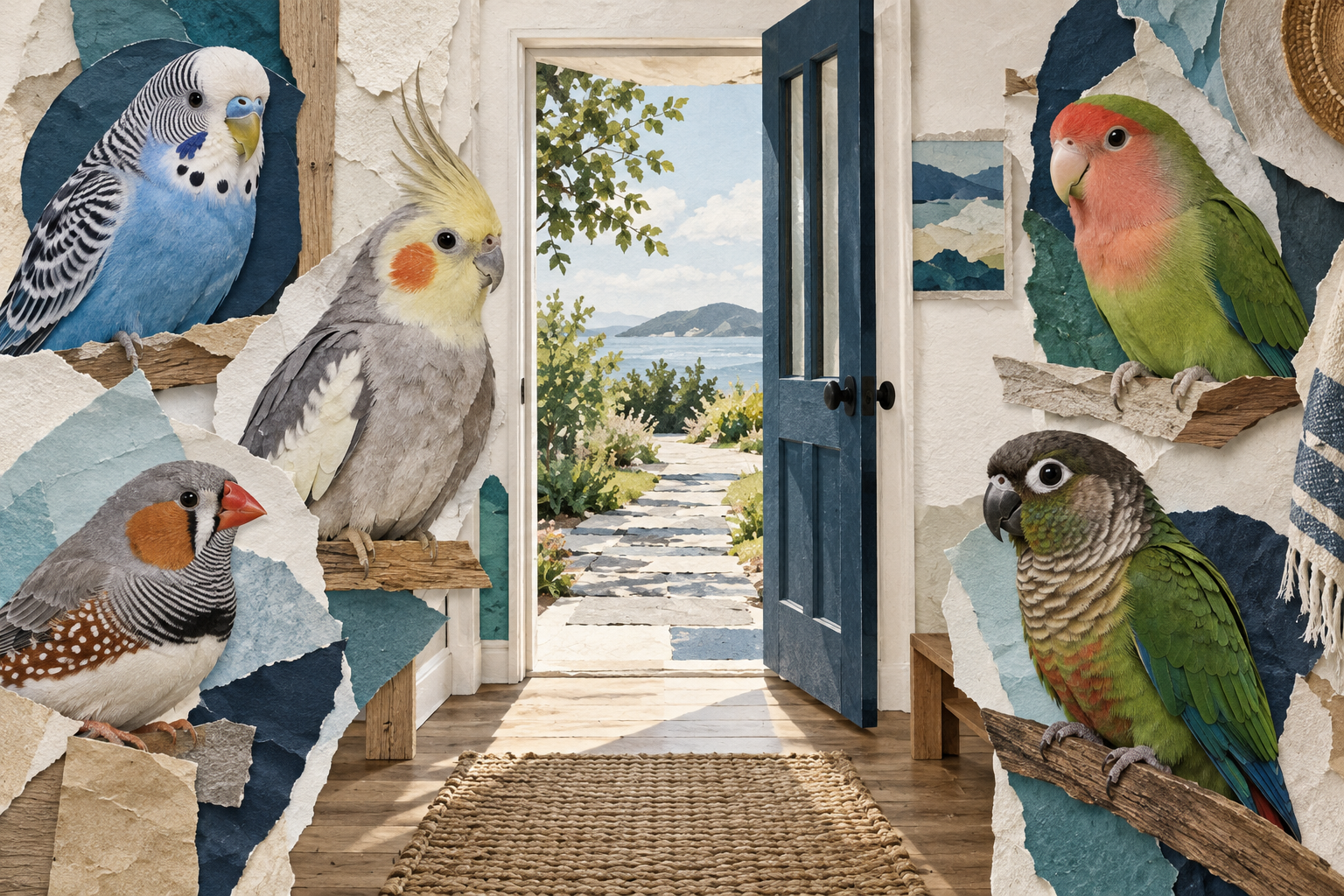
A lifespan number is not a warranty and should not be used to rank birds. It is a planning horizon: how long housing, veterinary care, food, daily attention, and a capable successor may be needed. Published figures vary because sources may report averages, typical captive lives, maximums, or broad groups rather than one species. Genetics, origin, nutrition, accidents, disease, and access to skilled care also change an individual's outcome.
This roundup covers seven familiar companion birds. Each entry compares at least two current expert or veterinary sources and pairs the uncertainty with one practical commitment question. Where sources disagree, the disagreement remains visible. Use the longer credible figure for contingency planning, then ask an avian veterinarian about the individual bird's age and health.
Age itself may be uncertain in an adopted bird. Plumage, leg bands, or a previous caregiver's recollection do not always establish a hatch date, and a veterinary examination cannot turn an estimate into a birth certificate. Record whether the age is documented or estimated. The less certain it is, the less sensible it becomes to build a care plan around an exact end year.
Small birds are still multi-year commitments
1. Budgie: published figures stretch from 5 to 15 years
The MSD Veterinary Manual lists an average of 5–10 years. PetMD's veterinarian-reviewed care sheet gives 10–12 years with proper care, while the World Parrot Trust lists 15 years. Those numbers describe different kinds of summaries, so compressing them into one “correct” average would create false confidence.
Planning implication: a budgie acquired for a child may still need care through several school stages, a move, or the child's departure from home. The adult who authorizes the adoption should remain the accountable caregiver, not assume a young person will retain the same schedule or address.
Before choosing, ask whether avian veterinary care, secure housing, and a backup caregiver will remain available if the family's routine changes. A smaller body reduces neither the need for professional care nor the seriousness of an emergency.
2. Canary: roughly 6–15 years across care references
MSD lists canaries as living up to 15 years. LafeberVet's veterinary-professional information sheet gives a mean of 6–12 years, with some reaching 15. This is a good example of why “up to” and “mean” cannot be treated as synonyms.
Planning implication: confirm who will maintain daily observation, cleaning, diet, and veterinary access even if the bird is valued mainly for song rather than handling. A relatively independent social style does not make the care commitment temporary or automatic.
3. Finch: the species label hides a wide spread
“Finch” covers many species. MSD gives 5–10 years for finches as a broad group. VCA lists 4–6 years for commonly kept finches and notes a maximum of 17 years. The unusually high maximum is not a forecast, and the shorter average is not permission to plan only four years ahead.
Planning implication: decide succession and housing at the group level. Many finches are kept socially, so the death of one bird can change flock compatibility without ending the household's responsibility. Ask what happens if one bird outlives companions, a compatible bird cannot be sourced, or the aviary must move.
Because “finch” is a category rather than one husbandry profile, confirm the exact species before using a lifespan or social plan. A broad number should prompt better questions, not erase species differences.
Cockatiels and lovebirds widen the horizon
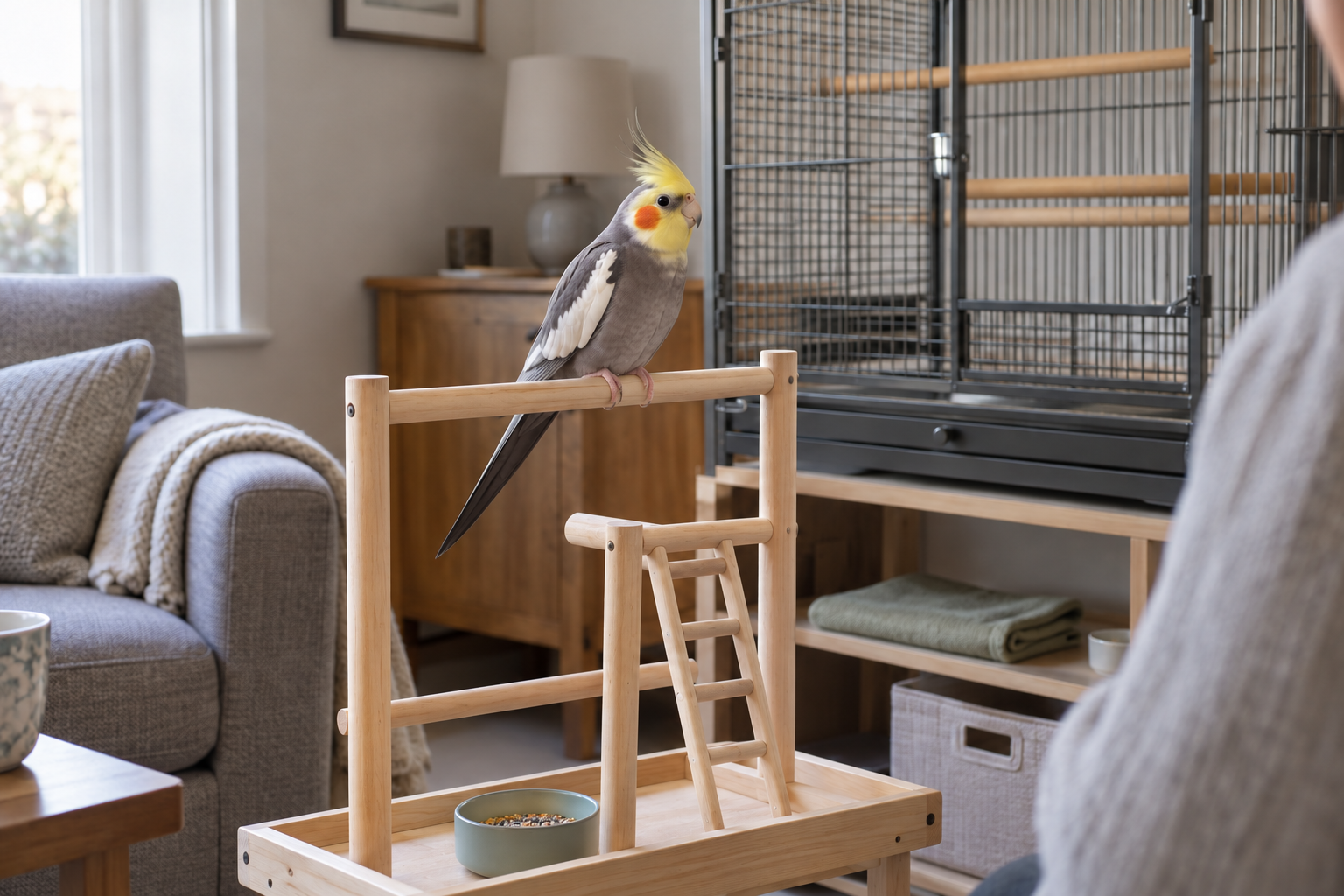
4. Cockatiel: sources commonly reach 20–25 years
MSD and the World Parrot Trust each publish a 20-year figure; PetMD states up to 25 years with proper care. The Association of Avian Veterinarians' current cockatiel handout gives a maximum of 30 years, which is a ceiling rather than an expected outcome. Together, the sources support planning for decades without promising that any bird will reach a particular birthday.
Planning implication: think beyond the current apartment, job, and relationship. A cockatiel's cage, safe flight routine, vocalization, and bird-experienced veterinary access must still fit if working hours or household members change. Write down which requirements are non-negotiable before a future housing search makes them inconvenient.
5. Lovebird: approximately 10–20 years in current sources
PetMD describes a captive life expectancy of 10–20 years. The World Parrot Trust lists 15 years for the rosy-faced lovebird, while MSD gives lovebirds up to 20 years. The apparent overlap should not obscure species differences, individual history, or the distinction between an average and an upper limit.
Planning implication: do not let the name “lovebird” substitute for an actual social plan. Whether kept singly or with a compatible bird, a lovebird needs stable daily care. If two birds live together, plan for separate housing if compatibility changes and for the possibility that one survives much longer than the other.
A green-cheek and an African grey show why succession matters
6. Green-cheek conure: sources vary from 10-plus to 25 years
The World Parrot Trust lists 10-plus years for the green-cheeked conure. MSD lists small conures in the same genus, Pyrrhura, at up to 25 years. A VCA overview for the much broader conure group gives 20–35 years, illustrating how a group-level number can overshoot what a species-specific profile says. It should not be silently applied to every conure.
Planning implication: treat the commitment as capable of crossing major career and family transitions. A successor needs more than affection; they need permission, suitable housing, tolerance for sound and chewing, access to records, and enough resources to continue veterinary and behavioral care.
7. African grey: credible references span 30–60 years
MSD gives African grey parrots an average of 30–50 years. The World Parrot Trust lists 50–60 years. A planning window that acknowledges both sources can extend beyond the caregiver's working life and, depending on the caregiver's age, beyond their ability to provide daily care.
Planning implication: successor care is not an optional note in a will written decades later. Identify at least one willing person or reputable organization now. Discuss the bird's legal transfer, continuing expenses, current routines, behavior, veterinarian, diet, identification, and housing. Reconfirm the plan periodically; a person who agrees today may move, develop allergies, acquire incompatible animals, or become unable to accept the bird.
Plan beyond your current calendar
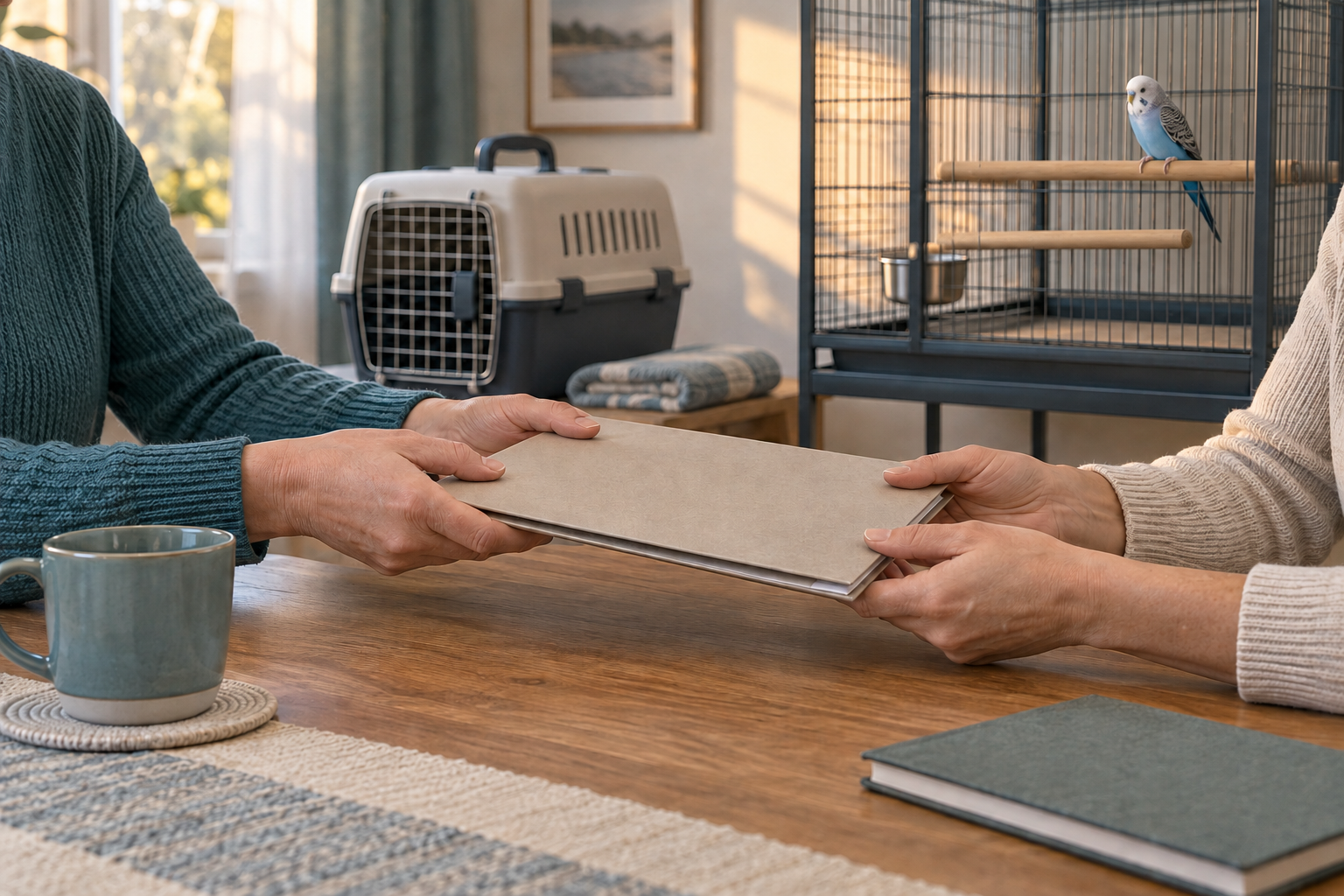
Use the longest credible lifespan as a stress test, not a prediction. Mark the likely dates of major transitions: education, relocation, partnership, children, retirement, and ageing. Then review five systems.
Do the same exercise for the bird's life stages. A young, healthy bird may tolerate today's perch layout and travel routine, while an older bird may need veterinary monitoring, adjusted access, or a caregiver able to administer prescribed treatment. Do not wait for age-related change to discover that the only intended successor is uncomfortable handling the bird or cannot reach an avian clinic.
First, keep a portable care record with species, confirmed age if known, identification, veterinary history, diet, normal weight trend, routines, fears, training cues, and emergency contacts. Second, maintain a realistic care budget and document which costs recur. Third, consider future housing rules, noise tolerance, space, and transport—not only today's lease. Fourth, preserve carrier training and relationships with bird-experienced clinics so a move does not erase access to care. Fifth, name both a temporary emergency caregiver and a long-term successor.
Ask successors directly rather than assigning them by assumption. Let them meet the bird and see the work. Record where supplies and documents are kept, how expenses would be funded, and what organization should be contacted if no private home remains suitable. Review the arrangement after every move and at least annually.
Also separate temporary incapacity from permanent succession. A nearby person who can provide two days of safe care may not be able to accept a parrot for decades. Name both roles, give each person the relevant authority and instructions, and keep their consent current.
If no private successor is genuinely willing, research reputable rescue or sanctuary policies while the bird is healthy. Confirm intake conditions, waiting lists, fees, and legal documents directly; a name written in a file is not a guaranteed placement. The humane plan is the one the receiving person or organization has actually agreed to support.
No range can tell you how long one bird will live. It can tell you whether your plan is too short. Choosing a bird responsibly means being prepared for the ordinary years, the ageing years, and the possibility that the bird's calendar extends well beyond your own expectations.