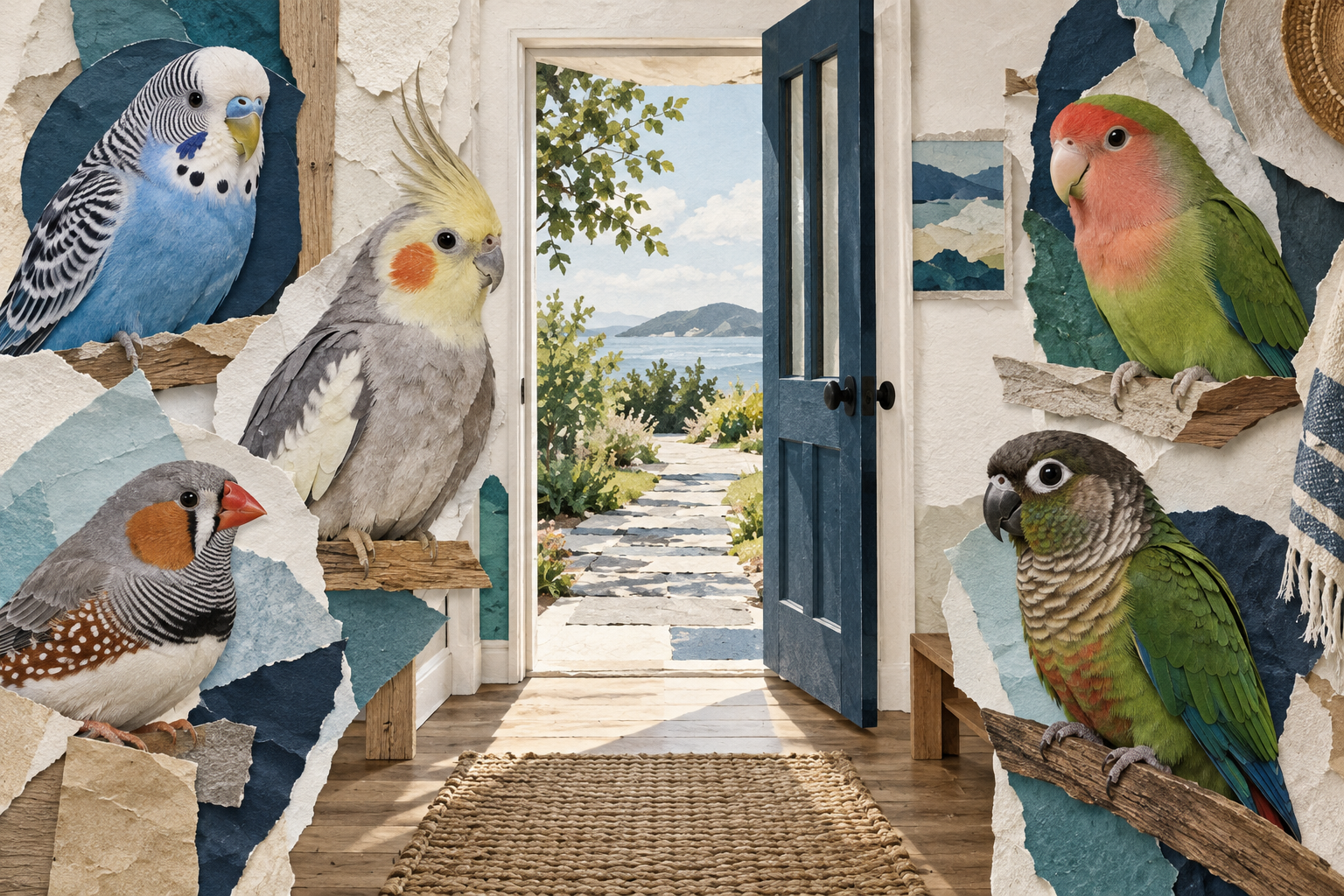
Budgies and cockatiels are often described as good “beginner birds.” That label hides the decision that matters: which bird, if either, fits the space, sound tolerance, cleaning routine, daily attention, and long-term responsibility of your household?
Both are social parrots with individual personalities. Neither is a low-maintenance decoration, and neither species guarantees a cuddly, quiet, or easy companion. This comparison uses the same practical criteria for both birds so you can identify tradeoffs rather than crown a universal winner.
Why “beginner bird” is not a decision
A smaller purchase price or familiar pet-store presence does not make an animal simple to care for. Budgies and cockatiels need suitable housing, daily observation, enrichment, safe exercise, fresh food and water, cleaning, and access to a veterinarian experienced with birds. They may live through major changes in your work, housing, and relationships.
Published longevity figures vary. The MSD Veterinary Manual lists a typical 5–10 years for budgies and up to 20 years for cockatiels, while World Parrot Trust species profiles list potential longevity of about 15 and 20 years respectively. These are planning signals, not guarantees. Genetics, prior care, diet, accidents, and veterinary care all matter.
Before choosing, confirm that your lease, household, budget, and nearby veterinary services can support either species for years.
Space, movement, and household footprint
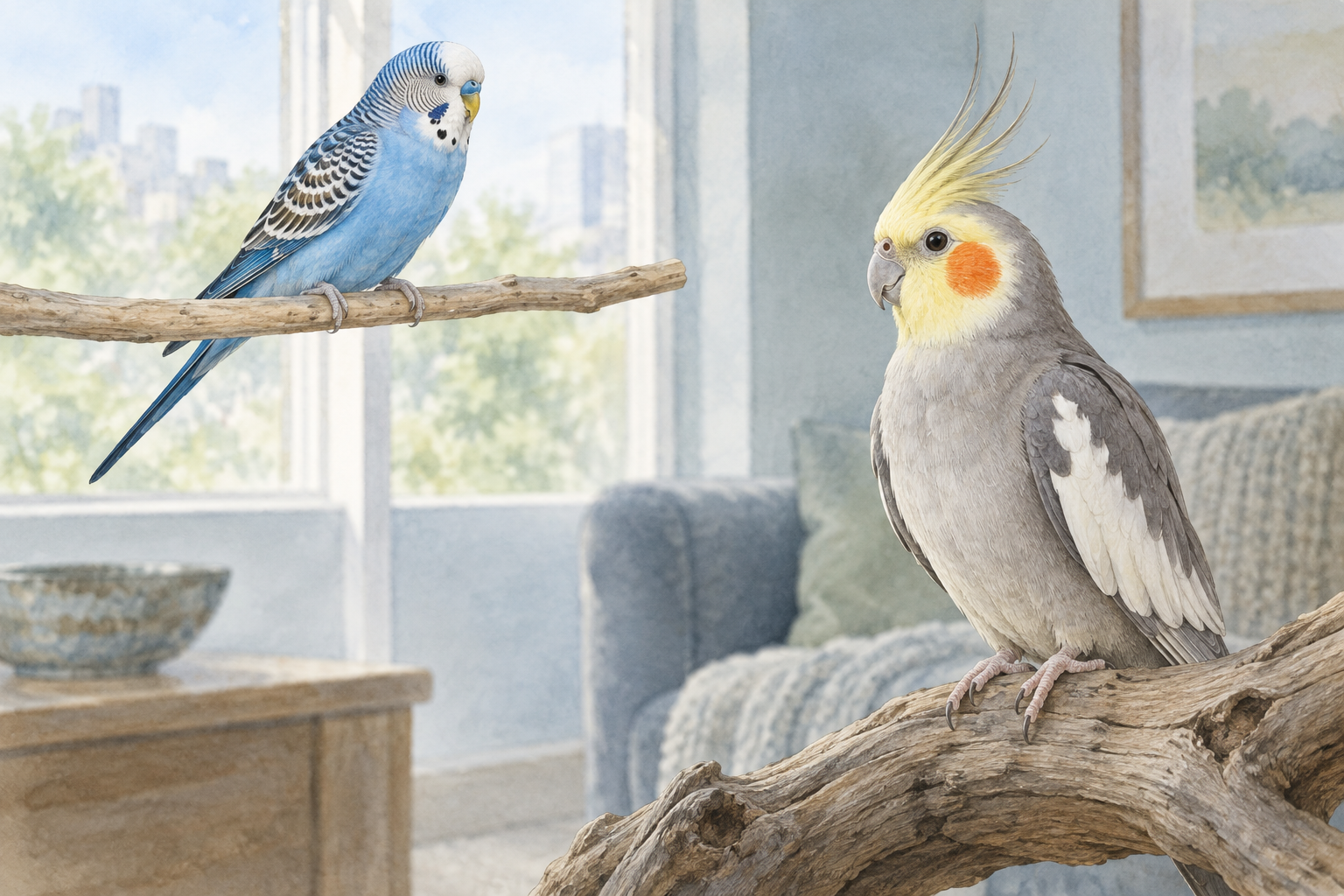
A budgie is physically smaller. The World Parrot Trust describes budgies at about 18–20 centimeters long and 22–32 grams. Cockatiels are listed at about 29–33 centimeters and 80–100 grams, with a long tail that adds noticeably to the space they occupy.
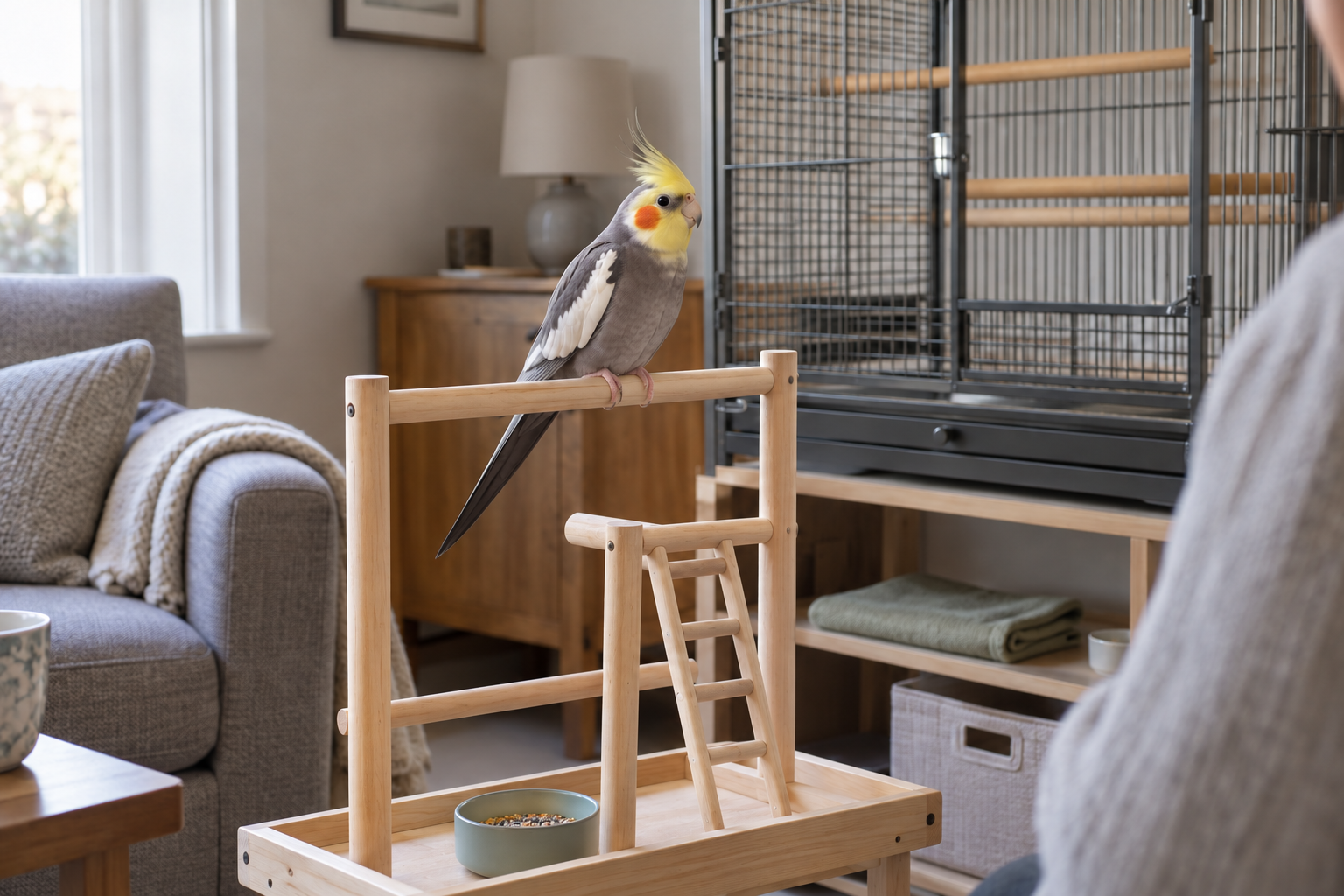
Small body size does not justify a tiny cage. Both birds need room to move without striking bars, furnishings, or toys, plus safe exercise outside the cage where appropriate. The cage also needs usable door openings, species-appropriate bar spacing, several suitable perches, feeding stations, and space that is not crowded by accessories. The RSPCA and MSD Veterinary Manual both emphasize movement and exercise rather than treating the cage as a display box.
In a compact home, a well-planned budgie setup may have the smaller physical footprint. A cockatiel's larger body and long tail usually require more clear interior space, a larger carrier, and more clearance around doors and perches. Yet floor area is only part of the question. Either bird needs a safe location away from cooking hazards, uncontrolled drafts, open windows, and unsupervised pets.
Ask where the bird will exercise, not merely where the cage will fit. If there is no practical way to create a bird-safe routine outside the cage, neither option is ready for that home.
Sound, feather dust, and daily cleanup
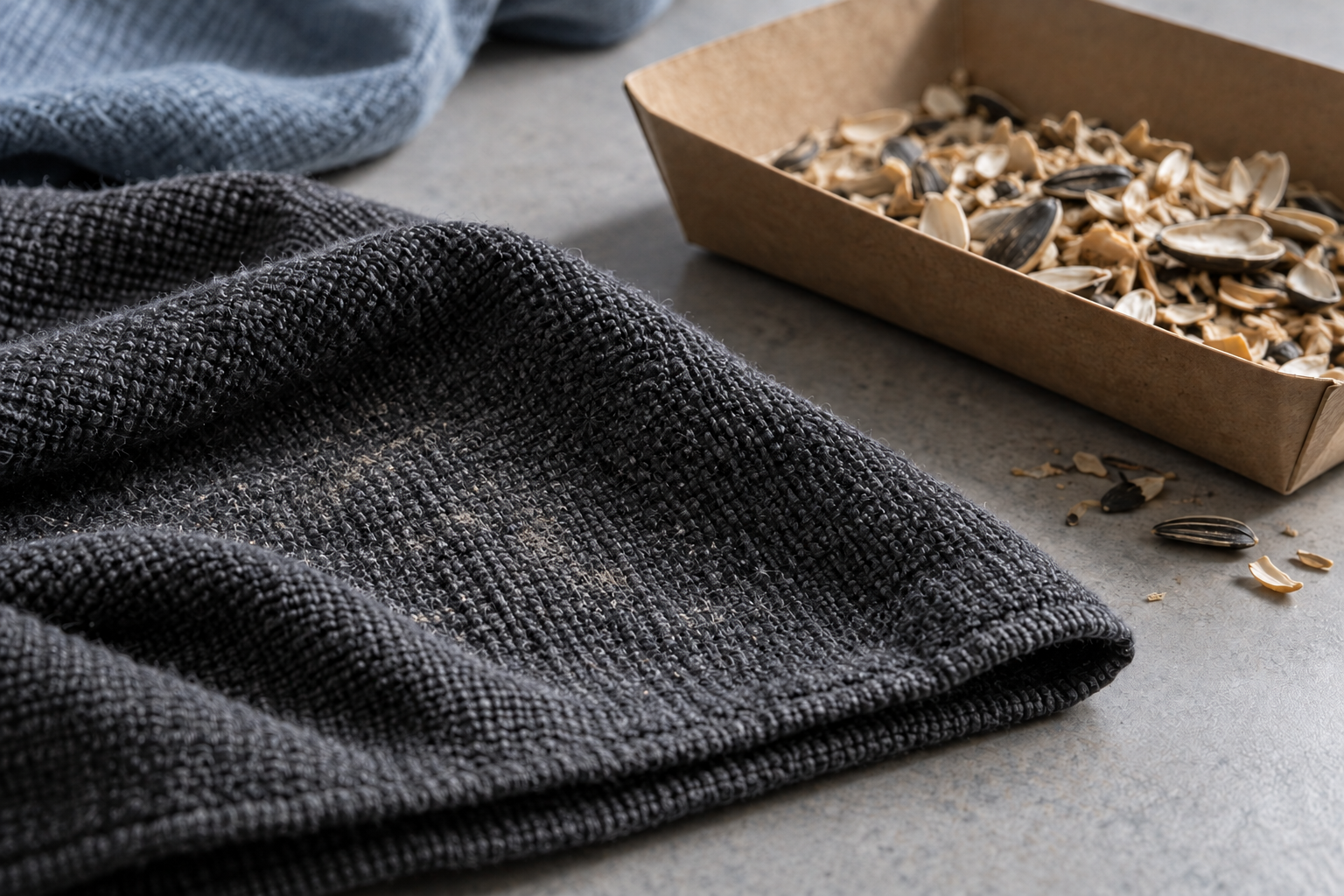
Budgies often produce frequent, busy chatter. Individual birds may also call sharply, and multiple birds can create a continuous layer of sound. Cockatiels commonly whistle and use contact calls that can carry through a home. The MSD Veterinary Manual describes both species as relatively quiet compared with larger parrots, but “relatively” is not the same as silent.
Visit healthy adult birds before deciding. Listen during active periods, not only when the room is calm. Consider remote meetings, a sleeping child, close neighbors, and household members who are sensitive to repetitive sound. Sex does not provide a reliable promise about volume or personality.
Both species scatter hulls, food fragments, feathers, and droppings. Cockatiels are powder-down birds and can produce a visible fine dust in addition to ordinary debris. That may increase the cleaning burden and deserves careful consideration in a household with allergies or respiratory concerns; discuss personal health questions with a clinician rather than relying on a bird article.
Daily cleanup is easier when the cage can be reached from all necessary sides, liners can be changed without a struggle, and nearby surfaces are washable. A smaller bird is not automatically a cleaner bird. Budgies can send light seed hulls and feathers well beyond the cage, while a cockatiel can create larger food pieces and more powder.
Social contact and handling expectations
Both species are social and need regular, appropriate interaction. That can include contact with compatible birds, calm human company, reward-based training, foraging, safe movement, and opportunities to choose whether to approach. A single bird should not be expected to wait alone all day and then provide instant affection on demand.
Budgies are agile, quick, and often delightful to watch as they climb and fly. Some learn to step up, interact closely, or imitate speech; others remain more comfortable with less handling. Cockatiels may seek proximity, whistle to household members, or enjoy head scratches, but an individual may also prefer limited touch or become defensive around a cage or favored person.
Choose for the care you can provide even if the bird never talks, cuddles, or performs. Previous socialization, current health, environment, and the quality of your interactions influence behavior. Species tendencies can help you plan; they cannot tell you who an individual bird will become.
For either species, use gradual training and respect signals that the bird needs more distance. Forcing a bird onto a hand, cornering it, or continuing after it freezes or retreats may damage trust. If your schedule allows only occasional weekend attention, neither bird is a good match without a credible daily social and enrichment plan.
Three households, three honest outcomes
Consider three fictional households. Their outcomes are examples, not prescriptions.
Household one lives in a smaller apartment, can provide a properly sized setup and safe flight routine, enjoys lively background chatter, and wants to observe and train without expecting cuddling. They have confirmed an avian clinic nearby. A budgie could be the more practical starting point, provided the household accepts daily care and a potentially long commitment.
Household two has more physical space, tolerates whistles and contact calls, can manage extra dust and cleaning, and wants a somewhat larger bird without moving into large-parrot care. They can protect several hours of calm interaction and exercise in the daily routine. A cockatiel may fit, but only after meeting adult birds and planning for its long tail, powder, carrier, and lifespan.
Household three has an open kitchen connected to the only possible cage location, frequent unsupervised pets, no avian veterinarian within a workable distance, and a schedule that leaves the home empty most days. Their honest result is neither. Choosing neither is not failure; it is responsible recognition that affection for birds does not automatically create a safe home for one.
The same answer may apply if someone needs a silent pet, cannot accommodate airborne dust, expects a guaranteed talker, or views a cage as permanent rather than a home base within a larger care routine.
Research next, then decide slowly
If one species appears to fit, meet several healthy adults through reputable rescues, shelters, or responsible caregivers. Observe normal sound and movement. Ask about the individual bird's history, diet, veterinary records, handling preferences, and reason for rehoming. Verify housing details with current species-specific guidance and an avian veterinarian.
Budget for the cage, carrier, furnishings, food, replacements, routine examinations, and emergencies—not just the bird. Identify who provides care during travel. Then ask the final question: would this still be a good home if the bird is louder, less tactile, more fearful, or more expensive than hoped?
Budgie and cockatiel are not two difficulty settings. They are different combinations of body size, movement, sound, dust, social needs, and lifespan. The better fit is the one whose real care requirements your household can meet without depending on a perfect personality. Sometimes that is a budgie, sometimes a cockatiel, and sometimes neither.