Budgies are small parrots, not simplified parrots. Their light bodies and familiar pet-store presence can disguise full-scale needs: room to fly, daily social opportunity, varied enrichment, a species-appropriate diet, and access to an avian veterinarian. A suitable life is measured by what the bird can do each day, not by how little space the cage occupies.
This profile describes the care pattern for a companion budgerigar, also called a budgie or parakeet in some countries. Individual health, history, flight ability, and temperament change the details, so use it to test household fit and take species-specific questions to an avian veterinarian.
Small parrot, full-scale needs
The World Parrot Trust lists budgerigars at roughly 18–20 centimeters long and 22–32 grams. Their small size makes them quick and agile; it also means that a reduction in food intake or a weight change can be easy to miss without attention.
Longevity figures differ among reputable sources. The World Parrot Trust lists a potential lifespan of about 15 years, while the MSD Veterinary Manual gives a typical range of 5–10 years. Neither figure predicts one bird's future. They show why a budgie belongs in a multi-year housing, veterinary, travel, and succession plan rather than an impulse purchase.
Budgies are naturally social and active. Common does not mean disposable, and beginner-friendly does not mean maintenance-free. Before bringing one home, confirm that every household member accepts frequent vocalization, scattered food and feathers, daily cleaning, safe flight arrangements, and care during holidays or moves.
Color, sex, and age may influence some traits, but they do not provide a dependable personality forecast. Choose the individual and care system rather than expecting a particular mutation to be quieter, friendlier, or easier to train. A source should describe observed behavior without turning tendency into guarantee.
Space to move, not just perch
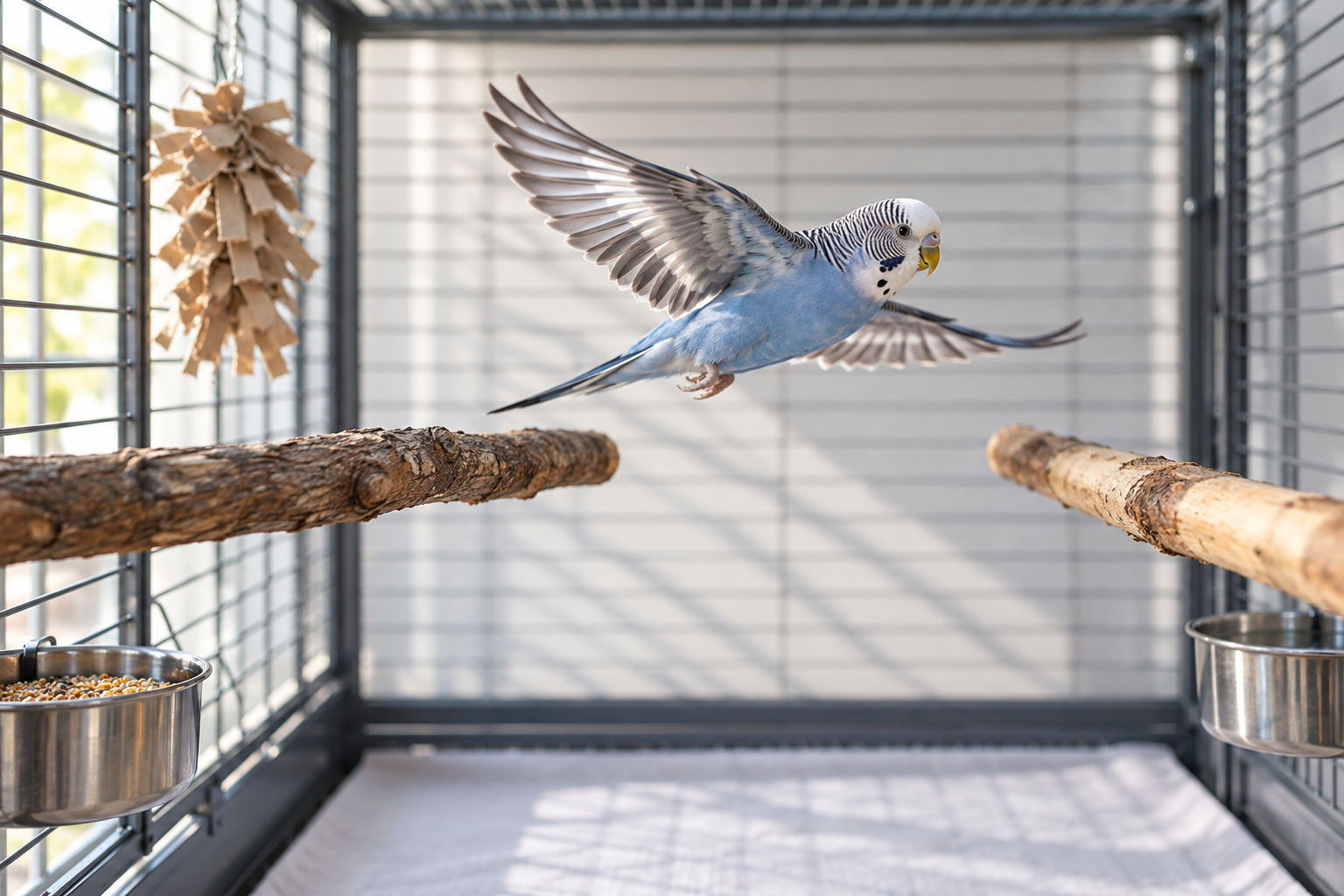
A budgie enclosure needs usable horizontal movement, consistent species-appropriate bar spacing, secure doors, and room for the bird to extend its wings without striking bars or furnishings. The World Parrot Trust supplies a source-specific minimum length, but a single number cannot account for the number of birds, time in the enclosure, perch placement, disability, or an individual bird's flight. Use current cage-selection guidance and an avian veterinarian rather than a product label alone.
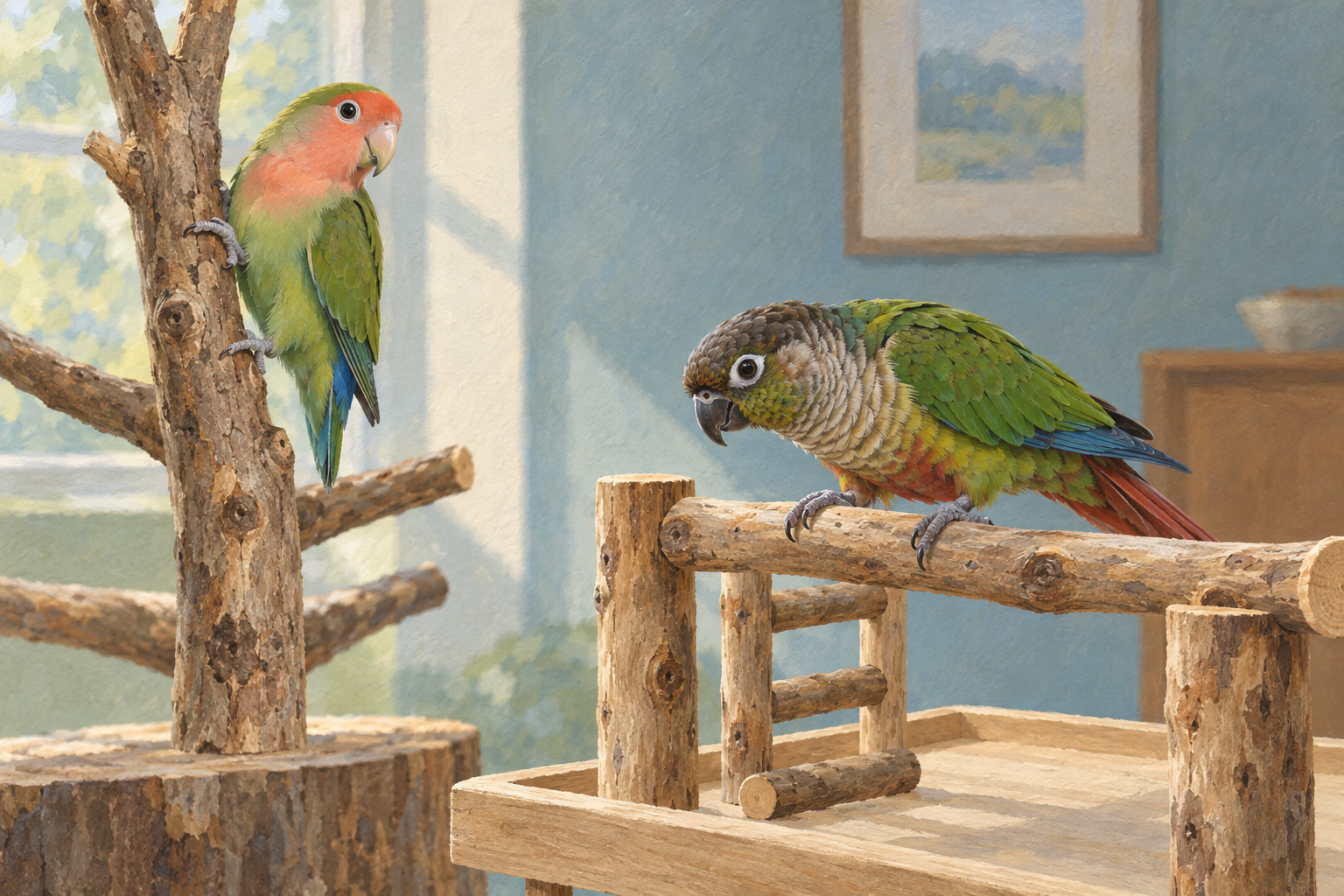
Arrange several appropriate perches so movement between them is possible. Vary safe diameter and texture instead of relying on one uniform dowel. Position bowls and perches to reduce contamination, and add enrichment without filling every flight path. The RSPCA recommends room for free movement and introduces toys gradually rather than crowding the cage.
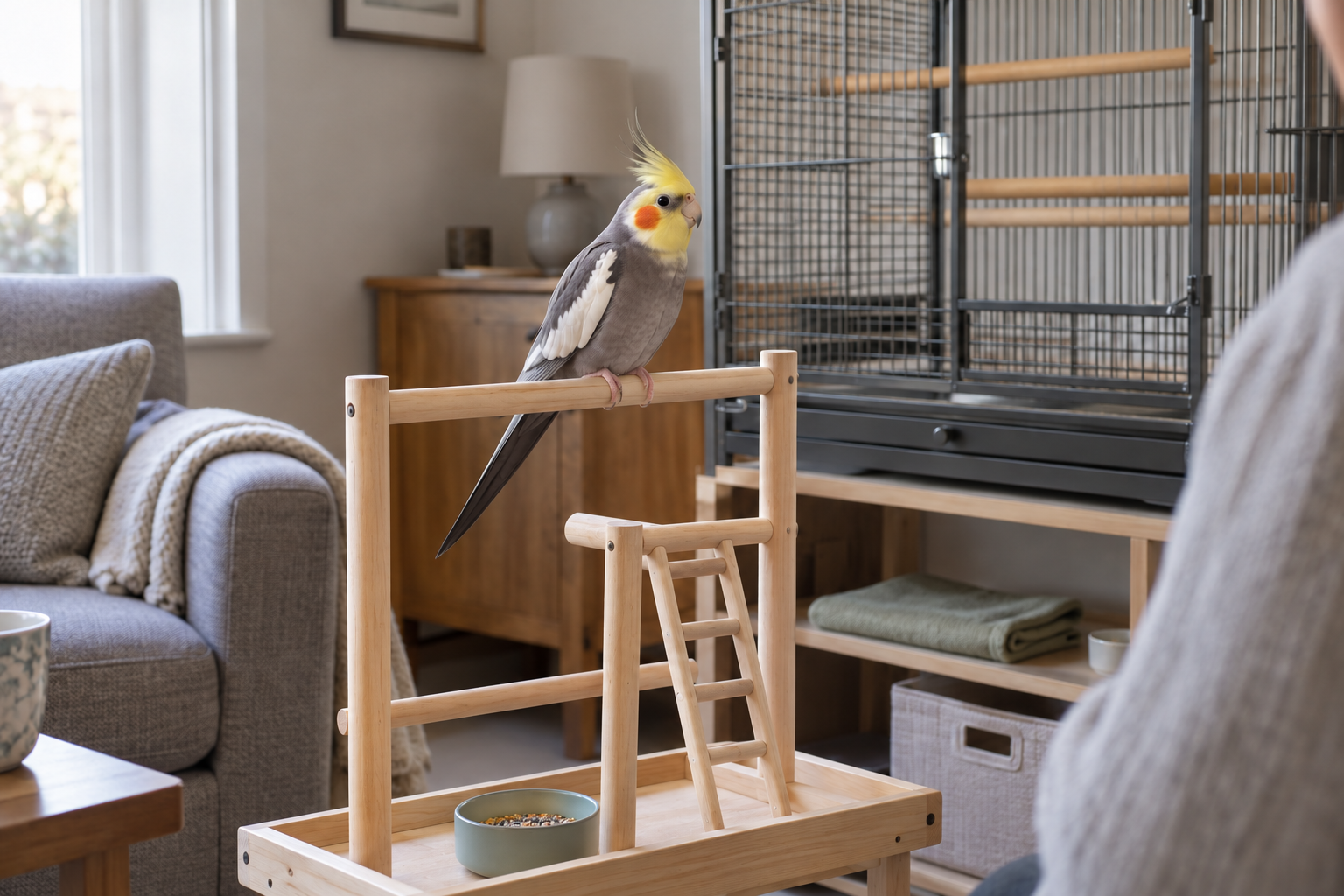
Budgies also need a secure place to fly and explore outside the enclosure, adjusted for the bird's ability and confidence. Close doors and windows, switch off fans, cover or mark confusing expanses of glass, remove other animals, and supervise. A clipped or disabled budgie still needs adapted movement and exercise; lack of flight does not remove the need for space.
The cage is a home base, not the whole life. Its location should provide household visibility without trapping the bird in constant traffic, fumes, drafts, temperature extremes, or interrupted sleep.
A social day

Social care is not solved by a mirror or a few minutes of handling. A budgie needs regular opportunities to vocalize, forage, move, observe, and interact in ways it can choose. Some enjoy close human training; others prefer companionship at a little distance. Talking and tameness are possible, not guaranteed features.
Consider two explicitly hypothetical routines.
In a single-budgie home, the bird wakes to a predictable feeding and cleaning routine, has safe movement and foraging opportunities, and receives several short, low-pressure interactions across the day. The caregiver notices when the bird wants distance and does not demand touch. Periods alone are planned around enrichment, and the household can sustain this attention every day rather than only on weekends.
In a two-budgie home, each bird has access to adequate space, food, water, perches, and retreat options. The caregiver still observes both birds individually and continues reward-based training and health monitoring. The pair is not assumed to be compatible merely because both are budgies; introductions, quarantine, resource guarding, and separate housing may need professional guidance.
Human company and compatible bird company are not identical. The responsible question is whether the planned social system gives each bird choice and adequate daily opportunity. If a second bird is being considered, budget and prepare for two complete care pathways even if the birds cannot share an enclosure.
Food, foraging, sound, and sleep
A seed-only bowl does not provide a complete diet for a companion budgie. A species-appropriate plan may use a reputable formulated food as a nutritional foundation with suitable vegetables and other items, but the exact structure should be agreed with an avian veterinarian. Do not abruptly remove the only food a bird recognizes. During any transition, monitor actual intake, droppings, behavior, and weight as directed.
Budgies manipulate and sort food, so a bowl can appear full while containing mostly hulls. Look at what is swallowed and what is discarded. Fresh water should remain accessible and clean. Perishable foods need hygienic preparation and timely removal.
Foraging turns part of the feeding routine into activity. Begin with easy, visible rewards in clean paper or a simple bird-safe device. Increase difficulty only after the bird reliably finds and eats the food. Foraging should add choice, not create a test that leaves an inexperienced bird hungry.
Expect vocal life. Budgies often chatter, chirp, and use sharper calls. The pattern varies by bird, household, time of day, and social setting. A quiet guarantee is unrealistic, but a sudden change from an individual's usual voice can be health information.
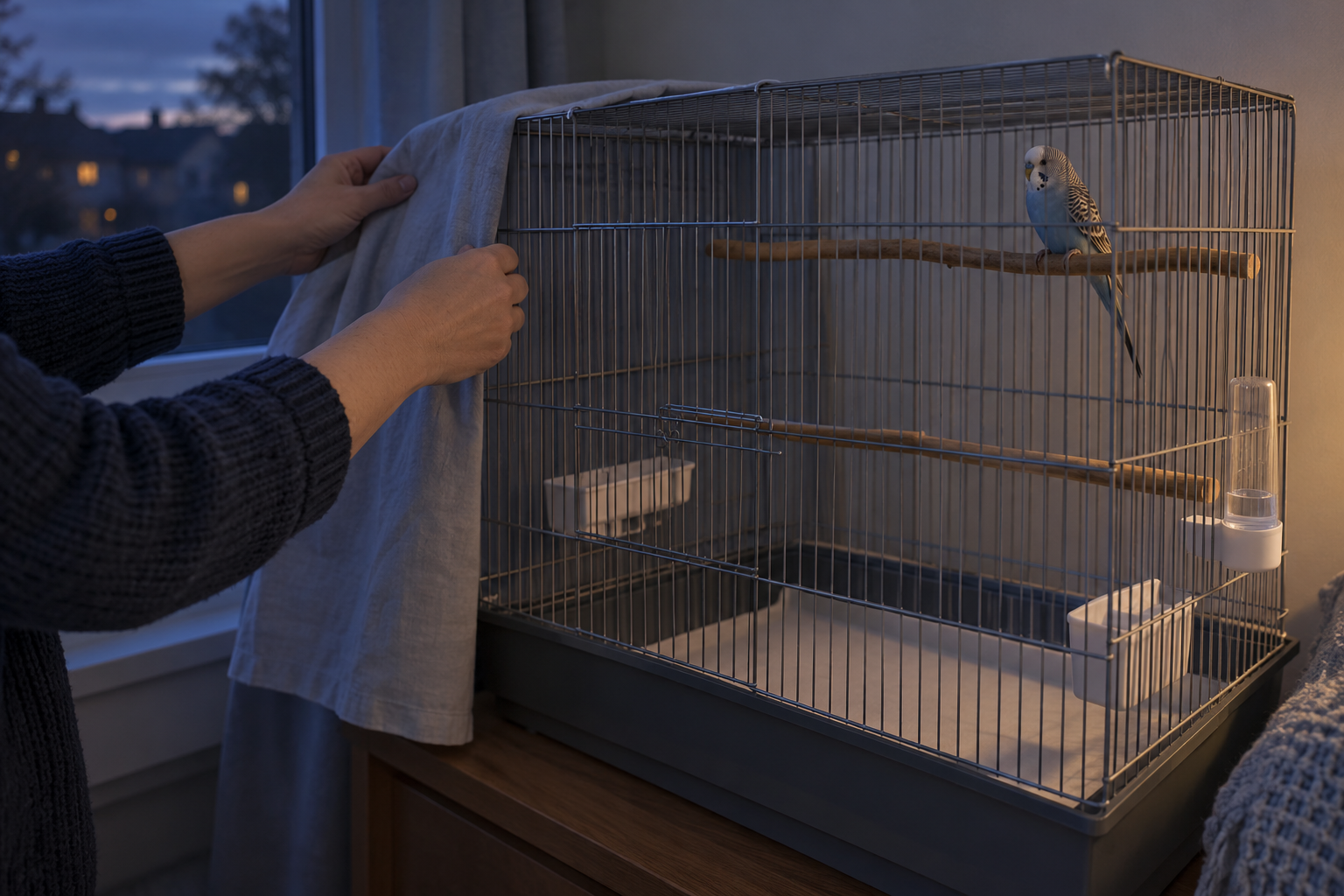
Provide a repeatable period for rest in a location protected from late-night activity and sudden disturbance. Sleep needs vary with the individual and environment, so focus on a consistent dark-and-quiet routine rather than copying one universal hour count. If the bird has repeated night frights or cannot settle, discuss the environment and health with the avian clinic.
Rotate a modest set of safe enrichment: shreddable items, swings where appropriate, bathing opportunities, simple foraging, and objects that support climbing and manipulation. Watch how the budgie uses each item. Frayed fibers, trapping gaps, loose parts, and damaged fasteners mean an item should be removed.
What to monitor over a lifetime
Arrange a new-bird examination and ongoing preventive care with a veterinarian experienced in birds. Learn the budgie's normal appetite, droppings, posture, activity, voice, and weight trend. Birds can conceal illness; reduced eating, persistent fluffing, unusual sleepiness, breathing effort, balance problems, altered droppings, or a marked behavior change deserves prompt veterinary advice.
Revisit the setup as the bird ages or circumstances change. A move may alter sleep and flight safety. A new pet changes separation routines. Arthritis, injury, or reduced vision can require lower perches and shorter, safer routes. Diet and weight should be reviewed professionally rather than adjusted from appearance alone.
Before choosing a budgie, check the fit honestly:
- Can the home provide daily movement and social opportunity?
- Is there a safe enclosure and a bird-proofed exercise area?
- Can everyone tolerate the sound, mess, and cleaning?
- Is an avian veterinarian accessible, including for emergencies?
- Can the household support one or two birds if compatibility or care needs change?
- Is there a plan for travel, housing changes, and years of care?
A budgie can be an engaging companion precisely because it is an active, social parrot in a small body. Respecting that scale of need—not minimizing it—is the foundation of good care.